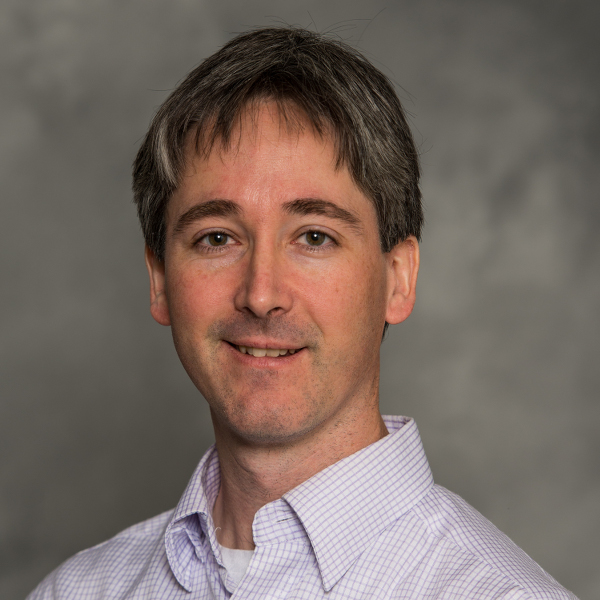
Scott Taylor is a Professor of Mathematics at Colby College. He specializes in geometric topology, focusing on knots and 3-dimensional spaces. His research explores topics such as Heegaard splittings, bridge numbers, and spatial graphs. He teaches courses like Series and Multi-variable Calculus, Geometry of Surfaces, and Geometry and Topology of Knots. He is the producer of Sum Camp, a summer program integrating arts and math games to enhance numeracy in children. He authored the textbook *Introduction to Mathematics: Number, Space, and Structure* (American Mathematical Society, forthcoming). His work bridges pure mathematical research with educational outreach. His recent articles address advanced topics including equivariant Heegaard genus, theta-curves, and Brunnian graphs. Though no specific awards are listed, his extensive publication record reflects scholarly contributions. He advises no listed students and has no detailed grants disclosed here.
Dr. Marcus Holzinger is the Joseph T. Negler Professor and Hatfield Endowed Professor in Space Policy & Law at the University of Colorado Boulder's Department of Aerospace Engineering Sciences. He leads the Colorado Center for Astrodynamics Research (CCAR) and the VADeR Laboratory, focusing on advancing space exploration through interdisciplinary research in space policy, autonomy, and space situational awareness. His work emphasizes collaboration and sustainable practices in space. Education: PhD in Aerospace Engineering Sciences, University of Colorado Boulder (2011) MS in Aeronautics & Astronautics Engineering, University of Washington (2005) BS in Aeronautics & Astronautics Engineering, University of Washington (2003) Research Interests: Space Policy & Law Space Domain Awareness Autonomy & Decision Support Systems Cislunar Space Dynamics Information Theory & Estimation Space Traffic Management Recent Research Trends: Holzinger’s work prioritizes cislunar space exploration and decentralized decision-making for space systems, with applications in orbital debris mitigation, sensor tasking, and spacecraft autonomy. His publications frequently address challenges in initial orbit determination and spacecraft maneuver detection . Awards: American Astronautical Society Fellow (2022) AIAA Associate Fellow (2018) AFOSR Young Investigator Award (2017) Advising & Labs: Holzinger mentors students in the STARLIT and VADeR Observatories. Notable advisees include Sam Fedeler (2023 PhD) and Katie Melbourne (PhD student). His labs develop technologies like astrographic mapping and sensor networks for space surveillance. Labs/Teams: CCAR and the VADeR Lab collaborate on projects funded by NASA, AFRL, and industry partners, emphasizing hardware-in-the-loop testing and space policy frameworks.
Fangjinhua Wang is a Researcher affiliated with the Department of Computer Science at ETH Zurich, working within the Professorship for Computer Science. Their role involves contributing to cutting-edge research in fields such as 3D reconstruction, computer vision, and neural networks. The research focuses on advancing methodologies like scene graph manipulation, multi-view stereo techniques, and holistic human-scene reconstruction. Collaborations and projects emphasize practical applications in robotics, computer graphics, and AI-driven systems. While no explicit education details are provided, the research trajectory reflects a deep engagement with computational methods for 3D modeling and vision-based systems. The work bridges theoretical advancements with real-world applications, addressing challenges in scene understanding, object interaction, and human-robot collaboration. Research interests are centered on interdisciplinary topics including neural representation learning, robust visual localization, and the integration of geometric priors for high-fidelity reconstructions. The output demonstrates a commitment to both foundational research and applied solutions in computer science and robotics.
Asaf Shapira is a Professor at the School of Mathematical Sciences, Tel-Aviv University. His research focuses on combinatorics, graph theory, and extremal problems, with notable contributions to Ramsey theory, probabilistic methods, and algorithmic applications. He has authored over 50 publications in top-tier journals and has taught advanced courses such as Extremal Graph Theory and Probabilistic Methods in Combinatorics. His research interests include extremal combinatorics, hypergraph theory, and structural graph theory. Recent work includes advancements in removal lemmas, partition properties, and algorithmic testing of graph properties. Shapira has also contributed to foundational results in property testing and combinatorial optimization. His teaching spans undergraduate and graduate levels, covering topics like combinatorial analysis, algebraic methods, and advanced algorithms. While no explicit awards are listed, his extensive publication record reflects significant scholarly impact.
Amar Hadzihasanovic is an Assistant Professor at Tallinn University of Technology, affiliated with the Compositional Systems and Methods group, and a Scientific Advisor at Quantinuum. He specializes in category theory, higher-dimensional algebra, and their applications in quantum computing and formal systems. His recent work includes organizing the 110th Peripatetic Seminar on Sheaves and Logic (PSSL) and completing a book on higher-categorical diagrams with Cambridge University Press. Hadzihasanovic has been awarded grants from ARIA (Safeguarded AI programme) and the Estonian Research Council, supporting his research on diagrammatic rewriting and homotopy theory. His research interests span categorical foundations, diagrammatic sets, and computational aspects of higher-dimensional structures. Key contributions include model structures for (∞, n)-categories, acyclicity conditions in pasting diagrams, and formal axiomatizations of quantum systems. He has advised PhD students Alkis Ioannidis and Clémence Chanavat, and collaborates widely with institutions like the University of Cambridge and Quantinuum. Hadzihasanovic has delivered invited talks at conferences such as Category Theory 2024, the Nordic Congress of Mathematicians, and the Geometric and Topological Methods in Computer Science (GETCO). His teaching includes a course on category theory and diagrammatic reasoning at Kyoto University. His software, including the rewalt library, supports topologically sound higher-dimensional diagram rewriting.
Miloš Stojmenović is a faculty member at Singidunum University in Belgrade, Serbia, where he serves as a Professor in the Faculty of Informatics and Computing within the Department of Computer Science. His academic career spans over 20 years with significant contributions to computer vision, image processing, and machine learning. Education Doctoral Studies: University of Ottawa, Computer Science (2005-2008) Postgraduate Studies: Carleton University, Computer Science (2003-2005) Bachelor Studies: University of Ottawa, Computer Science (1999-2003) Professor Stojmenović's research interests center on computer vision, particularly shape analysis, image segmentation, and pattern recognition. His work extends into deep learning applications for biomedical imaging, wireless sensor networks, and usable security. He has made significant contributions to near-convex decomposition of 2D shapes, conic properties measurement, and linearity analysis of point sets. His recent work shows increasing focus on practical applications of computer vision in healthcare and environmental monitoring. Analysis of his 15 most recent publications reveals a strong trend toward interdisciplinary research, particularly in biomedical applications of computer vision. Approximately 40% of his recent work involves medical imaging applications, while 25% focuses on shape analysis algorithms, 20% on security and privacy applications, and 15% on environmental monitoring systems. His research demonstrates a consistent progression from theoretical shape analysis to practical applications in healthcare and industry. Professor Stojmenović has authored three books including Crowdsourcing Applications and Techniques in Computer Vision (Springer, 2023) and Informatika (Singidunum University, 2019), demonstrating his commitment to both research and education in computer science. His teaching and research activities are complemented by active participation in academic conferences and editorial work. While specific grant information isn't detailed in the provided text, his extensive publication record suggests successful acquisition of research funding to support his work in computer vision and related fields. Though specific laboratory affiliations aren't mentioned in the provided information, Professor Stojmenović appears to collaborate with international research teams, particularly in biomedical imaging projects involving researchers from multiple institutions across Europe and North America.
Beibei Liu is an Assistant Professor in the Department of Mathematics at Ohio State University. Her research focuses on geometric topology, particularly the interplay between hyperbolic manifolds' geometric properties, Kleinian groups' algebraic properties, and dynamical properties of limit sets. She also investigates 3- and 4-manifolds' topology and knot theory. Her academic journey includes a PhD from the University of California, Davis under advisors Eugene Gorsky and Michael Kapovich, followed by postdoctoral roles at MIT, Georgia Institute of Technology, and the Max Planck Institute for Mathematics. Her work is supported by an NSF Grant DMS-2203237. Research interests span geometric group theory, hyperbolic geometry, and low-dimensional topology, with emphasis on manifolds, Kleinian groups, and Floer homology applications. Her articles explore topics like Heegaard Floer homology, geometric rigidity, and knot invariants. Awards and grants include NSF funding for advancing topology studies. She has advised no explicitly listed students but collaborates through postdoctoral and institutional networks.
Rolando De Santiago is an Adjunct Associate Professor of Mathematics at Purdue University, affiliated with the Department of Mathematics in the College of Science. His research focuses on operator algebras, von Neumann algebras, functional analysis, and group theory. He holds a PhD from the University of Iowa (2017) and has held postdoctoral positions at UCLA, including the UC Presidential Postdoctoral Fellowship (2018–2020). His work emphasizes classification of group von Neumann algebras via deformation/rigidity theory and explores structural properties like proper proximality, strong 1-boundedness, and graph products. He co-leads the Operator Algebras Seminar at Purdue and actively mentors students in quantum information theory and noncommutative geometry. Notable achievements include the Spira Award for Teaching and Mentoring (2023) and contributions to papers on quantum chromatic numbers, spectral gap characterizations, and wreath-like products. His research bridges operator algebras with geometric group theory, topology, and quantum computing applications. Education: PhD in Mathematics, University of Iowa (2017) MS in Mathematics, Cal Poly Pomona (2012) BS in Mathematics, Cal Poly Pomona (2012) Awards & Grants: UC Presidential Postdoctoral Fellowship (2018–2020) NSF-AGEP Supplemental Grant (2015–2016) GAANN Fellowship (2013–2015) Spira Award (2023) Research Themes: Von Neumann algebras, quantum graph coloring, group rigidity, operator system structures, and interdisciplinary applications in quantum information theory. Recent work includes quantum chromatic number bounds and spectral properties of noncommutative Poisson boundaries.
Pan Li is an Assistant Professor in Electrical and Computer Engineering at Georgia Tech's College of Engineering. His research develops expressive machine learning models for graph-structured data, focusing on graph neural networks, geometric deep learning, and AI applications in scientific domains. He holds a PhD from University of Illinois Urbana-Champaign. Research bridges theoretical foundations with scalable implementations for large graphs. Recent work includes equivariant architectures, hypergraph diffusion operators, and unsupervised combinatorial optimization. Recognitions include NSF CAREER Award and best paper awards. NSF CAREER Award (2023) Learning on Graph Conference Best Paper (2022) Sony Faculty Innovation Award (2021)
Charles Bertucci is a CNRS researcher in Mathematics at the Applied Mathematics department of École polytechnique in Palaiseau, France. He also serves as a part-time teacher at École polytechnique since 2020. Bertucci defended his thesis on December 11, 2018, and his Habilitation à Diriger les Recherches (HDR) in June 2022, granting him accreditation to supervise research. His educational background includes being a former student of École Polytechnique (class of 2012) and Paris-Sorbonne University. His doctoral studies were conducted at Paris-Dauphine University under the supervision of Pierre-Louis Lions. Bertucci's research focuses primarily on mean-field game theory , optimization , and the analysis of partial differential equations . He is particularly interested in identifying stability principles for equations posed in infinite dimensions. His work spans theoretical mathematics with applications in economics, finance, and real-world phenomena such as oil markets, cryptocurrency markets, and telecommunications. His interdisciplinary approach bridges pure mathematics with practical applications in various economic and technological domains. Analysis of his recent publications reveals a strong focus on mean field games theory, with extensions to applications in finance (particularly cryptocurrency markets), optimal transport theory, and connections to PDEs. His work often involves collaborations with leading mathematicians including Pierre-Louis Lions, Jean-Michel Lasry, and others. The research demonstrates both theoretical depth in mathematical analysis and practical relevance to economic modeling. His notable scientific achievements include: Recipient of the prestigious Peccot Course for 2022-2023 at Collège de France Bertucci has been actively involved in academic service, including organizing the workshop "Mean Field Games and Applications" in 2022 with Yves Achdou, Jean-Michel Lasry and Pierre-Louis Lions. His teaching activities include delivering the Peccot Course on "Mean-field games and stochastic control in Wasserstein space" in 2023 at Collège de France, consisting of four lectures between March 31 and April 21, 2023. His research is conducted within the vibrant mathematical community at École polytechnique and through collaborations with researchers at CNRS and other institutions, focusing on advancing the theoretical foundations of mean field games while exploring novel applications across various domains.
Jiehua Chen is an Associate Professor in the Department of Algorithms and Complexity at TU Wien (Vienna University of Technology), part of the School of Informatics. Her research focuses on algorithmic social choice, fair division, and computational complexity with applications to multi-agent systems, stable matchings, and parameterized algorithms. She leads the project Structural and Algorithmic Aspects of Preference-based Problems in Social Choice (2019–2027), funded by the Vienna Science and Technology Fund (WWTF). Her work spans theoretical contributions to voting systems, fair allocation mechanisms, and graph-based problems, with notable publications in venues like AAAI, IJCAI, and ACM Transactions on Economics and Computation. She teaches courses such as Algorithmic Social Choice and Quantum Computing and Complexity Theory , and has supervised research like E. Ceylan's diploma thesis on optimal seat arrangement algorithms. Chen’s research emphasizes practical algorithm design for social choice challenges, including refugee resettlement, participatory budgeting, and hedonic games. She frequently presents at international conferences and collaborates on interdisciplinary projects involving computational complexity and graph theory.
Francesc d'Assis Planas Vilanova is a Professor in the Department of Mathematics at the Polytechnic University of Catalonia (UPC), affiliated with the Faculty of Mathematics and Statistics. He is a core member of the GEOMVAP research group (Geometry of Varieties and Applications), focusing on Algebraic Geometry, Commutative Algebra, and Combinatorial Algebra. His research emphasizes the interplay between algebraic structures and geometric concepts, with contributions to topics like syzygetic ideals, Noetherian rings, and lattice ideals. Key publications include studies on Gorenstein syzygetic prime ideals, Jacobian divisors, and Rees algebras. His work bridges theoretical algebra with applications in combinatorial topology and graph theory. He has supervised at least one doctoral student, Ferran Muiños Ballester, whose thesis explores Rees algebras of equimultiple ideals. Planas Vilanova has secured grants through the Spanish and Catalan research agencies, contributing to projects like 'Geometria de Varietats i Aplicacions.' His research spans over three decades, with continuous contributions to algebraic theory and its applications.
Victoria S Akin is an Associate Professor of the Practice of Mathematics at Duke University's Trinity College of Arts & Sciences . She holds a Ph.D. from the University of Chicago (2017) in geometric group theory, focusing on mapping class groups. Her current research emphasizes mathematics education, particularly the retention of women in STEM through initiatives like the Girls Exploring Math (GEM) program. She co-directs this outreach effort, which engages middle school girls in problem-solving workshops and addresses social constructs impacting math self-concept. Education: Ph.D. in Mathematics, University of Chicago, 2017 Research Interests: DEI initiatives in STEM education Inclusive grading systems Graduate student professional development Impact of spatial reasoning interventions Grants & Awards: ACT UP MATH Research Co-PI (2022–2025) DukeGEM Public Service PI (2021–2023) 2019 Most Innovative Professor (National Arist) Repeated Top 5% Teaching Evaluations (Trinity College) Teaching & Advising: Coordinates calculus courses and mentors Bass Connections teams. Recent courses include Discrete Mathematics, Probability, and Teaching College Mathematics. Advises interdisciplinary projects on STEM retention and math identity. Labs/Teams: Co-leads Bass Connections teams focused on gender equity in STEM and directs the GEM program.
Robert W. Bell is an Associate Professor at Michigan State University, holding joint appointments in Lyman Briggs College and the Department of Mathematics. He specializes in geometric group theory, with a focus on Artin groups, Coxeter groups, mapping class groups, and combinatorial games like cops and robbers on graphs. His research also explores CAT(0) spaces and undergraduate research initiatives. Bell has published extensively in top-tier journals and co-authored a chapter in the book Office Hours with a Geometric Group Theorist . Teaching: Bell has taught courses such as Calculus III and Axiomatic Geometry. He actively participates in the Summer Undergraduate Research Institute in Experimental Mathematics (SURIEM), supported by NSF and NSA grants. Office hours are typically scheduled for Monday/Wednesday afternoons. Research Highlights: Notable works include studies on surface subgroups in Artin groups, co-Hopfian properties of braid groups, and the cop number in graph theory. His 2017 paper on generalized Petersen graphs and 2016 article on SURIEM’s impact highlight his dual focus on theoretical and applied mathematics. Awards: No specific honors are listed, though his contributions to geometric group theory and education are recognized through his publications and program leadership.
Mark A Iwen is an Associate Professor at Michigan State University, holding dual appointments in the Department of Mathematics and the Department of Computational Mathematics, Science and Engineering (CMSE) . His research focuses on computational harmonic analysis, mathematical data science, signal processing, and algorithms for analyzing high-dimensional datasets. He has contributed to advancements in sparse Fourier transforms, compressive sensing, and sublinear-time algorithms for large-scale data. Key research themes include: Efficient algorithms for high-dimensional PDEs and spectral methods Phase retrieval and inverse problems in imaging Optimization of tensor decompositions and dimensionality reduction techniques Development of sparse approximation methods with theoretical guarantees His recent work emphasizes applications in: Sublinear-time algorithms for function approximation Terminal embeddings for manifold data Fast JL embeddings with bi-Lipschitz properties Tensor completion and low-rank approximations Notable contributions include: Development of Sparse Harmonic Transforms for functions of many variables Advancements in distributed SVD algorithms for large networks Empirical and theoretical analysis of phase retrieval techniques Efficient sparse FFT implementations (e.g., DMSFT, GFFT) Iwen collaborates on open-source code projects, including sparse FFT libraries and phase retrieval tools. His work bridges mathematical theory with practical applications in engineering and computational science.