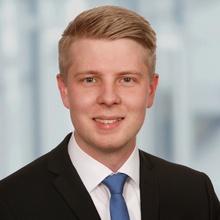
Adam Ratajczak is a Researcher at the Department of Control Systems and Mechatronics, Faculty of Information and Communication Technology, Wrocław University of Science and Technology. His work focuses on robotics, control systems, and nonholonomic motion planning. Research Interests: Nonholonomic robotic systems Jacobian motion planning algorithms Kinematic calibration Space manipulator dynamics Fuzzy logic control systems Selected Publications Trends: His research spans 2013-2025, with emphasis on nonholonomic robotics, trajectory optimization, and calibration techniques. Keywords include Robotics, Control Theory, and Algorithm Design. Subfields cover Nonholonomic Constraints, Jacobian Methods, and Space Docking. Labs & Teams: Affiliated with Wrocław University of Science and Technology's robotics research groups.
Professor Masakazu Soshi is a faculty member in the Department of Mechanical and Aerospace Engineering at the University of California Davis, affiliated with the College of Engineering. He leads the Advanced Research for Manufacturing Systems (ARMS) Laboratory, focusing on improving machining and additive manufacturing processes for advanced CNC machine tool systems. His research integrates computational analysis, experimental validation, and hardware development to enhance manufacturing productivity and cost-effectiveness. Research interests include manufacturing systems , CNC machine tools , mechatronics design , additive manufacturing , and high-performance machining . The ARMS Lab specifically addresses challenges in Directed Energy Deposition (DED), hybrid manufacturing processes, and precision machine tool component design. Key projects involve optimizing material deposition rates, residual stress management, and real-time control systems for additive processes. Recent publications emphasize DED process control , hybrid additive-subtractive systems , and manufacturing system integration . His work bridges computational modeling (e.g., conforming mesh simulations) with practical hardware innovations (e.g., dynamic powder splitters). No notable awards or grants are explicitly listed, though his lab's website (http://arms.engr.ucdavis.edu) highlights ongoing collaborations and applied research. Professor Soshi's lab maintains a strong focus on industrial applications, such as improving machine tool guideways via CBN hard milling and developing high-torque spindle systems for aerospace materials. His research also extends to robotic-assisted surgical toolpath optimization and advanced cooling methods for hybrid CNC machines.
Yannick Carette is a Researcher at KU Leuven's Department of Mechanical Engineering, affiliated with the MaPS (Manufacturing, Assembly and Productivity in Sheet metal forming) division, which serves as a core lab for Flanders Make - the strategic research center for Flanders' manufacturing industry. His work bridges advanced manufacturing techniques with biomedical applications, focusing on precision sheet metal forming processes. Dr. Carette's research expertise spans several interconnected domains: Single Point Incremental Forming (SPIF) process optimization and accuracy enhancement Digital Image Correlation for real-time process monitoring Multi-stage forming strategies using geometric decomposition techniques Application of manufacturing processes to medical implant production Statistical analysis of anatomical structures for implant design His publication trajectory reveals an evolution from fundamental manufacturing process understanding toward specialized biomedical applications. Early work focused on core SPIF mechanics and multi-step forming strategies, while recent research integrates machine learning for accuracy prediction and applies statistical shape modeling to anatomical analysis. This interdisciplinary approach has produced innovations like using non-rigid registration techniques - adapted from medical imaging - to improve SPIF process planning. Dr. Carette's collaborative research with medical professionals has significantly advanced understanding of anatomical variations in bones like the clavicle and tibia, explaining why standard implants often fail to fit properly. His work on thin-shell titanium clavicle implants demonstrates how manufacturing flexibility can address challenges in patient-specific medical device production.
René Mayer is a Full Professor at the Department of Mechanical Engineering, Polytechnique Montréal. With a B.Eng. (1983) and Ph.D. (1989) in mechanical engineering, he has dedicated his career to precision manufacturing, machine tool calibration, and metrology. He directs the Laboratoire de recherche en fabrication virtuelle (LRFV) and co-leads the Groupe de recherche en développement et fabrication des produits (GRDFP) . His research focuses on improving machine tool accuracy through rapid, automated measurement systems. Key areas include volumetric error compensation, thermal distortion modeling, and advanced calibration methods like SAMBA and R-test devices. Collaborations span aerospace, automotive, and biomedical industries, with international academic ties in Sweden, Poland, Germany, Switzerland, and France. Education : B.Eng. and Ph.D. in Mechanical Engineering Expertise : Precision engineering, robotics, artificial vision, finite element modeling Labs : Laboratoire de recherche en fabrication virtuelle, GRDFP Recent publications highlight machine learning applications for error prediction, thermal compensation, and uncertainty quantification in five-axis machining. Scientific honors include Fellowships with CIRP (2022) and IMechE (2012), recognizing his contributions to manufacturing science.
Dr. Tomislav Medić is a Lecturer and PostDoc at the Department of Civil, Environmental and Geomatic Engineering, ETH Zurich. His research focuses on advanced geospatial technologies, particularly terrestrial laser scanning (TLS) applications in deformation monitoring, sensor calibration, and precision agriculture. MSc in Geodesy and Geoinformation, University of Zagreb, Croatia PhD in Geodesy, Bonn University (IGG), Germany Dr. Medić’s research spans geomatics, remote sensing, and sensor engineering. Key areas include TLS radiometric calibration, point cloud processing for 3D displacement analysis, and multispectral LiDAR applications in agriculture. He contributes to improving geodetic measurement accuracy through innovative calibration strategies. His recent publications emphasize TLS integration with RGB data for geomonitoring (2025), hyperspectral scanning for fruit quality assessment (2024), and calibration field design for panoramic scanners (2023). Articles demonstrate expertise in error modeling, multi-sensor fusion, and environmental monitoring applications. At ETH Zurich’s Geosensors and Engineering Geodesy (GSEG) group, he leads the Alpine Measurement Lab collaboration project. He also participates in PhenoRob, a cluster of excellence in robotics and phenotyping for sustainable crop production at Bonn University.
Ulaş Yaman is an Associate Professor in the Department of Mechanical Engineering at Middle East Technical University (METU) in Ankara, Turkey. He received his B.Sc. in Mechanical Engineering (2007), M.Sc. in Mechanical Engineering (2010), and Ph.D. in Mechanical Engineering (2014) from METU, with a minor in Mechatronics. His academic career includes roles as a Visiting Assistant Professor at Purdue University (2014-2015) and research positions at METU. His research specializes in additive manufacturing, CAD/CAM systems, computational geometry, and embedded control systems. Key areas include 3D printing optimization, FDM process enhancements, CNC command generation, and hybrid manufacturing technologies. Recent work explores Industry 4.0 integration, structural optimization for 3D-printed artifacts, and novel fabrication pipelines like LIPRO. Yaman's publications demonstrate strong focus on manufacturing innovations, with recurring themes in real-time command generation, material behavior in 3D printing, geometric algorithms for production, and educational tools for control engineering. His work frequently combines hardware implementation with computational efficiency. Scientific Awards: BEST PAPER AWARD - IEEE 8th Workshop on Intelligent Solutions in Embedded Systems (2010) Research Grants: TÜBİTAK 1001: A Smart- and Hybrid Manufacturing System Utilizing Additive Manufacturing Methods and Machining (2017-2020) TÜBİTAK 3001: A Novel Design and Fabrication Pipeline for 3D Printers: LIPRO (2017-2018) ODTÜ-BAP: Improving the Dimensional Accuracy of 3D Printed Artifacts (2016) He leads the Laboratory for Intelligent Production Systems (LIPRO) with six research assistants, focusing on additive manufacturing, computational geometry, and embedded systems. Current projects include developing multi-axis hybrid manufacturing systems and novel CAD/CAM architectures.
Prof. Dr. Benedikt Wirth is a Professor of Mathematics at the University of Münster, Germany, affiliated with the Institute for Analysis and Numerics within the Department of Mathematics and Computer Science. He is an active researcher and educator specializing in optimization and calculus of variations, with significant contributions to mathematical imaging and shape analysis. His research interests include image processing, scientific computing, numerical analysis, optimization, shape spaces, geodesics in shape space, variational methods, elastic deformation, and optimal transport. Wirth has developed innovative mathematical frameworks for shape analysis, particularly focusing on Riemannian metrics for shape spaces and variational approaches to shape comparison and optimization. His recent publications (2023-2025) demonstrate continued leadership in mathematical optimization, with particular focus on PET reconstruction, dimension reduction techniques, manifold embeddings, and branched transport theory. His work bridges theoretical mathematics with practical applications in medical imaging and computer vision, showing particular strength in connecting geometric analysis with computational methods. CRC 1450 - A05: Targeting immune cell dynamics by longitudinal whole-body imaging and mathematical modelling CRC 1450 - A06: Improving intravital microscopy of inflammatory cell response by active motion compensation EXC 2044 - C1: Evolution and asymptotics EXC 2044 - C2: Multi-scale phenomena and macroscopic structures EXC 2044 - C3: Interacting particle systems and phase transitions EXC 2044 - C4: Geometry-based modelling, approximation, and reduction Prof. Wirth actively supervises numerous bachelor's and master's students, with over 40 theses completed under his guidance since 2015. His teaching portfolio includes courses on inverse problems, numerical methods for partial differential equations, shape spaces, optimization, and optimal transport. He has consistently maintained an active research program while contributing significantly to the education of the next generation of mathematicians.
Prof. Ing. Alojz Kopáčik, PhD. is a full-time professor and head of the Department of Surveying (SvF) at Slovak Technical University in Bratislava. His research focuses on geodesy, cartography, and photogrammetry with applications in metrology and construction monitoring. University: Slovak Technical University in Bratislava School: Faculty of Civil Engineering Department: Department of Surveying Email: alojz.kopacik@stuba.sk Research interests: Kopáčik specializes in metrology of geodetic instruments, automated calibration systems, and integration of image processing with interferometric measurements. He also works on point cloud analysis for structural verification and construction quality control. Recent publications (2024) demonstrate expertise in: Development of horizontal comparators for precision calibration Edge detection algorithms for systematic error analysis Building Information Modeling (BIM) integration with point clouds Automated metrology systems using machine vision Non-linearity compensation in length measurements Interferometric techniques for geodetic applications
Prof. Dr. Ir. Dannis Brouwer is a professor at the Faculty of Engineering Technology, University of Twente, leading the Precision Engineering group. His work focuses on flexure mechanisms with applications in ultra-precision machinery, robotics, orthoses, and flexible implants. He lectures Design Principles for Precision Mechanisms in Mechanical Engineering programs and has pioneered advancements in large-motion flexure joints. Education: MSc in Mechanical Engineering and Mechatronic Design (Eindhoven University of Technology, 1998-2001); PhD (University of Twente, 2007) Past Roles: Mechatronics System Designer at Philips (2001-2004); Senior Applied Research Engineer at Demcon (2007-2009) Brouwer’s research addresses the limitations of traditional bearings by optimizing flexure joints for high load capacity, large motion, and stiffness. His group developed topology synthesis methods and leverages additive manufacturing to enable geometric complexity at low cost. Applications span space mechanisms, cryogenic systems, and medical devices. His 15 most recent publications focus on flexure modeling, optimization, and applications in robotics and precision engineering. Key subfields include torsion reinforcement, underactuated grippers, and superelement formulations. Scientific Leadership: Associate Editor of Precision Engineering; Director-at-Large, American Society for Precision Engineering (2015-2017) Grants: 14 projects (total 5.5M€), supervising 11 PhD students, 7 PostDocs, and 2 EngD candidates Brouwer integrates education with industry through intensive Master’s courses and lectures at industrial academies. His work bridges theoretical advancements with practical implementations in mechatronic systems.
Dr. Hossam Eldessouky serves as a Lecturer in Advanced Manufacturing within the School of Computing, Engineering and Technology at Robert Gordon University (RGU), UK. With over 18 years of combined academic and industrial experience, he directs research through the Composite Materials Manufacturing Research Group while maintaining active industry collaborations across Egypt, UAE, and international institutions including University of Birmingham and Al Imam Mohammad Ibn Saud Islamic University. His educational background includes: PhD in Mechanical Engineering (2018) from University of Bath MSc in Industrial and Management Engineering (2010) from Arab Academy for Science, Technology & Maritime Transport BSc in Industrial and Management Engineering (2006) from Arab Academy for Science, Technology & Maritime Transport Dr. Eldessouky's research focuses on advancing manufacturing technologies through five interconnected domains: Additive Manufacturing for medical/aerospace applications, Precision and Smart Machining systems, Reverse Engineering methodologies, Smart Materials integration, and Composite Materials fabrication. His work consistently bridges theoretical innovation with industrial implementation, particularly in developing sustainable manufacturing solutions and high-precision components. His publication record demonstrates consistent output in high-impact journals, with recent work emphasizing sustainability integration in engineering education (2025), lattice-structured medical implants (2022), and advanced machining optimization (2021-2022). The research shows strong interdisciplinary connections between materials science, biomedical engineering, and digital manufacturing. Professional recognitions include: Fellow of the Higher Education Academy (FHEA) Multiple Shield of Honour awards from AASTMT (2006-2019) Black Belt Lean Six Sigma and ISO 9001 Lead Auditor certifications Extensive consultancy portfolio including Kamal Saad Co. and Summer-moon Fish Industry Dr. Eldessouky actively supervises student research projects while developing industry-relevant curricula. His grant portfolio includes international collaborative projects focused on sustainable manufacturing and advanced materials. The Composite Materials Manufacturing Research Group provides students with access to state-of-the-art equipment and real-world problem-solving opportunities through ongoing industry partnerships.
Colin Reiff serves as a Research Assistant at the Institute for Control Engineering of Machine Tools and Manufacturing Units at the University of Stuttgart, focusing on advanced manufacturing systems and process optimization. His work bridges theoretical research with industrial applications in automotive, aerospace, and general production contexts. His research interests center on process control and optimization in multi-stage production systems and Additive Manufacturing (Powder Bed Fusion Processes) . Reiff has developed innovative approaches for zero-defect manufacturing, particularly through smart centering methods for rotation-symmetric parts and automated vision data systems using collaborative robots. His work demonstrates how dimensional deviations can be compensated during production rather than detected at final inspection. Analysis of his publication record from 2018-2024 reveals consistent focus on manufacturing innovation, with increasing emphasis on data-driven approaches, software-defined manufacturing, and sustainable production. His research spans both theoretical frameworks and practical implementations, with several solutions transitioning to industrial applications. Reiff actively supervises student theses and practical experiments, including the "Simulation of a feed axis closed loop control with MATLAB/Simulink" laboratory course. His work has been supported through EU-funded projects like ForZDM under Horizon2020 and the High-Performance Center "Mass Personalization" in Stuttgart. His research group operates within the University of Stuttgart's manufacturing ecosystem, contributing to initiatives like the "Stuttgarter Maschinenfabrik" - a fully digitalized production environment for customer-individualized products. This environment leverages digital twins and new technological infrastructure to enable application development freedom and machine park flexibility.
Dr Jon Stammers serves as the Senior Theme Lead for Data, Connectivity and AI within the Integrated Manufacturing Group at the Advanced Manufacturing Research Centre (AMRC), University of Sheffield. He joined the AMRC in 2013, initially working in the Machining Group's Process Monitoring and Control team, and has since taken on leadership of the Data, Connectivity and AI theme. Additionally, he has lectured at the AMRC Training Centre and is an active member of the Centre for Machine Intelligence and the IET Manufacturing Technical Network. Stammers holds an MEng and PhD in Electronic Engineering. His doctoral research investigated automated identification of urban and natural audio signals using time-domain feature extraction and ensemble neural network classifiers. His primary research interests focus on leveraging data from connected manufacturing processes to enable Smart Factories. This includes developing open-source data architectures, data visualization techniques, computer vision applications, AI and machine learning algorithms, data security measures, and data science methodologies. He is particularly interested in how AI can serve as a practical tool to enhance daily manufacturing operations and the broader societal impacts of technology adoption in industrial settings. Analysis of his recent publications reveals a consistent emphasis on machine tool health monitoring, anomaly detection in machining processes, and the integration of AI for predictive maintenance. His work bridges theoretical advancements in signal processing and machine learning with practical industrial applications, contributing to more efficient and reliable manufacturing systems. No scientific awards, prizes, or fellowships were mentioned in the provided information. Stammers has previously lectured at the AMRC Training Centre, contributing to workforce development in advanced manufacturing. While no formal PhD or Master's advisees are listed in the provided information, his role in training is evident through his educational contributions. He has secured significant research funding as Principal Investigator and Co-Investigator on multiple projects, including the ATI-funded "Securing Aerospace Manufacture in the UK" (£974,000), Innovate UK's "Data-driven manufacturing" (£111,000), EPSRC's "Autonomous Method for Detecting Cutting Tool and Machine Tool Anomalies" (£1.02M), and several others totaling over £2.5 million. His current projects span AI for machining design, hydrogen storage, and geospatial AI for housing layouts. Stammers leads the Data, Connectivity and AI theme at the AMRC, which focuses on enabling Smart Factories through innovative data and AI solutions. He is part of the Integrated Manufacturing Group, a key research team within the AMRC dedicated to advancing manufacturing technologies.
Tsanko Vladimirov Karadzhov serves as an Associate Professor at the Technical University - Gabrovo, specifically within the Technical College - Lovech under the Department of Mechanical engineering, computer systems and electrical engineering. Holding a Doctor (scientific and educational) degree in Technical Sciences, he maintains an active research and teaching profile at the institution. Dr. Karadzhov's research spans precision measurement systems, mechanical engineering, laser technology applications, and robotics. His work demonstrates particular expertise in gear metrology, angular coordinate measurement systems, and dynamic error compensation techniques. His scholarly contributions bridge theoretical foundations with practical engineering solutions across multiple disciplines within mechanical and electrical engineering. Analysis of his recent publications reveals a consistent research trajectory focused on innovative measurement methodologies. His work progresses from fundamental mechanical engineering principles to increasingly sophisticated integrated systems incorporating computer vision, adaptive algorithms, and multi-sensor approaches. Key thematic areas include precision metrology for mechanical components, laser-based measurement systems, and advanced applications in gear design and manufacturing. Dr. Karadzhov has supervised at least one PhD student, Miroslav Mitkov Mihov, whose research focused on developing methods for strengthening through powder deposition on details. He has participated in five significant research projects at TU Gabrovo between 2018-2022, with primary focus on measurement systems for planar surfaces, angular coordinates of moving objects, and three-coordinate measuring systems with delta robot implementations.