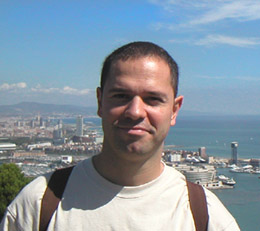
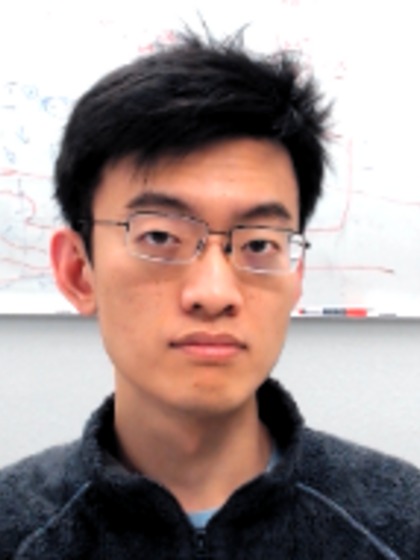
Patrick Baudisch is a Professor at the Hasso Plattner Institute, University of Potsdam , Germany. His research focuses on Human-Computer Interaction (HCI) , Digital Fabrication , and Virtual Reality . He has pioneered innovations in 3D printing , laser cutting , and haptic interfaces , aiming to bridge physical and digital design workflows. His work emphasizes personal fabrication , enabling non-experts to create complex physical objects. Key projects include tools for automated truss design (AirTied, Trusscillator), error-resistant laser cutting (FoolProofJoint), and haptic feedback systems using Electrical Muscle Stimulation (EMS). Collaborations span institutions like Microsoft Research and MIT Media Lab. Recent publications highlight advancements in 3D reconstruction , foamcore prototyping (HingeCore, PopCore), and structural fabrication (TrussFab, Assembler3). His research integrates design automation , material optimization , and user-centric fabrication tools .
Professor Andreas Archenti is a Chair Professor in Industrial Dependability at KTH Royal Institute of Technology , focusing on Precision Engineering, Metrology, and Analytics. He serves as the Director of the Center for Design and Management of Manufacturing Systems (DMMS) and teaches courses like Advanced Manufacturing Equipment and Industrial Analytics. Education: PhD in Machine and Process Technology (2011), MSc in Mechanical Engineering (2007) Research Interests: Precision manufacturing, robotics for biomedical applications, integrated metrology, and machine tool dynamics Collaborations: University of Tokyo on robotics for scientific exploration Recent Publications highlight data-driven surface quality prediction, compliance compensation in robotics, bearing fault diagnosis, and machine tool calibration. His work spans aerospace to micro/nano fabrication, emphasizing accuracy from nanometers to large-scale systems. Key Contributions include methodologies for machine tool error compensation, dynamic interaction modeling, and transfer learning applications in manufacturing. He has authored chapters in Springer publications and holds a patent for machine parameter determination.
Dionysios Aliprantis is a Professor of Electrical and Computer Engineering at Purdue University's Elmore Family School of Electrical and Computer Engineering. His research focuses on electric machines and drives, power systems, integration of renewable energy sources, electric transportation, and smart grids. He holds a Diploma in Electrical and Computer Engineering from the National Technical University of Athens (1999) and a PhD from Purdue University (2003). His work emphasizes advancing dynamic wireless power transfer technologies, microgrid stability, and optimal power flow methodologies. Recent contributions include full-scale testing of pavement-embedded charging systems and predictive control strategies for grid resilience. Dr. Aliprantis' research bridges computational electromagnetics with practical energy systems, addressing challenges in electric vehicle infrastructure and renewable energy integration. He leads projects on real-time charging control, fault detection, and robust grid operations under high uncertainty. Notable projects include pilot implementations of dynamic wireless power transfer lanes and agent-based modeling for smart grid functionality. His collaborations span academia, industry, and government, aiming to enhance grid resilience and support sustainable transportation systems. Dr. Aliprantis' work is supported by grants focusing on energy-transportation system interdependencies and advanced power electronics curricula.
Dr. Simon Fletcher is a Principal Enterprise Fellow in the Department of Engineering at the University of Huddersfield's School of Computing and Engineering, with over 20 years of experience in machine tool accuracy improvement. He specializes in error identification, avoidance, and compensation techniques, contributing to the international reputation of the Engineering Control and Machine Performance group. Fletcher's current research involves collaborative work with industry on detailed geometric and thermal performance assessments for precision manufacturers. This includes developing machine tool and machining process simulation software created through an InnovateUK project. His work extends to traceable on-machine inspection on large machine tools in collaboration with the Nuclear AMRC. As co-investigator for the EPSRC Future Metrology Hub, Fletcher researches new sensor technologies for embedded measurement of machine tool structural distortion and cost-effective MEMS-based solutions with edge computing. He leads an MSc module on dimensional measurement and supervises multiple PhD students in precision engineering topics.
Yinan Wang serves as an Assistant Professor in the Department of Industrial and Systems Engineering at Renssela Polytechnic Institute (RPI), focusing on engineering-driven machine learning applications for advanced manufacturing and robotics systems. Education: Ph.D., Industrial and Systems Engineering, Virginia Tech, 2022 M.S., Electrical Engineering, Columbia University, 2019 B.S., Electrical Engineering and Automation, Xi'an Jiaotong University, 2017 Research Interests: Dr. Wang's work bridges machine learning with industrial engineering through deep learning, uncertainty quantification, and system intelligence. His research targets advanced manufacturing challenges including robotic path planning, 3D anomaly detection, and environmental monitoring systems. Key application areas span aerospace assembly, toxic plume prediction, and quality control in industrial settings. Publication Trends: His 2024-2025 publications reveal three dominant themes: (1) transformer model compression for time-series forecasting (Smartformer), (2) geometric contrast learning for industrial point cloud segmentation (GeoContrast), and (3) multimodal physiological signal analysis for aviation safety prediction. These works consistently integrate physics-based constraints with deep learning architectures. Scientific Awards: Mary G. and Joseph Natrella Scholarship, American Statistical Association (ASA), 2022 Featured Article in ISE Magazine, Institute of Industrial and Systems Engineers (IISE), 2022 SPES + Q&P Best Student Paper Award, American Statistical Association (ASA), 2022 Educational Foundation Scholarship and Analysis Division Scholarship, International Society of Automation (ISA), 2021 Gilbreth Memorial Fellowship, Institute of Industrial and Systems Engineers (IISE), 2021 Data Mining & Decision Analytics (DMDA) Best Theoretical Paper Award, INFORMS, 2021 Finalist of Best Student Paper Award, Quality, Statistics & Reliability (QSR) Section, INFORMS, 2021 Best Poster Award, Manufacturing Science & Engineering Conference (MSEC), ASME, 2021 Advising and Grants: No publicly listed advisees or specific grant awards appear in the source material, though his extensive publication record and research center affiliations suggest active grant-supported projects. Labs and Teams: Dr. Wang contributes to RPI's Institute for Data Exploration and Applications (IDEA) and Center for Materials, Devices, and Integrated Systems (CMDIS), participating in interdisciplinary teams focused on data-driven engineering solutions.
Dr. Sheng Guo is an Associate Professor of Economics at Florida International University's Steven J. Green School of International & Public Affairs, holding a Ph.D. from the University of Chicago with CFA and FRM designations. His research spans household financial decisions, real estate economics, and health policy impacts. His work examines wealth effects on consumer behavior, housing market dynamics, executive compensation structures, and healthcare information systems. Current research investigates home equity utilization patterns and corporate governance during financial distress. Analysis of publications reveals consistent focus on wealth- consumption relationships, housing market dynamics, econometric methodology refinement, and corporate financial decision-making. Research employs advanced econometric techniques including switching regression models and longitudinal data analysis.
Robert Mahony is a Professor in the School of Engineering at the Australian National University (ANU) and an IEEE Fellow. His research focuses on nonlinear systems theory, geometric optimization, and robotics applications, with particular emphasis on control systems, vision-based navigation, and autonomous systems. He holds a PhD in Systems Engineering (1995) and a BSc in Applied Mathematics and Geology (1989), both from ANU. His work spans robot vision, mobile robotics, Lyapunov methods, and nonlinear control, with contributions to inertial navigation, event cameras, and equivariant filtering. He teaches courses such as ENGN4627/ENGN6627 Robotics and leads the Control, Information, Intelligence, Communication, Automation, Decision, and Autonomy Laboratory (CII-CADA Lab) at ANU. Key research themes include observer design for nonlinear systems, sensor fusion, and real-time control algorithms for autonomous vehicles. His publications address challenges in SLAM (Simultaneous Localization and Mapping), multi-object tracking, and robust state estimation under sensor limitations. Awards: IEEE Fellow Labs/Teams: CII-CADA Lab (ANU) Grants/Advising: Course convener for robotics modules; extensive collaborations on fire detection technology and aerospace systems.
Pedro Gil Jiménez is a Professor at the University of Alcalá, affiliated with the Signal and Communication Theory Department within the Electrical Engineering field. He leads the GRAM Group (Multisensorial Recognition and Analysis Group), focusing on advanced computer vision and robotics applications. His doctoral research (2009) centered on optimizing artificial vision techniques for surveillance systems under Dr. Saturnino Maldonado Bascón's supervision. His research emphasizes interdisciplinary approaches, integrating machine learning, robotics, and sensor technologies. Key areas include traffic sign recognition systems, mobile robotics design (e.g., stair-climbing wheelchairs), and medical rehabilitation applications. He has pioneered work in video surveillance, noise reduction algorithms, and object detection systems using SVMs and clustering methods. Over 20 years of publications (2002–2025) reflect his contributions to image processing, autonomous systems, and educational strategies in engineering curricula. His work bridges theoretical advancements with practical applications in security, healthcare, and transportation sectors. No notable awards are listed, though his extensive publication record highlights sustained academic impact.
Colas Schretter is a postdoctoral researcher and paid visiting professor at the Vrije Universiteit Brussel , affiliated with the Department of Electronics and Informatics. His research spans digital holography, biomedical imaging, and advanced signal processing techniques. Current projects include GEAR: Venturing into future health technologies (2021–2025) focusing on photoplethysmography and holographic image quality improvement. Previously led FWOAL784 (2015–2018) on hologram classification and compression. Research Interests : Digital holography for biomedical applications, lossless image compression algorithms, motion compensation in dynamic holography, and health technology innovation. His work bridges optical engineering, computer science, and real-time data processing. Recent Publications highlight advancements in hologram compression, spectrometer calibration, and 4D light field coding, reflecting his interdisciplinary focus. Collaborations include co-chairing conferences like ITF2018 Belgium and contributing to IEEE Access and SPIE proceedings.
Carlos Andújar Gran is an Associate Professor in the Computer Science Department at the Polytechnic University of Catalonia . He is a key member of the ViRVIG Research Center for Visualization, Virtual Reality, and Graphics Interaction, as well as the Eurographics Association . His work bridges technical innovation with cultural and educational applications. Primary affiliation: Universitat Politècnica de Catalunya Research center: ViRVIG - Research Center for Visualization, Virtual Reality and Graphics Interaction Professional network: Eurographics Association His research interests focus on advanced topics in computer graphics and virtual reality : 3D Modeling - Digital reconstruction of complex geometries Animation Systems - Real-time motion capture and pose estimation Cultural Heritage - Digital restoration techniques for medieval monuments Human-Computer Interaction - 3D user interface design Sports Analytics - Player position tracking through computer vision Medical Education - VR nursing training platforms His technical publications demonstrate a consistent focus on solving practical problems through innovative algorithms: Developed DragPoser for motion reconstruction with sparse sensors Created PADELVIC dataset for sports analytics Advanced automated color restitution methods for mural paintings Improved normal estimation in point cloud processing Optimized terrain super-resolution techniques using convolutional networks Designed interactive cultural heritage systems for museum exhibitions
Geir Hovland is a Professor at the Department of Engineering Sciences, University of Agder. He holds an MSc in Engineering Cybernetics from NTNU (1993) and a PhD in Robotics from the Australian National University (1997). His research focuses on robotics, control systems, industrial IT, and modeling/identification of dynamic systems. He serves as Chief Editor of the MIC Journal . Research Interests: Robotics and automation, including flexible manipulators and sensor networks Control systems for offshore and industrial applications Parallel kinematic machines and mechatronic systems Blockchain stability analysis (nonlinear control) Publications: Over 100 peer-reviewed articles in journals like Robotics , IEEE Transactions , and MIC Journal , with a focus on advanced control strategies, sensor optimization, and robotics in harsh environments. Labs/Teams: Leads the Norwegian Motion-Laboratory and collaborates with industry partners on projects like autonomous mooring systems and offshore crane modeling.
Kailai Li is a tenure-track Assistant Professor at the University of Groningen's Bernoulli Institute, where he leads the Agile Sensing and Intelligence Group (ASIG). His research develops novel methods for robotic perception, including continuous-time state estimation, sensor fusion, and visual navigation. Recent publications focus on Gaussian process representations for motion estimation and multi-robot collaboration using vision-language models. Dr. Li's lab maintains open-source projects like LiLi-OM (LiDAR-inertial odometry) and SFUISE (UWB-inertial fusion). Collaborations include Linköping University and industry partners. Current projects investigate trustworthy perception for autonomous systems under uncertainty and efficient representations for high-dimensional state estimation.
Yunus Can Gültekin is a Researcher at the Eindhoven University of Technology (TU/e), affiliated with the Signal Processing Systems department within the Electrical Engineering school. He holds a B.Sc. and M.Sc. from Middle East Technical University (Turkey) and a Ph.D. from TU/e (2020). His research focuses on future wireless/optical communication systems, quantum key distribution, and signal processing solutions using information theory tools. Key contributions include developing coded modulation techniques and mitigating nonlinear interference in optical systems. Education: B.Sc., Middle East Technical University, Ankara, Turkey (2013) M.Sc., Middle East Technical University, Ankara, Turkey (2015) Ph.D., Eindhoven University of Technology, Netherlands (2020) Research Interests: Quantum Key Distribution (QKD) systems Optical and free-space communication systems Probabilistic shaping and nonlinear mitigation Coded modulation design for high-speed transmission Notable Achievements: Best Paper Award at WIC/IEEE Symposium (2018) Optica Student Paper Award (2022) Quantum Delta NL Exchange Visit Grant (2023) International Excellence Fellowship (2024) Teaching: Current courses: Communication Theory, Digital Wireless Communication Exploration Lab Past courses: Analog Electronics Lab, Digital Design Lab Key Projects: LaiQa: Quantum Satellite Communications (2024–2026) BIT-FREE: Free-Space Optics (2024–2028) COCOLI: Optical Link Complexity (2022–2028) Labs/Teams: Active in the Signal Processing Systems group, collaborating on quantum and optical communication initiatives at TU/e.
Dr. Mohsen Soori is an Assistant Professor in the Department of Mechanical Engineering at the Faculty of Engineering, Eastern Mediterranean University. His research focuses on integrating artificial intelligence (AI), machine learning, and deep learning into advanced manufacturing processes, particularly in Industry 4.0 applications such as smart quality control, human-robot collaboration, and additive manufacturing optimization. He also specializes in CNC machining optimization, virtual machining systems, and error compensation in precision manufacturing. Dr. Soori holds a Ph.D. in Mechanical Engineering from Eastern Mediterranean University (2022), an M.Sc. from Amirkabir University of Technology (2012), and a B.Sc. from Shahid Rajaee Teacher Training University (2007). His academic work bridges theoretical advancements in numerical methods (e.g., variational iteration, finite element analysis) with practical industrial challenges in machining, robotics, and sustainability. His recent publications (2023–2025) emphasize AI-driven solutions for Industry 4.0, including blockchain-enabled supply chains, smart manufacturing systems, and virtual machining analytics. He has also contributed to studies on tool wear prediction, thermal management in titanium alloy machining, and sustainable CNC operations. Administrative roles and grants are not detailed in the provided text, but his involvement in academic leadership and collaborative research projects is implied through his active publication record and institutional affiliation.
Professor Tat-Jun Chin holds the SmartSat CRC Professorial Chair at the University of Adelaide's School of Computer and Mathematical Sciences within the Faculty of Sciences, Engineering and Technology. His research focuses on advanced robotics, computer vision, quantum computing, and space technology applications. He leads the Sentient Satellites Lab, pioneering work in event-based vision systems, satellite pose estimation, and neuromorphic computing. Notable contributions include robust algorithms for spacecraft navigation, quantum-inspired optimization methods, and open datasets for space robotics. His recent publications emphasize interdisciplinary applications, such as event-camera-based star tracking, geometric crater analysis for lunar missions, and quantum computing for robust fitting. He is actively involved in the Asian Conference on Computer Vision (ACCV) and collaborates with industry partners like SmartSat CRC. Awards and grants are not explicitly listed here, but his professorial chair indicates significant research funding. He supervises a dynamic research group advancing autonomous systems and space exploration technologies.