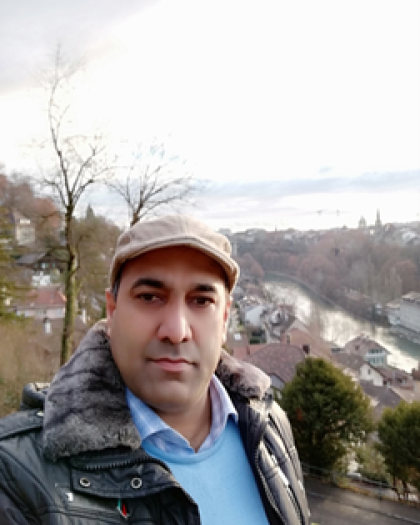
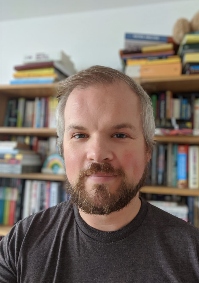
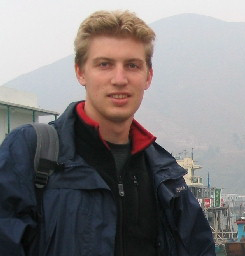
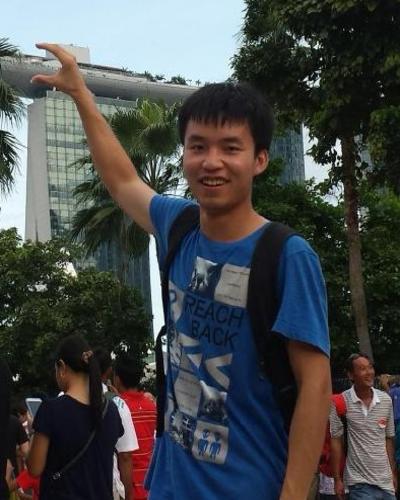
Allah Bux is a Research Fellow at the Department of Linguistic, Literary and Aesthetic Studies, University of Bergen. His work focuses on advanced computer vision techniques, medical image analysis, and deep learning applications. He holds expertise in 3D reconstruction, anomaly detection, and surveillance systems. His research interests include developing novel neural network architectures for tasks such as skin cancer diagnosis, head pose estimation, and human action recognition. He also explores spatiotemporal analysis and attention mechanisms in CNN models. Recent trends in his publications emphasize integration of vision transformers, dual attention networks, and transfer learning for solving real-world problems in healthcare, security, and education. No scientific awards or grants are explicitly listed in the provided text. He has no documented advisees. His research involves collaborations in medical imaging, autonomous surveillance systems, and educational data analysis, with a focus on practical applications of AI.
Dr. Ian Morris is a Reader in Mathematics at Queen Mary University of London and Deputy Director of Postgraduate Research Studies. Previously, he held positions at the University of Surrey (2012–2020) and postdoctoral roles at institutions including the University of Rome Tor Vergata and the University of Warwick. His research focuses on ergodic theory, with applications to fractal geometry, matrix analysis, and dynamical systems. Education: PhD in Mathematics, University of Manchester (2006), supervised by Dr. Charles Walkden. Bachelor’s degree in Mathematics, University of Warwick. Research Interests: Morris specializes in ergodic theory and its applications to fractal geometry, joint spectral characteristics of matrices, and dynamical systems. His work includes studies on self-affine fractals, Lyapunov exponents, and thermodynamic formalism for linear cocycles. He has explored topics such as marginal instability in switched systems and the interplay between self-affine measures and fractal dimensions. Grants: Leverhulme Trust Research Project Grant (2024–2028): "An ergodic optimisation approach to stability of linear switched systems" (£189,097). Leverhulme Trust Grant (2017–2022): "Lower bounds for Lyapunov exponents" (£267,776). Advising and Collaborations: Morris supervised PhD student Jonah Varney (2018–2022) and postdoctoral researchers Natalia Jurga and Argyrios Christodoulou. His collaborations include work with Balázs Bárány, Antti Käenmäki, and Çağrı Sert on topics like self-affine measures and matrix equilibrium states. Labs/Teams: Morris is affiliated with the Centre for Complex Systems at Queen Mary University of London, focusing on interdisciplinary research in dynamical systems and fractal geometry.
Jin Feng is a Professor in the Department of Mathematics at the University of Kansas. His research focuses on rigorous derivations of hydrodynamic equations through Hamilton-Jacobi theory and stochastic analysis, with applications to continuum mechanics and singular stochastic PDEs. He holds a joint appointment in the College of Liberal Arts and Sciences. Education details are not explicitly listed, but his work bridges mathematical physics and probability. Research interests include large deviation principles for Markov processes, metric space Hamilton-Jacobi equations, and renormalized solution frameworks for stochastic conservation laws. Key contributions include a 2006 monograph on large deviations for stochastic processes with Kurtz, and foundational work on viscosity solutions in non-standard spaces. Recent efforts emphasize hydrodynamic limit derivations using geodesic metric space methods outlined in Oberwolfach Reports (2020). Publications span Communications in Mathematical Physics, Archive for Rational Mechanics and Analysis, and Annals of Probability. His methods integrate optimal transport theory, weak KAM theory, and mass transport principles to address complex fluid dynamics problems.
Professor Stephen Simpson AC FAA FRS is a leading academic in nutritional biology and entomology at the University of Sydney. As a Professor in the School of Life and Environmental Sciences, he holds adjunct roles including Executive Director of Obesity Australia and former Academic Director of the Charles Perkins Centre. His research focuses on the Geometric Framework of nutrition, swarming behaviors in locusts, and dietary impacts on human and animal health. Simpson earned his undergraduate degree from the University of Queensland and PhD from the University of London before a 22-year tenure at the University of Oxford. He has been honored with prestigious awards including Fellowship of the Royal Society and Companion of the Order of Australia. His work bridges ecological, physiological, and societal dimensions of nutrition, with over 300 publications and collaborations across disciplines. Research interests include integrative nutrition modeling, metabolic biology, and public health interventions. Current projects explore precision nutrition, macronutrient balance in aging, and dietary influences on chronic diseases. Simpson leads a multidisciplinary team at the Sydney Centre for Healthy Societies and Sydney Policy Lab, addressing obesity and sustainable diets. His work has been translated into bestselling books like The Nature of Nutrition and Eat Like the Animals , bridging scientific research with public education. Notable achievements include co-developing the protein leverage hypothesis, elucidating locust swarm neurochemistry, and serving as a scientific advisor for documentaries like Great Southern Land . Awards include the Eureka Prize, NSW Scientist of the Year, and Honorary Fellowship from the Royal Entomological Society. Grants and collaborations span national and international institutions, focusing on aging, metabolic health, and food systems. Current research students investigate topics like macronutrient signaling, dietary effects on neurological conditions, and heart health optimization. Simpson’s lab integrates animal models (mice, birds, fish) with human studies, employing techniques from neurophysiology to computational modeling. His work emphasizes translational impact, aiming to inform policy and clinical practice through rigorous, cross-scale biological inquiry.
Prof. Dr.-Ing. Ingo Neumann is a Professor of Engineering Geodesy and Geodetic Analysis Methods at Leibniz University Hannover's Faculty of Civil Engineering and Geodetic Science. He serves as Executive Director of the Geodetic Institute and leads research in geodetic sensor systems, structural monitoring, and multi-sensor fusion. His work focuses on advancing terrestrial laser scanning (TLS), UAV-based calibration, and machine learning applications in civil infrastructure analysis. Research interests include deformation monitoring, sensor calibration, and geospatial data processing. Notable projects involve fusion of SAR/InSAR data with TLS for ground movement analysis, and development of automated damage detection algorithms for port and marine structures. He teaches courses on sensor technology, geodetic measurement methods, and industrial surveying. Publications span 2006–2025, with recent emphasis on robust outlier detection, Kalman filter applications, and B-spline modeling for structural analysis. His work integrates geodesy with computer vision and machine learning to enhance infrastructure monitoring precision.
Gennady Roshchupkin is an Assistant Professor at Erasmus MC, jointly affiliated with the Department of Radiology & Nuclear Medicine and the Department of Epidemiology. His research bridges medical imaging, genomics, and artificial intelligence to investigate complex diseases and developmental conditions. His primary research interests include: Genome-wide association studies (GWAS) Medical imaging analysis using AI and neural networks Craniofacial synostosis and pediatric craniofacial development Alzheimer's disease and neurodegenerative disorders Gut microbiome and metabolic health across the lifespan Population-based epidemiological studies The recent publications indicate a strong trend toward integrating AI with genetic and imaging data to uncover biological and clinical insights. His work frequently involves large-scale data analysis, latent-space modeling, and interdisciplinary collaboration across medicine, computer science, and public health. Although no specific awards are listed in the provided text, his publications in high-impact journals such as The Lancet Regional Health - Europe and Medical Image Analysis reflect significant scholarly contributions. He has also supervised at least two research trainees or doctoral students. Dr. Roshchupkin is actively engaged in clinical and population research, particularly in observational cohort studies and AI-driven medical image analysis. His work is supported by collaborations across departments and institutions, focusing on improving clinical outcomes through data science and precision medicine.
Dr. Sten Claessens is a Senior Lecturer at Curtin University's School of Earth and Planetary Sciences, within the Faculty of Science and Engineering. He holds a BSc and MSc in Geodesy from Delft University of Technology (Netherlands) and a PhD from Curtin University. His research focuses on gravity field modelling, geoid determination, and coordinate reference frames. He teaches courses on measurement adjustment analysis, control surveying, and applied geodetic surveying. Dr. Claessens has contributed extensively to global and regional geoid models, including the AUSGeoid2020 and Indian gravimetric geoid solutions. His work integrates satellite gravity data (GRACE, GOCE) and terrestrial observations to improve vertical datums and geodetic standards. He has authored/co-authored over 60 papers, with recent emphasis on hydrological loading studies and ultra-high-resolution gravity models. His ORCID profile (https://orcid.org/0000-0003-4935-6916) and Google Scholar page document his international collaborations and computational geodetic methodologies. Education: BSc/MSc (Delft University), PhD (Curtin University). Professional roles include membership in the International Association of Geodesy and editorial contributions to Journal of Geodesy . He leads Curtin's geoid computation research, collaborating with agencies like Australia's National Geospatial Intelligence Agency on vertical datum modernization. Research highlights include the Colorado geoid experiment (2020), development of layer-based gravity field models (2016), and Mars gravity validation studies (2012). Teaching responsibilities span advanced geodetic surveying units with practical field components.
David Rule is an Associate Professor (Docent) in the Department of Mathematics at Linköping University, affiliated with the Faculty of Science and Engineering. His research lies at the intersection of harmonic analysis and partial differential equations, with a focus on pseudodifferential, Fourier integral, and oscillatory integral operators. He also contributes significantly to mathematics education, both through teaching and pedagogical development at Didacticum. Education: PhD in Mathematics, University of Chicago, 2007 MSc in Mathematics, University of Chicago, 2003 MMath in Mathematical Physics, University of Sussex, 2001 His research interests center on the analytical properties of operators arising in PDEs, particularly their boundedness, regularity, and solvability in various function spaces. He investigates multilinear and degenerate forms of these operators, often under non-standard conditions such as Carleson measure control or non-symmetry. In mathematics education, he emphasizes reasoning, proof, and communication, challenging the notion that mathematics is inherently difficult by fostering intuitive development alongside logical rigor. The recent publications reflect a sustained focus on multilinear harmonic analysis, especially the boundedness of oscillatory and Fourier integral operators in both classical and weighted settings. His work spans pure analysis, with deep connections to operator theory and function spaces, and applied contexts such as fluid mechanics. The trend shows increasing collaboration and generalization beyond classical Calderón-Zygmund theory. Scientific Awards: No specific awards mentioned in the text. David Rule advises no listed students, but he teaches a range of courses from introductory calculus to advanced PDEs and graduate-level topics. He has received research support from institutions including the Simons Foundation. His work with Didacticum and academic unions like SULF and Saco-S highlights his commitment to improving teaching practices and defending academic autonomy. He is a member of the Division of Analysis and Mathematics Education (ANDI), where he contributes to interdisciplinary research in analysis and pedagogy. His union roles include service on the national and local SULF boards and Linköping's Saco-S council, emphasizing collegiality and democratic values in academia.
Pan He is an Assistant Professor in the Department of Computer Science and Software Engineering at Auburn University, part of the Samuel Ginn College of Engineering. His research focuses on developing deep learning techniques for real-time AI applications in infrastructure systems, including computer vision, 3D point cloud processing, and intelligent transportation. Education: Ph.D. in Computer Science, University of Florida B.E. in Software Engineering, Sichuan University (2015) His research interests include deep learning, computer vision, LiDAR, 3D perception, and adversarial machine learning. He develops AI techniques to empower downstream applications such as traffic signal control, anomaly detection, and infrastructure monitoring. Much of his work involves unsupervised and self-supervised learning on spatiotemporal data. His recent publications span top venues like TPAMI, ICLR, NeurIPS, CVPR, and IEEE T-ITS, focusing on topics such as explainable video anomaly detection, backdoor attacks in 3D detection, and efficient LiDAR annotation. These works demonstrate a strong trend toward robust, real-time, and interpretable AI systems for real-world infrastructure. Scientific Awards: 2025 ORAU Ralph E. Powe Junior Faculty Enhancement Award CVPR'22 and ICCV'21 Doctoral Consortium Awards Multiple Gartner Group Graduate Fellowships (2020–2022) Dean’s Award for Innovation and Creativity (SIAT, 2016) Best Bachelor Thesis Award (Sichuan University, 2015) Pan He advises students who have earned recognitions such as the CRA Outstanding Undergraduate Researcher Honorable Mention and the Wolotsz Graduate Fellowship. He has secured research grants and is actively recruiting PhD, Master’s, and undergraduate students. He has served as an Associate Editor for IEEE TNNLS and has taught courses on deep learning and computer vision. He leads a research group focused on foundational AI for pervasive computing and infrastructure intelligence.
Fabio Semperlotti is a Professor of Mechanical Engineering at Purdue University's School of Mechanical Engineering. His research focuses on advanced materials, structural health monitoring, wave propagation, and vibration control. He holds M.S. degrees in Aerospace and Astronautic Engineering from the University of Rome 'La Sapienza' (2000, 2002) and a Ph.D. from The Pennsylvania State University (2009). His work spans topics such as acoustic metamaterials, topological elastic systems, fractional-order elasticity, and machine learning applications in engineering. Recent contributions include studies on non-Abelian topological behavior in elastic waveguides and reinforcement learning frameworks for microelectronic component design. Semperlotti’s research also explores vibration attenuation via metastructures and deep learning-based inverse scattering solutions. Selected recent projects involve developing physics-informed neural networks for acoustic scattering, multimesh finite element methods for nonlocal elasticity, and geometric phase analysis in elastic systems. His work frequently bridges fundamental theory with practical applications in smart materials, structural optimization, and energy harvesting.
Alexandre Eremenko is a Professor in the Department of Mathematics at Purdue University, USA. His research focuses on complex analysis, value distribution theory, differential equations, and their geometric applications. He has made significant contributions to Nevanlinna theory, meromorphic functions, and complex dynamics. Eremenko is known for his work on the geometric theory of meromorphic functions and applications to spectral theory, including studies of Sturm-Liouville operators and conic singularities in differential geometry. Education details are not explicitly listed in the source materials, but his academic trajectory is evident through his prolific research output and collaborations with prominent mathematicians such as Mikhail Lyubich and Andrei Gabrielov. His research interests span topics like conformal metrics, holomorphic dynamics, and spectral loci of differential operators. His articles explore advanced mathematical concepts, including the topology of conformal metrics, interactions between function theory and dynamics, and geometric aspects of meromorphic functions. He has collaborated on foundational papers in complex analysis and contributed to the understanding of historical figures like Lars Ahlfers and Pierre Fatou. Despite his extensive publication record and research impact, no awards or grants are explicitly mentioned in the provided texts. He maintains an active presence in academic discourse, co-authoring works on topics ranging from PT-symmetric quartic potentials to spherical polygons and combinatorial geometry.
Dr. Hans Walther is a Professor of Mathematics at Purdue University's Department of Mathematics within the College of Science. His research focuses on Algebra, Commutative Algebra, and Algebraic Geometry, with a particular emphasis on D-modules, cohomology, and algorithmic methods in algebraic geometry. His work integrates theoretical advancements with computational techniques, addressing topics such as hypergeometric families, Milnor fiber cohomology, and Gröbner bases. Notable contributions include studies on Segre products, algorithmic stratifications, and homological methods in algebraic structures. Walther has authored or co-authored over 16 publications in prestigious journals such as the Journal of the American Mathematical Society and Compositio Mathematica, reflecting his expertise in advanced algebraic and geometric theories. He maintains an active research agenda without currently listed advising roles or grants, though his work influences computational algebraic geometry and related fields.
Marthe Vanhulst is a researcher affiliated with the Department of Mechanical Engineering at KU Leuven, specializing in incremental sheet metal forming and its applications in biomedical engineering. She works in the MaPS division (Manufacturing and Process Systems) and contributes to collaborative research initiatives like Flanders Make, the strategic research center for the manufacturing industry in Flanders. Research Interests Development of advanced manufacturing techniques for complex geometries Application of machine learning in optimizing sheet metal forming processes Biomedical applications of incremental forming, particularly cranial implants Knowledge management systems for industrial engineering workflows Integration of Digital Image Correlation for strain and thickness analysis Publication Trends Her research focuses on improving the geometric accuracy and thickness distribution in multi-stage incremental forming. Key themes include toolpath optimization, intermediate shape design, and digital compensation methods. Recent work integrates collaborative platforms for knowledge sharing in manufacturing, reflecting interdisciplinary efforts between mechanical engineering and computer science. Laboratory Affiliation Marthe is part of the Manufacturing and Process Systems (MaPS) research group at KU Leuven, which collaborates closely with Flanders Make. Her projects emphasize industrial partnerships and translating theoretical advancements into practical solutions for precision manufacturing.
Vanessa Sanchez is an Assistant Professor in the Department of Mechanical Engineering at Rice University. She transitioned from fashion design to engineering, focusing on smart and assistive clothing through materials science, manufacturing, and robotics. Her research emphasizes soft robotic textiles and shape memory polymers, with applications in wearable technology and medical devices. She leads the Sanchez Lab, an interdisciplinary group working at molecular and device scales. Education: PhD in Materials Science and Mechanical Engineering, Harvard University (2022) MS in Materials Science and Mechanical Engineering, Harvard University (2020) BS in Fiber Science, Cornell University (2016) Research Interests: Stimuli-responsive polymers and smart textiles Material-in-the-loop manufacturing for advanced systems Robotics via automated experimental processes Soft robotic devices and wearable energy harvesting Her work bridges fashion and engineering to create adaptive, functional fabrics with applications in healthcare and assistive technologies. Research Trends in Articles: Recent publications explore pneumatic soft robotics, knitted multistable materials, and medical textile devices like expanding foam casts. Themes include wearable energy systems, data-driven robotics analysis, and passive actuation mechanisms. Awards and Recognition: NSF MPS-Ascend Postdoctoral Fellow (Stanford University) Forbes 30 Under 30 (2022) ACS CAS Future Leader (2022) Lab and Collaborations: The Sanchez Lab at Rice University focuses on integrating materials science and robotics to develop responsive textiles. Projects include smart orthopedic casts, logic-enabled fabrics, and energy-harvesting systems for assistive robotics.
Stamatia Giannarou is an Associate Professor in Surgical Cancer Technology and Imaging at the Department of Surgery & Cancer, Faculty of Medicine, Imperial College London. She is affiliated with the Hamlyn Centre for Robotic Surgery, CRUK Convergence Science Centre, and other institutes. Her research focuses on artificial intelligence, image processing, computer vision, and surgical robotics. Giannarou holds a Royal Society University Research Fellowship and has contributed to advancements in intraoperative imaging, surgical instrument tracking, and machine learning applications in healthcare. Education: MEng in Electrical and Computer Engineering (Democritus University of Thrace, Greece, 2003) MSc in Communications and Signal Processing (Imperial College London, 2004) PhD in Object Recognition (Imperial College London, 2008) Research Interests: Her work bridges AI and surgical technology, including visual recognition in surgery, robotic navigation, and real-time tissue characterization. Key themes include: Autonomous robotic ultrasound systems for neurosurgery Deep learning for tumor segmentation and image analysis LiDAR and hyperspectral imaging for intraoperative guidance Markerless surgical tool tracking and pose estimation Awards: Royal Society University Research Fellow Grants & Labs: Leads projects on AI-driven surgical data science and collaborates on initiatives like the SurgRIPE challenge for robotic instrument pose estimation. Active in the Hamlyn Centre’s multidisciplinary research teams. Future Work: Expanding real-time surgical imaging modalities and ethical AI integration in surgical training systems.