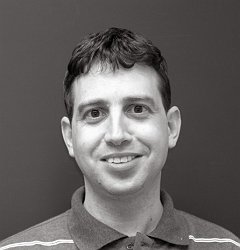
Mark Walsh is an Associate Professor in Mathematics at Maynooth University, affiliated with the Faculty of Science & Engineering and the Department of Mathematics and Statistics. His academic journey includes roles as Associate Professor at Wichita State University, Visiting Assistant Professor at Oregon State University, and Postdoctoral Researcher at WWU Muenster. He earned his PhD from the University of Oregon under Boris Botvinnik. His research explores the interplay between curvature (scalar and Ricci) and topology, particularly how geometric constraints shape the space of Riemannian metrics on manifolds. Key themes include deformation invariance, cobordism theory, and homotopy classifications. His work addresses fundamental questions like: "What topological shapes admit specific curvatures?" and "How do metrics evolve under curvature constraints?" Awards recognizing his contributions include: Simons Foundation Collaboration Award (2013) University of Oregon D. K. Harrison Award for Best PhD Thesis (2009) Johnson Fellowship Award (2008) He mentors graduate students in geometry/topology and teaches courses from introductory calculus to advanced differential geometry. Outreach includes directing the North Kildare Maths Problem Solving Club and public lectures on topics like soap-film geometry.
Shachar Itzhaky is an Associate Professor in the Department of Computer Science at Technion - Israel Institute of Technology, Haifa. His research spans multiple areas of programming languages, formal methods, and software engineering, with a focus on making program development and verification more accessible and efficient. He has served on program committees for numerous prestigious conferences including PLDI, POPL, SPLASH, and ICFP. Dr. Itzhaky's research interests center around program synthesis, automated reasoning, and formal verification. His work in program synthesis explores techniques for automatically generating programs from high-level specifications, with applications in end-user programming and software development. In automated reasoning, he has made significant contributions to e-graph based reasoning, invariant inference, and property-directed verification. His research in formal methods focuses on practical applications for program verification, particularly for data structures and security properties. An analysis of his recent publications reveals a strong focus on leveraging advanced formal techniques for practical program understanding and generation. His work consistently bridges theoretical foundations with practical applications, particularly in program synthesis, verification, and end-user programming tools. The trend shows increasing integration of machine learning techniques with traditional formal methods, as well as expanding applications to security and privacy domains. ACM SIGPLAN John C. Reynolds Doctoral Dissertation Award Dr. Itzhaky has been actively involved in the programming languages research community, serving on numerous program committees and contributing to the advancement of formal methods and program synthesis. His work has practical implications for software development tools, security analysis, and end-user programming environments. While specific grant information isn't detailed in the provided text, his extensive publication record in top-tier venues suggests successful funding for his research endeavors. His work on projects like Object Spreadsheets and Lifty demonstrates a commitment to creating practical tools that address real-world programming challenges. Dr. Itzhaky's research is conducted within the vibrant programming languages and formal methods group at Technion's Computer Science department. His work intersects with multiple research threads including program synthesis, verification, and security, suggesting collaboration across these areas within the department. His tools like EPR-based Verification, PDR∀, and VeriCon represent significant technical contributions that likely form the basis of ongoing research projects with students and collaborators.
Mehdi Neshat is a Visiting Scholar at the Data Science Institute within the Faculty of Engineering and Information Technology at the University of Technology Sydney (UTS). He holds a PhD in Engineering from the University of Adelaide (2016-2020) and has extensive experience as a research data scientist specializing in computational optimization methods applied to complex engineering and healthcare problems. His educational background includes: PhD in Engineering, University of Adelaide (2016-2020) Neshat's research focuses on developing and applying advanced computational methods to solve real-world challenges. He specializes in evolutionary algorithms, swarm intelligence, and machine learning techniques for optimizing renewable energy systems, particularly wave and wind energy converters. His work extends to healthcare applications including genomic analysis and medical diagnostics, as well as structural engineering optimization and smart building energy management. His interdisciplinary approach bridges theoretical algorithm development with practical implementation across multiple domains, demonstrating exceptional versatility in computational problem-solving. Analysis of his recent publications reveals a strong trend toward sophisticated ensemble methods and hybrid optimization approaches that combine multiple algorithms to overcome limitations of single-method approaches. His research shows increasing sophistication in handling multi-objective optimization problems, particularly in renewable energy systems where trade-offs between power output, system stability, and cost must be balanced. The geographical focus of his energy research centers on Australian coastal regions, with practical applications for wave and wind farm deployment. Neshat has received significant recognition for his research contributions: Back-to-back Best Paper Prizes at the GECCO conference (2019 and 2020), a CORE A-ranked international optimization and machine learning conference His collaborative research spans multiple institutions and disciplines. Previously, he served as a Postdoctoral Research Associate with the Genomic analysis team at the Australian Centre for Precision Health, Cancer Research Institute, University of South Australia, and as a Senior Research Fellow at the Center for Artificial Intelligence Research and Optimization, Torrens University Australia. His work demonstrates consistent engagement with multidisciplinary teams across engineering, computer science, and healthcare domains, with a strong emphasis on practical implementation of theoretical methods. At UTS, Neshat contributes to the Data Science Institute's research agenda, focusing on applying advanced computational methods to complex real-world problems where traditional analytical approaches fall short. His current work continues to expand the boundaries of optimization techniques for renewable energy systems while exploring new applications in healthcare analytics and structural engineering.
Maurizio Patrignani is a Full Professor of Computer Science at the Department of Civil, Computer and Aeronautical Engineering at Roma Tre University, where he has served since May 2017. Since November 2022, he has also held the position of Chair of the Computer Science and Engineering Faculty Board. His academic journey began with a "Laurea" degree in Electronic Engineering from the University of Rome "La Sapienza" in 1996, followed by a Ph.D. in Computer Science from the same institution in 2001. Patrignani's research spans multiple areas within computer science, with a strong focus on graph-related disciplines. His primary research interests include Computer Networks, Graph Drawing, Information Visualization, and Computational Geometry. He has developed expertise in Dynamic Graph Drawing, Orthogonal Drawings, Planarity and Planar Graphs, Upward Planarity, and Data Center Networking. His work often bridges theoretical computer science with practical applications, particularly in network visualization and analysis. The analysis of Patrignani's recent publications reveals a consistent focus on graph theory and its applications. His work demonstrates expertise in planar graph embeddings, orthogonal drawings, and upward planarity. Recent publications show increasing attention to practical applications of graph theory in network visualization, data center networking, and route planning. His research combines theoretical algorithm design with experimental validation and user studies, reflecting a comprehensive approach to solving complex problems in graph drawing and network analysis. Patrignani has been actively involved in numerous research projects throughout his career, including EU-funded initiatives like DELIS (Dynamically Evolving, Large Scale Information Systems) and GraDR (Graph Drawings and Representations), as well as national projects funded by MIUR. His collaborative work spans multiple institutions and researchers across Europe and beyond, demonstrating his significant role in the international computer science community. He has served on numerous program committees for major conferences in graph drawing and visualization, including the International Symposium on Graph Drawing (GD) where he was co-chair for GD 2008 and GD 2012. His organizational contributions extend to the Summer Workshop on Graph Drawing (SWGD) where he has been a member of the organizing committee since 2021. Patrignani's teaching portfolio at Roma Tre University includes courses on Algorithms and Data Structures, Computer Networks, Information Visualization, and Big Data Algorithms.