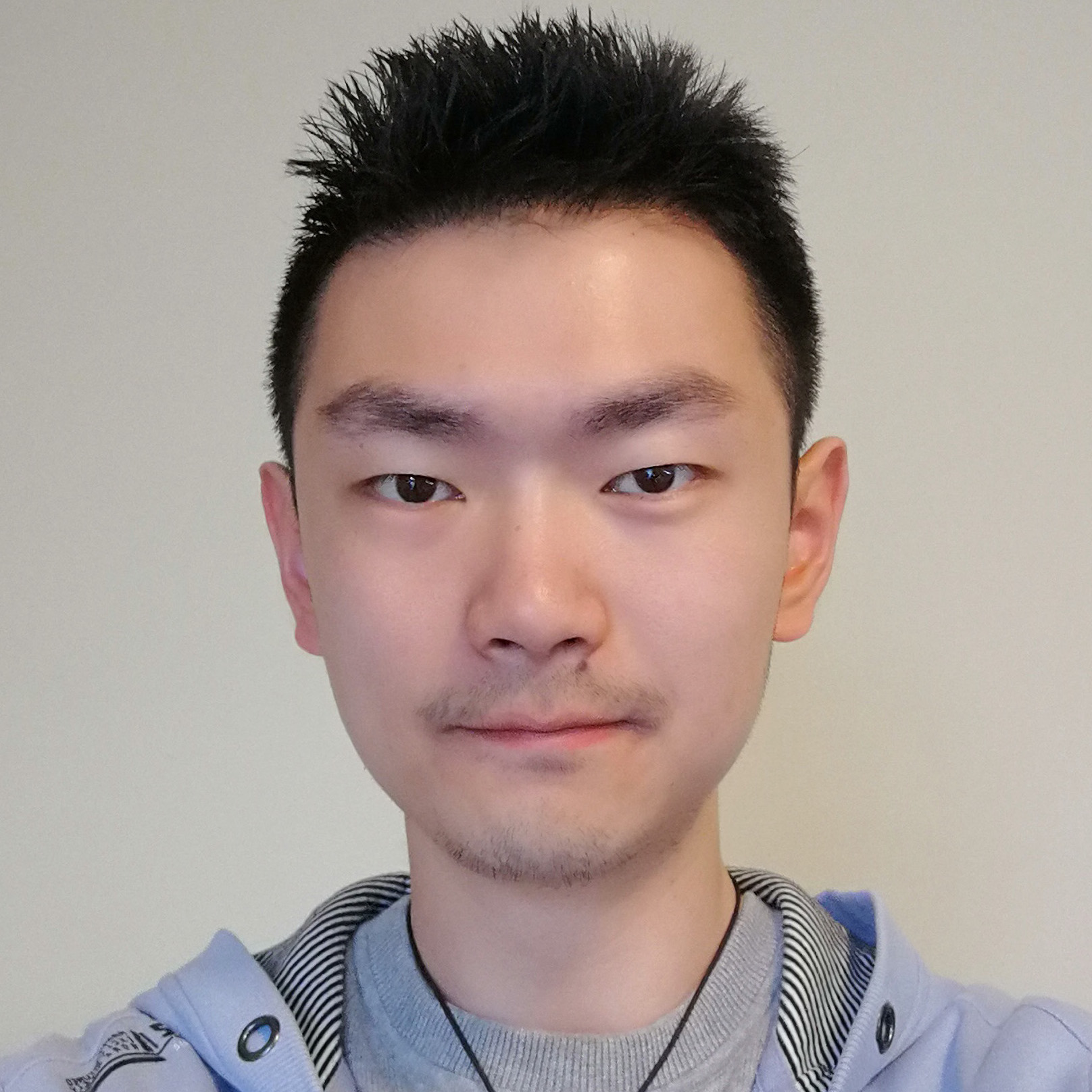
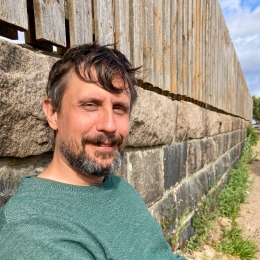
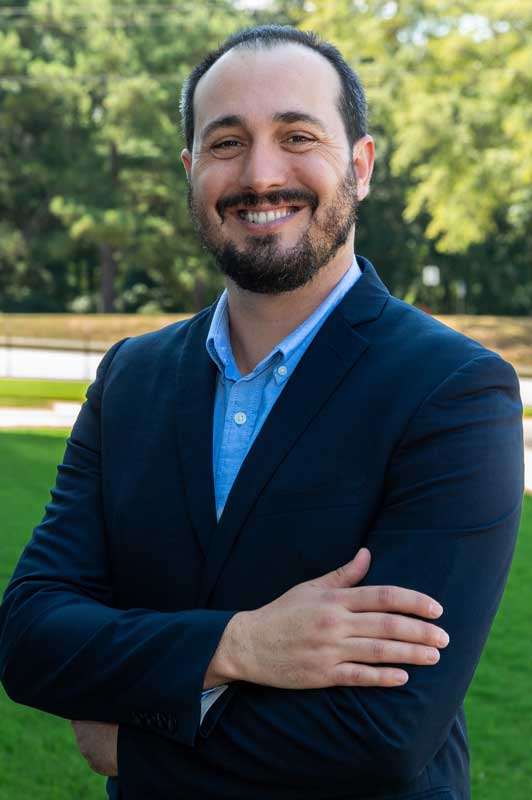
Michele Cooke is an Associate Professor at the University of Massachusetts Amherst , affiliated with the School of Earth and Sustainability. Her research focuses on mechanical modeling of fault systems, particularly in Southern California, and she leads initiatives for disability equity in geosciences. Contact: cooke@umass.edu | (413) 577-3142 | Morrill 3 230, 611 N Pleasant St, Amherst, MA Research Interests: Active faulting and work minimization in fault evolution Integration of analog experiments (sandbox/claybox) with numerical models Disability equity in geosciences (e.g., The Mind Hears mentoring forum) Subduction zone hazards and energy budgets Earthquake early warning accessibility for deaf communities Education: Ph.D., Stanford University
Professor Anna Giacomini is a leading academic in Rock Mechanics and Civil Engineering at the University of Newcastle. She holds a PhD from the University of Parma, Italy, and has been at the University of Newcastle since 2005. Her roles include Director of the Priority Research Centre for Geotechnical Science and Engineering and Deputy President of the Academic Senate (Research). She specializes in rockfall hazard analysis, mine geotechnics, and numerical modeling of geomechanical systems. Her research focuses on improving safety in mining and civil environments, with over $7.5M in funding and 140+ publications. Key areas include rockfall trajectory analysis, energy absorption in safety barriers, and drapery systems. She has led 20 major projects through ACARP and pioneered low-cost photogrammetric monitoring systems for rock slopes. Professor Giacomini is also a co-founder of HunterWiSE, promoting women in STEM. She has received prestigious awards such as the 2022 NSW Premier’s Engineering Prize and the 2019 John Booker Medal. Her administrative roles include membership in the ARC College of Experts and leadership in gender equity initiatives. Her technical contributions span experimental and numerical rock mechanics, including advancements in discrete element modeling (DEM) and stochastic approaches for discontinuity shear strength prediction. She collaborates internationally with institutions like the Colorado School of Mines and the University of Bologna.
Dr. Mahdi Taiebat is a Professor in the Department of Civil Engineering at the University of British Columbia (UBC), affiliated with the Faculty of Applied Science. He specializes in theoretical and computational geomechanics, constitutive modeling, granular materials mechanics, and geotechnical earthquake engineering. His research addresses challenges at the intersection of engineering, physics, and applied mathematics. He leads the Theoretical & Applied Geomechanics (TAG) research group and has co-authored over 150 scientific papers. Educations: B.Sc. and M.Sc. in Civil Engineering, Sharif University of Technology, Iran (2001, 2003) Ph.D. in Civil Engineering, University of California, Davis, USA (2008) Research Interests: Theoretical and computational geomechanics Constitutive modeling of engineering materials Physics and mechanics of granular materials Geotechnical earthquake engineering Static and dynamic soil-structure interaction Awards & Honors: Norman Medal (ASCE, 2012) Discovery Accelerator Supplement (NSERC, 2015) Professor Appreciation Award (UBC Civil Engineering Undergraduate Student Club, 2011) Postdoctoral Research Fellowship, Norwegian Geotechnical Institute (2008-2009) His work includes advising graduate students on geomechanics and geotechnical earthquake engineering, with emphasis on programming skills (C++, Fortran, Python) and competency in solid/fluid mechanics. The TAG group focuses on advanced numerical methods and experimental validation, collaborating internationally on projects like the LEAP initiative. His research spans constitutive model development (e.g., SANISAND/SANICLAY), seismic site response analysis, and liquefaction mitigation strategies.
Marilena Cardu is an Associate Professor in the Department of Environmental, Land, and Infrastructure Engineering (DIATI) at the Polytechnic University of Turin. She is actively involved in teaching, research, and supervision within the fields of excavation engineering, rock blasting, tunneling, and sustainable mining. She serves as a course instructor for key programs including Civil and Environmental Engineering and Georesources and Geoenergy Engineering. Academic Rank: Associate Professor Institution: Polytechnic University of Turin Department: DIATI (Environmental, Land, and Infrastructure Engineering) Email: marilena.cardu@polito.it Her research interests center on excavation engineering and safety, with strong interdisciplinary engagement in geotechnics, environmental engineering, and mineral resource management. She specializes in rock blasting, demolition techniques, TBM (Tunnel Boring Machine) performance, and mining safety. Her work aligns with UN SDGs such as Industry and Innovation, Sustainable Cities, and Responsible Production. The recent publications reflect a strong trend in tunneling technology, rock fragmentation, blast safety, and sustainable resource development. Her work combines experimental, numerical, and field-based approaches, often applied to real-world industrial and infrastructure challenges. Scientific Projects and Responsibilities: Scientific Director for collaborative research in excavation engineering (2023–2026) Scientific Manager for gas network compliance testing (2022–2025) Lead on multiple commercial consultancy projects in rock characterization, blast design, and vibration monitoring She supervises PhD students such as Nestor David Mejia Almeida and Oveis Farzay, focusing on TBM modeling and geomechanics. She is a key member of the Geomechanics and Geotechnologies Laboratory at DIATI, contributing to both academic and applied research in underground construction and mining safety.
Minchen Li Assistant Professor at Carnegie Mellon University's School of Computer Science (Computer Science Department). Formerly an Assistant Adjunct Professor at UCLA's Mathematics Department. Holds a Ph.D. from the University of Pennsylvania's SIG Center for Computer Graphics, followed by a postdoctoral position there. Research focuses on physics-based simulation, integrating numerical analysis, high-performance computing, and machine learning. Notable contributions include the IPC method for frictional contact simulation and large-scale material point methods. Education Ph.D., Computer and Information Science, University of Pennsylvania (2020) M.Sc., Computer Science, University of British Columbia (2018) B.Eng., Computer Science and Technology, Zhejiang University (2015) Research Interests Advances in physical simulation for visual computing, robotics, and manufacturing. Specializes in robust and efficient methods for solid/fluid dynamics, contact modeling, and GPU acceleration. Combines numerical analysis with machine learning to address challenges in simulation accuracy and versatility. Awards 2021 ACM SIGGRAPH Outstanding Doctoral Dissertation Award 2024 SCA Early Career Researcher Award Advising & Labs Leads the Simulation Intelligence Group (SIG) at CMU Graphics Lab. Advises PhD students Guying Lin, Juntian Zheng, Michael Liu, and Zhaofeng Luo. Collaborates with industry and academic partners on projects like VR-based modeling systems and scalable simulation frameworks.
Mustafa Onur is the McMan Professor and Chair of Petroleum Engineering at The University of Tulsa, where he directs the TU Petroleum Reservoir Exploitation Projects (TUPREP). He holds a Ph.D. and M.S. in Petroleum Engineering from The University of Tulsa and a B.S. from Middle East Technical University. Previously, he held professorships at Istanbul Technical University and Universiti Teknologi Petronas (Malaysia), including a Schlumberger Chair position. Research Focus: Dr. Onur specializes in inverse problem theory, mathematical optimization, and data science applied to reservoir management, geothermal systems, and uncertainty quantification. His work integrates machine learning with traditional reservoir engineering to solve complex problems in energy extraction and carbon sequestration. Publication Trends (2024-2025): His 15 most recent articles emphasize deep learning-based reservoir surrogates, CO₂ storage optimization, geothermal energy extraction, and constrained production optimization. Key innovations include Embed-to-Control frameworks, physics-driven interwell simulators, and stochastic optimization algorithms for uncertainty management in subsurface systems. Awards & Recognition: 2010 SPE Formation Evaluation Award 2014 SPE Distinguished Member 2018 SPE Reservoir Description and Dynamics Award Leadership: As TUPREP director, he leads advanced research in reservoir exploitation, focusing on practical applications of AI and optimization in petroleum and geothermal engineering. He serves as Associate Editor for SPE Journal and Journal of Petroleum Science and Engineering .
Ashkan Jahanbani Ghahfarokhi is an Associate Professor in Reservoir Engineering at NTNU’s Department of Geosciences since 2019. He leads the CEORS Gemini Centre (CO2 Enhanced Oil Recovery & Storage) and is a core member of the BRU21 Reservoir Management group. His research focuses on data-driven subsurface modeling, CO2 storage, and optimization of oil recovery processes. Education: PhD, NTNU (2015); MEng, University of Calgary (2009); MSc/BSc, Petroleum University of Technology, Iran (2006–2009). Roles: Head of Reservoir Engineering Group (2021–2022), Project Manager for NORHED II (2022), and NTNU’s Outstanding Academic Fellow (2022–2026). Research interests include CO2-EOR/Storage, machine learning applications, proxy modeling, and reservoir simulation. He has supervised 20+ students and published over 40 journal/conference papers. Awards include DNVA postdoc scholarship (2015–2017) and PoreLab postdoc (wettability studies). Teaching: Masters/PhD courses in reservoir fluids, simulation, and geomechanics. Guest editor for Energies (AI in Oil & Gas).
Christian Stranne is an Associate Professor at Stockholm University's Department of Geological Sciences, specializing in Marine geophysical mapping and modeling. He leads research projects investigating climate change impacts on methane dynamics and Arctic glacial systems. Research Focus Climate warming-induced methane release from marine sediments Arctic ice-ocean-atmosphere interactions Acoustic mapping of oceanographic features Submarine groundwater discharge mechanisms Glacial sedimentation and retreat dynamics Scientific Contributions His work integrates field observations with numerical modeling, particularly through: Development of geomechanically-coupled hydrate dissociation models Pioneering acoustic techniques for mixed layer depth mapping Quantifying glacial erosion rates in Greenland fjords Awards & Grants Swedish Research Council Postdoctoral Fellowship (2015) Swedish Research Council Grant for methane release study (2018) Swedish Research Council Grant for sediment-ocean-atmosphere methane study (2022) Field Experience Christian has extensive polar expedition experience: 6 major icebreaker expeditions to Antarctica and Arctic Ocean Research cruises in Sweden, Finland, Brazil, and Chile Expertise in CTD/LADCP operations and mooring deployments
Luca Pavarino is a Professor at the Department of Mathematics, University of Pavia. His research focuses on scientific computing and numerical methods, particularly in the context of cardiac electrophysiology and multiphysics systems. He leads the Scientific Computing group, specializing in domain decomposition methods (BDDC/FETI-DP), isogeometric analysis, and parallel algorithms. His work integrates advanced numerical techniques with biomedical applications, including cardiac electromechanical coupling, drug testing on cardiac tissues, and modeling genetic cardiac disorders like LQT8 syndrome. Key contributions include scalable solvers for nonlinear systems, preconditioners for heterogeneous media, and operator learning for ionic dynamics. Research interests span computational cardiology, numerical analysis, and parallel computing, with applications to biophysics and drug discovery. His projects often involve interdisciplinary collaborations between mathematics, engineering, and medicine. Notable contributions include: Development of BDDC/FETI-DP preconditioners for cardiac models Integration of machine learning with cardiac electrophysiology High-performance computing for multiphysics systems (Biot’s consolidation, protein stability) Labs/Teams: Scientific Computing Group at the University of Pavia’s Department of Mathematics.
Li Li is a Full Professor in the Department of Civil, Geological and Mining Engineering at Polytechnique Montréal . With a background in Mining Engineering (BSc, MSc) and a PhD in Earth Sciences (IPGP-Paris 7), Li leads research in geotechnics , mining engineering , and rock mechanics . They manage the Geotechnical Research Group , serve as Scientific Director at IRME , and contribute as Academic Editor since 2017. Their research focuses on Stress distribution in inclined mine stopes Arching effects in backfilled openings Climatic impacts on filtered residue parks Hydro-mechanical properties of waste rocks Settlement and consolidation of tailings slurry Elasto-plastic analysis of underground structures Recent publications reveal key trends in mine backfill mechanics and geotechnical safety , including numerical modeling of barricade design and experimental studies on shear strength scaling. Li has received Méritas Awards (2016, 2020) for teaching excellence in mining engineering. They supervise 19 graduate students and lead NSERC-funded projects on geotechnical stability and environmental mining practices . Scientific Awards: Méritas Award 2016 Méritas Award 2020 Student Supervision : 4 PhD (2016-2024) and 10 Master's thesis projects (2012-2023) covering waste rock geomechanics , tailings deposition , and cemented backfill stability . Current postdoctoral researchers include Pengyu Yang , Jian Zheng , and Feitao Zeng .
Yashar Mehmani is an Assistant Professor in the Leone Family Department of Energy and Mineral Engineering at Pennsylvania State University. His research focuses on porous media flow and mechanics, with an emphasis on multiscale computing to bridge microscale physics and macroscale observations. Applications include subsurface energy systems, CO2 storage, and groundwater contamination. He holds a faculty position within the College of Earth and Mineral Sciences and is affiliated with the IEE (Institute for Energy and the Environment). His research interests span computational geomechanics, multiphase flow modeling, and pore-scale to continuum upscaling. Recent work includes developing machine learning-enhanced preconditioning methods for porous media simulations and kinetic theories for bubble dynamics in subsurface systems. He has received a NSF CAREER Award (2022) for integrating computational and experimental approaches in porous material studies. Key Projects: Impact of CO2 Mineralization on Microstructure Evolution, Multiscale Preconditioning Algorithms Grants: NSF CAREER Award (2022), IEE Seed Grants (2023) Dr. Mehmani collaborates with interdisciplinary teams on energy transition challenges. His lab develops advanced numerical tools for simulating subsurface processes at multiple scales, with applications in carbon sequestration and geothermal energy systems.
Jack Montgomery is an Associate Professor of Civil and Environmental Engineering at Auburn University's College of Engineering, specializing in Geotechnical Engineering. He holds a Ph.D., M.S., and B.S. in Civil Engineering from the University of California-Davis and California Polytechnic State University. His research focuses on Geotechnical Earthquake Engineering, Landslides, Dam Engineering, Sinkholes, and Advanced Site Characterization. He has received the prestigious NSF CAREER award for his work on piping mechanisms in unsaturated soils. His projects include developing landslide warning systems for Alabama highways, studying liquefaction effects in earthquakes, and integrating geophysics into infrastructure assessments. He collaborates with agencies like ALDOT and the U.S. Nuclear Regulatory Commission on critical infrastructure resilience. His lab work includes centrifuge modeling, geotechnical reconnaissance, and advanced numerical simulations. Education: Ph.D. Civil Engineering, University of California-Davis M.S. Civil Engineering, University of California-Davis B.S. Civil Engineering, California Polytechnic State University Research emphasizes landslide prediction, dam stability, and seismic risk mitigation. Recent efforts include machine learning applications for foundation design and sinkhole tracking via media reports. Key Awards: NSF Faculty Early Career Development (CAREER) Program Award Advising and Grants: Collaborates with federal agencies on $1M NRC-funded advanced nuclear reactor research and leads Auburn’s geotechnical engineering outreach. His work appears in 20+ peer-reviewed articles and field investigations. Labs/Teams: Active in Auburn’s Advanced Structural Engineering Lab and Highway Research Center, contributing to Alabama’s transportation infrastructure resilience.
Jonathan Kingslake is an Associate Professor in the Department of Earth and Environmental Sciences at Columbia University and a member of the Lamont-Doherty Earth Observatory. His research focuses on glaciology, subglacial and supraglacial hydrology, and ice sheet dynamics. He holds a BSc in Physics from the University of York and a PhD in Glaciology from the University of Sheffield. Prior to Columbia, he worked as a Glacier Geophysicist at the British Antarctic Survey. His work integrates field observations, remote sensing, and mathematical modeling to improve understanding of glacial processes and climate impacts. Education: B.Sc. Physics, University of York (2009) Ph.D. Glaciology, University of Sheffield (2013) Key Research Themes: Subglacial and supraglacial water dynamics West Antarctic Ice Sheet evolution Ice shelf stability and meltwater mechanisms Glacial lake formation and drainage Fieldwork Experience: Antarctica (2013–2015): Radar and GPS measurements of ice flow Greenland (2017): Meltwater refreezing studies Juneau Icefield (2018): Firn compaction and ice core sampling Grants & Collaborations: NSF-funded projects on Antarctic ice shelf dynamics Lenfest Junior Faculty Development Grant (Juneau Icefield fieldwork) Part of the Polar Geophysics Group at Lamont Lab/Team: Advises a group of students and postdocs in the Polar Geophysics Group, focusing on interdisciplinary approaches to glacial processes.
Jean-Philippe Avouac is the Earle C. Anthony Professor of Geology and Mechanical and Civil Engineering at the California Institute of Technology (Caltech). He is also the Associate Director of the Center for Autonomous Systems and Technologies and the former Director of the Tectonic Observatory (2004–2013). His academic career includes roles at the University of Cambridge (2018–2021) and leadership in geomechanics research. Avouac holds a M.E. from École Polytechnique (1987), a Ph.D. from Institut de Physique du Globe de Paris (1991), and a Habilitation (1992). His research focuses on crustal deformation, earthquake mechanics, and geomorphic processes, using field observations, geodetic measurements, and remote sensing. He has authored over 200 peer-reviewed publications and pioneered geodetic imaging techniques. Key research areas include seismicity forecasting, fault dynamics, and subsurface engineering impacts. Awards include the AGU Fellow distinction and the Wolfson Merit Award. Avouac advises numerous PhD students and postdocs, directing labs like the Center for Geomechanics and Mitigation of Geohazards. His work spans tectonic processes in the Himalayas, induced seismicity, and planetary surface dynamics.
Caglar Oskay is the Cornelius Vanderbilt Professor of Engineering and Chair of the Department of Civil and Environmental Engineering at Vanderbilt University. He is also a Professor of Mechanical Engineering. His research focuses on multiscale computational modeling of material and structural systems under extreme conditions, with expertise in composite materials, failure mechanisms, and computational mechanics. Dr. Oskay earned his Ph.D. in Civil Engineering from Rensselaer Polytechnic Institute (2003) and has held academic roles there before joining Vanderbilt in 2006. He was honored as an ASME Fellow in 2017 and as a Chancellor Faculty Fellow in 2016. Key research areas include multiscale failure modeling, life prediction of heterogeneous materials, and computational methods for composites and multiphysics systems. His work integrates advanced simulation techniques with experimental validation, addressing challenges in infrastructure resilience, additive manufacturing defects, and quantum computing applications in engineering. Education: Ph.D., Civil Engineering, Rensselaer Polytechnic Institute (2003) M.S., Civil Engineering, Rensselaer Polytechnic Institute M.S., Applied Mathematics, Rensselaer Polytechnic Institute B.S., Civil Engineering, Middle East Technical University Recent research highlights include stochastic modeling of geotechnical infrastructure failures, quantum-enhanced finite element methods, and predictive analytics for additive manufacturing defects. He leads interdisciplinary efforts on backward erosion piping in flood protection systems and has secured grants for multiscale modeling of titanium alloys and composites. Awards: ASME Fellow (2017) Chancellor Faculty Fellow (2016) Advising and grants: Dr. Oskay’s grants include NSF-funded studies on backward erosion piping and quantum computing applications. His research group collaborates with industry partners on materials for aerospace and energy sectors, emphasizing computational tools for failure prediction and material design. His work bridges computational mechanics with practical engineering challenges, advancing methods for infrastructure resilience, advanced materials, and sustainable design through multiscale modeling innovations.