Jennifer L. Caine is a Senior Lecturer in the Department of Studio Art at Dartmouth College, where she teaches courses such as Painting II and Painting III . Previously, she taught at Boston University for five years and served as a visiting artist at Providence College, Lyme Academy College of Art, and the Museum of Fine Arts School. B.A., Dartmouth College (2000) M.F.A., Boston University (2005) Her artistic practice explores the relationship between memory, time, space, and materiality through paintings, prints, drawings, artist books, and installations. Key themes include sedimentary strata, fractal geometries, and the interplay between legible and illegible textual marks in layered compositions. Notable solo exhibitions include CoLab (Austin, TX), The Painting Center (New York, NY), Soprafina Gallery (Boston, MA), and the Zillman Museum of Art (Bangor, ME). Collaborative site-specific installations include works with Rachel Hellmann at the Addison Gallery of American Art (Andover, MA) and the University of Indianapolis. Scientific and artistic awards include the Edward E. Elson Residency Award and the Constantin Alajalov Award at Boston University. She is a member of the Boston Printmakers and the Center for Book Arts.
Mahdi Khodadadzadeh is an Assistant Professor in the Department of Geo-information Processing, specializing in machine learning, data mining, and geospatial analysis. His work bridges traditional and deep learning methods with applications in mineral exploration, environmental modeling, and circular economy initiatives. Research outputs include novel cross-validation techniques for geospatial machine learning (Spatial+, dissimilarity-adaptive methods), hyperspectral mineral mapping for ore characterization, and hybrid models combining artificial neural networks with optimization algorithms. He actively contributes to open-access datasets and methodologies, particularly in drill-core analysis and multi-source data fusion. Collaborations with researchers like R. Zurita-Milla and R. Gloaguen are evident through co-authored publications and shared datasets. His work impacts domains such as mineral exploration, geospatial modeling, and sustainable resource management, with a focus on robust statistical evaluation frameworks and spectral-spatial analysis.
Prof. Dr. Philipp Lepenies is Professor of Politics (Sustainability) and Director of the Research Center for Sustainability at Freie Universität Berlin. His work bridges political science, economics, and the history of ideas, focusing on sustainable development, poverty, inequality, and the political economy of statistics. Doctorate in Economics (2001, Freie Universität Berlin) Master of Science in Development Studies (1998, London School of Economics) Habilitation in Political Science (2011, Goethe-Universität Frankfurt) Lepenies’ research explores how metrics like GDP shape policy, the role of expertise in governance, and the historical roots of development concepts. He critiques the dominance of economic indicators in political discourse and advocates for more holistic sustainability frameworks. His recent publications analyze well-being indicators, poverty definitions, and the legacy of Albert O. Hirschman. Articles often intersect political theory with empirical case studies in Latin America and Southeast Asia, emphasizing the need to balance technical metrics with social context. He supervises theses on sustainability, poverty, and development policy, requiring exposés aligned with his research. Lepenies also leads courses like "Politics at Tintin" and "Growth, Capitalism, Degrowth" at Freie Universität Berlin. Lepenies previously held academic positions at the Freie Universität Berlin (2016-2022 as Guest Professor), the Institute for Advanced Sustainability Studies (2012-2015), and the Swedish Collegium for Advanced Study (2009-2010). His non-academic experience includes a decade at KfW Entwicklungsbank as Senior Economist.
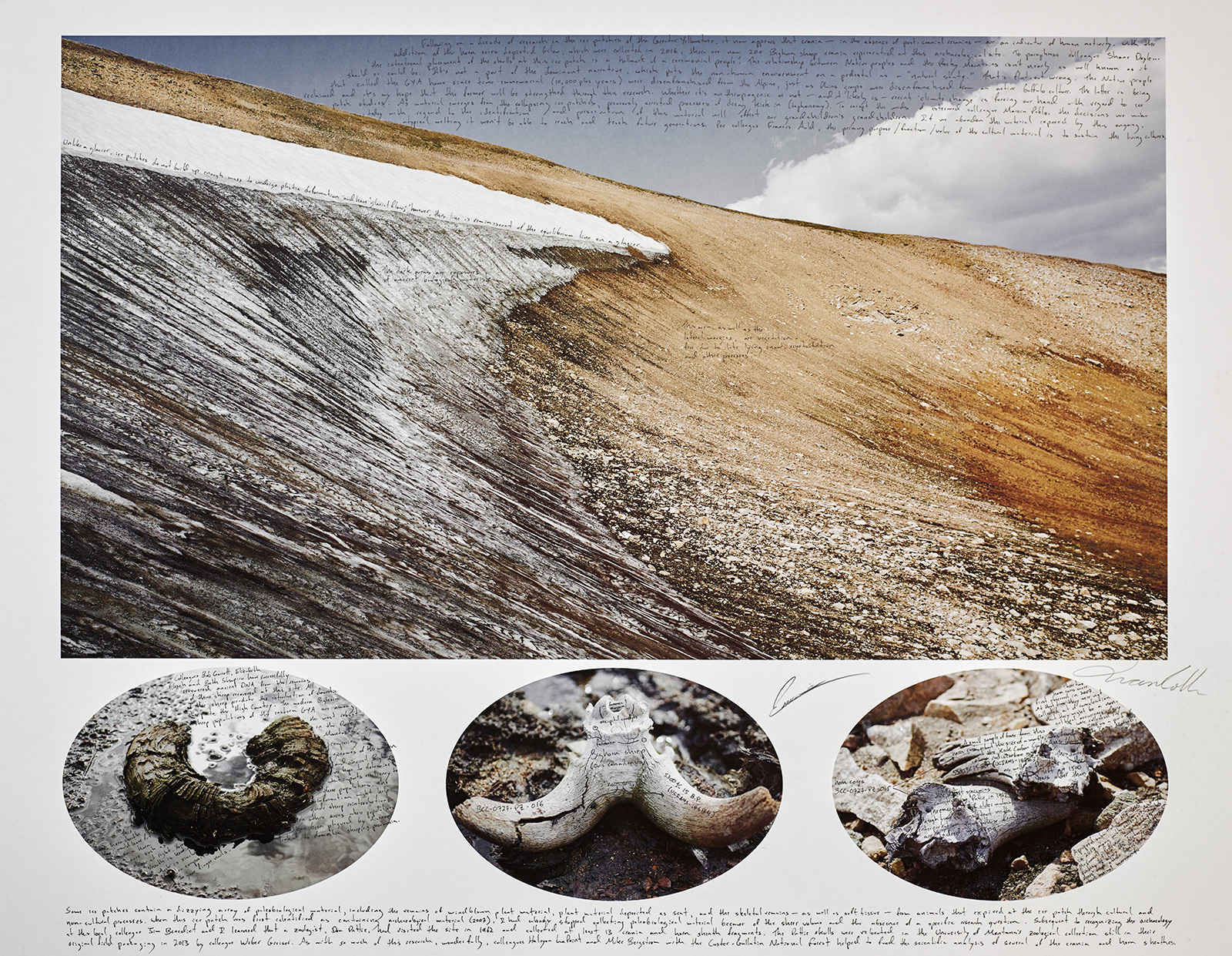
Ian van Coller is a Professor of Photography at Montana State University (2006–Present) and a 2018 Guggenheim Fellow. His affiliations include the Piece of Cake Collective, The Last Glacier Collective (since 2012), and the Antarctic Artists and Writers Collective (since 2020). His research examines climate change and deep time through photography and artist books, collaborating with paleo-climatologists globally. Key research interests include: Visualizing glacial retreat and paleoclimate data Interdisciplinary art-science methodologies Environmental advocacy through large-scale artist books Cultural impacts of ecological change His publications emphasize: Glaciology and cryosphere dynamics Intersections of art, science, and public engagement Decolonial perspectives on environmental narratives Awards: 2018 John Simon Guggenheim Fellowship Collaborations involve fieldwork in extreme environments (Antarctica, Kilimanjaro, Svalbard) and partnerships with institutions like the Long Now Foundation. His work is archived in major museums and libraries worldwide.
Rachel N. Bara serves as an Adjunct Assistant Professor in St. Lawrence University's First-Year Program, where she teaches and advises undergraduate students. Her academic career includes prior service as a post-graduate teaching fellow at The Pennsylvania State University, instructing technical writing and business communication courses. Her educational background comprises: M.F.A. in English and Creative Writing, The Pennsylvania State University (2011) B.A. in English Language and Literature, Smith College Bara's professional identity bridges journalism and creative writing, with a distinctive focus on environmental narratives. She examines how scientific concepts manifest in human experiences—from children's remote learning adaptations to carbon sink discoveries in geological formations. Her work consistently explores 'the margin of what is known,' highlighting stories where scientific frontiers intersect with personal and community identity. This approach manifests in both her Earth Island Journal contributions and current book projects, including a creative biography of physicist Laura Fermi. Scientific awards and honors are not documented in available sources. As an advisor, Bara guides first-year students through St. Lawrence's orientation program, leveraging her expertise in communication to develop foundational academic skills. While her adjunct position doesn't involve research grants or graduate supervision, her classroom integrates real-world science communication challenges, connecting students with contemporary environmental discourse through her journalistic work. No research laboratory or dedicated team structure is associated with her academic role; her creative and journalistic output represents individual scholarly work.
Dr. Choo Chung Siung is a Senior Lecturer at Swinburne University of Technology Sarawak, Faculty of Engineering, Computing and Science, where he serves as Director of the Centre for Innovative Society. With 12 years of combined academic and industry experience, he teaches soil mechanics and geotechnical engineering to future civil engineers. Dr. Choo obtained his Bachelor of Engineering in Civil Engineering (1st Class Honours) in 2010 and completed his PhD at Swinburne University of Technology. His research focuses on tunnelling and trenchless technologies, numerical modeling of soil-structure interaction, machine learning applications in geotechnical engineering, upcycling industrial wastes for construction, and geoeducation innovations. Analyzing his recent publications reveals a strong emphasis on pipe jacking forces in weathered geological formations, with increasing integration of machine learning techniques in geotechnical analysis. His work bridges traditional geotechnical engineering with modern computational approaches, particularly in the context of Southeast Asian geological conditions. Vice-Chancellor's 2019 Industry Engagement Award (Highly Commended), Swinburne University of Technology International Convention Scholarship Award (ICSA) 2019/2020, Sarawak Convention Bureau Best Civil Engineering Graduate 2010, Cahya Mata Sarawak IEM Gold Medal Award 2009, Institution of Engineers Malaysia Dr. Choo actively supervises research students and has secured multiple research grants from both industrial sources and the Ministry of Higher Education's Fundamental Research Grant Scheme. His professional engagement extends to numerous industry organizations, where he serves as a committee member and technical expert. As Director of the Centre for Innovative Society, he leads interdisciplinary research initiatives that address regional engineering challenges.
Sandra McEwan is a Sessional Lecturer in the Department of Curriculum, Teaching & Learning at the Ontario Institute for Studies in Education (OISE), University of Toronto, where she teaches Elementary Science and Environmental Education in the Master of Teaching Program. With over four decades of experience spanning K-12 teaching, teacher education, and educational leadership, she brings extensive practical knowledge to preparing future educators in science and environmental pedagogy. Her educational background includes: MEd in Science Education, University of Toronto/OISE (2000) BEd in Science and Environmental Science Education, University of Toronto/FEUT (1984) BSc in Biology, University of Toronto (1983) McEwan's research centers on nature-based learning, outdoor and environmental education, and differentiated instruction. She develops practical strategies for integrating environmental awareness into science curricula through hands-on, experiential learning in natural settings. Her work emphasizes making complex ecological concepts accessible to diverse learners while addressing real-world environmental challenges through classroom applications. Her publication record spans 30+ years with over 30 scholarly works, showing consistent focus on practical educational resources. Recent publications address contemporary issues like food systems education and acid rain impacts, while maintaining strong emphasis on outdoor learning methodologies and curriculum development for K-12 settings. The body of work demonstrates evolution from foundational environmental science resources toward integrated, systems-thinking approaches. As a Sessional Lecturer and former Faculty Advisor in the MT Program (2016-2023), she has mentored numerous pre-service teachers. Her extensive experience as both K-12 educator and teacher trainer provides unique perspective for guiding new educators in implementing effective science and environmental education practices.
Karin Ruggaber is a Professor and Co-Director of Studies for the Slade Graduate Programme at UCL's Slade School of Fine Art, where she also serves as Head of Graduate Sculpture and Admissions Tutor (MA/MFA). Her academic career spans over 15 years at UCL, progressing from Lecturer (2007-2015) to Senior Lecturer (2015-2019) and ultimately Professor (2023-present), with concurrent visiting lecturer roles at institutions including the Royal Academy Schools, Goldsmiths College, and Oxford's Ruskin School. Her research centers on sculpture as a dynamic practice exploring figuration, ornamentation, and sensory experience in architecture. The Rock Room Project, founded in 2013, exemplifies her interdisciplinary approach through collaborations with UCL Earth Sciences and Museums, examining materiality across geological timescales. Her work investigates architecture as territorial manifestation and the translation of sculpture into public spaces, with principles of ordering set against material imprecision. Her recent exhibitions reveal consistent engagement with material transformation and spatial narratives, particularly evident in her 2021 'Clips and Brooches' series and 2018 'Bottom of the lake' exhibition. The trend shows increasing integration of archival research (notably her 2022 British School at Rome archive work on the Bulwer sisters) with sculptural practice, alongside sustained exploration of sensory perception across multiple exhibitions including Anechoic Chamber workshops and ice physics laboratory experiments. Abbey Fellowship at the British School at Rome (2019) Library and Archive Award at the British School at Rome (2022) Residency awards at CCA Andratx, Spain (2016, 2022) UCL Arts and Humanities Small Impact Grant (2024) UCL Dean’s Strategic Fund Award (2018) Arts Council England, The Elephant Trust, and Henry Moore Foundation grants Ruggaber's mentorship extends through programs like OUTPOST Norwich's Resident Artists Members' Exchange (2014), while her research grants consistently support interdisciplinary projects bridging art with earth sciences and climate physics. The Rock Room Project has facilitated collaborations with geochemists, perfumers, and animal geographers, demonstrating her commitment to cross-disciplinary knowledge exchange. Her external examiner roles at Glasgow School of Art, Newcastle University, and others reflect her standing in art education. Based in the Slade School's Graduate Sculpture program, Ruggaber's Rock Room Project creates a unique laboratory for artistic experimentation within UCL's Earth Sciences context. This initiative has hosted specialized workshops in the Anechoic Chamber, Ice Physics Laboratory, and Marine Engineering facilities, fostering innovative approaches to materiality and sensory experience. The project's evolution from annual Rock Room exhibitions to the UCL Mullard Space Science Laboratory Sculpture Parks demonstrates its expanding scientific integration.
Jo Volley is a Senior Lecturer on the graduate painting programme at the Slade School of Fine Art, University College London. They also serve as Co-Director of The Material Research Project and Director of the Material Museum. Born in Grimsby in 1953, Volley studied at the Slade as both undergraduate and graduate from 1972-1977, where they were awarded the Boise Travelling Scholarship to Italy. In 1986, they were appointed lecturer at the Slade and directed the Slade Summer School and the Affiliate Programme from 1989-2002. Their research focuses on the interactions of measurement, space, light and colour, employing diverse materials including pigment, mosaic, gold leaf, image transfer, wax, limestone and various printing processes. Volley's work examines archiving, historic materials and craftsmanship, exploring the relationship between the object and subject of painting, the intervening space between idea and touch, and the emotional separateness of making across time. Volley's practice centers on material investigation related to painting, emphasizing how material knowledge informs creative processes. They empower practitioners by focusing on the physical act of making and reaffirming craftsmanship's role in aesthetic decisions. This philosophy earned them the 2013 Provost's Teaching Award from UCL. Significant projects include 'The Journeyman Works' series developed during their 2003 residency at the Usher Gallery, Lincoln, and the Simson&Volley collaborative partnership formed with Henrietta Simson in 2008. Volley was elected to the Art Workers Guild in 2009 and served on cathedral fabric commissions from 2012-2016. Current research includes: UCL CHIRP Small Research Grant – The Pigment Timeline Project with Dr Ruth Siddall and Gary Woodley Grand Challenges Sustainable Cities Small Grants 'From Pigments to Solar Power' with Dr Hugo Bronstein and colleagues Principal Investigator on AHRC-funded Collaborative Doctoral project with Winsor & Newton 'The Materials Research Project: From Landscape to Colour' (2013-2016) Volley's extensive exhibition history spans decades and continents, from 'The Golden Key' (2005) in Bangkok to recent works like 'Objects of the Misanthropocene: Unearthing futures' (2022) at UCL. They are developing the 'Art School Guide to Material Practice, Vol.I Supports, Grounds & Surfaces,' continuing their commitment to connecting historical techniques with contemporary artistic exploration.
Professor Kenneth Mccaffrey is Head of Department and Chair of the Board of Studies in the Department of Earth Sciences at Durham University. He has served in this department since 2000, progressing from Lecturer to Senior Lecturer (2004), Reader (2008), and Professor (2013). Previously, he was at Kingston University (1995-2000) and Trinity College Dublin (1991-1995). He also served as Director of the Centre for Research in Earth Energy System (CeREES) from 2011-2014 and as a Royal Society Industrial Fellow (50% FTE) from 2006-2009. His research spans geoinformatics methods , 3D/4D modeling of continental margins , magma and mineralized systems , and structural characterization of fault and shear zones . His work integrates field observations with digital technologies to understand tectonic processes, fracture systems in reservoir analogues, and the mechanical evolution of deformation zones. He has pioneered the use of terrestrial laser scanning and digital mapping techniques for geological applications. Analysis of his recent publications reveals a strong focus on helium resource systems , rift basin evolution , and fault mechanics , with increasing integration of computational methods including deep learning for structural interpretation. His work bridges fundamental geological processes with practical applications in resource exploration. 2021 Dewey Medal from the Geological Society of London for fieldwork and mentoring contributions 2005 Murchison Fund from the Geological Society 2001 Durham University Excellence in Teaching Award 1993 Ramsay Medal Professor Mccaffrey has supervised multiple PhD students including Adam Welsh, Lewis Mackenzie, Rhiannon Morgan, and Zak Milner. He has served on the Petroleum Group Committee of the Geological Society of London since 2013 and previously on their Science Committee (2000-2002). He was 'Specials' editor for the Geological Society of London from 2006-2012 and has convened numerous significant conferences including the 2016 event marking fifty years of the Wilson Cycle Concept in Plate Tectonics. He leads research in the Centre for Research in Earth Energy System (CeREES) and has been instrumental in developing digital field methods and virtual outcrop technologies that have transformed geological data acquisition and analysis.
Roland Barthel serves as Professor in the Department of Geosciences at the University of Gothenburg's Faculty of Science and concurrently holds the position of Vice-Dean for the Faculty Office of Natural Sciences and Technology. Previously Head of Department (2018-2022), he specializes in groundwater resources within the context of climate change impacts across Sweden and Europe. His research integrates hydrological science with socioeconomic factors to address critical water challenges including drought, scarcity, and extreme weather events. Barthel emphasizes the societal dimensions of water management, particularly regarding unregulated private wells that constitute a significant portion of Sweden's drinking water supply. His interdisciplinary approach bridges natural and social sciences to develop implementable solutions requiring consideration of economic, political, and social frameworks alongside physical system understanding. Analysis of his publication record reveals a dominant focus on data-driven methodologies for groundwater dynamics assessment, drought propagation analysis, and climate adaptation strategies. His work consistently emphasizes regional-scale studies in temperate and high-latitude environments, with increasing attention to interdisciplinary collaboration frameworks. Scientific recognition includes: Student Union's Pedagogical Award (2014) Student Union's Pedagogical Award (2016) As an educator, Barthel pioneered hydrology instruction at the university by developing the master's course Applied Hydrology (GVG460) and undergraduate Hydrology and Hydrogeology (GV2002). He leads Earth Sciences thesis supervision, chairs the program committee, and contributes to multiple geoscience courses. His teaching excellence earned three consecutive pedagogical award nominations with wins in 2014 and 2016. He currently participates in an EU Erasmus+ project developing digital teaching tools with European partners, addressing high market demand for groundwater specialists in Swedish infrastructure and environmental sectors.
Dr. Markus Nielbock serves as Head of Science Media Service at the Center for Astronomical Education and Public Relations, part of the House of Astronomy (HdA) affiliated with the Max Planck Institute for Astronomy (MPIA) in Heidelberg. With a background in physics and astronomy research, he transitioned to focus on science communication and education after serving as project scientist for the Herschel Space Telescope. His research interests center on astronomy education, particularly the development of didactic materials for secondary schools, public relations for astronomical institutions, and the ESO Science Outreach Network. He actively supervises students teaching physics and organizes numerous public lectures and events to engage the community with astronomy. Dr. Nielbock's publication record shows a strong focus on educational materials, with recent work emphasizing exoplanet science, celestial navigation techniques, and space exploration education. His 15 most recent publications (2018-2024) demonstrate consistent output in reputable educational journals like Science in Schools and astroEDU, covering diverse topics from exoplanet atmospheres to historical navigation methods. As an educator, he has taught the block course 'Introduction to Astronomy for Secondary School Teachers' annually since 2016, developed numerous instructional videos on astronomical concepts, and created extensive teaching materials through the 'Space for Education' project. His outreach extends to radio interviews discussing recent astronomical discoveries and maintaining an active social media presence focused on astronomy communication.
Dr. Carolin Liefke serves as Deputy Managing Scientist at the Haus der Astronomie (Center for Astronomy Education and Outreach) in Heidelberg and Deputy Director of the International Astronomical Union Office of Astronomy for Education. With over 20 years of experience in astronomy education and outreach, she has been a research associate at Haus der Astronomie since 2010 and became Germany's National Outreach Coordinator for the IAU in 2020. Dr. Liefke's work focuses on bridging professional astronomy with educational practice through multiple initiatives including astronomy courses for pre-service physics teachers at the University of Heidelberg, the 'Telescope Driver's Licence' teacher training program, the HdA partner school network, and the IASC Pan-STARRS asteroid search program that enables students to discover asteroids using telescope time in Hawaii. She also coordinates programs for gifted students, high school research opportunities, and public events at Haus der Astronomie. Her research background in stellar activity and X-ray astronomy informs her educational approach, though her current work emphasizes translating astronomical research into accessible educational content. The 15 most recent publications in her portfolio demonstrate a clear shift from refereed astronomy research papers to educational materials, reflecting her career transition toward specializing in astronomy education. National Outreach Coordinator for Germany of the International Astronomical Union (since 2020) Executive board member of Vereinigung der Sternfreunde (German amateur astronomy association) Regular contributor to astronomy education journals and publications Author of numerous educational materials for teachers and students Active science communicator through social media and public events Dr. Liefke teaches multiple seminars annually at the University of Heidelberg for pre-service physics teachers, covering topics from basic astronomy concepts to current research headlines. Her educational philosophy emphasizes hands-on experience with real astronomical data and equipment, as evidenced by her development of the 'Telescope Driver's Licence' program that trains teachers to use school telescopes effectively. At Haus der Astronomie, she works within the MPIA-Campus infrastructure to create educational experiences that connect students and teachers with cutting-edge astronomical research while making complex concepts accessible to diverse audiences.
Dr. Laure Brayer is an Associate Professor (Maître de Conférences) at the École Nationale Supérieure d'Architecture de Grenoble (ENSAG), part of Université Grenoble Alpes. She is a researcher at the AAU-CRESSON laboratory (UMR Ambiances, Architectures, Urbanités), a Joint Research Unit affiliated with CNRS, Université Grenoble Alpes, ENSA Nantes, ENSA Grenoble, and Centrale Nantes. Her academic journey includes a state qualification in architecture and a doctoral thesis on film devices in urban landscape understanding, which earned the COMUE Grenoble Alpes Thesis Prize in 2014. Dr. Brayer's research focuses on contemporary urban situations, exploring their experiences, representations, and transformations through the lens of sensory perception and atmospheric qualities. She specializes in how film and audio-visual methodologies can document and analyze urban spaces, particularly investigating the 'insignificant part' of urban experience that traditional methods might overlook. Her work examines the articulation between mediation, critique, and design projects, with significant contributions to understanding how sensory phenomena translate into architectural and urban research. Her recent work shows a strong trend toward collaborative research-creation projects that bridge academic inquiry with artistic practice. She directs 'Les Ondes de l'Eau,' a project mapping sensitive memories of the Romanche Valley in collaboration with artist collective Regards des lieux. Her publications reveal deep engagement with atmospheric research, sensory ethnography, and innovative documentation methods that capture the temporal and sensory dimensions of urban spaces. She has developed expertise in using film as a collective exercise for describing atmosphere as a 'matter of concern,' organizing video workshops that generate new understandings of urban environments. Dr. Brayer has received notable recognition including the COMUE Grenoble Alpes Thesis Prize (2014). Her work has been presented at major international venues including the International Congress On Ambiances in Lisbon (2024), Festival de l'Histoire de l'Art in Fontainebleau (2023), and numerous academic conferences across Europe and North America. As an educator, she teaches in the field of Arts and Techniques of Representation at ENSAG, likely incorporating her research expertise into courses on audio-visual methodologies for architectural research and sensory documentation techniques. Her collaborative approach extends to supervising research that involves multiple stakeholders and interdisciplinary perspectives, particularly through her work with the AAU-CRESSON laboratory which serves as a hub for atmospheric and sensory urban research.
Arne Solli is an Associate Professor in History at the Department of Archaeology, History, Cultural Studies and Religion, University of Bergen. His academic work bridges historical scholarship with digital methodologies, with a particular focus on historical demography, urban history, and GIS applications in historical research. Dr. Solli's research spans multiple interconnected domains including historical demography, urban development of Bergen, historical GIS applications, and the evolution of property registration systems. His work often combines microhistorical approaches with macrohistorical perspectives, creating innovative frameworks for understanding historical population patterns. He has made significant contributions to the study of 19th century cholera epidemics in Norway, examining how factors like topography, social status, and water supply affected mortality rates. His research demonstrates a consistent focus on spatial and temporal analysis of historical phenomena, with particular attention to Bergen's urban development over centuries. Dr. Solli has pioneered the integration of GIS technology with historical research through his development of BerGIS, a map portal for historical maps of Bergen that has become an essential resource for urban historians. Historical demography and population structures Urban history and development of Bergen Historical GIS applications Property registration systems through time 19th century Norwegian social and health history Cholera epidemiology and public health Dr. Solli has received recognition for his innovative approaches to historical research, particularly in developing digital tools that transform how historical data can be analyzed and visualized. His work on BerGIS has provided valuable resources for researchers studying urban development patterns over time. As an educator, Dr. Solli has contributed to the development of digital history methodologies and has supervised numerous students in historical research. His publications span from the 1990s to present, demonstrating a sustained commitment to advancing historical scholarship through technological innovation.