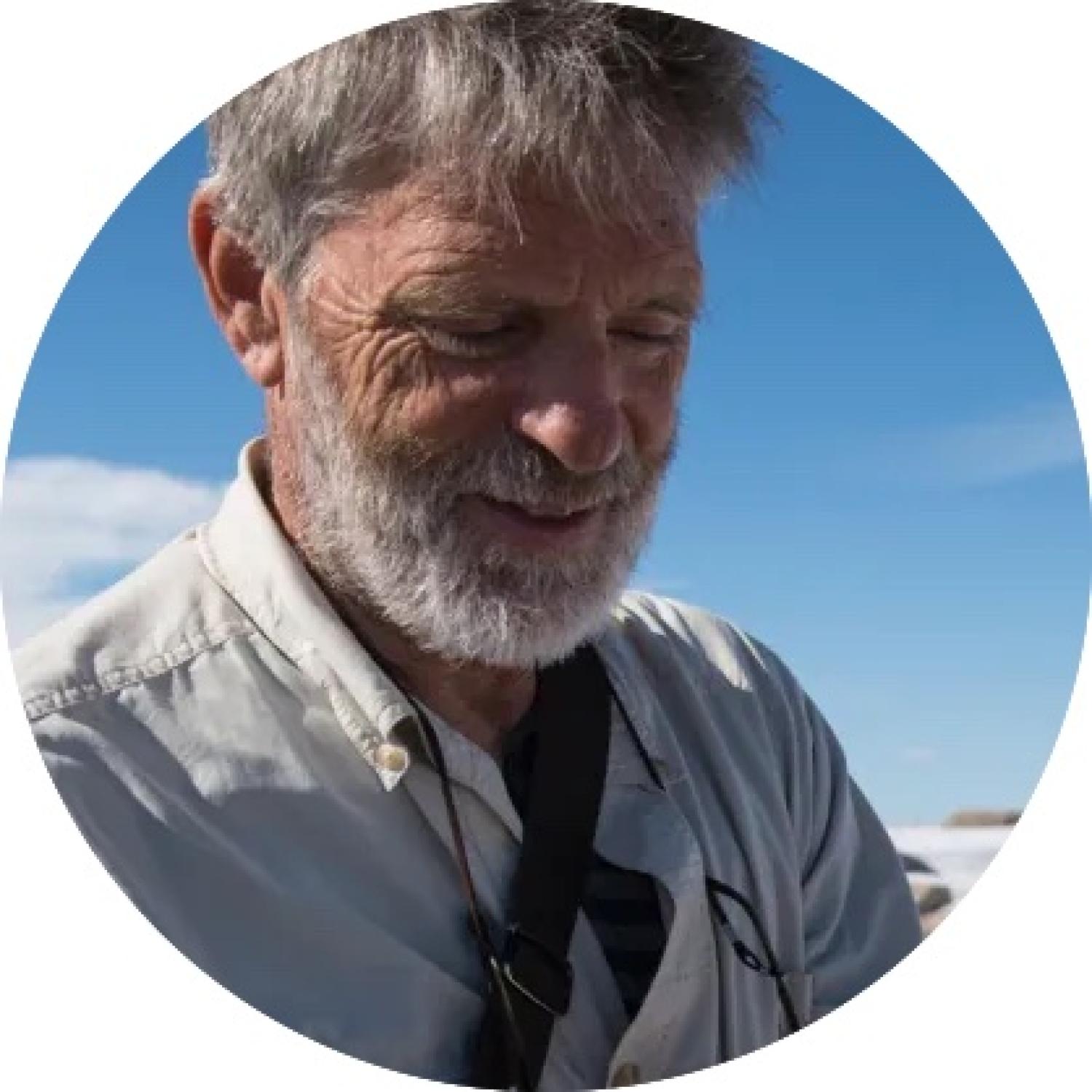
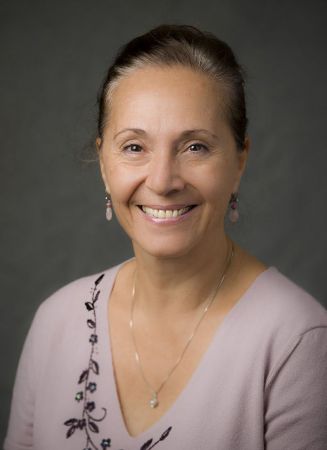
Gifford H. Miller is a Professor at the University of Colorado Boulder and serves as the Director of the Center for Geochemical Analysis of the Global Environment (GAGE) . His research focuses on reconstructing Earth's climate system using Quaternary records, with expertise in amino acid geochronology and cosmogenic exposure dating. Specializes in Arctic climate history, ice sheet dynamics, and human impacts on ecosystems Active in teaching courses on global change, Quaternary dating methods, and Holocene nonlinearities His recent work explores Holocene climate variability through lake sediments in Iceland and Baffin Island, integrating biomarkers and ancient DNA. Awards include the 2021 University of Colorado Distinguished Professor title and fellowships from AGU and GSA. 2021: Distinguished Professor, University of Colorado System 2018: Distinguished Career Award, American Quaternary Association 2009: Elected Fellow, American Geophysical Union
Youssef M. A. Hashash is the Grainger Distinguished Chair in Engineering and a Professor in the Department of Civil and Environmental Engineering at the University of Illinois at Urbana-Champaign (UIUC). He holds a B.S., M.S., and Ph.D. in Civil Engineering from MIT (1987–1992). His expertise spans geotechnical engineering, earthquake engineering, and computational geomechanics, with a focus on deep excavations, tunneling, and soil-structure interaction. He co-developed DEEPSOIL, widely used for seismic soil response analysis. Education: B.S. Civil Engineering, MIT (1987) M.S. Civil (Geotechnical) Engineering, MIT (1988) Ph.D. Civil (Geotechnical) Engineering, MIT (1992) Research Interests: Dr. Hashash's work integrates geotechnical engineering with advanced technologies like AI, visualization, and discrete element modeling. Key areas include: Seismic site response and amplification models for Central/Eastern North America Tunneling and underground infrastructure resilience Geotechnical applications of machine learning and augmented reality Soil-structure interaction and liquefaction analysis Professional Roles: Geotechnical co-leader, NIST investigation of the Champlain Towers South collapse (2022–present) Chair, National Academies' Committee on Geological and Geotechnical Engineering (2024–present) Past President, Geo-Institute of ASCE Awards: Presidential Early Career Award for Scientists and Engineers ASCE 2014 Peck Medal Elected to National Academy of Engineering (2022) Labs/Teams: Leads research groups at UIUC focused on computational geomechanics and geotechnical earthquake engineering. Collaborates with federal agencies like NIST and NSF on large-scale projects.
Richard Simon is an Associate Professor in the Department of Civil, Geological and Mining Engineering at Polytechnique Montréal. He holds leadership roles as Publications Director of his department and Administrative Director of the Institute for Research in Mining and Environment (IRME) UQAT-Polytechnique. His educational background includes a B.Eng. and M.Sc.A. from Polytechnique Montréal and a Ph.D. from McGill University. Dr. Simon teaches courses including Introduction to Mine Operations, Underground Mining, and Rock Mechanics I. His research focuses on rock mechanics, numerical modeling, mining engineering, and geotechnical applications in mining environments. His extensive publication record demonstrates consistent focus on numerical modeling of rock behavior, mine stability analysis, and backfill mechanics. Recent work emphasizes computational geomechanics applications in mining operations, including stress analysis in backfilled stopes, slope stability in open pits, and optimization of mining layouts. Environmental aspects of mining, particularly contaminant transport in fractured rock, also feature prominently. Dr. Simon has supervised 6 doctoral and 8 master's students working on topics ranging from numerical seismic assessment in mines to rock fracture mechanics. He secured significant research funding including $900,000 (2017) for a metals circular economy project and led three new IRME research initiatives (2015). He directs research activities at IRME UQAT-Polytechnique and collaborates extensively within the mining geomechanics research community. His expertise is regularly featured in media outlets including La Presse+ and Les Affaires.
Sibel Pamukcu is a Professor in the Department of Civil and Environmental Engineering at Lehigh University, affiliated with the P.C. Rossin College of Engineering and Applied Science. Her research focuses on electroremediation of soils and groundwater, advanced geo-materials, and sensor systems for subsurface monitoring. She has held leadership roles including interim Chair of Civil and Environmental Engineering and co-director of Lehigh’s ADVANCE grant. Pamukcu teaches courses in geotechnical and environmental engineering at both undergraduate and graduate levels. Education: Ph.D. in Civil Engineering, Louisiana State University M.S. in Civil Engineering, Louisiana State University B.S. in Civil Engineering, Bogazici University, Turkey Research Interests: Her work spans electrochemical methods for environmental detoxification, development of polymer-enhanced sands, and distributed sensor networks for real-time subsurface monitoring. Key focus areas include: In-situ destruction of contaminants in clay-rich soils Enhanced oil recovery via electric fields Wireless and fiber-optic sensor systems for hazard mitigation Grants & Awards: Principal investigator on over 60 grants from NSF, DOE, DOD, and others. Notable awards include the Alfred Noble Robinson Award (Lehigh University) and the ASCE Civil Engineering Foundation Grant Award. Her lab holds multiple patents on soil remediation techniques and polymer-coated sands. Advising & Service: Supervised 9 Ph.D. and 25+ M.S. students Appointed to Martindale Center faculty and Sigma Xi leadership Contributed to 50+ peer-reviewed articles and 100+ technical publications Labs & Teams: Leads interdisciplinary initiatives in electrokinetic remediation and underground sensing, collaborating with industry partners like Electric Power Research Institute and the Pennsylvania Department of Transportation.
J.D. Jansen is a full Professor at Delft University of Technology (TU Delft) in the School of Civil Engineering & Geosciences, specializing in the Reservoir Engineering department. His research focuses on systems and control theory applied to subsurface flow mechanics, with applications in oil and gas production, geothermal energy, and induced seismicity. He actively contributes to academic networks through editorial roles, keynote presentations, and international collaborations. Active in computational geosciences (modeling, simulation, data analysis) Member of the Dutch Mining Council since 2016 Recipient of two Society of Petroleum Engineers awards in 2018 His work emphasizes optimization of subsurface processes, numerical modeling of porous materials, and seismicity mitigation. Recent publications highlight fault slip mechanics, benchmarking simulations, and stress pattern analysis in geothermal systems. Collaborations span geomechanics, reservoir engineering, and data assimilation domains. Scientific awards include: Distinguished Membership of the Society of Petroleum Engineers (2018) SPE Distinguished Achievement Award for Petroleum Engineering Faculty (2018) He leads research initiatives in induced seismicity, particularly in the Groningen Field, and contributes to model-based production optimization. Media engagements since 2020 demonstrate public outreach in energy transition topics.
Ares J. Rosakis is the Theodore von Kármán Professor of Aeronautics and Mechanical Engineering at the California Institute of Technology (Caltech), where he served as Chair of the Division of Engineering and Applied Science from 2009-2015 and previously as Director of the Graduate Aerospace Laboratories (GALCIT). He has held numerous prestigious visiting professorships including at Nanyang Technological University, Northwestern University, Columbia University, Oxford University, and École Normale Supérieure in Paris. Rosakis earned his B.A. and M.A. in Engineering Science from Oxford University in 1978, followed by his Sc.M. (1980) and Ph.D. (1982) in Engineering (Solid Mechanics) from Brown University. He joined Caltech as an Assistant Professor in 1982, was promoted to Associate Professor in 1988, and to full Professor in 1993. In 2004, he was named the Theodore von Kármán Professor, one of Caltech's most distinguished named chairs. Rosakis is globally recognized as the foremost expert in dynamic failure mechanics of solid materials. His pioneering contributions span the dynamic failure of metals, composites, and interfaces. He invented Coherent Gradient Sensing (CGS) interferometry, a novel optical method sensitive to gradients of optical path differences that has been widely adopted in fracture mechanics and thin film stress measurements. His research encompasses dynamic shear-dominated rupture of heterogeneous materials, rupture mechanics of crustal earthquakes (where he experimentally discovered 'intersonic' or 'supershear' ruptures), and reliability of thin films and in-situ wafer level metrology. His work bridges engineering science, materials mechanics, and geophysics with remarkable interdisciplinary impact. His recent publications demonstrate a strong focus on earthquake mechanics and laboratory simulations of seismic events, particularly supershear earthquake ruptures. The research connects fundamental fracture mechanics with real-world geophysical phenomena, revealing how laboratory-scale experiments can illuminate the physics of large-scale earthquakes. His work has established critical links between theoretical models, experimental observations, and geological field evidence. Rosakis has received numerous prestigious awards including: 2024 Foreign Member of the Royal Society, UK 2023 Honorary PhD from National Technical University of Athens 2023 Honorary Degree of Doctor of Engineering from University of Illinois 2021 Zdeněk P. Bažant Medal for Failure and Damage Prevention 2018 Timoshenko Medal from ASME 2016 Elected to the National Academy of Sciences 2011 Elected to the National Academy of Engineering Throughout his distinguished career at Caltech, Rosakis has mentored numerous graduate students and postdoctoral researchers, many of whom have become leaders in their fields. His research has been continuously supported by major grants from the National Science Foundation, Department of Energy, and other federal agencies, focusing on dynamic fracture, earthquake mechanics, and advanced optical measurement techniques. He has served on numerous editorial boards and advisory committees for major scientific organizations. At Caltech, Rosakis leads research in the Graduate Aerospace Laboratories (GALCIT), where he has established world-class experimental facilities for studying dynamic fracture and earthquake mechanics. His laboratory features high-speed imaging systems capable of millions of frames per second, infrared diagnostics for temperature field measurements, and specialized equipment for simulating earthquake ruptures at laboratory scale. His research group combines experimental, theoretical, and computational approaches to address fundamental questions in solid mechanics and their applications to geophysics and materials engineering.
Natalia Rybczynski is an Adjunct Research Professor in the Department of Biology at Carleton University, affiliated with the Faculty of Science. Her primary research focuses on Paleobiology and Paleoenvironments of the Cenozoic High Arctic and functional morphology of vertebrate feeding and locomotion systems. She holds offices at the Canadian Museum of Nature in Gatineau and coordinates interdisciplinary projects on Arctic paleoenvironments, pinniped evolution, and vertebrate herbivore feeding mechanisms. Education: B.Sc. in Biology, Carleton University M.Sc. in Zoology, University of Toronto Ph.D. in Evolutionary Anthropology, Duke University Research Interests: Reconstructing Arctic paleoenvironments during the Neogene Evolutionary transitions in marine mammals (e.g., pinnipeds) Feeding kinematics in herbivorous vertebrates like hadrosaurs Integration of field-based paleontology with biomechanical and anatomical analyses Her publications span paleoclimatology, fossil analysis, and evolutionary studies, emphasizing Arctic ecosystems and vertebrate adaptations. Collaborative work includes geoscientists to reconstruct ancient Arctic climates and anatomists to model feeding systems in extinct species. Active in field expeditions and lab-based experimental studies. Labs/Teams: Collaborates with Canadian Museum of Nature researchers and international teams in Arctic paleontology projects. Engages in interdisciplinary initiatives like the PoLAR-FIT project studying Pliocene Arctic ecosystems.
Dr. Alain Bonneville is a Lab Fellow and Geophysicist at Pacific Northwest National Laboratory (PNNL) and holds a Courtesy Professor appointment at Oregon State University's College of Earth, Ocean, and Atmospheric Sciences. With extensive experience in geological storage of CO2, geothermal energy, and geophysical monitoring techniques, Dr. Bonneville leads diverse research projects that bridge fundamental science and practical applications for energy and environmental challenges. Dr. Bonneville's educational background includes: PhD in Geophysics from the University of Montpellier, France MS in Petroleum Geophysics from IFP-School, Paris, France BS in Geology from the University of Lyon, France Dr. Bonneville's research spans several critical areas in Earth sciences and energy systems. His work on geothermal energy focuses on super-hot enhanced geothermal systems (EGS), site characterization, monitoring, and stimulation fluids. In geological CO2 storage, he investigates project management, site characterization, numerical modeling, and monitoring methods using potential fields and remote sensing. His expertise in geophysical methods includes heat flow measurements, gravity surveys, muon tomography development for borehole deployment, and remote sensing applications. Additional research areas encompass marine heat flow instrumentation development, thermal monitoring of active volcanoes, and intraplate volcanism studies in the Indian and Pacific Oceans. Dr. Bonneville has received significant recognition for his contributions to science, including: Membership in the Washington State Academy of Sciences Lab Fellow position at Pacific Northwest National Laboratory Executive Committee membership on the U.S. National Risk Assessment Partnership Scientific Committee membership at IFP-Energies Nouvelles, France He also holds two U.S. patents related to electrophilic acid gas-reactive fluids for enhanced fracturing and recovery of energy producing materials. Throughout his career, Dr. Bonneville has led significant research initiatives, including the PNNL Carbon Sequestration Initiative (2009-2013) and the European Marie Curie Research Training Network on Greenhouse Gas Removal (GRASP), which involved 14 academic and industrial institutions across 7 countries and supported 35 PhD students and post-docs. His work on the FutureGen 2.0 project demonstrates his leadership in large-scale carbon storage site characterization and monitoring program design. Dr. Bonneville maintains active collaborations with research teams at PNNL's Environmental Molecular Sciences Laboratory and works closely with Oregon State University's geoscience researchers. His laboratory work focuses on developing novel instrumentation for geophysical monitoring, particularly in the areas of muon tomography for subsurface characterization and thermal monitoring systems for geothermal and carbon storage applications.
John F. Rudge is a Professor of Geodynamics at the Bullard Laboratories, Department of Earth Sciences, University of Cambridge , and a Fellow and Dean of Trinity College. His research focuses on the dynamics of Earth's interior, including mantle convection, magma transport, and the geochemical evolution of the planet. He employs continuum mechanics, numerical analysis, and statistical methods to address questions about melt dynamics, mantle heterogeneity, and the surface expressions of geophysical processes. Education includes a mathematics undergraduate degree and a PhD in Earth Sciences and Applied Mathematics from Cambridge. He held postdoctoral positions at institutions like ETH Zürich, Yale, and Columbia University before joining Cambridge as a University Lecturer in 2010 and being promoted to Professor in 2022. Key research areas include: Transport of melts and volatiles in the mantle Evolution of Earth's interior from accretion to present Dynamic topography and inner core dynamics Publications span over two decades, with recent works addressing melt rheology, mantle mineralogy, and interdisciplinary applications in oncology. He has supervised numerous PhD students and postdocs, including David Rees Jones, Isarapong Eksinchol, and Laura Alisic. Awards include the Philip Leverhulme Prize and Geological Society President’s Award. Teaching responsibilities include courses on geophysics, magma dynamics, and supervisions in Natural Sciences at Trinity College. Research tools include finite element modeling and collaborations with computational scientists.
Konstantinos Karapiperis is a Tenure Track Assistant Professor at EPFL's Laboratory of Multiscale Modeling of Materials (LMD), within the School of Architecture, Civil and Environmental Engineering (ENAC). His research integrates mechanics , multiscale modeling , and data science to study geomaterials and structural materials. PhD in Applied Mechanics (minor in Applied Mathematics), Caltech Postdoctoral Researcher & Lecturer, ETH Zürich (Marie Skłodowska-Curie Fellowship) Research focuses on granular materials , architected materials , and nonlocal modeling using techniques like Level-Set Discrete Element Method (LS-DEM) and machine learning . Recent work explores fracture control via graph neural networks and thermodynamics-informed models. Selected scientific award: Marie Skłodowska-Curie Fellowship Teaches courses in Soil Mechanics and Multiscale Modeling . PhD students include Thomas Henzel and Hrishikesh Gopakumar Menon. His Data-Driven Mechanics Laboratory (LMD) develops predictive tools for granular and structured material behavior.
Professor Behzad Fatahi is a distinguished academic in Civil and Environmental Engineering at the University of Technology Sydney (UTS), specializing in geotechnical engineering, railway infrastructure, and sustainable construction technologies. With a career spanning over 16 years at UTS, he has served as Deputy Head of School - Teaching and Learning (2024-present), Head of Discipline (2020-2024), and School Research Coordinator (2012-2017). His research focuses on unsaturated soil mechanics , dynamic soil-structure interaction , and green infrastructure solutions . Academic Appointments : Professor (2024-present), Associate Professor (2017-2024), Senior Lecturer (2011-2017), Lecturer (2008-2011) Research Leadership : Supervised 21 PhD students to completion, developed groundbreaking techniques for landfill waste reuse and tyre-derived aggregates in railway construction His work on seismic resilience of LNG tanks and bioengineered soil stabilization has received international recognition, including the 2023 Best Research Paper Award at the Australasian Association for Engineering Education conference. Professor Fatahi's industry experience includes geotechnical engineering roles at Coffey International and SES Engineering prior to academia. Key Research Contributions : Developed green corridor models for railway lines using coupled flow-deformation equations Pioneered AI-integrated teaching frameworks for civil engineering education Advanced machine learning techniques for intelligent compaction and structural buckling analysis As a Category 1 supervisor , he mentors graduate researchers in Civil Engineering , Geomechanics , and Earthquake Engineering . His peer-reviewed work (>240 publications) demonstrates technical excellence and innovation across multiple geotechnical domains.
Carlos Torres-Verdín is a Professor and holds the Brian James Jennings Memorial Endowed Chair and Zarrow Centennial Professorship in Petroleum Engineering at The University of Texas at Austin's Hildebrand Department of Petroleum and Geosystems Engineering, within the Jackson School of Geosciences. He earned a B.S. in Geophysical Engineering from the National Polytechnic Institute of México (1983), an M.Sc. in Electrical Engineering from UT Austin (1985), and a Ph.D. in Engineering Geoscience from UC Berkeley (1991). His research focuses on petrophysical and geophysical characterization of subsurface regions using well logging, seismic, and multi-physics data. Key areas include borehole geophysics, rock physics, reservoir characterization, and hydraulic fracturing. He has received numerous accolades, including the 2020 Virgil Kauffman Gold Medal (SEG) and the 2017 Conrad Schlumberger Award (EAGE). His work integrates advanced numerical methods and machine learning to enhance reservoir evaluation and CO2 sequestration monitoring. Torres-Verdín teaches courses such as PGE 358 (Formation Evaluation) and directs the Formation Evaluation Joint Industry Research Consortium, fostering industry-academia collaboration. Awards & Honors 2020 Virgil Kauffman Gold Medal, SEG 2019 Anthony F. Lucas Gold Medal, SPE 2017 Conrad Schlumberger Award, EAGE 2017 Lockheed Martin Excellence in Engineering Teaching Award Research & Teaching His recent studies address challenges in unconventional reservoirs, fluid dynamics in nanoporous media, and real-time geosteering. He has published over 150 peer-reviewed articles, emphasizing innovation in inversion techniques, NMR applications, and reservoir simulation.
Nicholas Kamenos is a Professor at the Department of Ecology, Environment and Geoscience and Director of the Umeå Marine Sciences Centre (UMF) at Umeå University, Sweden. His research bridges global biogeochemical cycles and ecological responses to climate change, focusing on ecosystem engineers like coralline algae, corals, and seagrass. He works in polar to tropical regions, employing SCUBA, mesocosm experiments, and advanced analytical tools. Role: Director, Umeå Marine Sciences Centre Research Focus: Climate change impacts, ocean acidification, blue carbon, Arctic-temperate-tropical ecosystems His recent publications highlight interdisciplinary approaches to understanding marine ecosystem resilience. Research spans proxy development for historical climate reconstruction, carbon burial dynamics, and the role of calcifying organisms in carbon cycling, with applications to conservation and policy. Key grants include projects like AQUASERV (2024–2029) on service provision in marine ecosystems, Light Harvesting in Coralline Algae (2024–2027), and IRISCC (2024–2026) exploring seawater temperature changes. Collaborative work addresses coastal deoxygenation and socio-political aspects of blue carbon economies. He leads the Umeå Marine Sciences Centre, leveraging facilities like the Marine Mesocosm Facility and advanced tools (laser ablation ICPMS, isotope ratio mass spectrometry). His work integrates biological, geological, and chemical techniques to address multidisciplinary questions.
Dr. Nicola Mingotti is a Research Associate in the Department of Earth Sciences at the University of Cambridge, affiliated with the Institute for Energy & Environmental Flows (IEEF). His experimental research focuses on fluid mechanics in the context of energy transition, particularly carbon sequestration and underground hydrogen storage, while also addressing oceanic microplastics dispersion and atmospheric volcanic ash transport. Research Associate, University of Cambridge IEEF Flow Laboratory His work on multiphase flows spans volcanic eruptions, oceanic microplastics separation, and contaminant dispersion in hospital environments. Recent studies include Journal of Fluid Mechanics publications on bubble plumes (2023) and sediment-laden oceanic plumes (2022), alongside Communications Earth & Environment articles on CO2 storage (2024) and volcanic dynamics (2021). Scientific awards and honors: None explicitly mentioned in the text. As an engineering researcher, he led investigations on droplet transport in ventilation systems (Royal Papworth Hospital, 2021) and historical surgical environment design (2021). His publications demonstrate interdisciplinary expertise across environmental fluid mechanics, geological engineering, and public health.
Anne H Schistad Solberg is a Professor in the Department of Informatics at the University of Oslo's Faculty of Mathematics and Natural Sciences. She leads research in digital signal processing and image analysis, with a focus on machine learning applications across multiple domains. As co-director of SFI Visual Intelligence, she oversees research on interpretable deep learning models, uncertainty quantification, contextual learning, and self-supervised learning approaches. Her research spans medical imaging (particularly cardiovascular ultrasound), environmental monitoring using satellite imagery, and seabed mapping with sonar technology. Professor Solberg's work demonstrates a consistent trajectory from foundational signal processing techniques to cutting-edge deep learning applications. Her recent publications show increasing specialization in medical image analysis, particularly in echocardiography enhancement and cardiac structure segmentation, while maintaining strong contributions to remote sensing and geophysical applications. She teaches several popular courses including IN2070, IN3310, and IN5400 (Machine Learning for Image Analysis), which is noted as the most popular master's/PhD course on deep learning at the University of Oslo. Professor Solberg serves as principal investigator for the Intelligent Cardiovascular Ultrasound Scanner (INCUS) project, collaborating with GE Vingmed Ultrasound to develop AI-enhanced cardiac imaging systems that improve diagnostic accuracy and productivity in echocardiography. Co-director of SFI Visual Intelligence research center Principal Investigator for the INCUS project (Intelligent Cardiovascular Ultrasound Scanner) Member of the Digital Signal Processing and Image Analysis (DSB) research group Member of the Strategic Research Initiative: Multimodal Medical Imaging and Image Analysis (MEDIMA) Her research group develops algorithms that address real-world challenges in medical diagnostics and environmental monitoring, with a particular emphasis on making deep learning models more interpretable and reliable for critical applications. The INCUS project, funded through User-driven Research-based Innovation (BIA), aims to reduce the time wasted during cardiac ultrasound examinations by implementing intelligent algorithms that learn from expert users and historical data.