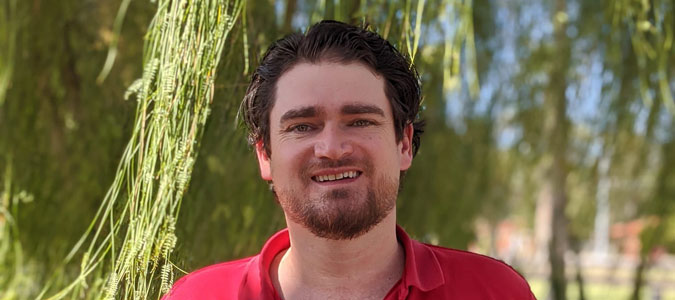
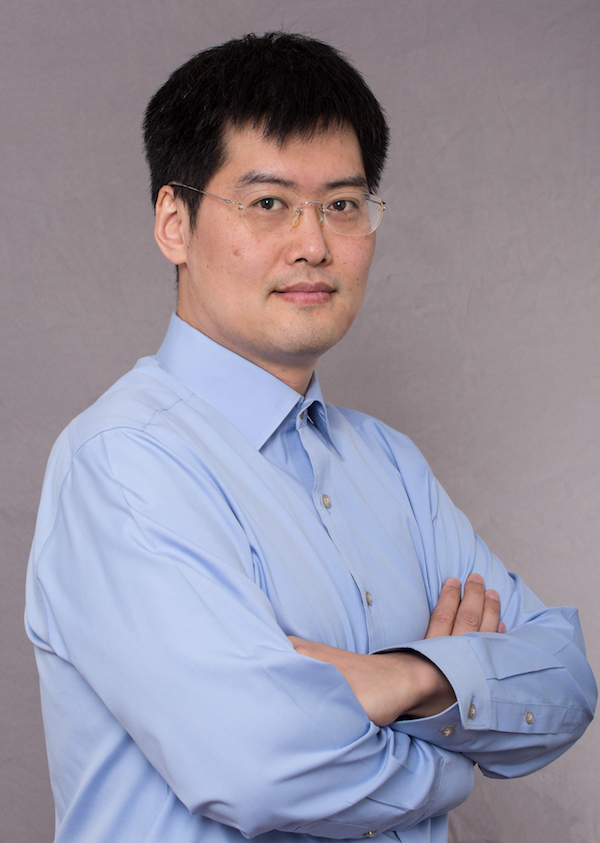
Edgar Weippl is a Professor at the Faculty of Computer Science, University of Vienna, where he serves as Vice Dean and Head of the Research Group Security and Privacy. His work spans cybersecurity, blockchain, and machine learning, with teaching roles in information security and software security courses. Current Positions: Vice Dean (Faculty of Computer Science), Head (Security and Privacy Research Group), Deputy Head (Neuroinformatics & Knowledge Engineering Groups) Research Interests: Cybersecurity, blockchain, IoT security, code obfuscation, privacy technologies, reinforcement learning, and socio-technical systems security Selected Publications: Focus on blockchain privacy, VoWiFi security, code obfuscation, and reinforcement learning applications
Dr. Ibrahim Tekin is a Professor at Sabanci University’s Electrical and Electronics Engineering Department. He holds a B.S. and M.S. from Middle East Technical University (1990-1992) and a Ph.D. from The Ohio State University (1997). His career spans research roles at Bell Laboratories (1997-2000) and academic teaching/research. His primary research interests include antenna design, smart antennas, propagation modeling, and geolocation algorithms. He teaches advanced courses like Electromagnetics II , Microwaves , and Antennas and Propagation for Wireless Communication , emphasizing practical applications in RF and microwave systems. Dr. Tekin’s work focuses on 5G mm-wave antenna arrays, full-duplex systems, and MEMS-based RF components. His recent research explores beamforming networks, low-actuation-voltage MEMS switches, and compact antenna designs for 5G applications. He has contributed to over 60 peer-reviewed publications, including journal articles in IEEE Transactions on Antennas and Propagation and Microwave and Optical Technology Letters . His research also addresses indoor positioning systems using GPS signals and RFIC integration challenges. Key technical contributions include innovative antenna array configurations, low-loss RF MEMS switches, and advanced full-duplex architectures. His work bridges theoretical electromagnetics with practical implementations in next-generation wireless communication systems.
John J. Curtin is a Professor in the Department of Psychology at the University of Wisconsin-Madison, where he directs the Addiction Research Center. His work bridges clinical psychology, computer science, and engineering to develop innovative digital solutions for mental health and addiction treatment. Dr. Curtin's research focuses on digital therapeutics and personal sensing technologies for substance use disorders and mental illness. His laboratory develops software applications that provide evidence-based interventions, treatment management tools, and enhanced communication with care providers. He specializes in algorithm development for moment-to-moment psychiatric risk prediction and just-in-time personalized interventions that adapt to both patient characteristics and their current context. His research program is highly interdisciplinary, collaborating with the Center for Health Enhancement Systems Studies, computer science, geography, and electrical and computer engineering departments. Dr. Curtin's work combines machine learning approaches with novel data streams from geolocation, cellular communications, social media activity, and wearable biosensors to create more effective and personalized treatment approaches. Dr. Curtin has secured continuous funding from the National Institutes of Health (NIAAA, NIDA, NCI and NIMH) since 1998. His current research examines machine learning-assisted precision medicine for smoking cessation, contextualized daily prediction of lapse risk in opioid use disorder, and dynamic real-time prediction of alcohol use lapse using mobile health technologies. His laboratory has produced numerous publications advancing the field of digital mental health interventions, with a particular focus on using technology to deliver precisely tailored treatments at the right moment for individuals struggling with substance use disorders.
Harpreet S. Dhillon is the W. Martin Johnson Professor of Engineering and Associate Dean for Research and Innovation at Virginia Tech's College of Engineering. He holds appointments in the Bradley Department of Electrical and Computer Engineering. His research focuses on wireless communications, stochastic geometry, machine learning, and next-generation network systems. Education: Ph.D., University of Texas at Austin (2013); M.S., Virginia Tech (2010); B.Tech., Indian Institute of Technology Guwahati (2008). Research Interests: Communication Theory, Stochastic Geometry, Machine Learning for Communication Systems, Heterogeneous Networks, IoT, and Energy Harvesting. He leads projects on vision-aided localization, LEO satellite systems, and RIS-aided networks. Key Awards: IEEE Fellow (2023), AAIA Fellow (2022), IEEE Heinrich Hertz Award (2016), and numerous early-career recognitions. His work has resulted in over 150 journal/conference publications. Advising: Supervises Ph.D. students in cutting-edge research areas like 6G localization and RIS optimization. His advisees have won awards such as the VT ECE Blackwell Award for Best Dissertation. Labs/Teams: Head of the research group focusing on communication theory and localization. Collaborates on projects funded by agencies like NSF and industry partners.
Jedidiah Crandall is an Associate Professor at Arizona State University's School of Computing and Augmented Intelligence, with an affiliation to the Biodesign Center for Biocomputing, Security and Society. His research focuses on Internet censorship, network security, and privacy-preserving technologies. Crandall collaborates with journalists and activists to expose surveillance mechanisms, particularly in politically sensitive regions like Russia and China. His work includes analyzing VPN vulnerabilities , decentralized censorship systems , and cross-border data flows . He teaches advanced courses in computer network security and advises graduate students on thesis/dissertation research. Research trends in his publications emphasize measuring state-level information control , attack vectors in modern networks , and secure communication technologies . Notable work includes TSPU: Russia's censorship infrastructure and Hidden Links: Analyzing Secret Families of VPN Apps . Crandall's teaching spans courses like Advanced Computer Network Security and Applied Cryptography , reflecting his commitment to preparing the next generation of security professionals. His Censored Planet project tracks global Internet censorship patterns through large-scale measurements.
Catalina Iannone is an Assistant Professor in the Department of Spanish & Portuguese at The Ohio State University’s College of Arts and Sciences. Her research focuses on race, urban space, and visual culture in contemporary Iberia, with a particular emphasis on Lavapiés (Madrid) and Mouraria (Lisbon). She holds a Ph.D. from The University of Texas at Austin (2018), an M.A. from New York University in Madrid (2011), and a B.A. from New York University (2010). Her work bridges literary analysis, cultural studies, and urban sociology. She is author of the forthcoming book Cities Beyond Crisis: Race, Affect, and Urban Culture in 21st Century Iberia (Vanderbilt UP) and creator of the digital project The Atlas of Resistance , mapping Lavapiés’ cultural evolution since 2000 through geolocated artifacts and data. Her publications appear in Hispania , Arizona Journal of Hispanic Cultural Studies , and Journal of Lusophone Studies . Teaching interests include Iberian migrations, postcolonial theory, and visual culture.
Paul Van Oorschot is a Professor at the School of Computer Science, Carleton University. He has held the Canada Research Chair in Authentication and Computer Security from 2002 to 2023. His expertise spans authentication, applied cryptography, and network security. He co-authored the seminal Handbook of Applied Cryptography and led the NSERC Internetworked Systems Security Network (2008–2013). His research focuses on enhancing security in systems, software, and web authentication, including methods to augment passwords with geolocation and device recognition. He holds a Ph.D. from the University of Waterloo and was awarded the J.W. Graham Medal (2000) and Fellowship in the Royal Society of Canada (2011). Education: Ph.D. in Computer Science from the University of Waterloo (1988) His research interests include authentication systems, public-key infrastructure, smartphone security, and usability challenges in security design. He has contributed to frameworks like OWL for password-based key exchange and SLV for server location verification. His work addresses both technical and human factors in securing modern computing environments. Key contributions include analysis of TLS interception, memory safety in programming languages, and evaluating IoT security best practices. He has published extensively on topics ranging from side-channel attacks to cryptographic protocol vulnerabilities. Awards: J.W. Graham Medal in Computing and Innovation (2000), Fellow of the Royal Society of Canada (2011) His academic leadership includes roles in shaping cybersecurity education and policy, emphasizing the need for rigorous scientific approaches in security research. His research group, the Carleton Computer Security Lab (CCSL), drives interdisciplinary projects in software security and system administration tools.
Martin Nordal Petersen is an Associate Professor at the Department of Electrical and Photonics Engineering , Technical University of Denmark (DTU) . His work spans Internet of Things (IoT) , optical networking , and wireless communication systems, with notable contributions to LoRa , NB-IoT , and LPWAN technologies. He actively supervises PhD projects on topics such as machine learning in IoT edge devices , secure 5G communication , and smart community architectures . Active projects (2024–2027): Machine Learning in IoT Edge Devices , Deterministic and Secure 5G Communication Finished projects (2021–2024; 2018–2021; 2015–2018): Reliable M2M/IoT Communication , Smart Communities , IoT 100% , Network Slicing His research explores: IoT Reliability : Multi-RAT communication, backup systems, and signal propagation Optical Networks : Alien wavelength integration, SDN control, and network emulation platforms Wireless Innovation : GPS-free geolocation, maritime NB-IoT use cases, and multimode fiber distribution Current collaborations emphasize cross-disciplinary applications of IoT in healthcare , industrial ergonomics , and smart environments .
Naren Ramakrishnan is the Thomas L. Phillips Professor of Engineering in the Department of Computer Science at Virginia Tech, where he directs the Sanghani Center for AI and Data Analytics. He also serves as AI and Machine Learning Lead for the Virginia Tech Innovation Campus. His research spans data science, machine learning, urban analytics, forecasting, and computational epidemiology. Recent publications (2024-2025) focus on language model optimization, AI applications in government and environmental conservation, and spatiotemporal data analysis. Work demonstrates strong emphasis on real-world AI deployments in regulatory compliance, supply chain verification, and network optimization. Methodological innovations include prompt engineering techniques, world models for reinforcement learning, and specialized embedding methods. Dr. Ramakrishnan has received prestigious fellowships from ACM, AAAS, and IEEE. His research has been supported by numerous agencies including DARPA, NSF, NIH, and industry partners like Amazon and Boeing, with 36 PhD students mentored to completion.
Juan Llamas-Rodriguez is an Assistant Professor of Communication and Associate Director at the Center for Advanced Research in Global Communication at the University of Pennsylvania's Annenberg School of Communication. His research focuses on transnational media, border studies, and Latin American cultural production. He holds a Ph.D. from the University of California, Santa Barbara (2017), an M.A. from Concordia University (2013), and a B.A. from the University of Toronto (2011). His book Border Tunnels (2023) examines media's role in shaping borderland perceptions. He co-edits [in]Transition , a peer-reviewed videographic journal, and engages in public humanities projects like The Migrant Steps Project. His work appears in journals such as Feminist Media Histories , Journal of Cinema and Media Studies , and Television & New Media . Key research interests include digital culture, global communication, and the intersection of technology with society. He teaches courses on media and migration, multimodal scholarship, and Latin American television history.
Xuming He is an Associate Professor at the School of Information Science and Technology (SIST), ShanghaiTech University, where he leads the PLUS Lab. His research spans computer vision and machine learning with a focus on developing algorithms that operate effectively under limited supervision and evolving data conditions. His core research interests include weakly-supervised and few-shot learning for scenarios with sparse annotations, continual learning frameworks for knowledge retention during sequential task acquisition, semantic segmentation techniques for scene understanding, and multimodal vision-language representations. He emphasizes interpretable machine learning to build transparent AI systems capable of human-understandable reasoning, addressing critical challenges in model trustworthiness and deployment reliability. Recent publications reveal strong trends toward novel class discovery in long-tailed recognition scenarios, physics-informed generative modeling for scientific applications, and robust segmentation under distribution shifts. His work increasingly integrates large language models for multimodal reasoning while maintaining focus on efficiency in resource-constrained environments like robotic grasping and medical imaging analysis. He actively mentors students, having supervised Qian He to PhD completion and Chuanyang Hu to Master's degree in 2023. He welcomes prospective graduate students through ShanghaiTech's Computer Science & Technology program and offers undergraduate research projects requiring minimum six-month commitments. The PLUS Lab under his direction drives innovation in learning under supervision constraints, with recent work spanning medical tumor analysis, cross-view geolocation, photonic computing, and semiconductor design verification. The lab's research bridges theoretical advances with practical applications across healthcare, robotics, and scientific discovery domains.
Prof. Philipp Reiss is a Professor of Lunar and Planetary Exploration Technologies at the Technical University of Munich (TUM), part of the TUM School of Engineering and Design. His academic journey includes a doctorate in lunar exploration (2018) and postdoctoral leadership of a research group, followed by ESA work on lunar mission instruments. He was appointed to his current role in 2022. Education: Bachelor's/Master's in Aerospace Engineering from Bremen University of Applied Sciences and TUM Doctorate in Lunar Exploration (TUM, 2018) Research Focus: Development of instruments for in-situ resource characterization (e.g., water detection on the Moon) Simulation of heat/mass transport in extraterrestrial environments Technologies for extreme environment exploration Legal and ethical frameworks for space resource utilization Recent Article Trends: Recent work emphasizes lunar water cycle analysis, space resource extraction technologies, and ESA mission instrument development. Key projects include PROSPECT payload design and thermal extraction of volatiles from regolith. Awards and Roles: ERC Grant Awardee (2024), Honorary Fellow at TUM Institute for Advanced Study Principal Investigator at ORIGINS Excellence Cluster (2022–present) Member of ESA’s PROSPECT science team (2019–present) Contributions to UN space resource legal discussions Advising & Grants: Supervises research projects on lunar rover systems and resource utilization. Secured funding through ERC grants and ESA collaborations. Advises on international space policy initiatives. Labs/Teams: Leads the Lunar and Planetary Exploration Professorship group at TUM, collaborating with ESA, JAXA, and the European Lunar Symposium. Active in developing planetary exploration tools like the PROSPECT permittivity sensor and MULE instrumentation.
Dr. Ramsey Faragher is a Senior Research Associate at the Computer Laboratory , University of Cambridge, and a Bye-Fellow at Queens' College. His work focuses on infrastructure-free indoor positioning systems, sensor fusion, and improvements to smartphone sensing capabilities. Academic Affiliation : University of Cambridge (Computer Laboratory) Professional Roles : Bye-Fellow at Queens' College, Senior Research Associate His research spans multiple disciplines within computer science and engineering, emphasizing innovative navigation solutions and signal processing techniques. Key areas include GNSS robustness, wireless security, and machine learning applications for positioning systems. Recent publications highlight advancements in supercorrelation for automotive GNSS, sensor data calibration, and motion-compensated signal processing. Articles frequently address challenges such as spoofing mitigation, urban navigation, and infrastructure-free localization. Scientific Recognition Fellow of the Royal Institute of Navigation Chartered Physicist (CPhys)
Daniele Apiletti is an Associate Professor at the Polytechnic University of Turin , affiliated with the Department of Control and Computer Engineering (DAUIN). He serves as a member of the Interdepartmental Center SmartData@PoliTO and acts as Academic Advisor for the Master's degree program in Data Science and Engineering. Research Groups: DBDM - Database and Data Mining Group (DAUIN) ERC Sectors: Algorithms, Artificial Intelligence, Machine Learning, Web and Information Systems Research Interests span Big Data Analytics, Data Science, Machine Learning, Computer Vision, and Quantum Computing. His work focuses on integrating data-driven and theory-guided approaches for heterogeneous data querying, cloud continuum machine learning, and spatio-temporal models for crisis management. Recent Publications highlight trends in medical image segmentation, predictive industrial modeling, and fault-tolerant data systems. Key subfields include AI in healthcare, scalable manufacturing analytics, and vision-language models for game tutorials. Teaching roles include course ownership of Big Data: Architectures and Data Analytics and Internships across multiple academic years. He has collaborated on courses in Data Science, Database Technologies, and Data Management. PhD Students Supervised: Etibar Vazirov (Cloud Continuum Machine Learning) Gabriele Scaffidi Militone (Cloud Storage Microservices) Daniele Rege Cambrin (Spatio-Temporal Ecology Models) Simone Monaco (Theory-Guided Data Science) Research Projects include commercial contracts on: - Natural language querying of corporate research archives - National tourism ecosystem platforms - AI for thermotechnical system design - Machine Learning in clinical trials and supply chains
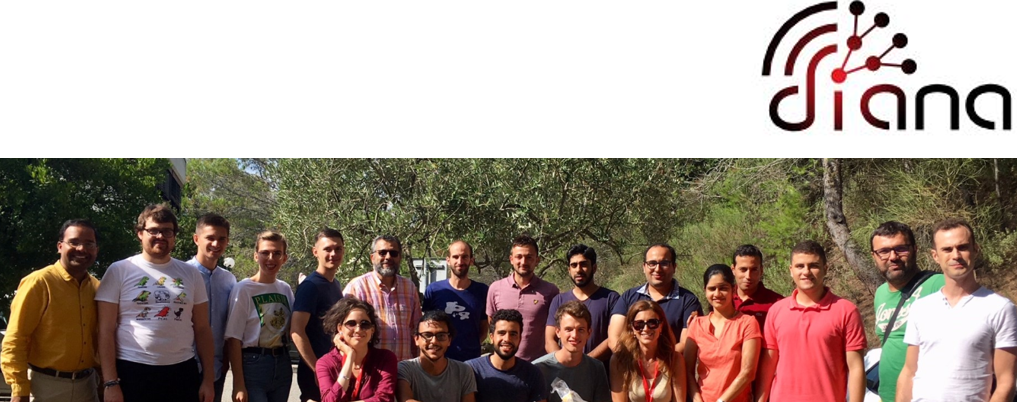
Chadi Barakat is a Senior Researcher (Directeur de Recherche) at Université Côte d'Azur's Inria research center, leading the DIANA project-team. He holds a PhD in Computer Science from University of Nice Sophia Antipolis (2001) and Habilitation (HDR) in 2009, with academic credentials from Lebanese University (1997) and French institutions. PhD: Computer Science (2001), University of Nice Sophia Antipolis HDR: Computer Science (2009), University of Nice Sophia Antipolis Master's: Computer Science (1998), University of Nice Sophia Antipolis BSc: Electrical & Electronics Engineering (1997), Lebanese University His research focuses on Internet measurement and traffic analysis , with significant contributions to Quality of Experience (QoE) modeling, 5G/ICN/SDN network architectures , and network performance evaluation . Recent articles highlight browser-based network monitoring, fidelity-aware network emulation, and ray tracing optimization for radio frequency mapping. He has supervised 12 PhD students to completion and currently directs the Academy of Excellence 'Networks, Information, and Digital Society' at Université Côte d'Azur. His work has received multiple best paper awards at CNSM, CloudNet, and SECON conferences, while serving as associate editor for Elsevier Computer Networks journal and active in ACM/IEEE conference committees. Director, Academy of Excellence 'Networks, Information, and Digital Society' (2025-present) Senior IEEE Member (2010) & ACM Senior Member (2018) General Co-Chair: ACM IMC 2022, ACM CoNEXT 2012 Guest Editor: IEEE JSAC special issue on Internet Sampling