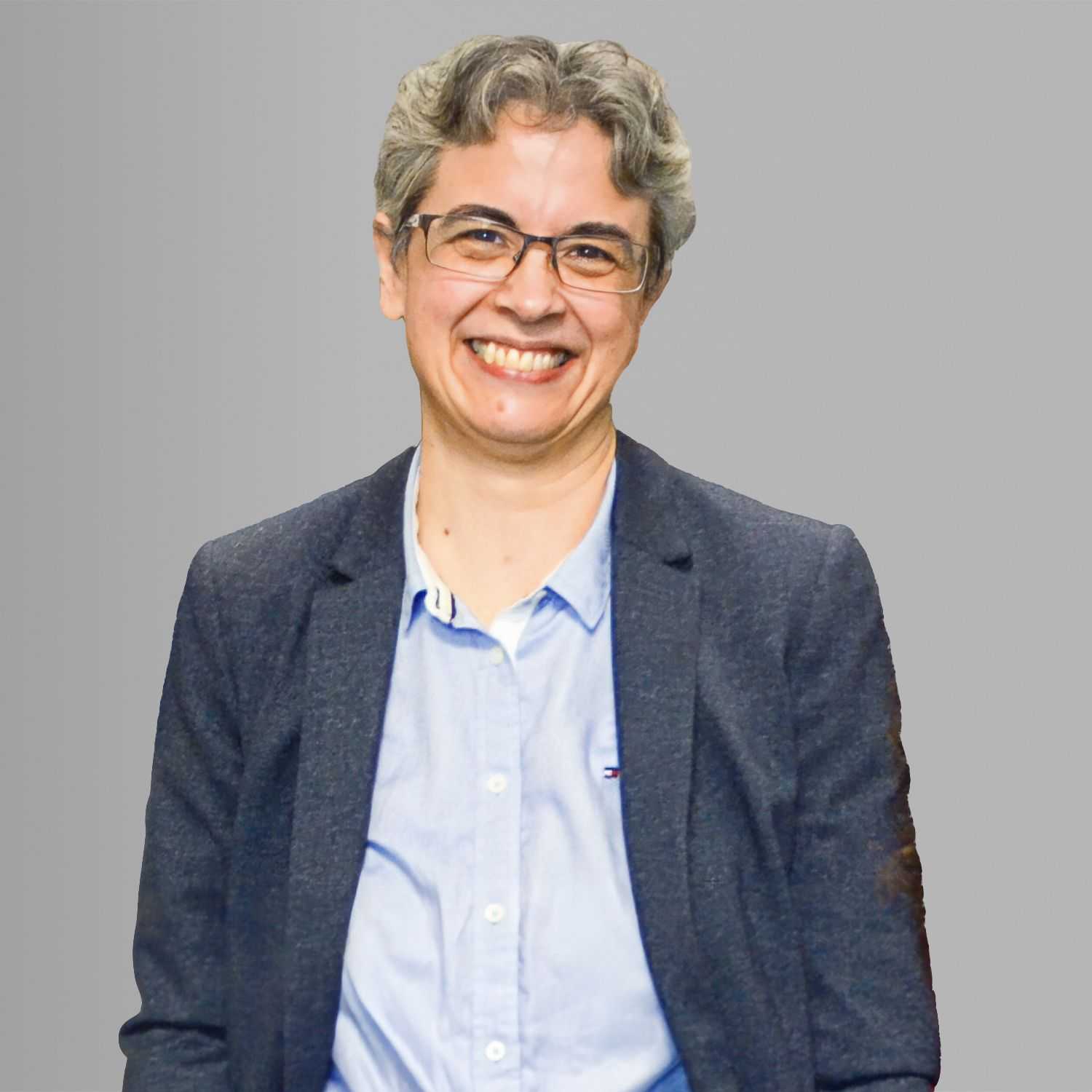
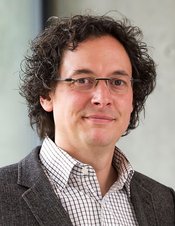
Fernando Benites de Azevedo e Souza is a researcher at Zurich University of Applied Sciences (ZHAW) specializing in Natural Language Processing (NLP) and text analytics. He collaborates across disciplines including cultural management, speech recognition, and low-resource language technologies. Key research areas: NLP applications in arts management, speech-to-text systems, and German dialect identification Active in SwissNLP community and VarDial conference series Focus on practical implementations: e-assessment integrity, transliteration resources, and resource-constrained deep learning His work demonstrates technical expertise in: Comparative analysis of ASR systems (CEASR corpus) Transliteration pattern detection (TRANSLIT resource) Dialect identification challenges Combining lexical and sentiment analysis Scientific achievements include: Ranked first in ALTA 2018 patent classification competition Multiple top-three finishes at VarDial evaluations First place in GermEval 2020 low-resource speech recognition task
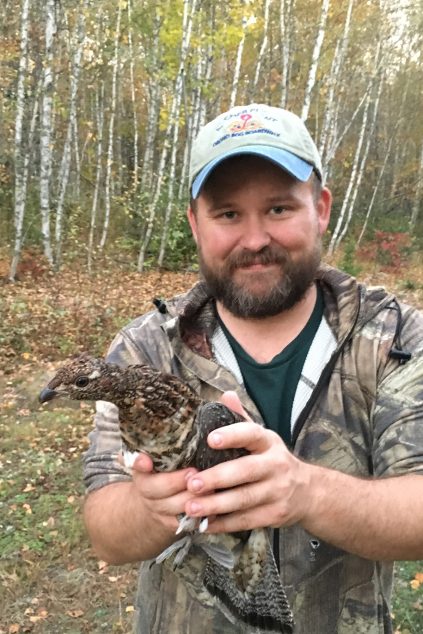
Erik Blomberg is Professor of Wildlife Ecology and Chair of the Department of Wildlife, Fisheries, and Conservation Biology at the University of Maine, within the College of Natural Sciences, Forestry and Agriculture. He leads a dynamic research lab focused on wildlife population dynamics and conservation, supported by the Maine Agricultural and Forest Experiment Station and McIntire-Stennis funding. Ph.D., Ecology, Evolution, and Conservation Biology, University of Nevada, Reno M.Sc., Natural Resources Science, University of Rhode Island Dr. Blomberg's research centers on understanding how environmental change affects wildlife populations, with a focus on gamebirds (ruffed grouse, spruce grouse, American woodcock), bats, American eels, and greater sage-grouse. His lab uses advanced demographic modeling and GPS telemetry to study survival, reproduction, migration, and habitat use. His work directly informs conservation and management strategies in collaboration with state and federal agencies. His recent publications reflect a strong emphasis on migration ecology, population modeling, and conservation science. Projects like the Eastern Woodcock Migration Research Cooperative demonstrate a trend toward large-scale, collaborative science integrating tracking technology with demographic analysis to address pressing wildlife management questions across North America. Dr. Blomberg is actively involved in mentoring graduate students and teaching key courses including Wildlife Population Dynamics (WLE 410/411), Gamebird Ecology (WLE 435), and Applied Population Ecology (WLE 650). He co-instructs the department’s field course and supervises research in the Wildlife Demographics Lab. His research is funded through the McIntire-Stennis Project ME042116 and Experiment Station contributions, supporting long-term studies on grouse ecology and woodcock migration. He has established strong partnerships with the Maine Department of Inland Fisheries and Wildlife and the Cooperative Forestry Research Unit. The Wildlife Demographics Lab, housed in Nutting Hall, is a hub for quantitative wildlife ecology, training the next generation of conservation scientists in demographic analysis, field methods, and conservation planning.
Roberto Fernández Fernández serves as Associate Professor at the University of León's Faculty of Law within the Department of Private and Business Law, specializing in Labour and Social Security Law as core member of the DTSS DERECHO DEL TRABAJO Y DE LA SEGURIDAD SOCIAL research group. His academic career centers on contemporary labor jurisprudence and technological impacts on employment relations. He earned his Doctorate from the University of León in 2003 with the thesis Las mutualidades voluntarias de previsión social de naturaleza empresarial under Dr. Juan José Fernández Domínguez's supervision, establishing his expertise in business-oriented social security systems. Research focuses on labor law evolution , social security frameworks , and technology-driven workplace transformations , with significant contributions to algorithmic recruitment ethics, geolocation monitoring boundaries, and social media expression rights. His work bridges traditional labor jurisprudence with digital age challenges through rigorous analysis of Supreme Court rulings and European jurisprudence. Recent publications reveal strong thematic convergence in labor law's adaptation to technological disruption, particularly examining big data in hiring, digital occupational risks, and regulatory gaps in social media usage. Concurrently, his educational research advances formative assessment methodologies across university teaching levels. Scientific awards: No documented honors in provided materials. Advising activities remain undocumented regarding specific students, though his extensive publications on Master's program evaluation (particularly Teacher Training rubrics and triadic assessment) confirm active graduate mentorship. Grant details are absent from available sources. As integral member of the DTSS research group, he contributes to seminal academic events including the Desafíos de las Relaciones Laborales ante los Cambios Tecnológicos seminar series and digital workplace risk prevention workshops, driving discourse on labor law modernization through collaborative knowledge production.
Jia Liang is a researcher at Henan Polytechnic University's School of Electrical Engineering and Automation, with a focus on Machine Learning , Compressed Sensing , and Privacy-Preserving Techniques . His work bridges Computer Science and Signal Processing , particularly in Radar Imaging and Medical Image Analysis . Key Collaborations: Di Xiao, Ying Luo, Qun Zhang, Hui Huang Technical Expertise: Federated Learning, SAR Imaging, Compressive Sensing, Adversarial Learning His research emphasizes secure data processing in IoT and cloud environments, with recent innovations in cross-disciplinary applications like biosignal analysis for cysticercosis diagnosis . Publications span top venues including IEEE Transactions on Aerospace Systems and Remote Sensing . Notable trends include privacy-preserving machine learning for federated systems and 3D radar imaging of rotating targets, alongside medical imaging solutions for chest radiographs and optical coherence tomography .
Lecturer Sarvas Risto is affiliated with Aalto University's Department of Computer Science within the School of Science. His research focuses on digital media studies, human-computer interaction (HCI), and the societal implications of technology. Key areas include social media analysis, digital saturation, metadata creation, and citizenship in the digital age. Risto has contributed to over 20 peer-reviewed publications since 2001, with notable work exploring photography's technological evolution, mobile social interaction platforms, and user-centric design principles. His research activities include organizing academic events like the 2021 Final Seminar of the 'Everyday Media Imagined by Teenagers' project and presenting at international conferences on topics such as digital natives' connectivity experiences and citizenship skills. While primarily focused on academic contributions, his work bridges technical innovation with sociocultural analysis, addressing both practical and ethical dimensions of emerging technologies. Risto has collaborated on projects like the RISE initiative, which explored semantically supported media services, and the DIMAS system for distributing multimedia content on peer-to-peer networks. His ongoing interests span future print media design, metadata systems for digital photography, and the legal aspects of user-generated content.
Hongyu Zhang is a Lecturer in the Department of Earth, Geographic, and Climate Sciences at the University of Massachusetts Amherst, where he contributes to the Geographic Information Science and Technology (GIST) program. He is based at the Mount Ida Campus and is actively engaged in research and teaching at the intersection of geography, technology, and ethics. Education: PhD in Geography, McGill University, 2024 MSc in Geography, Western University, 2017 Bachelor of Environmental Studies (BES) in Geomatics, University of Waterloo, 2015 (with minor in Computer Science and Diploma of Excellence in GIS) Hongyu's research focuses on geoprivacy , GeoAI , and the ethical dimensions of spatial data . He investigates how individuals disclose location information on social media, particularly in Chinese digital environments like Weibo, using mixed methods to understand the sociotechnical dynamics of privacy. His work aims to promote responsible spatial data science by bridging GIScience with human behavior and digital ethics. His recent publications and open-source contributions reflect a strong trend in social media analysis , geoprivacy discourse , and computational ethics . He develops tools and datasets to analyze privacy-related language and behavior online, with a focus on Chinese platforms. His work also extends to GIS education , where he emphasizes project-based learning to improve student employability in geospatial fields. Scientific Contributions: Development of lexicons for analyzing geoprivacy in Chinese social media Creation of datasets on microblog content and user comments Open educational resources in data science and GIS Research on algorithmic price discrimination and digital surveillance Hongyu is committed to open science and student mentorship. While no formal list of advisees is available, his teaching and project-based approach suggest active engagement with students. He has no listed scientific awards, but his research output and GitHub activity indicate a growing scholarly presence in geospatial ethics and digital society. He maintains an active research website and GitHub profile, where he shares code, datasets, and educational materials, reflecting a transparent and collaborative research philosophy.
Dr. Henry M. Streby is an Associate Professor of Ecology in the Department of Environmental Sciences at the University of Toledo's College of Natural Sciences and Mathematics. He holds a Ph.D. from the University of Minnesota (2010) and B.S./M.S. degrees from Ohio University. His research focuses on avian ecology, wildlife conservation, and evolutionary biology, with particular emphasis on migratory connectivity, hybridization, and novel field methodology. Ph.D., Ecology - University of Minnesota (2010) M.S., Ecology - Ohio University B.S., Ecology - Ohio University Dr. Streby's lab produces actionable science for biodiversity conservation while advancing understanding of avian behavioral evolution. Current projects include red-headed woodpecker demography, energy development impacts on birds, and collaborative work with the Black Swamp Bird Observatory. His methodological innovations span geolocator deployment, radio-telemetry, and full-season productivity modeling. His 15 most recent publications highlight trends in migration ecology, hybridization genetics, and habitat conservation. Key themes include migratory connectivity in Vermivora warblers, spatial ecology of turtles, and behavioral adaptations in Golden-winged Warblers. Collaborative work spans genomic analysis, climate impacts, and methodological improvements. Scientific Awards: 2021 President's Award for Excellence in Scholarly Activity (University of Toledo) 2018 Wildlife Society's Wildlife Publication Award 2013 Cooper Ornithological Society Young Professional Award NSF Postdoctoral Fellowship Out To Innovate Career Development Fellowship Louis Agassiz Fuertes Grant Graduate Dean's Fellowship (University of Toledo) Dr. Streby has mentored 12 graduate students including Gunnar Kramer (PhD 2021) and Kyle Pagel (MS 2019). His lab maintains a strong presence at professional ornithological and ecological societies, with extensive fieldwork in the Great Lakes, New Mexico, and Midwest oak savannas.
Hartwig Henry Hochmair is a Professor of Geomatics at the School of Forest, Fisheries, and Geomatics Sciences , University of Florida, Fort Lauderdale Research and Education Center (FLREC). Since joining the Geomatics program in 2008, he has focused on spatio-temporal analysis, data quality assessment, and the application of Geographic Information Systems (GIS) to interdisciplinary challenges in transportation, natural resource management, and urban planning. His work bridges academic research with practical GIS tools, particularly through the use of freely available geospatial data sources like OpenStreetMap and USGS Topo Maps. Research Interests : Geomatics, GIS, spatio-temporal analysis, data quality evaluation, GeoAI, OpenStreetMap, invasive species monitoring, and urban canopy analysis. Teaching : Courses include SUR 3520 Measurement Science, SUR 4350/6536 Geodesy and Geodetic Positioning, SUR 5525 Least Squares Adjustment, SUR 5365 Digital Mapping, and SUR 6103 GIS Programming. Lab : Leads the Geomatics program at FLREC, focusing on geospatial data visualization, accessibility modeling, and network analysis. His recent publications emphasize the integration of AI in geospatial workflows, comparative studies of volunteered and authoritative street data, and pandemic-induced shifts in human mobility. While no formal awards are highlighted in the provided texts, his work frequently addresses environmental challenges, technological innovations in mapping, and open data accessibility.
José Losada Quintás serves as an Associate Professor in the Department of Public Law at the University of Las Palmas de Gran Canaria, specializing in Labor and Social Security Law within the Social and Legal Sciences branch. His academic profile demonstrates extensive involvement in graduate and undergraduate education, particularly in Labor Relations and Human Resources programs. His research focuses on contemporary labor law challenges including workplace technology integration, digital surveillance, and evolving employment models. Key interests span labor relations in the digital age, workers' rights protection, collective bargaining frameworks, and the legal implications of new work forms like platform economy roles. His work consistently addresses the intersection of traditional labor frameworks with modern technological and economic transformations. Analysis of his advised theses reveals consistent thematic focus on labor law adaptation to technological change, with predominant emphasis on workplace monitoring systems, digital privacy concerns, and regulatory responses to emerging employment models. The research output shows strong alignment with European jurisprudence, particularly CJEU doctrine, while addressing practical Spanish labor market challenges. As an academic advisor, he has supervised numerous graduate theses covering critical contemporary issues including ERTE mechanisms during the pandemic, workplace harassment frameworks, and the legal status of platform workers. His mentorship extends across both Master's Degree in Law and Labor Relations and Human Resources programs. His departmental affiliation with Public Law at ULPGC places him within a framework where legal scholarship directly engages with social protection systems and workers' rights enforcement mechanisms. Current research trajectories indicate growing focus on technological mediation in employment relationships and regulatory adaptation to digital workplace transformations.
Susana Sotelo Docío is a Research Fellow at the Universidade de Santiago de Compostela , affiliated with the Faculty of Philology and the S3 Laboratory . Her work centers on Natural Language Processing (NLP) with applications in linguistic diversity , cultural narratives , and computational institutionalism . Email: susana.sotelo.docio@usc.es Phone: +34 881816397 Research Interests : Susana specializes in Named Entity Recognition (NER) , generative language models , and machine translation , with a focus on minoritized languages like Galician and Portuguese. Her projects include creating gold-standard corpora for cultural analysis and tourism, developing open-source generative models for Galician-Portuguese, and analyzing far-right political movements in Iberia using computational methods. Publications & Trends : Her work spans computational linguistics , political science , and digital humanities . Recent contributions include interdisciplinary studies combining large language models with historical institutionalism , alongside technical advancements in NER systems and continual pretraining for multilingual NLP. Thesis : In her 2024 doctoral thesis, she explored NLP-based analysis of cultural narratives about Santiago de Compostela, emphasizing how collective perceptions shape tourism practices. Labs & Teams : She collaborates with the S3 Laboratory and contributes to projects involving Pablo Gamallo , José Ramón Pichel , and other researchers in language technologies.
Scott Emrich is an Associate Professor in the Department of Electrical Engineering and Computer Science at the University of Tennessee, Knoxville. He also serves as the Interim Program Director for the UT-Oak Ridge Innovation Institute (UT-ORII) Ph.D. program in Data Science and Engineering. Dr. Emrich earned his B.S. in Biology and Computer Science from Loyola College in Maryland, followed by a Ph.D. in Bioinformatics and Computational Biology from Iowa State University. Upon completing his Ph.D., he received both the ISU Research Excellence Award and the university-wide Zaffarano Prize for Graduate Research. Before joining the University of Tennessee, he was the Director of Bioinformatics at the University of Notre Dame with faculty appointments in Computer Science and Engineering and Biological Sciences. His research focuses on genome-centric bioinformatics, parallel and distributed computing, and the integration of biological applications with second- and third-generation sequencing technologies. Dr. Emrich has published over 75 peer-reviewed publications in high-impact venues including Science (with 2 covers), PNAS, Nature, and Genome Research. His work has been cited over 14,300 times according to Google Scholar. His research group has introduced novel biological problems to the computer science community and developed bioinformatics frameworks that have contributed to high-impact publications in genomics. Dr. Emrich's publications demonstrate a strong trend toward integrating machine learning and AI approaches with traditional bioinformatics methods, particularly in codon usage analysis, genome assembly, and vector biology. His recent work shows increasing sophistication in language models for biological sequences and reference-free analysis techniques. His scientific awards include: 2008 Zaffrano Prize for Graduate Research ISU Research Excellence Award Dr. Emrich has advised numerous students throughout his career, including current PhD students in Genome Science and Technology and Data Science programs. His research has been supported by multiple NIH awards, including leadership roles on a NIAID contract (VectorBase) and a 2017-funded P01 grant on malaria genetics. Additional funding has come from the U.S. Department of Agriculture (USDA), the Department of Energy (DOE), and the state of Tennessee. He leads a research group focused on developing scalable computational tools that advance our understanding of genome biology. His group has introduced novel biological problems such as the influence of codon usage on protein folding to the broader computer science research community.
Yunus Emre Tansü is an Associate Professor at Gaziantep University's Faculty of Arts and Sciences, Department of History, specializing in General Turkish History. He has served in this position since 2019, following his tenure as a Doctor Lecturer at the same institution from 2004 to 2019. Previously, he worked as a Lecturer at Ege University's Department of Atatürk's Principles and Revolution History from 1996 to 2004. Dr. Tansü completed his educational journey at Hacettepe University, earning his History Doctorate from the Institute of Social Sciences (1994-2002), a Master's degree in History with thesis (1990-1993), and a Bachelor's degree in History from the Faculty of Letters (1986-1990). His research interests span multiple dimensions of Turkish history with particular focus on General Turkish History , Pre-Islamic Turkish History , Turkish Cultural History , and Turkish Peoples and Communities . His scholarly work demonstrates deep engagement with Turkic civilizations across Central Asia, Anatolia, and the broader Eurasian context. Dr. Tansü has made significant contributions to understanding Seljuk history, pre-Islamic Turkic societies, migration patterns, and cultural interactions between Turkic peoples and neighboring civilizations, with notable expertise in funeral customs, women's roles in nomadic societies, and historical source analysis. His extensive publication record reveals consistent scholarly productivity across multiple historical subfields. Recent works (2024-2025) demonstrate continued focus on Seljuk history, Turkic genealogy, Mongol Empire studies, and Samanid Dynasty research. His scholarship shows a methodological approach that combines historical source analysis with cultural anthropology, particularly evident in his studies of Turkic funeral customs and women's roles in nomadic societies. The interdisciplinary nature of his work is apparent in publications addressing both historical subjects and contemporary issues like migration and refugee integration. Dr. Tansü has authored or co-authored numerous scholarly works including 49 book chapters, 64 articles, and 62 conference papers. His publications appear in both Turkish and international venues, demonstrating his commitment to contributing to global scholarly discourse while maintaining strong connections to Turkish academic traditions. His editorial work includes multiple volumes of the 'Tarih Alanında Seçme Yazılar' (Selected Writings in History) series. His academic career includes significant research projects such as 'Gaziantep Kozdere Aktas Mameyler Village Turkmen Communities Historical, Social and Cultural Status Research' (2013-2017) and 'Gaziantep Elbeyli Turkmen El Bacuz Tribe Historical, Social and Cultural Status Research' (2014-2017), where he served as principal investigator. He has also contributed to educational development projects including 'Course Passing and Credit System Research' and 'Ministry of National Education Program Studies.' Dr. Tansü's scholarly network extends across Turkish and international academic institutions, with collaborations evident in his co-authored publications and participation in numerous international conferences throughout Turkey, Central Asia, and Europe, demonstrating his active engagement in the global historical research community.
Prof. Dr. Ulrich Ebner-Priemer is a Full Professor and Chair of Applied Psychology at the Karlsruhe Institute of Technology (KIT), where he leads the Mental mHealth Lab within the Institute for Sports and Sports Science. His work focuses on developing and applying mobile health approaches for mental disorders, with a methodological emphasis on Ambulatory Assessment (also known as Ecological Momentary Assessment, Experience Sampling Method, or digital phenotyping). He maintains a significant collaboration with the Central Institute of Mental Health (ZI) in Mannheim and leads research projects involving multiple German university hospitals. Prof. Ebner-Priemer's research spans several key areas: Assessment of momentary mechanisms in daily life through projects like EMPOWERYOU, STAR, START, and RELATER Long-term monitoring of illness trajectories in projects like S02 and A04 within CRC TRR 265 Development of mHealth interventions including TherapyBuilder and BipoLife Investigation of physical activity's effects on mental health and wellbeing Neurobiological correlates of everyday experiences using combined mobile and neuroimaging approaches His publication record reveals a consistent trajectory of high-impact research in digital mental health. Recent work explores how physical activity mitigates social isolation effects, neural correlates of social contact benefits, and green space impacts on mental wellbeing. His research covers diverse mental disorders including borderline personality disorder, ADHD, PTSD, bipolar disorders, depression, anxiety, eating disorders, and alcohol use disorder, with publications in Nature Neuroscience, JAMA Psychiatry, Lancet Psychiatry, and Science Advances. Major recognitions include: President of the Society for Ambulatory Assessment (SAA) Current chair of the ECNP network "Digital Health" Successful acquisition of CRC393 on Affective Disorders DFG funding for multiple collaborative research centers BMBF funding for numerous mHealth intervention studies As a mentor, Prof. Ebner-Priemer has supervised numerous doctoral students to completion, including Markus Reichert, Marco Giurgiu, Tobias Kockler, and Lena Wieland. His lab has developed a unique assessment ecosystem in partnership with movisens, featuring real-time analysis capabilities. The Mental mHealth Lab serves as central infrastructure for large-scale collaborative projects involving university hospitals in Marburg, Münster, Dresden, and Bonn, solidifying its position as a leader in European mental health technology research.
Professor Kim Jong-hyun serves in the Department of Information Security at Sejong University, directing the Network Security Lab which develops core security technologies for cyberattack response, cloud security, and mobile communications security in evolving digital environments. The lab actively participates in international standardization efforts. His research spans critical cybersecurity domains: Network and 5G Security Drone (UAV) Security Systems AI-Driven Malware Detection Cloud Infrastructure Protection Mobile Communications Vulnerability Analysis Base Station Authentication Mechanisms 2024 publications reveal concentrated research on wireless security challenges, particularly fake base station threats in 5G networks, container security in cloud-native environments, and deep learning applications for UAV location integrity. His work bridges theoretical models with practical implementations for next-generation network security. No scientific awards are documented in the provided materials. Professor Kim actively supervises graduate research through Master's thesis and Doctoral Dissertation courses in the Graduate School of Information Security, while teaching specialized courses including Mobile Communications Security and Advanced C Programming. His advising focuses on emerging security threats in telecommunications infrastructure. The Network Security Lab (Se212C) functions as an operational hub for hands-on security research, with interview procedures requiring direct email contact for prospective students.
Gitta Astrid Hildegard Kutyniok is a Professor in the Department of Physics and Technology at UiT The Arctic University of Norway. Her research spans machine learning, applied mathematics, and signal processing, with a focus on theoretical foundations and practical applications.


.png)