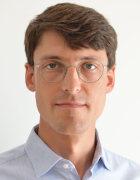
Edgar Weippl is a Professor at the Faculty of Computer Science, University of Vienna, where he serves as Vice Dean and Head of the Research Group Security and Privacy. His work spans cybersecurity, blockchain, and machine learning, with teaching roles in information security and software security courses. Current Positions: Vice Dean (Faculty of Computer Science), Head (Security and Privacy Research Group), Deputy Head (Neuroinformatics & Knowledge Engineering Groups) Research Interests: Cybersecurity, blockchain, IoT security, code obfuscation, privacy technologies, reinforcement learning, and socio-technical systems security Selected Publications: Focus on blockchain privacy, VoWiFi security, code obfuscation, and reinforcement learning applications
Prof. Philipp Reiss is a Professor of Lunar and Planetary Exploration Technologies at the Technical University of Munich (TUM), part of the TUM School of Engineering and Design. His academic journey includes a doctorate in lunar exploration (2018) and postdoctoral leadership of a research group, followed by ESA work on lunar mission instruments. He was appointed to his current role in 2022. Education: Bachelor's/Master's in Aerospace Engineering from Bremen University of Applied Sciences and TUM Doctorate in Lunar Exploration (TUM, 2018) Research Focus: Development of instruments for in-situ resource characterization (e.g., water detection on the Moon) Simulation of heat/mass transport in extraterrestrial environments Technologies for extreme environment exploration Legal and ethical frameworks for space resource utilization Recent Article Trends: Recent work emphasizes lunar water cycle analysis, space resource extraction technologies, and ESA mission instrument development. Key projects include PROSPECT payload design and thermal extraction of volatiles from regolith. Awards and Roles: ERC Grant Awardee (2024), Honorary Fellow at TUM Institute for Advanced Study Principal Investigator at ORIGINS Excellence Cluster (2022–present) Member of ESA’s PROSPECT science team (2019–present) Contributions to UN space resource legal discussions Advising & Grants: Supervises research projects on lunar rover systems and resource utilization. Secured funding through ERC grants and ESA collaborations. Advises on international space policy initiatives. Labs/Teams: Leads the Lunar and Planetary Exploration Professorship group at TUM, collaborating with ESA, JAXA, and the European Lunar Symposium. Active in developing planetary exploration tools like the PROSPECT permittivity sensor and MULE instrumentation.
Dr. Ramsey Faragher is a Senior Research Associate at the Computer Laboratory , University of Cambridge, and a Bye-Fellow at Queens' College. His work focuses on infrastructure-free indoor positioning systems, sensor fusion, and improvements to smartphone sensing capabilities. Academic Affiliation : University of Cambridge (Computer Laboratory) Professional Roles : Bye-Fellow at Queens' College, Senior Research Associate His research spans multiple disciplines within computer science and engineering, emphasizing innovative navigation solutions and signal processing techniques. Key areas include GNSS robustness, wireless security, and machine learning applications for positioning systems. Recent publications highlight advancements in supercorrelation for automotive GNSS, sensor data calibration, and motion-compensated signal processing. Articles frequently address challenges such as spoofing mitigation, urban navigation, and infrastructure-free localization. Scientific Recognition Fellow of the Royal Institute of Navigation Chartered Physicist (CPhys)
Daniele Apiletti is an Associate Professor at the Polytechnic University of Turin , affiliated with the Department of Control and Computer Engineering (DAUIN). He serves as a member of the Interdepartmental Center SmartData@PoliTO and acts as Academic Advisor for the Master's degree program in Data Science and Engineering. Research Groups: DBDM - Database and Data Mining Group (DAUIN) ERC Sectors: Algorithms, Artificial Intelligence, Machine Learning, Web and Information Systems Research Interests span Big Data Analytics, Data Science, Machine Learning, Computer Vision, and Quantum Computing. His work focuses on integrating data-driven and theory-guided approaches for heterogeneous data querying, cloud continuum machine learning, and spatio-temporal models for crisis management. Recent Publications highlight trends in medical image segmentation, predictive industrial modeling, and fault-tolerant data systems. Key subfields include AI in healthcare, scalable manufacturing analytics, and vision-language models for game tutorials. Teaching roles include course ownership of Big Data: Architectures and Data Analytics and Internships across multiple academic years. He has collaborated on courses in Data Science, Database Technologies, and Data Management. PhD Students Supervised: Etibar Vazirov (Cloud Continuum Machine Learning) Gabriele Scaffidi Militone (Cloud Storage Microservices) Daniele Rege Cambrin (Spatio-Temporal Ecology Models) Simone Monaco (Theory-Guided Data Science) Research Projects include commercial contracts on: - Natural language querying of corporate research archives - National tourism ecosystem platforms - AI for thermotechnical system design - Machine Learning in clinical trials and supply chains
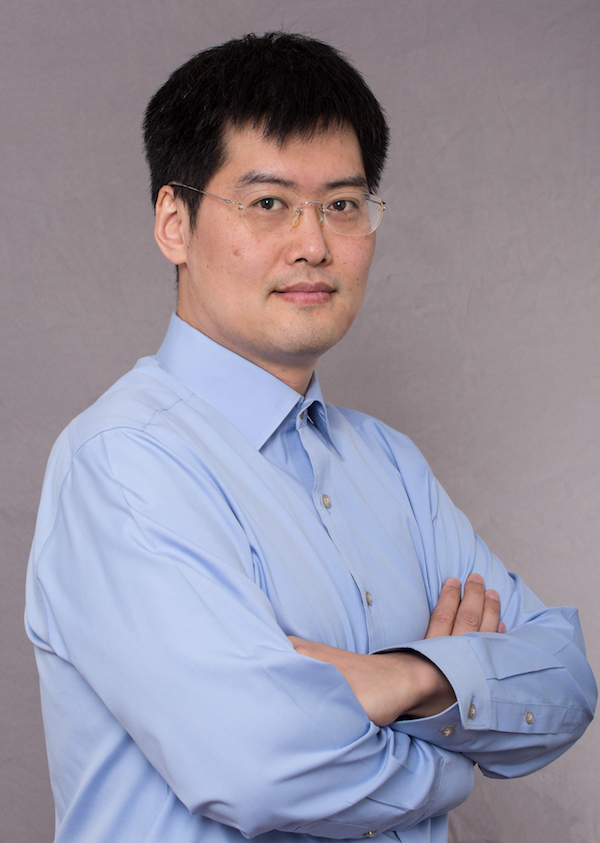
Xuming He is an Associate Professor at the School of Information Science and Technology (SIST), ShanghaiTech University, where he leads the PLUS Lab. His research spans computer vision and machine learning with a focus on developing algorithms that operate effectively under limited supervision and evolving data conditions. His core research interests include weakly-supervised and few-shot learning for scenarios with sparse annotations, continual learning frameworks for knowledge retention during sequential task acquisition, semantic segmentation techniques for scene understanding, and multimodal vision-language representations. He emphasizes interpretable machine learning to build transparent AI systems capable of human-understandable reasoning, addressing critical challenges in model trustworthiness and deployment reliability. Recent publications reveal strong trends toward novel class discovery in long-tailed recognition scenarios, physics-informed generative modeling for scientific applications, and robust segmentation under distribution shifts. His work increasingly integrates large language models for multimodal reasoning while maintaining focus on efficiency in resource-constrained environments like robotic grasping and medical imaging analysis. He actively mentors students, having supervised Qian He to PhD completion and Chuanyang Hu to Master's degree in 2023. He welcomes prospective graduate students through ShanghaiTech's Computer Science & Technology program and offers undergraduate research projects requiring minimum six-month commitments. The PLUS Lab under his direction drives innovation in learning under supervision constraints, with recent work spanning medical tumor analysis, cross-view geolocation, photonic computing, and semiconductor design verification. The lab's research bridges theoretical advances with practical applications across healthcare, robotics, and scientific discovery domains.
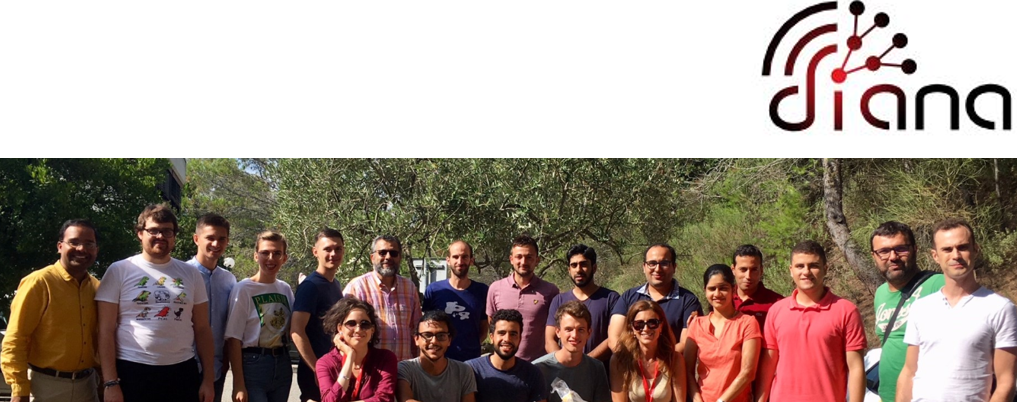
Chadi Barakat is a Senior Researcher (Directeur de Recherche) at Université Côte d'Azur's Inria research center, leading the DIANA project-team. He holds a PhD in Computer Science from University of Nice Sophia Antipolis (2001) and Habilitation (HDR) in 2009, with academic credentials from Lebanese University (1997) and French institutions. PhD: Computer Science (2001), University of Nice Sophia Antipolis HDR: Computer Science (2009), University of Nice Sophia Antipolis Master's: Computer Science (1998), University of Nice Sophia Antipolis BSc: Electrical & Electronics Engineering (1997), Lebanese University His research focuses on Internet measurement and traffic analysis , with significant contributions to Quality of Experience (QoE) modeling, 5G/ICN/SDN network architectures , and network performance evaluation . Recent articles highlight browser-based network monitoring, fidelity-aware network emulation, and ray tracing optimization for radio frequency mapping. He has supervised 12 PhD students to completion and currently directs the Academy of Excellence 'Networks, Information, and Digital Society' at Université Côte d'Azur. His work has received multiple best paper awards at CNSM, CloudNet, and SECON conferences, while serving as associate editor for Elsevier Computer Networks journal and active in ACM/IEEE conference committees. Director, Academy of Excellence 'Networks, Information, and Digital Society' (2025-present) Senior IEEE Member (2010) & ACM Senior Member (2018) General Co-Chair: ACM IMC 2022, ACM CoNEXT 2012 Guest Editor: IEEE JSAC special issue on Internet Sampling
Dr. Fendy Santoso is a leading researcher and Cyber-Physical Lead at the Artificial Intelligence and Cyber Futures Institute, Charles Sturt University, Australia. He also holds a Visiting Fellow position at the School of Engineering and Technology, UNSW Canberra, and has held visiting roles at the University of Cambridge and Cranfield University. His work bridges cybersecurity, AI, and autonomous systems, with significant impact in UAV security and cyber-physical resilience. Education: PhD in Electrical Engineering, University of New South Wales (Awarded: 21 Jun 2012) Master of Electrical and Computer Systems Engineering, Monash University (Awarded: 07 Jun 2007) Dr. Santoso’s research focuses on adversarial machine learning, UAV security, intrusion detection in robotic systems, and cyber-secure digital twins. His work integrates AI, control theory, and cybersecurity to enhance the resilience of autonomous systems. He has pioneered research in securing ROS-based platforms and defending against GPS spoofing and DoS attacks in unmanned vehicles. His recent publications (2020–2025) highlight a strong trend in applying deep learning, fuzzy logic, and physics-informed models to detect and mitigate cyberattacks in UAVs and UGVs. Key themes include intrusion detection systems, secure digital twins for agriculture, and intelligent transportation systems enabled by drones. His work is frequently published in IEEE Transactions and top-tier conferences. Scientific Awards and Grants: Vice-Chancellor’s Distinguished Early Career Travel Fellowship, University of Wollongong (2019) ARC Linkage Project Grant (LP230100083) on adversarial machine learning for UAVs (2024) CSIRO-funded AgriTwins project on cyber-secure digital twins for agriculture (2024) Dr. Santoso has secured over AUD 3 million in competitive research funding and actively supervises postgraduate students. He serves as a reviewer for the Australian Research Council and technical program committees of major AI and engineering conferences. His collaborative work spans defence organisations like DSTG and the U.S. Army Ground Vehicle Systems Centre, as well as international academic institutions. He is a Senior Member of IEEE and leads research in labs focused on cyber-physical systems, autonomous robotics, and AI-driven security frameworks. His team develops real-time detection tools for cyberattacks on military and agricultural robots, contributing to critical infrastructure resilience.
Zheng Yang is a Professor at Tsinghua University's School of Software, with significant research contributions in cryptography, cybersecurity, and privacy-preserving systems. His work spans multiple institutions including collaborations with University of Helsinki's Secure System Group and Chongqing University of Technology. He maintains active research in both theoretical and applied security domains, with particular focus on industrial applications. Professor Yang's research interests center on cryptographic protocols, authentication mechanisms, and security for emerging technologies. His work addresses critical challenges in Cyber-Physical Systems security, Industrial Internet of Things protection, and privacy-preserving computation. He has made significant contributions to secure key exchange protocols, authentication systems, and defenses against sophisticated network attacks including DDoS mitigation strategies. His research bridges theoretical cryptography with practical implementations for resource-constrained environments. Analysis of Professor Yang's recent publications reveals a strong trend toward practical security solutions for industrial and embedded systems. His work increasingly focuses on balancing security with performance constraints in Cyber-Physical Systems and Industrial IoT environments. Key research themes include lightweight cryptography for resource-constrained devices, privacy-preserving location services, and novel authentication mechanisms that maintain security while minimizing computational overhead. His publications demonstrate consistent innovation in adapting cryptographic techniques to real-world security challenges. Professor Yang has established himself as a leading researcher through his extensive publication record in top security venues including IEEE Security & Privacy, USENIX Security, and ACM conferences. His work has been published consistently in high-impact journals and conferences, demonstrating sustained research productivity and influence in the security community. Professor Yang maintains active research collaborations with numerous institutions globally, evidenced by his extensive co-authorship network. His research has attracted significant funding for projects addressing critical security challenges in emerging technologies. His work on secure authentication protocols and privacy-preserving systems has practical applications across multiple industry sectors. Professor Yang leads research initiatives focused on secure Cyber-Physical Systems and Industrial IoT security. His laboratory work emphasizes practical implementations of cryptographic protocols for real-world systems, with particular attention to performance constraints in embedded environments. Current research directions include secure communication for programmable logic controllers, privacy-preserving location services, and adaptive defenses against sophisticated network attacks.
Jun Shen is a Professor at the School of Computing and Information Technology, University of Wollongong. He specializes in computational intelligence, cloud computing, and big data applications, with a focus on AI-driven solutions for real-world challenges in transport systems, healthcare, education, and environmental management. He has secured over 40 research grants totaling AU$4.5 million and supervised 26 completed PhD projects. His work spans interdisciplinary areas including bioinformatics, smart manufacturing, and digital health. Research interests include bio-inspired algorithmic optimization, AI in arts/media, and edge computing for IoT systems. He has pioneered research centers in applied computing since 2014 and holds editorial roles in top journals like IEEE Transactions. As an IEEE Distinguished Lecturer, he actively promotes AI ethics and interdisciplinary collaboration. Recent publications emphasize adversarial machine learning defenses, UAV systems, and multimodal data fusion. His supervision includes projects in intelligent transport systems, cloud computing, and e-learning. Grants include projects on resilient energy systems and UAV geolocation verification. Leadership roles include leading over 20 researchers and chairing conferences. He advocates for digital transformation in public services and has conducted fieldwork at MIT, UCI, and Georgia Tech.
Neal D. Goldstein, PhD, MBI, is an Associate Research Professor of Epidemiology at Drexel University's Dornsife School of Public Health. His work focuses on computational methods in epidemiology, particularly leveraging electronic health records (EHR) for infectious disease surveillance and public health resource optimization. He holds a PhD in Epidemiology from Drexel and an MBI from Oregon Health & Science University. Research interests include data analysis methods, infectious disease transmission, spatial epidemiology, and translational epidemiology. Goldstein has authored over 60 peer-reviewed publications, a textbook on EHR-based epidemiological analyses, and co-authored chapters in academic textbooks. His work has been featured in national media outlets including Kaiser Health News and Politico. Key projects include NIH-funded studies on HIV surveillance and predictive modeling of healthcare-associated infections. Goldstein also maintains a blog discussing methodological advances in epidemiology and EHR research. He advises students and collaborates on grants focused on improving public health resource allocation through data-driven approaches. Goldstein's lab emphasizes bridging EHR informatics with epidemiological practice to address challenges in infectious disease management and healthcare equity.
Christos Nicolaides is an Assistant Professor at the Department of Business and Public Administration within the School of Economics and Management at the University of Cyprus (UCY), holding a secondary appointment as a Digital Fellow at MIT's Initiative on the Digital Economy. Previously, he spent three years as a James McDonnell Foundation-funded Postdoctoral Fellow at MIT Sloan School of Management. His educational background includes a PhD in Engineering from Massachusetts Institute of Technology (2014), SM from MIT (2011), MSc in Applied Mathematics from Imperial College London (2009), and BSc in Physics from University of Thessaloniki (2008). Nicolaides' research applies mathematical, statistical, and computational tools to large-scale empirical questions in social influence mediated by digital technologies. His work spans Data Science , Machine Learning , Social Networks , and Computational Social Science , with significant contributions to understanding human mobility patterns, disease transmission dynamics, and social contagion effects. His research has established novel methodologies for analyzing complex network structures in mobility data and social interactions. Analysis of his 15 most recent publications reveals a consistent focus on applying network science to real-world problems, particularly in pandemic response (12 publications), human mobility analytics (9 publications), and social contagion dynamics (7 publications). His work demonstrates increasing interdisciplinary integration, combining computer science, epidemiology, and organizational behavior since 2020. Marie S. Curie Fellow Two Highly Cited Papers by Web of Science (2017, 2020) Best Paper Award by Risk Analysis Society (2019) Professor of The Week by Poets & Quants (2020) As principal institutional investigator, Nicolaides has secured over €1 million in research funding from the European Commission, industry partners, Cyprus Innovation and Research Foundation, and Cyprus Ministry of Health. His current teaching includes Social Networks and Entrepreneurship, Introduction to Operations Management, and Quantitative Methods in Management. Media coverage of his work spans major outlets including The New York Times, CNN, Nature, and Science, with significant impact on public health policy discussions during the COVID-19 pandemic.
Tuomas Väisänen is a Postdoctoral Researcher at the University of Helsinki's Faculty of Science and Department of Geosciences and Geography . He contributes to multiple research initiatives including the Helsinki Inequality Initiative (INEQ), Institute for Urban Studies (Urbaria), and Institute of Sustainability Science (HELSUS). His academic work bridges computational geography with urban studies, focusing on multilingualism, digital data sources, and mobility patterns. Doctor of Philosophy (2019–2023), Multidisciplinary Doctoral Programme in Environmental Studies, University of Helsinki Master of Philosophy (2016–2018), Department of Geosciences and Geography, University of Helsinki Bachelor of Science (2012–2016), Department of Geosciences and Geography, University of Helsinki His research explores urban diversity through linguistic landscapes , dynamic populations , and residential area changes . He integrates sociolinguistics with geographical methods , emphasizing mobile phone data , social media analysis , and machine learning . Recent projects like BORDERSPACE and MOBI-TWIN investigate cross-border interactions and European territorial integration . His 15 most recent publications highlight trends in computational urban geography , geospatial datasets , and linguistic diversity mapping , with a focus on Erasmus+ mobility , national park interactions , and transnational functional areas . Contributions to open datasets (e.g., Mobi-Twin, Erasmus+ flows) underscore his commitment to digital methods and European regional development . While no formal awards are listed, his peer-review activities for journals like Computers, Environment and Urban Systems and Biological Conservation demonstrate academic engagement. He teaches spatial data methods to Master's students and provides guest lectures on computer vision and GIS . Collaborations span the European Commission, Academy of Finland, and University of Tartu Foundation.
Kalina Bontcheva is a Senior Researcher in the Natural Language Processing Group within the Department of Computer Science at the University of Sheffield. She holds an EPSRC Career Acceleration Fellowship (working part-time since October 2015) focused on personalized summarization of social media content. Her research spans multiple EU-funded projects including PHEME (computing veracity of social media), TrendMiner, DecarboNet, and uComp, with significant contributions to the GATE (General Architecture for Text Engineering) open-source NLP infrastructure since 1999. Dr. Bontcheva's research interests focus on the intersection of natural language processing and social media analysis. Her work encompasses NLP for social media, semantic search, information extraction from social platforms, crowdsourcing of NLP corpora, collaborative text annotation, semantic technologies, and text mining and analytics. She has particular expertise in developing methods for personalized, abstractive multi-document summarization across different social media platforms, addressing the challenges of noisy, jargon-filled and dynamic content. Her interdisciplinary approach combines machine learning, semantic technologies, and social dimension analysis to create systems that adapt to individual users' information seeking goals. Analysis of her recent publications reveals a strong focus on social media processing challenges, with emphasis on Twitter analysis, temporal expression recognition, and handling noisy text. Her work consistently addresses the unique characteristics of social media content and develops specialized techniques for information extraction, sentiment analysis, and user geolocation within these platforms. The GATE framework serves as the foundation for much of her tool development, demonstrating her commitment to creating reusable, open-source NLP infrastructure. Her most significant award is the EPSRC Career Acceleration Fellowship, which supports her work on personalized social media summarization. This prestigious fellowship includes a substantial budget of £560k and involves collaborations with industry partners including The Press Association, British Telecom, and Fizzback. Dr. Bontcheva has led numerous major research projects throughout her career. She was Principal Investigator on three EU-funded projects (MUSING, TAO, and ServiceFinder) between 2006-2009, coordinating the TAO consortium with seven partner institutions. She currently leads the PHEME EU project and serves as PI for TrendMiner and DecarboNet European projects, while also contributing as Co-I on the uComp project. Her project portfolio demonstrates consistent success in securing competitive research funding across multiple domains within NLP and semantic technologies. She works within the Natural Language Processing Group at the University of Sheffield, which has been central to the development of the GATE infrastructure. Her work connects with various initiatives including the GATE Cloud platform and the TextVRE project for e-humanities textual studies. She has established collaborations with organizations including the Press Association, British Telecom, Oxford Internet Institute, and Sheffield's Department of Journalism to ensure her research addresses real-world needs across different user communities.
Dr. Miguel Mascaró Portells is a Senior Lecturer at the University of the Balearic Islands in the Department of Mathematics and Computer Science. He holds a PhD in Computer Science and actively contributes to research groups focused on computer graphics, AI, and multimedia technologies. Research Focus: His work encompasses web development, cloud computing, Big Data applications, neural vision systems, multimedia content management, and geolocation technologies. Specific interests include: Object-Oriented Programming (OOP) and SOA services Mobile device programming and TDT visualization Cloud-based multiprocessing systems Home automation and control systems Teaching: Current courses include: Advanced Algorithms Programming - Computer Science I Final Degree Project supervision SOA solutions for tourism Affiliations: Active member of: Computer Graphics, Vision and AI Unit (UGIVIA) Multimedia Information Technology (TIM) Research Group
Brian Nussbaum is an Assistant Professor in the College of Emergency Preparedness, Homeland Security and Cybersecurity (CEHC) at the University at Albany. He is concurrently a Fellow of the Cybersecurity Initiative at New America and an Affiliate Scholar at Stanford Law School's Center for Internet and Society (CIS). Previously, he served as a Senior Intelligence Analyst at the New York State Office of Counter Terrorism (OCT), where he established the Cyber Analysis Unit (CAU) at the New York State Intelligence Center (NYSIC). Education: Ph.D. in Political Science, University at Albany, 2009 M.A. in Political Science, University at Albany, 2007 B.A. in Political Science, Binghamton University, 2002 Nussbaum's research examines cybersecurity governance with emphasis on state/local capabilities, critical infrastructure protection, and intelligence communication. His core interests include: Policy frameworks for municipal cybersecurity resilience Threat assessment methodologies for emerging technologies Cross-jurisdictional information sharing architectures Operational challenges in smart city security His recent publications (2020-2024) demonstrate multidisciplinary analysis of cyber-physical threats, with recurring themes in: Critical infrastructure vulnerability and crisis management Evolution of financial cybercrime and regulatory responses Attribution challenges in cyber incidents Intersections of disinformation, surveillance, and democratic processes Nussbaum contributes to field-building through affiliations with New America and Stanford CIS, extending his impact beyond academia into national policy discourse. His prior operational experience at NYSIC informs applied research on public-sector cybersecurity capacity.