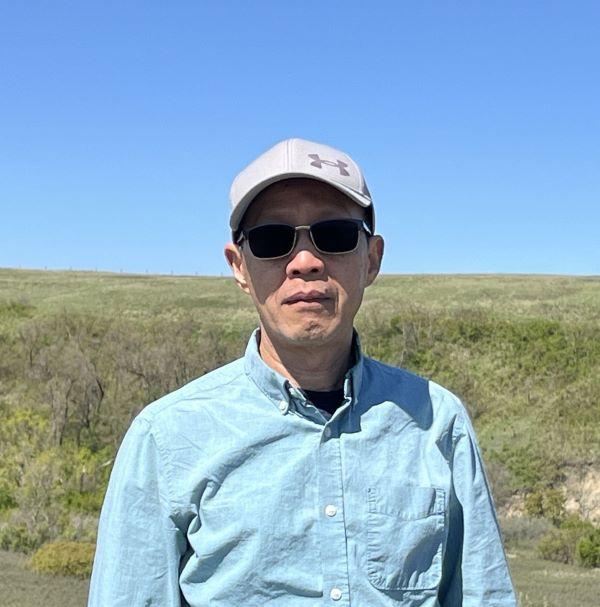
Guoxiang ChiView profile
Professor
Dr. Guoxiang Chi is a Professor in the Department of Earth Sciences within the Faculty of Science at the University of Regina, Canada. His research is centered on fluid geochemistry and hydrodynamics related to mineralization and hydrocarbon systems, with a focus on uranium deposits, geofluids, and fluid inclusions. His expertise includes the application of fluid-inclusion, stable isotope, and numerical modeling techniques to understand mineralization processes. He teaches a wide range of courses including Geochemistry, Igneous Petrology, Mineral Deposits, Groundwater Flow, Sedimentology, and advanced topics in fluid geology. Dr. Chi's research interests include: Economic geology and metallogenesis Uranium deposit systems in sedimentary basins Hydrodynamics of basinal fluids Fluid inclusion analysis and microthermometry Diagenetic processes and reservoir characterization Numerical modeling of fluid flow and reactive transport His recent publications (2022–2024) reveal a strong focus on unconformity-related uranium systems in the Athabasca Basin, utilizing fluid inclusion, isotopic, and geochemical data. His work spans global mineral systems including Sn-Pb-Zn deposits in South China, Cu-Au skarns in Kyrgyzstan, and Co-Cu systems in Africa. The research consistently integrates field observations, laboratory analyses, and modeling to understand ore-forming processes. Dr. Chi holds editorial roles in leading journals: Associate Editor, Ore Geology Reviews Associate Editor, Acta Geologica Sinica Editorial Board Member, Journal of Earth Science Editorial Board Member, Geotectonica et Metallogenia Former Associate Editor, Bulletin of Canadian Petroleum Geology Guest Editor for special issues in Geoscience Frontiers , Ore Geology Reviews , and Geofluids He has advised numerous graduate students and leads a research group focused on fluid-driven mineralization. His prior experience includes research scientist roles at the Geological Survey of Canada and postdoctoral work at the University of Quebec. He has not been mentioned as retired, deceased, or part-time, indicating active engagement in academic and research activities.