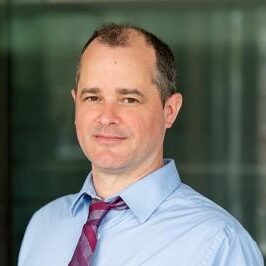
Dr Kingsley Edney is an Associate Professor in International Relations of China at the University of Leeds' School of Politics and International Studies. He holds a PhD (International Relations) and MA (Political Science) from the University of Melbourne, along with a BA(Hons) in Politics and Anthropology from Victoria University of Wellington. Fluent in Chinese and with experience living in Shanghai and Beijing, his research focuses on China's non-material international security dynamics, including cultural diplomacy, propaganda, and ideological strategies to manage global information flows. His expertise includes Chinese soft power, the role of ideology in foreign policy, and the intersection of domestic political cohesion with international security objectives. He teaches undergraduate and master's courses on China's domestic and international politics. Current postgraduate researchers under his supervision are Jinru Huang, Yanyu Lu, and Hengfeng Zhao. Edney's research outputs span topics like public perceptions of China in the Anglosphere, Chinese youth nationalism, and environmental governance. His work often bridges theoretical frameworks with empirical analysis of China's evolving global engagement strategies. He maintains active academic engagement through platforms like Google Scholar and ORCID.
Peter A. Raymond is the Oastler Professor of Biogeochemistry at Yale University's School of the Environment and Department of Geology and Geophysics. He serves as Senior Associate Dean of Research & Director of Doctoral Studies and is Co-Director of the Yale Center for Natural Carbon Capture. Raymond leads the Raymond Biogeochemistry Lab, which investigates the biogeochemistry of inland waters, enhanced weathering, methane cycling, and blue carbon systems through cutting-edge field, laboratory, and modeling approaches. Education B.S., Marist College Ph.D., College of William and Mary/Virginia Institute of Marine Science Research Focus Raymond's research fundamentally reshapes our understanding of carbon cycling in aquatic systems, demonstrating that rivers serve as dynamic conduits rather than passive pipes in the global carbon cycle. His work examines how biology and watershed variables alter carbon chemistry in streams, rivers, and estuaries, with particular emphasis on understanding global carbon cycles in relation to climate change. Raymond employs radiocarbon measurements to explore the age and turnover of carbon in aquatic ecosystems, revealing that rivers are variable sources of both old and young terrestrial dissolved organic carbon to oceans. The Raymond Lab is particularly known for developing the Pulse-Shunt Concept, which challenges traditional views of riverine biogeochemistry by emphasizing the episodic and dynamic nature of elemental fluxes. Current research directions include enhanced weathering and alkalinity studies for carbon removal, global greenhouse gas budgets through projects like RECCAP 2, natural methane cycling in aquatic systems, and blue carbon ecosystems such as mangroves and salt marshes. Publication Trends Raymond's recent publications (2023-2025) demonstrate a strong focus on global carbon and methane cycling, with particular attention to inland water systems' role in the Earth's climate system. His work increasingly integrates large-scale datasets with field measurements to understand how climate change and human activities affect greenhouse gas emissions from rivers and streams. A significant portion of his recent work contributes to international efforts like the Global Carbon Project, aiming to refine estimates of global carbon and methane fluxes. His research also shows growing emphasis on carbon removal strategies, particularly enhanced rock weathering through the Earthshot-funded GOAL-A project, and their potential for climate mitigation. Scientific Recognition Fellow of the American Association for the Advancement of Science Member of the Connecticut Academy of Science and Engineering Coastal and Estuarine Research Federations Cronin Award for Young Scientists ISI highly cited author Past Editor and Chief of the American Geophysical Union's journal Global Biogeochemical Cycles Mentorship and Funding Professor Raymond currently mentors four doctoral students (Jon Gewirtzman, Shou-En "Samuel" Tsao, Benjamin Saalidong, and Mingyu Zhang) and masters student Bella Garrioch. His research is supported by multiple grants from the National Science Foundation (NSF), including CAREER awards, and participation in the Earthshot-funded GOAL-A (Global Ocean And Land Alkalinization) project. Raymond has also been involved in significant collaborative projects with USGS data to research how climate and land use change alter carbon export from US watersheds, and with Lamont Doherty to develop methods for measuring air-sea gas exchange of CO2 in rivers and estuaries. Research Infrastructure The Raymond Biogeochemistry Lab at Yale is a dynamic research group comprising research scientists, postdocs, doctoral and masters students, and postgraduate researchers. The lab recently acquired a Mini Carbon Dating System (MICADAS) at Yale, significantly expanding their research capabilities in ecosystem carbon turnover and verification of natural climate solutions. The lab collaborates globally on projects in the Arctic, Hudson River, and middle Atlantic Bight, and is actively involved in the NASA Carbon Monitoring System BlueFlux field campaign to assess carbon exchange in coastal wetlands.
Jennifer Wilcox is the Presidential Distinguished Professor of Chemical Engineering and Energy Policy at the University of Pennsylvania's School of Engineering and Applied Science. She holds the James H. Manning Chair and directs the Clean Energy Conversions Lab, which focuses on carbon management strategies to mitigate climate change. Wilcox also served as Principal Deputy Assistant Secretary of Fossil Energy and Carbon Management at the U.S. Department of Energy from January 2021. Her research spans carbon capture, utilization, and storage (CCUS), direct air capture (DAC), mineral carbonization, life cycle assessment, and techno-economic analysis of carbon management technologies. Wilcox's work examines both mitigation and adaptation strategies to minimize negative climate impacts associated with society's dependence on fossil fuels. She takes a multi-perspective approach that includes experimental work, materials characterization, geo-spatial analyses, systems modeling, and techno-economic analysis while considering environmental and social contexts. Wilcox's research has been featured in major publications including the first textbook on Carbon Capture and Storage, the California Getting to Neutral report, the CDR primer, Greenhouse Gas Removal Technologies, the State of CDR Volume 2, and the Roads to Removal report. Her work has received recognition including the DOE Secretary's Achievement Award for contributions to the Getting to Neutral report. Secretary's Achievement Award for work on the Getting to Neutral Report Principal Deputy Assistant Secretary of Fossil Energy and Carbon Management (2021) Author of the first textbook on Carbon Capture and Storage Lead contributor to the California Getting to Neutral report Co-author of the CDR primer with nearly 40 subject matter experts Wilcox mentors several PhD candidates and research associates including Maxwell Pisciotta, Shelvey Swett, Hélène Pilorgé, Shrey Patel, Aline Uwase, Katherine Vaz Gomes, and Abby Lunstrum. Her lab examines various carbon management strategies from technology development to deployment optimization, with a focus on maximizing climate change mitigation while minimizing adverse social and environmental impacts. The Clean Energy Conversions Lab tracks public funding for carbon management projects across the United States and analyzes lessons from recent legislation like the Bipartisan Infrastructure Law and Inflation Reduction Act to identify opportunities for carbon management.
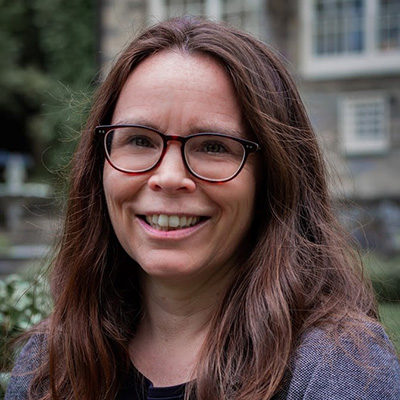
Dr. Stephanie M. Patch is an Assistant Professor in the Department of Civil, Coastal, and Environmental Engineering at the University of South Alabama's College of Engineering. Her research focuses on coastal engineering challenges, particularly beach erosion dynamics and the interaction between natural processes and engineered structures during extreme events like hurricanes. Education: Ph.D. Civil Engineering, Virginia Tech M.S. Civil Engineering, Georgia Tech Savannah B.S. Civil Engineering, Georgia Tech Savannah Research Interests: Dr. Patch investigates short- and long-term coastal erosion mechanisms, wave and surge impacts on barrier islands, and numerical modeling applications for coastal resilience. Her recent work examines Hurricane Sandy's effects on New Jersey and Virginia barrier systems, emphasizing adaptive strategies under rising sea levels. Publications Trends: Her articles address coastal infrastructure resilience, hurricane geomorphological impacts, and adaptation strategies using advanced numerical simulations. Key themes include sea-level rise mitigation, post-disaster assessment, and coastal policy frameworks. Advising & Grants: No formal advisees or grant details listed in the profile. Labs/Teams: Active in coastal modeling and field measurement initiatives, though specific lab affiliations are not detailed here.
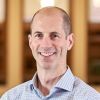
Dustin Tingley is a Professor of Government at Harvard University and holds a joint appointment at the Harvard Kennedy School of Public Policy . He serves as Interim Vice Provost for Advances in Learning and directs the Data Science and Technology Group and the Harvard Initiative on Learning and Teaching . He earned a PhD in Politics from Princeton and a BA in political science and math from the University of Rochester. Key Roles : Deputy Vice Provost (past), Chair of Harvard's Standing Committee on Climate Education Research Focus : Climate change politics, data science, causal inference, and international political economy His recent work explores the political economy of climate transitions , public opinion on carbon policies , and machine learning applications in social sciences . He co-founded ABLConnect , a repository for active learning pedagogy, and organized conferences on causal mechanisms , teaching with AI , and equitable classrooms . Awards : Gladys M. Kammerer Award (2015) for co-authored book Sailing the Water’s Edge Notable Publications : Uncertain Futures: How to Unlock the Climate Impasse (2023, with Alex Gazmararian) The Political Economy of the Clean Energy Transition (2025)
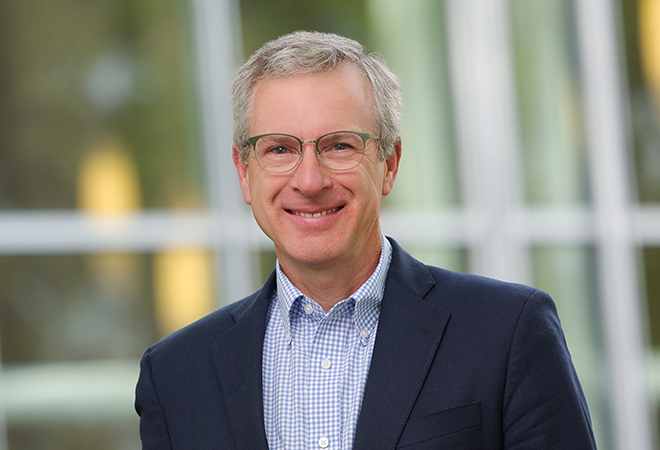
Jonathan B. Wiener is the William R. Perkins Distinguished Professor of Law at Duke Law School, Professor of Environmental Policy at the Nicholas School of the Environment, and Professor of Public Policy at the Sanford School of Public Policy at Duke University. He serves as Co-Director of the Duke Center on Risk in the Science & Society Initiative and holds affiliations with Resources for the Future (RFF), the Administrative Conference of the United States (ACUS), Duke Kunshan University, and the Harvard Center for Risk Analysis. President, Society for Risk Analysis (2008) Co-Chair, SRA World Congress on Risk (2012) Founding Faculty Director, Duke Center for Environmental Solutions (2000-05) Co-Director, Rethinking Regulation Program (2015-19) His research focuses on comparative risk regulation , climate change policy , environmental economics , and international regulatory cooperation , with recent work on solar radiation modification governance , multirisk frameworks , and adaptive policy design . Key projects include the Duke Center on Risk and the Duke Rethinking Regulation initiative. Scientific awards include the Chauncey Starr Young Risk Analyst Award (SRA, 2003) Richard J. Burk Outstanding Service Award (SRA, 2014) University Fellow of Resources for the Future Senior Fellow of ACUS He has advised on climate treaties , international risk assessments , and regulatory reform , with grants from institutions like the Intergovernmental Panel on Climate Change and China Council for International Cooperation on Environment & Development . His work bridges law , policy , and decision sciences .
J. Eric Bickel is a Professor at The University of Texas at Austin, serving as Director of the Operations Research & Industrial Engineering (ORIE) and Engineering Management programs. He holds a courtesy appointment in the Department of Petroleum and Geosystems Engineering and directs the Center for Engineering & Decision Analytics (CEDA). His academic background includes a PhD and MS in Engineering-Economic Systems from Stanford University and a BS in Mechanical Engineering from New Mexico State University. His research focuses on decision analysis under uncertainty, addressing topics like probabilistic modeling, climate engineering, risk management, and applications in sports and energy sectors. His work has been featured in major media including The New York Times and Wall Street Journal , and his climate engineering research was endorsed by Nobel Laureates as a top climate change response strategy. Professor Bickel has extensive industry experience, having previously served as Senior Engagement Manager and Co-Director of Client Education at Strategic Decisions Group (SDG), where he remains on the Board of Directors. His consulting spans oil/gas, energy trading, and financial services sectors. He has received recognition as a Fellow of the Society of Decision Professionals and contributed to the Copenhagen Consensus on Climate Project. His teaching extends to executive education through Texas Executive Education and McCombs School of Business. Research highlights include novel methods for probabilistic dependence modeling, value-of-information analysis in shale reservoirs, and critiques of risk assessment tools like heat maps. His climate engineering work emphasizes economically viable solar radiation management strategies.
Dr. Paul G. O'Brien is an Associate Professor in the Department of Mechanical Engineering at York University, Canada, affiliated with the Lassonde School of Engineering. His research focuses on interdisciplinary clean energy solutions, including energy storage, thermophotovoltaic systems, decarbonization of buildings, and life cycle assessments. He leads the Advanced Materials for Sustainable Energy Technologies (AM-SET-Lab) and has authored over 50 journal articles. His work spans materials science, photonic crystal engineering, and radiative cooling technologies. Research interests include optimizing thermal energy storage systems, photonic crystal-based filters for solar applications, and CO2 capture via direct air capture systems. His lab develops materials for passive cooling, solar-thermal integration, and advanced photocatalytic CO2 reduction. Dr. O’Brien collaborates across engineering disciplines to address global energy challenges. Recent publications highlight innovations in ellipsoidal optical cavities for thermophotovoltaics, radiative cooling materials, and techno-economic assessments of carbon capture technologies. His work bridges fundamental material science with applied engineering solutions for sustainable energy systems.
Garrett Cullity is a Professor of Philosophy at the School of Philosophy, Australian National University (ANU), within the Research School of Social Sciences (RSSS). Previously, he held positions at the Universities of Oxford, St Andrews, and Adelaide, including the Hughes Professor of Philosophy at Adelaide. His research spans moral philosophy, focusing on topics such as moral judgment, moral knowledge, practical reason, moral virtues, and applied ethics related to climate change, international aid, and consumer ethics. Education: B.Phil. and D.Phil. (Oxford), undergraduate studies at UWA. He has supervised numerous research students and contributed to projects like The Ethics of Net Zero (2023–2026) and Ethics, Responsibility and the Carbon Budget (2018–2024). Research interests include the theoretical foundations of morality, moral virtues, climate ethics, fairness in collective action, and global poverty. His work bridges abstract moral theory with practical issues like environmental policy and humanitarian responsibility.
Dr. Will Grant is an Associate Professor in Science Communication at the Australian National University’s Australian National Centre for the Public Awareness of Science. His work focuses on science communication, public policy, and the intersection of science with politics and technology. He holds a PhD from The University of Queensland and has been at ANU since 2008. His research explores science communication strategies, misinformation dynamics, and the societal impacts of emerging technologies. He has authored over 100 publications in outlets like Public Understanding of Science and Environmental Communication , and his work has reached 1.8 million readers on The Conversation . He co-founded PostAc, a platform analyzing PhD job markets, and has advised organizations including the Office of the Chief Scientist and CSIRO. Grant’s research interests include science communication pedagogy, the role of social media in shaping public discourse, and the ethical dimensions of geoengineering. He has organized high-impact outreach initiatives like the Long Conversations dialogue series and hosts the podcast The Wholesome Show . His awards include the Vice Chancellor’s Award for Public Policy and Outreach (2015) and the Sidney Sax Medal (2020). He supervises numerous graduate students and teaches courses on science communication ethics, digital media, and science-policy interaction.
Kristian Søby Kristensen is a Senior Researcher at the Department of Political Science , University of Copenhagen. His work focuses on security and strategy within NATO, Danish/Western defense policy, Arctic security, geopolitics, and globalization. Key Research Areas: NATO and Transatlantic Relations Climate Change and Security Arctic Geopolitics Defense Policy and Governance Recent Publications: Arctic geoengineering governance (2025) Climate change securitization in Greenland (2024) Danish parliamentary oversight of security policy (2024) Nordic NATO expansion implications (2024) Collaborations: Co-author with Francesco Catonini, Johannes Bürkert, and Laura Mortensgaard Consultant for Danish defense and Arctic policy projects
Sandrine Maljean-Dubois is a Researcher at Aix-Marseille Université and Deputy Scientific Director of the CNRS Section 36 (INSHS). Her expertise lies in public law, with a focus on environmental and climate governance. She has organized numerous international colloquia on topics such as ocean law, climate litigation, and biodiversity protection. Her research addresses the intersection of international law, ecological urgency, and institutional accountability. She supervises doctoral students exploring climate policy, marine governance, and environmental justice. Key activities include co-organizing events like 'Gouverner la société internationale par les chiffres' (2025) and 'Le rôle des juridictions internationales dans la protection du climat' (2024). Her work bridges legal frameworks with scientific challenges, emphasizing interdisciplinary approaches to global environmental crises.
Katja Fennel is a Professor in the Department of Oceanography at Dalhousie University, Faculty of Science. Her research focuses on coupled physical-biogeochemical modeling to understand marine ecosystems, carbon and nutrient cycling, and climate change impacts. She specializes in coastal and open ocean dynamics, with expertise in hypoxia, ocean deoxygenation, and carbon sequestration. Fennel holds significant academic roles including Killam Professorship (2019-2024) and former Co-editor-in-Chief of Biogeosciences (2013-2021). She has led projects on ocean prediction, marine carbon dioxide removal (CDR), and coastal acidification. Education: PhD in Marine Biology and Diploma in Numerical Mathematics from University Rostock, Germany Affiliations: Adjunct roles at University of Maryland Center for Environmental Science, University of Maine, and Rutgers University Research Interests: Development of high-resolution coupled models to study biogeochemical processes in shelf and open ocean systems. Key areas include the impact of climate change on marine ecosystems, hypoxia formation mechanisms, and the role of ocean alkalinity enhancement in carbon removal. Fennel's work integrates observational data with advanced modeling to address ecological and climate challenges. Publications highlight contributions to understanding coastal-ocean carbon dynamics, biogeochemical forecasting, and Arctic carbon uptake. Recent focus includes expanding Argo float networks and evaluating marine CDR strategies like ocean alkalinity enhancement (OAE). Awards: AGU Fellow (2024), CMOS President's Prize (2023)
Professor Liz Stephens is a faculty member at the University of Reading's Department of Meteorology, specializing in flood forecasting, climate variability, and disaster risk management. Her work focuses on improving hydrological and meteorological models to enhance flood preparedness and climate adaptation strategies globally. Research Interests: Probabilistic flood forecasting Climate impacts on extreme events Enhancing forecast communication for decision-makers Applications in data-scarce regions like Kenya and Uganda Key Projects: Global Flood Awareness System (GloFAS) World Weather Attribution studies Probabilistic forecast evaluation frameworks Her research bridges academic analysis with practical implementation, collaborating with international organizations like ECMWF and humanitarian agencies to translate scientific insights into actionable disaster preparedness measures.
Alireza Yaseri serves as an Adjunct Assistant Professor in the Department of Civil Engineering within Smith Engineering at Queen's University. He maintains a dual affiliation with the GeoEngineering Centre, a leading research institute at Queen's specializing in geotechnical and geoenvironmental challenges, where he contributes to advanced computational modeling initiatives. Education: PhD in Geotechnical Engineering, Université Laval (2021) MSc in Geotechnical Engineering, Shiraz University (2012) Dr. Yaseri's research program centers on computational geomechanics with emphases on seismic soil-structure interaction, railway-induced vibrations, and constitutive modeling of granular materials. His work bridges theoretical mechanics and practical infrastructure challenges through advanced numerical techniques, particularly hybrid FEM-SBFEM implementations for dynamic analysis of earth dams, canyon systems, and transportation corridors. He investigates nonlinear soil behavior under monotonic/cyclic loading and develops predictive models for vibration propagation in complex geological settings. Analysis of his publication trajectory (2014-2024) reveals consistent innovation in computational geotechnics, with recent work focusing on 2.5D/3D modeling of train-induced vibrations and sophisticated sand constitutive frameworks. His 2024 publications demonstrate dual expertise in railway vibration prediction methodologies and critical-state soil mechanics, while his earth dam-canyon system analyses from 2020-2022 established foundational approaches for seismic amplification in flexible geological formations. As an active member of Queen's GeoEngineering Centre, Dr. Yaseri collaborates on interdisciplinary projects addressing infrastructure resilience, with particular relevance to dam safety and transportation geotechnics in seismic zones. His technical leadership in scaled boundary methods contributes to the center's reputation for computational innovation in geomechanics.