Mijian Xu is a Research Fellow at Nanyang Technological University who joined the MIG research group in December 2021. His academic background includes a PhD in Geology from Nanjing University (2021) and an MSc in Geophysics from the same institution (2016). His research focuses on investigating Earth's inner structures in the Tibetan Plateau and surrounding regions. Xu specializes in using receiver function techniques to image earth discontinuities, velocity structures, and anisotropies. As an advocate of open-source software, he has developed significant tools for seismic data processing including Seispy and SplitRFLab . Seismotectonics Seismic imaging Geodynamics of Tibetan Plateau Wavefield Simulation in Complex Media Xu's publications demonstrate expertise in developing computational methods for seismic analysis, particularly his 2022 paper on Seispy which presents a Python module for batch calculation and post-processing of receiver functions. His 2018 Earth and Planetary Science Letters paper provides insights into the subducted Indian slab and the origin of the Tengchong volcano in Southeast Tibet.
Anja Rosenthal is a Scientist at the European Synchrotron Radiation Facility (ESRF) in Grenoble, France, working on the ID06-LVP beamline within the Matter at Extremes group. Her research focuses on experimental petrology and geochemistry, with expertise in experimental mineral physics, to understand Earth's deep mantle processes and their impact on volatile fluxes, magmatism, volcanism, deformation processes, and seismology. Her research spans Earth Sciences, Geochemistry, Geophysics, Petrology, Mineral Physics, and Seismology. She employs high-pressure and high-temperature experiments using synchrotron radiation to study mineral properties in Earth's mantle, particularly stishovite and post-stishovite polymorphs, and their role in generating seismic anomalies through chemical substitutions involving Fe, Al, Ti, and OH. Scientific recognition includes: Marie Skłodowska-Curie Individual Fellowship for the ELASTIC project She secured competitive EU funding for the ELASTIC project, which systematically investigates how eclogitic defects affect stishovite's density and elasticity to refine seismic anomaly models in Earth's mantle transition zone and upper lower mantle. As part of ESRF's Matter at Extremes group, she utilizes large volume press instrumentation on beamline ID06-LVP to simulate extreme mantle conditions, advancing understanding of subducted oceanic crust behavior and its geodynamic consequences.
Maryline Moulin is a prominent geophysics researcher specializing in plate tectonics, continental margin evolution, and integrated seismic analysis. She has led major oceanographic campaigns including PAMELA-MOZ05/03 and MAGIC projects, focusing on passive margins in the South Atlantic and East African regions. 2003 PhD from University of Western Brittany 2016 Project Leader for PAMELA campaigns Key collaborator in 15+ international seismic studies Her research spans diverse methodologies: Wide-angle seismic (OBS) profiling Multi-channel seismic (MCS) interpretation Gravity and magnetic anomaly analysis 3D structural modeling (Placa3D) Seismo-stratigraphic analysis Recent publications (2023-2025) reveal patterns in: Proto-oceanic crust formation Passive margin segmentation Quaternary contourite systems Transform margin tectonics Deep crustal architecture
Gyula Bögöly is an Associate Professor at the Department of Geotechnics and Engineering Geology , Budapest University of Technology and Economics (BME) . He teaches subjects including Tunnel Construction, Rock Mechanics, and Geodynamics, with a focus on engineering geology applications in civil infrastructure. His research spans rock slope stability, stone structures, and numerical modeling techniques. Engineering Geology Rock Mechanics Stone Structures Rock Slopes Numerical Modeling UAV-based geological mapping His recent publications highlight trends in slope stability analysis, UAV applications for quarry mapping, mechanical degradation of construction aggregates, and reinforcement of masonry arch bridges. These works integrate field testing, numerical simulation, and empirical correlation studies. builder250 scholarship He collaborates with the Pál Vásárhelyi Doctoral School of Civil Engineering and Geosciences and contributes to practical engineering education through project-based courses.
Prof. Liviu Matenco serves as Professor and Chair of Tectonics and Sedimentary Basins at Utrecht University's Faculty of Geosciences, Department of Earth Sciences since 2017. He holds office in the Earth Simulation Lab at Princetonlaan 4 (Room 1.38) and can be reached at +31 30 253 7339. His research program focuses on sedimentary basins formation and evolution, long-term sediment dynamics coupled with anthropogenic systems, orogenic structure interactions, lithosphere dynamics, and tectonic-driven sedimentary sequences. Matenco teaches Dynamics of Basins and Orogens, Reflection Seismics, and Fieldwork Research Instruction, bridging theoretical geoscience with practical field applications. Among his professional leadership roles, Matenco serves as Editor in Chief of Global and Planetary Change and chairs the International Lithosphere Program Task Force VI on Sedimentary Basins. Elected member of the Academia Europaea (2018) Honorary Member of the Romanian Academy His academic career spans positions at University of Bucharest (1991-2003), VU University Amsterdam (2003-2011), and Utrecht University (2012-present), where he progressed from Associate Professor to full Professor. He maintains active memberships in the European Geosciences Union, American Geophysical Union, and Geological Society of America.
Marthe Grønlie Guren is a Research Fellow at the Department of Geosciences, University of Oslo, affiliated with the NJORD Centre for Studies of the Physics of the Earth. She has held this position since 2022, following her Doctoral Research Fellowship (2018–2022) at the same institution. She earned her MSc in Geosciences from the University of Oslo in 2017. Her research focuses on geophysical and geochemical processes at nanoscales, specializing in fluid-rock interactions, mineral dissolution dynamics, and reaction-induced fracturing. She employs advanced computational methods, including molecular dynamics simulations , ab initio modeling , and X-ray micro-tomography , to investigate Earth's crustal and deep interior processes. Publications emphasize mineral behavior under extreme conditions, fracture mechanics, and planetary formation. Trends include high-pressure mineral simulations (2022), nanoscale damage analysis (2022), and carbonate dissolution (2023). No awards or student advising roles are documented. She contributes to the Section for Crustal Processes and collaborates with the NJORD Centre on projects like ChemFrac (Nanoscale controls of reaction-induced fracturing) and CO2Basalt research.
Danijela Dimitrijević is a Postdoctoral Researcher in the Chair of Palaeontology at Friedrich-Alexander-Universität Erlangen-Nürnberg (FAU). Her work focuses on the evolutionary and ecological dynamics of marine reef communities across deep time, particularly the morphological trait evolution of scleractinian corals and their responses to climate upheavals. Education: PhD in Paleontology (FAU, 2024) International Master in Geosciences: Palaeobiology (FAU, 2021) International Master in Applied Ecology (EMMC-IMAE, 2015) BSc in Geospatial and Environmental Science (University of Belgrade, 2011) Research Interests: Danijela investigates coral reef evolution , trait-based extinction risk , and marine community responses to hyperthermal events . Her projects integrate quantitative trait analysis (e.g., corallite size) with paleoclimatic data to assess long-term ecological resilience. She also co-developed the Ancient Reef Traits (ART) database for global reef-building organism data. Publication Trends: Recent work spans census-based reef carbonate production , bioerosion patterns in Triassic corals , and trait decoupling in extinction events . She emphasizes open science and data equity in paleontological research. Fieldwork & Collaboration: Active in field studies (e.g., Silurian reefs in Sweden) and international collaborations, Danijela bridges geological history with modern conservation challenges through interdisciplinary research and science communication initiatives.
Dr Benjamin Sames is a permanent scientific staff member (micropalaeontologist & stratigrapher) at the University of Vienna , Institute of Geology – Department for Geodynamics and Sedimentology, and simultaneously serves as an Affiliate Research Associate in Vertebrate Palaeontology at the Sam Noble Oklahoma Museum of Natural History (USA) and as a Stratigraphic Consultant for Petrobras (Brazil). His career has been dedicated to advancing the taxonomy, phylogeny and biostratigraphic application of non-marine ostracods and charophytes, integrating these microfossils into refined Mesozoic stratigraphic and palaeoclimatic frameworks. Education & Career Path 2003 – Diploma (equiv. M.Sc.), Freie Universität Berlin: thesis on the ostracods & charophytes of the Tendaguru Beds, Tanzania. 2009 – Dr. rer. nat., Freie Universität Berlin: doctoral dissertation on Late Jurassic–Early Cretaceous non-marine ostracod taxonomy, phylogeny and biostratigraphy with focus on the North American Western Interior. 2006–2011 – Research/Scientific Assistant, Freie Universität Berlin & University of Vienna. Since 2015 – Project Leader, Austrian Science Fund (FWF) project P 27687 “Lower Cretaceous Climate and Non-marine Stratigraphy (LCCNS)”. 2017–2019 – Project Leader, Austrian Academy of Sciences (ÖAW) / IGCP 632 “Late Mesozoic lacustrine systems in Tunisia”. 2020–2024 – Principal Investigator, Petrobras service contract “BrasCretOst I” and ÖAW/UNESCO IGCP 710 sub-project “NOMAJU”. Research Focus Dr Sames’ work centres on the micropalaeontology of Mesozoic non-marine ostracods and charophytes , integrating these data into high-resolution biostratigraphy, chemostratigraphy and cyclostratigraphy . A second pillar is Cretaceous palaeoclimatology , exploring greenhouse climate dynamics, short-term sea-level changes driven by aquifer-eustasy, and ocean–land interactions. Methodologically he couples classical taxonomy with quantitative stratigraphic techniques, XRF geochemistry and climate modelling. Awards & Honours 2004 – Katharina-Heinroth-Preis (Gesellschaft Naturforschender Freunde zu Berlin) for Diploma thesis. 2012 – Hanns-Bruno-Geinitz-Preis (Senckenberg Naturhistorische Sammlungen Dresden) for Doctoral thesis. 2014 – Eponymous ostracod species Vecticypris samesi established by Ayress & Whatley in recognition of his scientific contributions. International Projects & Leadership FWF Project P 27687 “LCCNS” – integrating palaeoenvironmental and climate cyclicities in the non-marine Lower Cretaceous. ÖAW/IGCP 632 – Late Mesozoic lacustrine systems in Tunisia and global correlation. Petrobras BrasCretOst I – revision of non-marine ostracod taxonomy in Brazilian basins (2020-2024). UNESCO-IUGS IGCP 710 sub-project NOMAJU – Mid-Jurassic marine–non-marine correlation and sea-level dynamics. Secretary & Scientific Collaborator, UNESCO-IUGS IGCP 609 “Climate-environmental deteriorations during greenhouse phases”. Editorial & Reviewing Roles Associate Editor, Austrian Journal of Earth Sciences (AJES) ; guest editor/co-editor of Geological Society of London Special Publication 498 “Cretaceous Climate Events and Short-Term Sea-Level Changes” and several special issues in Palaeogeography, Palaeoclimatology, Palaeoecology and Science China Earth Sciences ; reviewer for >15 international journals. Laboratory & Collaboration Networks Dr Sames operates within the University of Vienna Sedimentology & Palaeontology laboratories and maintains active collaboration with institutions such as Queen Mary University of London, University of Oklahoma, Nanjing Institute of Geology & Palaeontology, Chinese Academy of Sciences, and Petrobras CENPES, ensuring access to global sample sets and multi-proxy analytical facilities.
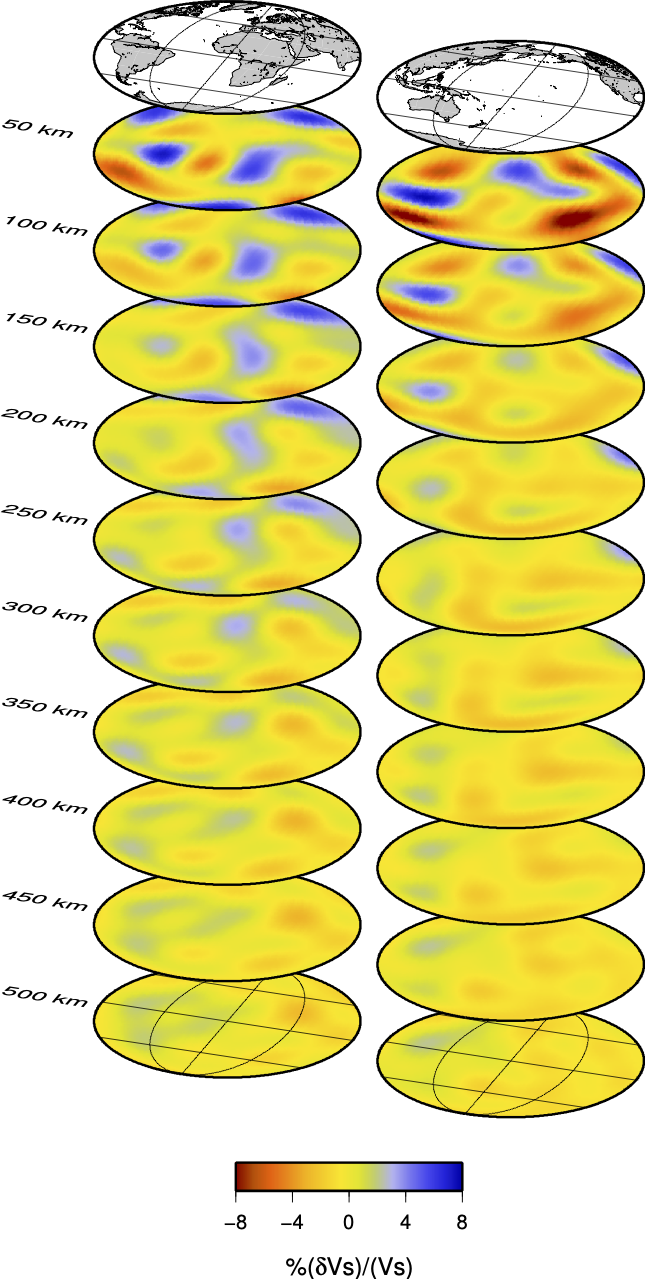
Dr Andrew Valentine is currently an Associate Professor in the Department of Earth Sciences at Durham University, a position he has held since 2023. Previously, he served as Assistant Professor at Durham (2021-2023), Fellow at the Research School of Earth Sciences at The Australian National University (2016-2021), and Postdoctoral Researcher at Utrecht University (2011-2016). He holds significant leadership roles including Director of Education for the Department of Earth Sciences (2025-present) and Secretary of the IUGG Commission on Mathematical Geophysics (2023-present). DPhil in Earth Sciences, University of Oxford (2006-2010), supervised by Prof. J.H. Woodhouse BA/MSci in Natural Sciences (Physics), University of Cambridge (2002-2006) Valentine's research focuses on mathematical and statistical tools for extracting information from observational data, with expertise in geophysical inverse theory, global seismology, and machine learning applications in Earth Sciences. His work bridges theoretical mathematics with practical geophysical problems, developing novel approaches to data analysis and interpretation. He has made significant contributions to probabilistic inversion methods, seismic tomography, and the application of deep learning to geoscience problems. Analysis of his recent publications reveals a strong trend toward integrating machine learning with traditional geophysical methods. His work spans from theoretical developments in Bayesian inference and optimal transport to practical applications in seismic modeling, mantle dynamics, and volcanic processes. A notable pattern is his focus on uncertainty quantification in geophysical models and the development of efficient computational frameworks for complex inverse problems. His research increasingly incorporates neural networks and other AI techniques to address longstanding challenges in Earth Sciences. Harold Jeffreys Lectureship, Royal Astronomical Society (2025) ARC DECRA Fellowship (2018-2021) Multiple Geophysical Journal International Outstanding Reviewer citations Geophysical Journal International Student Author Award (2010) Valentine has supervised numerous PhD students including Buse Turunçtur, Matthias Scheiter, Suzanne Atkins, Paul Käufl, and Ralph de Wit, with thesis topics spanning sparsity-constrained inversion, Monte Carlo methods, mantle convection patterns, and probabilistic source inversion. His supervision extends to current students Arijit Chakraborty, Charlotte Aulton, Hanna-Riia Allas, Isaac Abbott, and Ugurcan Cetiner. He has served on various editorial boards including as Editor for Geophysical Journal International (2020-2025) and has been involved in major collaborative projects through organizations like CIG. As Director of InLab since 2018, Valentine leads a research group focused on developing innovative computational approaches to geophysical problems. His team has produced influential open-source software like pyprop8 for seismic modeling and has pioneered applications of deep learning to problems ranging from glacial isostatic adjustment to volcanic glass properties. The group maintains strong international collaborations, particularly with researchers at The Australian National University where Valentine holds an Honorary Senior Lecturer position (2021-2025).
Professor Jeroen Van Hunen is a Professor in the Department of Earth Sciences at Durham University, where he has been employed since 2006, progressing through the ranks from Lecturer to his current position as Professor. His research focuses on applying fluid dynamics to understand Earth's processes across various length and time scales. His educational background includes a PhD (2001) and MSc (1996) from Utrecht University in the Netherlands. Prior to joining Durham, he served as an Oberassistent at ETH Zurich (2004-2006) and as a Postdoctoral researcher at the University of Colorado at Boulder (2002-2004). Professor Van Hunen's research interests span multiple areas of geodynamics, with a particular focus on subduction dynamics, early Earth evolution, and interactions between tectonics and climate. His work has been supported by significant grants including an ERC Starting Grant (2011) for "Modelling the Archean Subduction Environment (MASE)" and numerous NERC and EPSRC grants. Recently, he has expanded his research to include sustainable energy solutions such as Carbon Capture and Storage and geothermal energy extraction from abandoned mines. His research has led to substantial contributions across multiple subfields of geodynamics, with a particular emphasis on understanding the mechanisms behind plate tectonics through time, cratonic root formation, and the dynamics of subduction zones. His recent work shows an increasing focus on applied geoscience related to sustainable energy solutions, particularly geothermal energy from mine water systems. Professor Van Hunen has received recognition through leadership roles including President of the EGU Geodynamics division (2021-2025) and Chief Specialty Editor of Frontiers in Earth Sciences (2023-present). He has also served on the NERC Peer Review College since 2012 and as Associate Editor for several prominent geoscience journals. He has supervised numerous PhD and Master's students, including Adam Welsh, Alexandra Sweeney, Arijit Chakraborty, Rachel Kirby, Sophie Chapman, and Ugurcan Cetiner. His research group has been involved in multiple collaborative projects addressing fundamental questions in Earth sciences as well as applied research on sustainable energy solutions. Professor Van Hunen leads research initiatives focused on geothermal energy extraction from abandoned mines through projects like GEMSToolbox and EarthSafe, demonstrating his commitment to applying geoscience knowledge to contemporary energy challenges. His work bridges fundamental geodynamic research with practical applications for sustainable energy development.
Behnam Seyed-Mahmoud is an Associate Professor in the Department of Physics and Astronomy at the University of Lethbridge, Canada, specializing in theoretical, computational, and experimental studies of rotating fluids with direct applications to planetary and stellar interiors. Education: B.Sc. in Physics, University of Lethbridge M.Sc. in Geophysics, Memorial University Ph.D. in Physics, York University Research Focus: His work centers on geodynamics, geodynamo theory, Earth rotation phenomena (wobble/nutation), inertial modes, and elliptical instability. He develops computational tools to predict modal frequencies of rotating fluid bodies and conducts experimental validation using custom apparatus. Key objectives include refining Earth models to match observed frequencies and investigating alternative dynamo mechanisms for planetary magnetic fields. Publication Trends: Analysis of his 2004-2021 publications reveals consistent emphasis on rotational fluid dynamics in planetary cores and stellar interiors. Dominant themes include inertial mode characterization, elliptical instability as a dynamo energy source (notably for Mars' ancient magnetic field), and gravity mode analysis in stars. His methodology integrates theoretical modeling, numerical computation, and experimental validation. Grants & Supervision: Secured significant funding including an NSERC grant of $175,000 (extended 2015) for 'Dynamics of the Earth' and a Canadian Space Agency grant of $249,862 (2006) for the MOMENT Mars project. Supervised Master's students Md. Kamruzzaman, Ali Moradi, Hossein Naseri, and Michel Nzikou. Experimental Facility: Leads the Experimental Geodynamics Lab featuring a state-of-the-art rotating global apparatus with Particle Imaging Velocimetry (PIV) capabilities, enabling direct observation of fluid core dynamics through illuminated horizontal planes and remote-controlled seismic simulations.
Chief Assistant Professor Ivaylo Radev serves at the University of Architecture, Civil Engineering and Geodesy (UACEG) within the Faculty of Geodesy, Department of Higher Geodesy. His academic career spans geodetic monitoring, crustal deformation analysis, and landslide process studies with active involvement in international research projects. His research focuses on geodynamic processes , particularly through GPS monitoring of crustal deformations and active fault analysis. Key areas include landslide monitoring in urban environments like Sofia's Botanical Garden, Krupnik-Kresna region geodynamics, and integration of gravimetric measurements with geodetic data. His methodological approach combines field measurements with finite element modeling for deformation analysis. Publications reveal a consistent research trajectory in geodetic monitoring techniques from 2004-2012, with emphasis on practical applications for natural hazard assessment. His work demonstrates strong collaboration with the Bulgarian Academy of Sciences and international partners through NATO-funded projects. As project manager for multiple geodynamic research initiatives including 'Complex Research of Modern Geodynamics in the Krupnik-Kresna Area' (2006) and 'Study of Modern Active Faults Through Geodetic Methods' (2012), he has contributed to regional seismic hazard understanding. His participation in the NATO Science for Peace project 'HEMUSNET' (2006-2011) highlights international research engagement. He maintains active teaching responsibilities with documented lecture courses and Teams-based educational platforms for geodetic instruction. His laboratory work centers on deformation monitoring systems within the Department of Higher Geodesy infrastructure.
Brandon Lutz serves as Assistant Teaching Professor and Field Camp Director in the Department of Geological and Environmental Sciences at Appalachian State University, joining in Fall 2024. His expertise bridges academic research with practical industry experience from the U.S. Geological Survey, oil/gas exploration, and gold mining sectors. His educational foundation includes: Ph.D. from New Mexico Institute of Mining and Technology M.S. from University of Alabama B.S. from Ohio University Dr. Lutz's research integrates structural geology and tectonics with resource exploration, focusing on: Fault zone mechanics across scales Deformation-resource relationships Intraplate tectonic processes Orogenic gold systems He employs field mapping, 3D modeling, microstructural analysis, and numerical simulations to address fundamental questions about Earth's deformation processes and their practical implications for natural resource distribution. His recent publications (2021-2024) demonstrate consistent focus on fault mechanics and resource implications across diverse settings including Death Valley, Arkoma Basin, and Blue Mountains, appearing in top journals like Journal of Structural Geology and Earth Science Reviews. As Field Camp Director, Dr. Lutz leads the critical Summer Field Geology course while teaching structural geology and field methods courses. He is establishing his research program with emphasis on student involvement in field and computational projects leveraging his industry-government-academia background.
Professor Paul Dirk Bons is a faculty member at the University of Tübingen's Faculty of Geosciences, leading the Structural Geology working group. His research focuses on microstructural processes in geological materials and ice dynamics, with extensive DFG-funded project experience. His primary research spans structural geology and rock deformation mechanisms, specializing in subgrain structure development in rocks/metals, numerical modeling of partial melt microstructures, and deformation-recrystallization processes in polar ice. He also investigates fluid pathways in hydrothermal systems, exemplified by his Mount Painter Inlier case study in South Australia, integrating geology, materials science, and computational techniques. Professor Bons has directed multiple completed DFG projects including 'Subgrain structure development in rocks and metals (MineralSubstructureDynamics)', 'Numerical modeling of partial melt microstructures', and polar ice deformation studies. His work demonstrates expertise in computational geodynamics through infrastructure-focused programs and standard grants. He heads the Structural Geology working group at Tübingen, which conducts advanced microstructural simulations of deformation mechanisms across geological materials and ice systems.