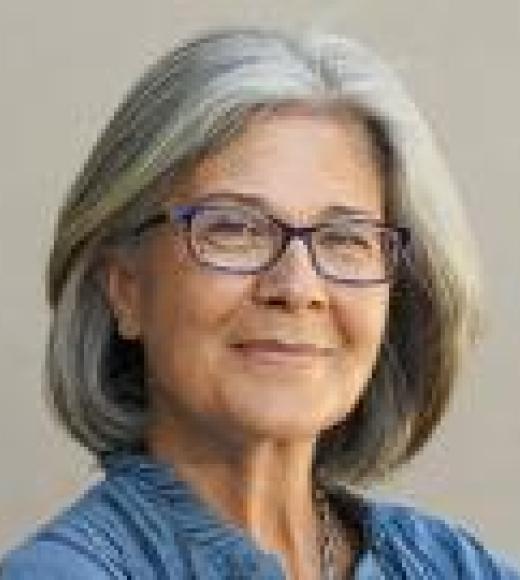
Isabel P. MontañezView profile
Professor
Isabel P. Montañez is a Distinguished Professor and Director of the Institute of the Environment at the University of California, Davis. She holds a Chancellor's Leadership Professorship in the Department of Earth and Planetary Sciences within the College of Letters and Science. Her research focuses on reconstructing past climates through geochemical and sedimentological analyses, with particular emphasis on understanding climate transitions and ecosystem responses during Earth's deep history. Education: B.A. in Geology from Bryn Mawr College (1981), Ph.D. in Geology from Virginia Polytechnic Institute (1989). She joined UC Davis in 1998 after serving as an assistant and associate professor at UC Riverside. Research Interests: Montañez specializes in paleoclimatology, geochemistry, and sedimentary geology. Her work integrates field studies, numerical modeling, and laboratory analyses to study climate change impacts, including CO2 feedback mechanisms, glacial-interglacial cycles, and ancient climate extremes. Notable contributions include studies on the Late Paleozoic Ice Age, Carboniferous tropical forests, and Pleistocene hydroclimate records in Sierra Nevada caves. Awards and Recognition: Montañez has received numerous accolades, including the Arthur L. Day Medal (GSA, 2023), election to the National Academy of Sciences (2021), and the UC Davis Prize for Teaching and Scholarly Achievement (2021). She is a Fellow of the Geological Society of America, AGU, AAAS, and other prestigious organizations. Leadership and Advocacy: As former GSA President (2017–2018) and director of the John Muir Institute of the Environment, Montañez champions transdisciplinary climate research and environmental justice. She leads initiatives to bridge deep-time climate science with modern climate challenges, emphasizing global collaboration and policy impact. Labs and Teams: Her research group collaborates with international teams on projects funded by NSF, NASA, and international agencies. Key collaborators include institutions in China, Europe, and South America, focusing on integrated climate and geochemical datasets.