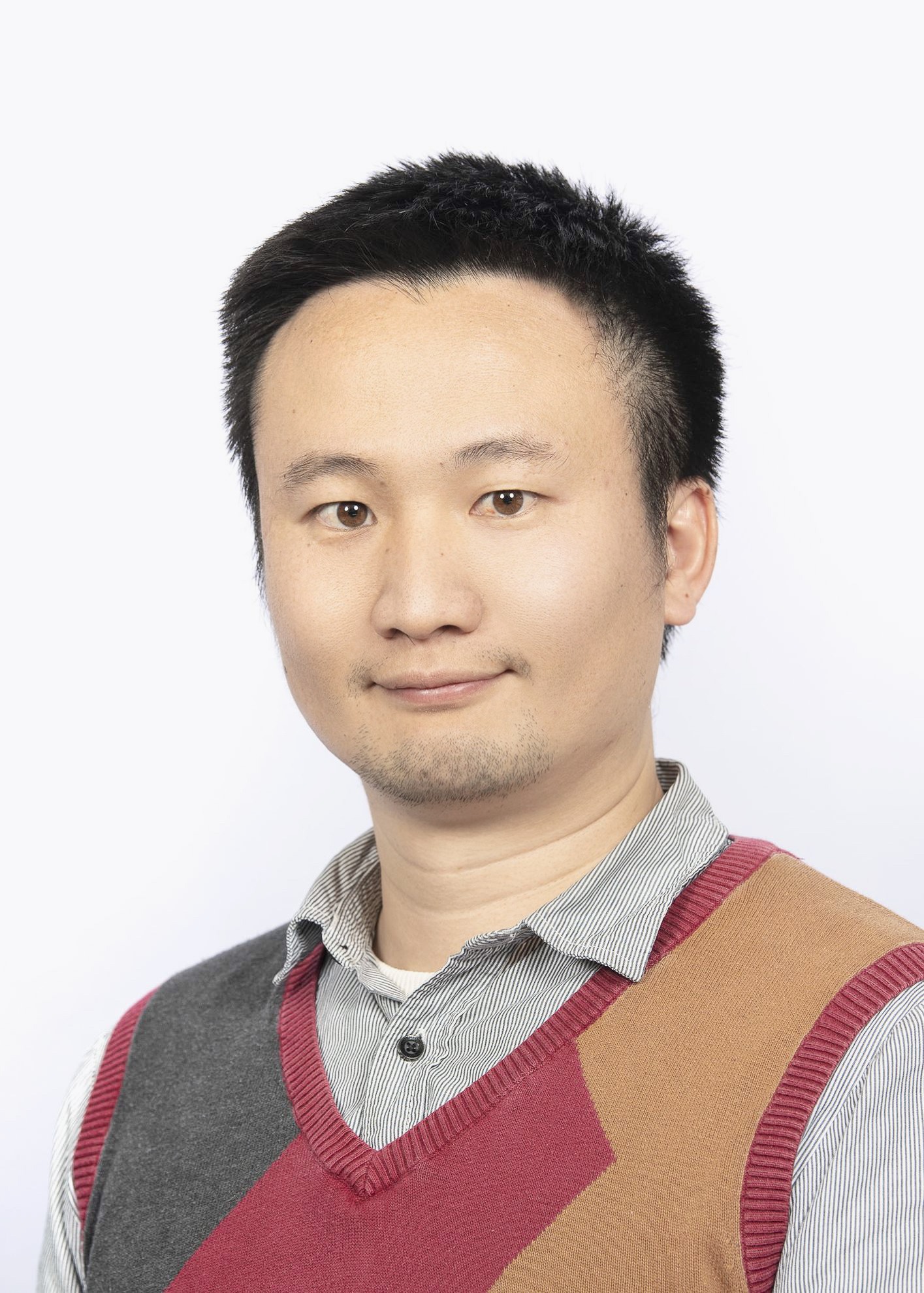
Konstantinos Kalogeropoulos is an Assistant Professor at the Department of Biotechnology and Biomedicine, Technical University of Denmark (DTU), leading research at the Cell Diversity Lab. His work bridges proteomics, computational biology, and snake venom research. Current projects: "The Proteomic Landscape during Influenza Infection" (2022-2025) Supervisor for PhD projects on protease network rewiring in psoriasis and wound exudate degradomics Research interests include: Proteomic analysis of inflammatory diseases Snake venom toxin structure prediction Extracellular matrix biomechanics De novo peptide sequencing algorithms Computational modeling of protease networks Recent article trends demonstrate his work in • Database-free proteomics (InstaNovo/InstaNexus) • Snake venom pathophysiology (V-ToCs clustering) • Inflammatory disease biomarkers (psoriasis, impaired healing) • Extracellular matrix mechanics (fibronectin tension, gut inflammation) Advising: Supervises PhD students Polhaus, C. J. M. and Haack, A. M., focusing on protease networks and wound healing.
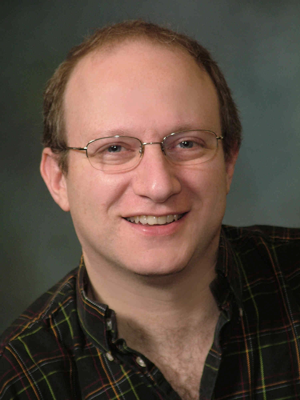
Zaiqiao Meng is a Lecturer (Assistant Professor) at the University of Glasgow's School of Computing Science, affiliated with the Information Retrieval Group and IDA section. He also holds an Affiliated Lecturer position at the University of Cambridge's Language Technology Lab. His research focuses on the intersection of machine learning, knowledge graphs, and NLP, particularly in biomedical applications. Key areas include AI agents, large language models, and healthcare informatics. Current roles include co-leading the Glasgow AI4BioMed Lab, which develops AI solutions for biomedical knowledge extraction. He has extensive postdoctoral and visiting research experience, including at KAUST's MINE lab. Meng has published widely in top conferences like ACL and EMNLP, with over 40 publications since 2019. His work spans topics such as drug-target interaction prediction, clinical summarization, and knowledge graph construction. Teaching includes courses on Recommender Systems and Data Science at both undergraduate and graduate levels. He advises multiple PhD students on projects involving LLMs, biomedical entity representation, and conversational agents.
Kenneth Ross is a Professor in the Computer Science Department at Columbia University in New York City. His primary appointment is within the Department of Computer Science, with affiliations including the Foundations of Data Science Committee. His work bridges theoretical database research and practical system implementation. His research focuses on database systems with particular expertise in query processing, query language design, data warehousing, and architecture-sensitive database system design. Additional research spans computational biology, especially analysis of large genomic data sets. Current projects include Linear Algebra Operators in Databases for machine learning workloads and Repeats and Somatic Mutation analysis in genomics. His work consistently addresses the intersection of hardware capabilities and database system design. Ross leads the Database Research Lab at Columbia, which has produced significant work on query optimization, GPU database processing, and hardware-conscious database systems. His recent publications demonstrate strong focus on adapting database systems to modern hardware including GPUs, SIMD processors, and persistent memory. His scientific recognition includes: Packard Foundation Fellowship Sloan Foundation Fellowship NSF Young Investigator Award Distinguished Faculty Teaching Award (2008) Ross actively advises undergraduate engineering students (juniors with last names P-Z) and has taught foundational courses including Introduction to Databases and Programming and Problem Solving for over two decades. His teaching portfolio shows consistent engagement with both theoretical concepts and practical implementation challenges in computer science education.
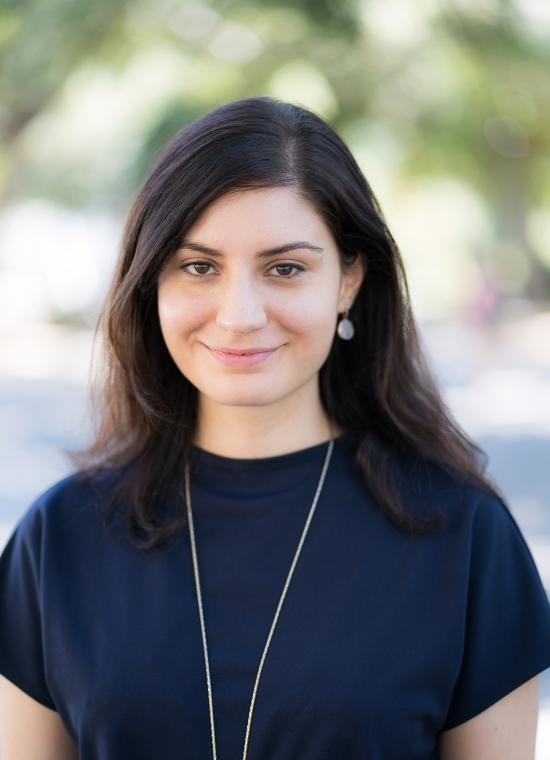
Alexandra Papoutsaki is an Associate Professor of Computer Science at Pomona College since 2017. Her research focuses on Human-Computer Interaction , particularly in webcam-based eye tracking and shared gaze for remote collaboration . Ph.D. in Computer Science from Brown University M.Sc. in Computer Science from Brown University B.Sc. in Computer Science from Athens University of Economics and Business Her work spans personal informatics , crowdsourcing methodologies , and remote usability testing , with recent projects examining collaborative drawing interfaces, baby tracking reflection, and digital health communities. Earlier contributions include computational biology research in genome-wide survival analysis and pan-cancer mutation networks. Key trends in her publications include: Remote collaboration tools enhanced by eye tracking Personal data systems for health and creative domains Foundational work in crowdsourcing quality control Interdisciplinary approaches combining computer science with psychology and medicine Scientific recognition includes: NSF CRII Grant (2020-2022) Wig Distinguished Professor Award (2020) Best Paper at RECOMB (2013) She has developed multiple open-source platforms including WebGazer for scalable eye tracking and Remotion for mobile usability testing. Her research team has published extensively in top venues like CHI, IMWUT, and IJCAI.
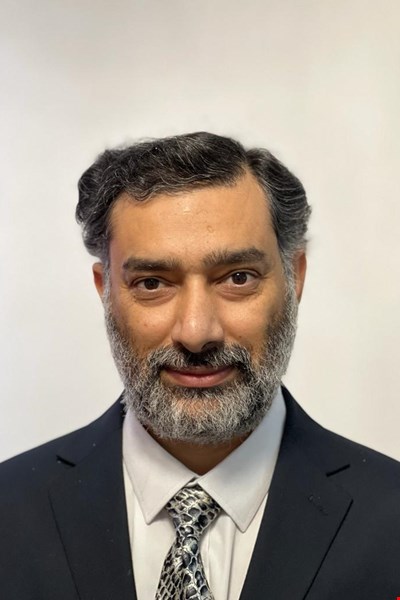
Dr. Matloob Khushi serves as a Senior Lecturer in Computer Science at Brunel University London's College of Engineering, Design and Physical Sciences. With over 25 years of combined academic and industry experience, his work bridges theoretical AI advancements with practical applications in finance, healthcare, and public health domains. His research has established significant collaborations with international banks, healthcare institutions, and technology startups. Dr. Khushi earned his PhD in AI and Data Science from the University of Sydney, developing novel algorithms for genomic data analysis. His postdoctoral research at the Children's Medical Research Institute (2014-2017) pioneered AI-based diagnostic tools for medical condition detection. More recently, he developed bioinformatics tools for environmental assessment under a UKRI NEC grant. Research Focus FinTech Innovation : Creator of the SS Ratio (incorporating volatility and drawdown sensitivities), advanced portfolio optimization models, and synthetic data generation techniques for fraud detection and credit risk assessment Bioinformatics Leadership : Developer of AI tools for genomic analysis and early cancer detection, featured in SBS News and The Daily Telegraph Public Health NLP : Architect of systems for vaccine misinformation detection, mental health monitoring, and health surveillance on social media His publication portfolio shows consistent growth from foundational bioinformatics work to current multimodal AI applications, with increasing interdisciplinary collaboration across finance and healthcare sectors. Awards and Recognition Ranked among Stanford/Elsevier's top 2% of global AI scientists Recipient of Best Paper Awards from IEEE Transactions on Computational Social Systems and PeerJ Media recognition for cancer detection research by major news outlets Mentorship and Teaching Dr. Khushi has supervised six PhD candidates to completion and over 100 postgraduate dissertations. He teaches CS3002 Artificial Intelligence and mentors students in Final Year Projects. His supervision focuses on Deep Learning/NLP for FinTech prediction and Public Health Surveillance applications, emphasizing practical implementation of theoretical concepts.
Duncan Astle is the Gnodde Goldman Sachs Professor of Neuroinformatics at the Department of Psychiatry, University of Cambridge. He serves as a Programme Leader at the Medical Research Council's Cognition and Brain Sciences Unit (MRC CBU) and is a Fellow of Robinson College. Astle heads the 4D Lab (Development, Dynamics, Disorders, Data Science), which provides a research home for approximately 15 Early Career Researchers working at the intersection of developmental cognitive neuroscience and advanced data science methodologies. Astle's research focuses on understanding childhood development through innovative analytical approaches. His work employs transdiagnostic methods to study children with attention, learning, and memory difficulties, moving beyond traditional diagnostic categories. He investigates how neural systems develop in childhood, how they relate to developmental disorders, and how they respond to intervention. His research integrates network science, machine learning, and generative modeling to capture the complexity of neurodevelopmental diversity, examining how cognitive skills, literacy, numeracy, and mental health interrelate over developmental time. His publication record reveals a strong focus on brain connectivity and organization across development. Recent work explores structural and functional neurodevelopmental trajectories, brain wiring economics, and the impact of environmental factors on neural development. Astle's research frequently employs advanced data science techniques to identify sub-populations of children with different cognitive or brain profiles, regardless of diagnosis, and to map non-linear relationships between brain organization and cognitive difficulties. His work has increasingly focused on transdiagnostic approaches to understanding developmental disorders and the application of computational models to developmental neuroscience. Astle actively supervises PhD students and has built a substantial research group that contributes to major projects including the Centre for Attention Learning and Memory (CALM) and Resilience in Education and Development (RED). His work has been supported by prestigious funding bodies including the Royal Society, the British Academy, the Medical Research Council, and the Economic and Social Research Council, as well as multiple charitable foundations. The 4D Lab, under Astle's leadership, utilizes state-of-the-art facilities at the University of Cambridge, including on-site magnetic resonance imaging and magnetoencephalography scanners. The lab contributes to building specialist cohorts such as CALM (800 children with cognitive difficulties plus 200 comparison children) and RED, which study children's development, resilience, and educational outcomes. Astle's team explores how growing up in adverse environments affects children's brains, behavior, and mental health, with the aim of identifying early markers of risk and resilience.
Aaditya Rangan is an Associate Professor of Mathematics at the Courant Institute of Mathematical Sciences, New York University. He holds a Ph.D. from UC Berkeley (2003) and a B.A. from Dartmouth College (1999). His research focuses on applying numerical analysis and scientific computing to biological systems, including neuronal network dynamics in the insect olfactory system and mammalian visual cortex. He also develops computational tools for genomic data analysis, particularly biclustering methods for gene expression and SNP datasets. Rangan currently directs NYU's master's program in mathematics. Key contributions include models of synaptic depression in neural systems and algorithms for cryo-EM data processing. His work is published in journals like the Journal of Computational Neuroscience and PLoS Computational Biology , and his software tools are available on GitHub.
Professor Tariq Butt of Swansea University's Faculty of Science and Engineering leads the Biocontrol and Natural Products (BANP) group , focusing on entomopathogenic fungi and natural product-based biopesticides for managing pests impacting food security , human health , and agriculture . He co-directs the Natural Products BioHub and Health Technology Solutions Research Institute . His cross-disciplinary research includes collaborations with Dr Joel Loveridge (Chemistry) for chemical ecology, Professor Chedly Tizoui (Engineering) for plant-based molluscicides, and Professor Dan Eastwood (Biosciences) for fungal biocontrol. Externally, he works with experts in Greece, Brazil, Turkey, Saudi Arabia , and companies like Certis Belchim and Lallemand . Recent publications highlight his work on fungal volatile organic compounds for pest control, mosquito repellents , and microbial consortia to reduce chemical dependencies. He has supervised over 35 PhD/MSc students and contributed to 174+ peer-reviewed articles and 14 book chapters .
Prof. Dr. Urs F. Greber is an Ordinary Professor of Molecular Cell Biology at the Department of Molecular Life Sciences, Faculty of Mathematics and Natural Sciences, University of Zurich. His research focuses on understanding how viruses interact with host cells, particularly adenoviruses and rhinoviruses that cause human respiratory diseases. He leads the Greber Lab, which investigates viral entry mechanisms, replication processes, and the cellular responses to infection. Greber's research interests span virology, molecular cell biology, and infection mechanisms. His lab explores how viruses take control over membrane and lipid functions, cytoplasmic transport processes, and cellular metabolism to support their gene expression and progeny formation. They employ system-wide profiling, molecular cell biology approaches, light microscopy, and machine learning for image analysis to map the cell state underlying viral infections of cultured and primary human cells, including lung organoids and iPSC-derived macrophages. A key focus is understanding cell-to-cell variability in infection phenotypes and the mode-of-action of antiviral compounds. The Greber Lab has published extensively on adenovirus biology, including viral entry, uncoating, nuclear import, and assembly mechanisms. Their recent work has identified broad-spectrum antiviral compounds, elucidated alternative virus entry pathways, and developed innovative imaging and AI-based approaches for quantifying virus infectivity. Their research contributes to understanding how viruses break down host defense barriers and has implications for antiviral therapy development. Greber has supervised numerous PhD and Master's students including Cornelia Bircher, Alessandro Savi, Franziska Tomas, Alfonso Gomez-Gonzalez, Anthony Petkidis, and Dominik Olszewski. His lab has received funding from the Swiss National Science Foundation, including a grant for coronavirus research during the pandemic. The lab actively collaborates with other research groups at University of Zurich, ETH Zurich, and international institutions. Current projects include exploring how viral DNA interactions contribute to infection outcome variability, investigating adenovirus egress mechanisms, and developing high-throughput screening methods for antiviral compounds.
Victoria Lemieux is a Professor at the University of British Columbia (UBC) Faculty of Arts, School of Information, and Cluster Lead for Blockchain@UBC, Canada’s largest research cluster focused on blockchain technology. Her research centers on risks to trustworthy records in blockchain systems and their impact on transparency, financial stability, and human rights. She has pioneered Canada’s first research-oriented graduate blockchain training program and organized multiple interdisciplinary summer institutes. Education: Ph.D. in Archival Studies from University College London (2002), Certified Information Systems Security Professional (CISSP, 2005). Affiliated with UBC’s Peter Wall Institute for Advanced Studies, Sauder School of Business, and Institute for Computers, Information and Cognitive Systems (ICICS). Research interests span blockchain technology , trustworthy records , risk management , information governance , and visual analytics , with recent work addressing healthcare data frameworks, Web3 AI integration, and socio-cultural dynamics of decentralized systems. She has published extensively on blockchain applications in archives, land transactions, and privacy-preserving technologies. Scientific Awards : 2015 Emmett Leahy Award 2015 World Bank Big Data Innovation Award 2016 Emerald Literati Award 2016 Emerald Literati Outstanding Paper Award Supervision: Currently accepts doctoral students in Computational Archival Science and blockchain-related archival research. Affiliated with the Blockchain@UBC cluster and multidisciplinary research teams exploring decentralized systems for social good.
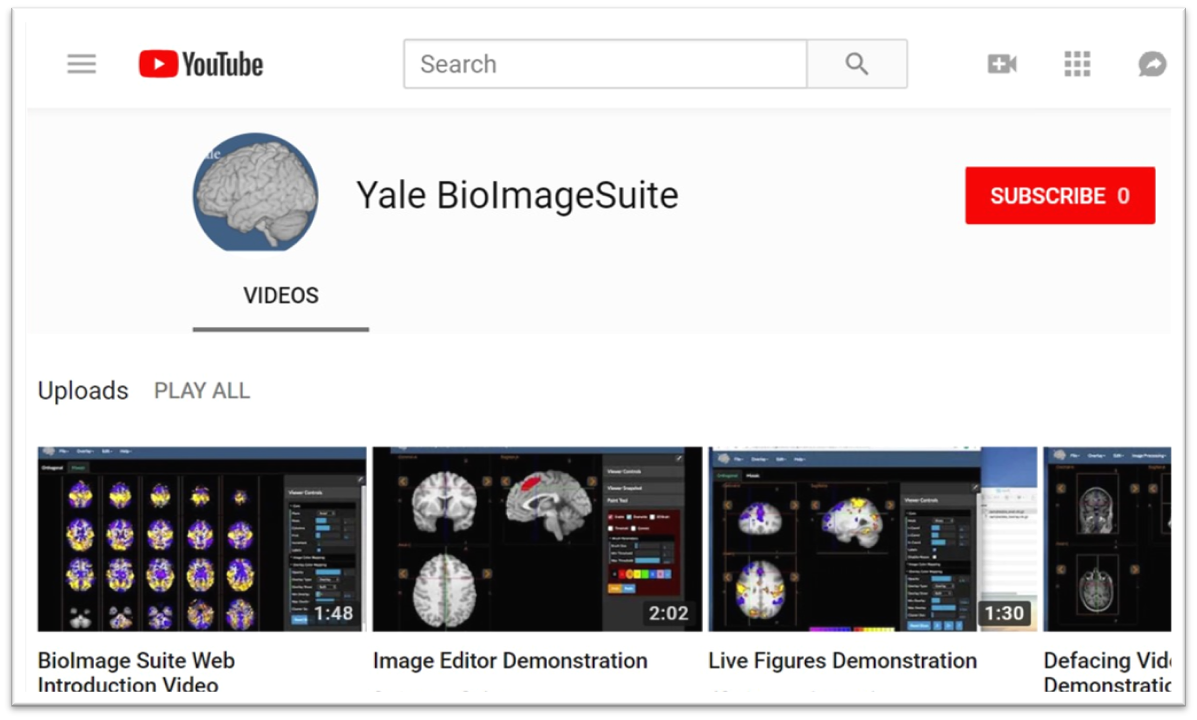
Xenophon Papademetris is a Professor of Biomedical Informatics & Data Science and Radiology & Biomedical Imaging at Yale School of Medicine. He serves as Associate Director of Biomedical Imaging Data Sciences at Yale Biomedical Imaging Institute and directs the Medical Software and Medical Artificial Intelligence Certificate Program. PhD in Electrical and Information Sciences from Yale University (2000) BA from Cambridge University (1994) Postdoctoral Fellowship at Yale University (2002) His research focuses on medical image analysis, machine learning, and biomedical software development. He has developed tools like BioImage Suite Web and contributed to standards committees at the Association for the Advancement of Medical Instrumentation (AAMI). His work spans modalities including MRI, CT, PET, and optical imaging. Recent publications emphasize neuroimaging analysis, explainable AI in healthcare, and multimodal data integration across species. He leads NIH-funded research under the BRAIN Initiative (R24 MH114805) and has authored a textbook on Medical Software published by Cambridge University Press. IEEE Senior Member Yale Brown-Coxe Postdoctoral Fellowship Harding Bliss Prize for Excellence in Engineering He directs the BioImage Suite Project, creating web-based image analysis tools using JavaScript and WebAssembly. His teaching includes both academic courses and a Coursera program on Medical Software with over 14,000 enrollments.
Igor Jurisica is a Professor at the University of Toronto and a Senior Scientist at the Krembil Research Institute’s Data Science Discovery Centre for Chronic Diseases. He also serves as Visiting Scientist at IBM CAS, Scientific Director of the World Community Grid, and Chief Scientist at the Creative Destruction Lab (Rotman School of Management). His research focuses on integrative computational biology, data mining, and AI-driven models for cancer mechanisms, drug discovery, and chronic disease management. Key affiliations include the Osteoarthritis Research Program, Schroeder Arthritis Institute, and leadership roles in open science initiatives like the World Community Grid, a global distributed computing platform with 810,000+ volunteers. Jurisica’s work bridges computational tools (e.g., NAViGaTOR visualization platform, MirDIP databases) and clinical applications, emphasizing explainable AI in healthcare. Research interests span proteomics, microRNA regulation, systems vaccinology, and multi-omics integration for disease stratification. Notable contributions include identifying prognostic signatures in cancer and osteoarthritis, machine learning models for drug repurposing, and sportomics analyses of athletic biomarkers. He has been recognized as a Thomson Reuters Highly Cited Researcher (2014-2016) and ranked among the Top 100 AI Leaders in Oncology (2023). His labs develop open-access tools like PathDIP, OsteoDIP, and miRAnno to advance translational research.
Istvan Albert is a Research Professor of Bioinformatics at Pennsylvania State University , affiliated with the Department of Biochemistry and Molecular Biology . He leads the Bioinformatics Consulting Center and teaches BMMB 852: Applied Bioinformatics . Research Interests: Specializing in bioinformatics, large-scale biological data analysis, microarray and sequence analysis, scientific programming, algorithm development, and database-driven web development. His work spans gene ontology visualization , RNA-Seq analysis , and coronavirus research . Software Development: Created GeneScape for gene function visualization and bio for bioinformatics workflows. Maintains the Biostar Handbook series and the Biostars Q&A Forum , a leading bioinformatics resource.
Ji Hwan Park is an Assistant Professor in the School of Interactive Games and Media at RIT's Golisano College of Computing and Information Sciences (GCCIS). He holds a PhD from Stony Brook University under Prof. Arie Kaufman. His research focuses on accessible data visualization, digital twins, human-AI collaboration, and VR/AR applications. Notable contributions include developing tools for ADHD-friendly visualizations and interactive protein motif identification. He has received funding from the Department of Defense for biomedical research and earned an Honorable Mention at CHI 2024. Current teaching includes courses on game design and advanced algorithms. Research activities span medical imaging analytics (e.g., CMed framework for crowd-sourced diagnostics), climate modeling through Bayesian deep learning, and creative visualization techniques like Graphoto. His work bridges technical innovation with human-centered design principles, particularly in healthcare and neurodivergent accessibility contexts.
John Diffley is a Principal Group Leader and Associate Research Director at The Francis Crick Institute in London, UK, where he leads research on DNA replication mechanisms. His work focuses on understanding how cells precisely duplicate their DNA during cell division and how errors in this process contribute to cancer development. Diffley obtained his PhD from New York University in 1985 and completed postdoctoral training with Bruce Stillman at Cold Spring Harbor Laboratory until 1990. He established his research group at the Clare Hall Laboratories (originally Imperial Cancer Research Fund, then Cancer Research UK) before moving to The Francis Crick Institute in 2015. His research spans DNA replication initiation, cell cycle control, replication fork checkpoints, and epigenetic inheritance. Diffley's lab has pioneered methods to reconstitute chromatin replication using purified proteins, providing unprecedented insights into chromosome biology. His team combines genetics, cell biology, and biochemistry to study the molecular 'machines' that copy DNA in yeast and human cells. Analysis of Diffley's recent publications reveals a strong focus on structural mechanisms of DNA replication, particularly using cryo-EM to visualize replication machinery. His work examines helicase loading and activation, replication fork stability under stress, and the connection between replication errors and cancer development. The research spans model organisms to human cells, with increasing emphasis on structural approaches in recent years. FRS (Fellow of the Royal Society) FMedSci (Fellow of the Academy of Medical Sciences) Diffley actively mentors a diverse team of postdoctoral researchers and PhD students, investigating various aspects of DNA replication. His lab has received substantial funding to support their work on replication mechanisms, with projects spanning basic biochemical reconstitution to studies of replication errors in cancer contexts. The lab maintains multiple technical platforms including structural biology, biochemistry, and cell biology approaches. His research group operates within The Francis Crick Institute's collaborative environment, utilizing shared facilities for structural biology, microscopy, and genomics to advance understanding of DNA replication mechanisms and their implications for genome stability and disease.