Wyeth W. Wasserman is a Professor in the Department of Medical Genetics at the University of British Columbia's Faculty of Medicine, concurrently serving as Senior Scientist at the Centre for Molecular Medicine and Therapeutics and Investigator at the BC Children's Hospital Research Institute in Vancouver. His research pioneers computational methods for genome sequence analysis, specializing in cis-regulatory elements controlling gene transcription and their role in tissue development and rare pediatric disorders. The Wasserman Lab develops widely adopted bioinformatics software and databases, leveraging deep learning to decipher cellular diversity from identical DNA sequences, with direct applications in health informatics for improving genetic disease diagnosis. Actively engaged in graduate supervision across UBC's Bioinformatics, Genome Science and Technology, and Medical Genetics programs, Dr. Wasserman fosters interdisciplinary collaborations through the Wasserman Lab, which partners with diverse research teams at the computational-life sciences interface to advance genomic medicine.
Lisa Wu Wills is an Assistant Professor in the Department of Computer Science and Electrical and Computer Engineering at Duke University, leading the APEX Lab (Application-driven Programmable Efficient Accelerated Systems Lab). Her research focuses on hardware acceleration for big data analytics in genomics, graphs, and databases to advance healthcare and natural sciences. Education: Ph.D. in Computer Science, Columbia University, 2014 Research Interests: Dr. Wills pioneers computer architecture and hardware-software co-design to create efficient accelerators for emerging applications. Her work targets genomics , graph analytics , and database systems , emphasizing simplified hardware deployment and energy efficiency for scientific breakthroughs in healthcare and AI. Publication Trends: Her 2022-2025 publications reveal a strong focus on open-source frameworks (Beethoven, PyTFHE) for accelerator development, hardware acceleration in privacy-preserving computing, and optimization for large language models. Key themes include transfer learning for EDA, domain-specific architectures for genomics, and energy-efficient image processing. Scientific Awards: Google ML and Systems Junior Faculty Award (2025) Advising and Grants: Dr. Wills mentors three PhD students: Chris Kjellqvist (Beethoven framework architect), Mason Ma (PyTFHE lead for FHE applications), and Mansi Choudhary (COCOSSim simulator creator). Her 2025 Google award funds research on accelerating vector databases and retrieval-augmented generation for LLMs. Labs and Teams: She directs the APEX Lab at Duke, developing tools like Beethoven (open-source accelerator composer) and PyTFHE for hardware-software integration, enabling domain scientists to leverage custom acceleration with minimal hardware expertise.
Aaron Puri is an Assistant Professor of Chemistry at the University of Utah, specializing in chemical ecology and natural product discovery. His research focuses on bacterial interactions in methane-oxidizing communities and the biosynthesis of secondary metabolites. Education: B.S. from University of Chicago, Ph.D. from Stanford University School of Medicine Dr. Puri's work bridges microbiology and chemistry, with projects targeting: Chemical Ecology: Decoding interspecies signaling in methane-oxidizing bacteria Natural Products: Discovering therapeutics from underexplored bacterial genomes Biosynthesis: Activating cryptic gene clusters for novel compound production Recent publications highlight advancements in quorum sensing mechanisms (2025), inverse stable isotopic labeling techniques (2024), and methanotroph community dynamics. His research also explores spatially resolved model ecosystems for studying microbial phenotypes (2023-2024). Key methods include GNPS Dashboard for mass spectrometry analysis (2021-2022). Dr. Puri leads the CAREER-funded project on quorum sensing in methanotrophs (2024) and has developed genetic tools for industrial methanotrophs (2015). His lab maintains a strong focus on environmental microbiology and biotechnological applications.
Helen Suh is a Professor at Tufts University, jointly appointed in the departments of Civil and Environmental Engineering and Community Health . As an internationally-recognized expert in air pollution health effects, she combines environmental epidemiology , exposure science , and data analytics to investigate how pollutants impact human health. Sc.D. , Harvard University (1993) M.S. , Harvard University (1990) S.B. , Massachusetts Institute of Technology (1985) Her research focuses on three areas: air pollutant impacts on cognitive performance and child development , multi-pollutant health effects , and GIS-based spatio-temporal modeling for epidemiological studies. Recent publications highlight her work on PM2.5 measurement error correction , hormonal disruptions in pregnancy , and machine learning applications in environmental health analysis. Current trends include: Advanced statistical methods for exposure assessment Multi-omics approaches to cardiometabolic health International comparative studies (e.g., Tehran, Puerto Rico) Long-term mortality analysis in Medicare populations Pollution-immune system interactions in vulnerable groups Policy-relevant modeling for air quality standards Helen Suh has served as an Associate Editor for the Journal of Exposure Science and Environmental Epidemiology and advised major U.S. and international health organizations. Her work spans over 150 publications and integrates multidisciplinary team leadership in environmental health science. Her laboratory develops large-scale data analytics tools and spatio-temporal exposure models to support population-level health research. Current projects include air pollution and aging cohorts , urban environmental noise measurement , and epigenetic responses to pollutants .
Brian D. Gregory is a Professor of Biology at the University of Pennsylvania's School of Arts & Sciences. His research focuses on RNA modifications, computational biology, and plant genetics, particularly studying how RNA modifications regulate gene expression in plants and animals. He holds a Ph.D. from Harvard University (2005) and a B.S.A. from the University of Arizona (2000). Research Interests: RNA epitranscriptomics (e.g., m6A, NAD+ caps) RNA secondary structure and protein interactions Genomic approaches to study plant stress responses Development of high-throughput sequencing tools like PIP-seq Recent Work Highlights: Recent studies include analyzing pathogen-induced RNA modifications' role in plant immunity (Plant Cell 2023), global RNA structure/protein interaction mapping, and epitranscriptomic dynamics in drought tolerance. His lab's work bridges computational methods with molecular genetics to uncover post-transcriptional regulatory mechanisms. Lab & Collaborations: The Gregory Lab uses Arabidopsis thaliana as a primary model organism but also explores animal systems. They collaborate with institutions like Cornell University and have developed protocols published in Current Protocols in Molecular Biology. Teaching: BIOL 4231: Genome Sciences and Genomic Medicine BIOL 6010: Communication for Biologists
Prof. Dr. Jörg Hackermüller is a computational biologist with expertise in Omics data integration Toxicology Environmental risk assessment Non-coding RNA biology . He serves as Head of the Department of Computational Biology and Chemistry at the Helmholtz Centre for Environmental Research (UFZ) since 2024 and holds a Professorship at the Faculty of Mathematics and Computer Science at Leipzig University since 2021. His research focuses on Developing AI methods for chemical toxicity prediction Multi-omics integration for mechanistic toxicology Data standardization in environmental monitoring Non-coding RNAs as biomarkers in disease and toxicity and has produced 15+ recent publications spanning tools like multiGSEA and deepFPlearn+ . He collaborates with teams across UFZ Leipzig University Novartis Fraunhofer Institute and leads projects like InCeTo and SafePol , integrating exposome research with systems biology.
Staffan Bensch is a Professor at Lund University, holding roles in the Molecular Ecology and Evolution Lab, Lund Migration Group, and Immunogenetics and Infection Biology. His research focuses on evolutionary biology, particularly bird migration genetics and host-parasite interactions of avian malaria. He leads projects on migratory divides in willow warblers and chiffchaffs, and maintains the MalAvi database of bird malaria lineages. Education: PhD in 1993 from Lund University, with postdoctoral work at UC San Diego. Techniques: Molecular Ecology methods including genomics and tracking technologies. Research Interests: Genetic basis of migration Host-parasite evolution Avian malaria biodiversity Publications: Over 267 articles, including recent work on migratory genetics and parasite population structures. Awards: Rosén Linnaeus Prize (2019), Katma Award (2016), Elliott Coues Award (2014). Grants: Active projects on climate adaptation in willow warblers and comparative studies of migration genetics. Supervised 11 students including Violeta Caballero-Lopez (PhD). Labs/Teams: Molecular Ecology and Evolution Lab, Lund Migration Group.
Prof. Dr. Jörg Schultz serves as a Professor for Bioinformatics at the Faculty of Biology, University of Würzburg, a position he has held since 2003. He is also a Group Leader at the Center for Computational and Theoretical Biology (CCTB) and was a member of the CCTB Managing Board from 2015-2019. His academic journey includes significant roles as Group Leader at the Max Planck Institute for Molecular Genetics in Berlin (2002-2003) and at cellzome in Heidelberg (2000-2002). He completed his PhD studies at EMBL Heidelberg (1996-2000) after conducting his diploma thesis there in 1995-1996, following biology studies at the University of Konstanz (1991-1996). Prof. Schultz's research spans bioinformatics, computational biology, and evolutionary genomics, with notable contributions to protein domain analysis, phylogenetics, and structural bioinformatics. His recent work has focused extensively on plant genomics, particularly studying carnivorous plants like the Venus flytrap to uncover the evolutionary roots of plant carnivory. His research integrates computational methods with biological questions to address fundamental evolutionary patterns and molecular mechanisms across diverse organisms. Prof. Schultz has maintained a prolific publication record since the late 1990s, with his most recent work demonstrating continued innovation in computational approaches to biological questions. His publications reveal a consistent trajectory from foundational work on protein domain evolution (including the development of the SMART database) to current research on plant genomics, molecular evolution, and bioinformatics tool development. His work shows particular strength in bridging computational methodology with biological insight across multiple domains. Among his significant contributions is the development of the ITS2 Database, a widely used resource for phylogenetic analyses, along with various computational tools including ALVIS for sequence alignment visualization, reper for repetitive element analysis, and BCdatabaser for DNA barcoding. These resources have advanced methodological capabilities in the bioinformatics community. As an academic mentor, Prof. Schultz has guided numerous students and researchers through his laboratory at the University of Würzburg, contributing significantly to the education and training of the next generation of bioinformaticians. His leadership roles demonstrate his commitment to advancing computational and theoretical biology as academic disciplines while maintaining strong connections between computational approaches and biological discovery.
Raymond T. Ng is a Professor of Computer Science at the University of British Columbia (UBC) and serves as Director of the Data Science Institute . In addition, he is the part-time Chief Informatics Officer at the PROOF Centre of Excellence for the Prevention of Organ Failures located at St Paul’s Hospital. Since 2016 he has held the prestigious Canada Research Chair in Data Science and Analytics. Education B.Sc. (Hons.) Computer Science, University of British Columbia, 1986 M.Math. Computer Science, University of Waterloo, 1988 Ph.D. Computer Science, University of Maryland, College Park, 1992 Research Interests Professor Ng’s research lies at the intersection of data mining , text mining , health informatics , sensor analytics , and databases . Over the past decade he has focused on two major domains: Genomics & Biomarker Discovery: Developing multi-omics biomarker panels for heart, lung and kidney transplant rejection and COPD exacerbations using transcriptomics, proteomics and metabolomics data. Natural Language Processing: Mining and summarizing conversational text such as emails, blogs and meeting transcripts to generate structured metadata and actionable insights. Scientific Awards Canada Research Chair in Data Science and Analytics (2016-2026) Best Paper Award, ACM SIGMOD 2004 Best Paper Award, ACM SIGKDD 2001 Selected among Best Papers of VLDB ’99 & ’98 Governor General’s Gold Medal, UBC (1986) Research Funding & Leadership Since joining UBC in 1992, Professor Ng has continuously secured major peer-reviewed funding from NSERC, CIHR, Genome Canada, CFI, MITACS and industry partners (Google, IBM, SAP). He leads or co-leads several large-scale initiatives: HEARTBiT multi-marker blood test for cardiac transplant rejection (CIHR 2018-2021) MERIDIAN ocean acoustic data infrastructure (CFI 2018-2021) Pan-Canadian Early Detection of Lung Cancer (Terry Fox 2018-2021) Business Intelligence Network (NSERC 2009-2014) Multiple Genome Canada programs on biomarker translation (2004-2018) Laboratories & Teams Professor Ng directs the Data Science Institute and works closely with the Natural Language Processing Research Group . At the PROOF Centre he heads a multidisciplinary team of statisticians, computer scientists and clinicians advancing computational biomarker pipelines from discovery to clinical implementation.
Reto Nyffeler , PD Dr., has been Lecturer and Curator of Phanerogams at the University of Zurich since 2002. He leads the Institute of Systematic Botany’s herbarium activities and heads the Nyffeler research group, collaborating closely with the Sukkulenten-Sammlung Zürich. Education & Career Diploma in Systematic Botany, University of Zurich (1988-1991) Ph.D., Institute of Systematic Botany, University of Zurich (1994-1997) Post-doctoral researcher & Mercer Fellow, Arnold Arboretum, Harvard University (1997-2000) Post-doctoral researcher, Stanford University (2000-2001) Lecturer and Herbarium Curator, University of Zurich (2002-present) Research Focus Nyffeler’s work integrates plant systematics, biogeography, and phylogenetic methodology. Empirically, he concentrates on the diversification of succulent plants—especially Cactaceae—using molecular phylogenetics to untangle taxonomy, growth-form evolution, and biogeographic history. Parallel interests include the floristics of alpine regions and the systematics of Campanulaceae, Asteraceae, and Ranunculaceae. Across dozens of peer-reviewed papers (2010-2025) he has advanced family-wide phylogenies for Cactaceae and Caryophyllales, documented repeated succulent radiations, and created online taxonomic backbones such as Caryophyllales.org . His current projects combine next-generation sequencing with classical morphology to revise genera like Parodia and to understand adaptation in high-altitude Callianthemum . Students & Mentoring PhD advisee: Anita Lendel (systematics of Trichocereeae) Master advisees: 16 students (2006-2018) working on alpine ecology, cactus morphology, and floristic change Research Group & Collaborations The Nyffeler group comprises a scientific assistant (Dr. Heike Hofmann), technical and IT staff, and rotating Master students. The team maintains close collaborations with the Sukkulenten-Sammlung Zürich, Harvard’s Arnold Arboretum (Mercer Fellowship network), and multiple international cactus specialists.
Prof. Dr. Matthias Weidlich is a faculty member at Humboldt University of Berlin within the Institute of Computer Science under the Faculty of Mathematics and Natural Sciences . His research focuses on Process Mining , Complex Event Processing , and Data Privacy with applications in Business Process Management and Scientific Workflows . Research Interests: Business Process Management and Process Mining Complex Event Processing and Stream Data Analysis Data Privacy and Security in Process Systems Scientific Workflow Systems and User Behavior Heterogeneous Network Embeddings Algorithm Design and Optimization Recent Publications (2023-2025) demonstrate expertise in: Efficient stream processing techniques Privacy-preserving process mining frameworks Scientific workflow analysis tools Graph neural network applications Multi-modal data integration Adaptive querying systems Contact: Office: Unter den Linden 6, 10099 Berlin Phone: 030 2093-41277 Email: matthias.weidlich@hu-berlin.de Web: hu.berlin/data
Prof. Valentina Boeva is an Assistant Professor at the Department of Computer Science, ETH Zürich, specializing in biomedical informatics. Her research focuses on integrating machine learning and computational methods to address challenges in genomics, oncology, and precision medicine. She holds a position in the Professur für Biomedizininformatik (Biomedical Informatics) and is based at CAB G32.2, Universitätstrasse 6, Zürich, Switzerland. Her work emphasizes applications such as cancer biomarker discovery, tumor heterogeneity analysis, and epigenetic profiling. She teaches courses including Machine Learning Seminar, Data Science Lab, and Machine Learning for Genomics. Her research group develops computational tools like CDState and UniversalEPI to decode complex biological systems. She actively publishes in top-tier journals, with recent work on exosome-driven diagnostics and chromatin interaction modeling. Her scientific contributions span methodologies for single-cell data analysis, survival modeling, and drug response prediction. She collaborates across disciplines to bridge computational science with clinical applications in cancer research.
Chet C. Sherwood is a Professor of Anthropology at George Washington University (GW) and a core faculty member of the Center for the Advanced Study of Human Paleobiology (CASHP). He also directs the National Chimpanzee Brain Resource and is affiliated with the GW Mind-Brain Institute. His research focuses on evolutionary neuroscience, particularly brain evolution in primates and other mammals, emphasizing how brain structure relates to behavior, development, and genetics. Education: Ph.D. (2003), M.A. (1998, 1996), and B.A. (1995) from Columbia University, with an additional M.A. from New York University (1996). Teaches courses such as ANTH 1001: Biological Anthropology and ANTH 3413: Evolution of the Human Brain. Research interests include comparative neuroanatomy of the cerebral cortex, human brain evolution relative to other primates, and the molecular and cellular mechanisms underlying cognitive evolution. He explores how brain differences across species correlate with ecological and behavioral traits, leveraging neuroimaging, transcriptomics, and fossil reconstruction techniques. Recent work investigates aging-related brain changes in primates and elephants. Notable achievements include membership in the National Academy of Sciences (2021) and the AAAS Fellowship (2022). His lab’s studies on chimpanzee brain plasticity and the genetic basis of primate cognition have advanced understanding of human uniqueness and shared evolutionary traits. Chet’s interdisciplinary collaborations span paleontology, genomics, and neuroscience, with a focus on bridging evolutionary and medical insights. His leadership in the National Chimpanzee Brain Resource underscores his commitment to advancing comparative neurobiology through resource development and ethical research practices.
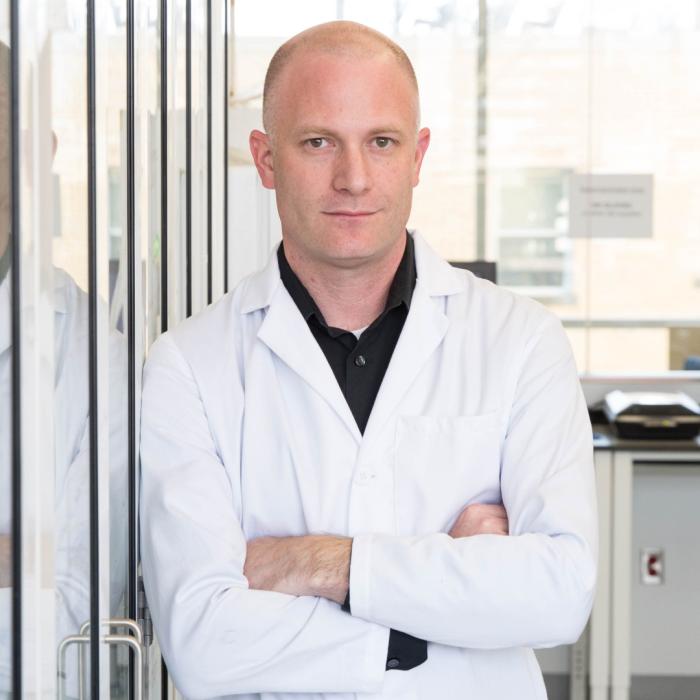
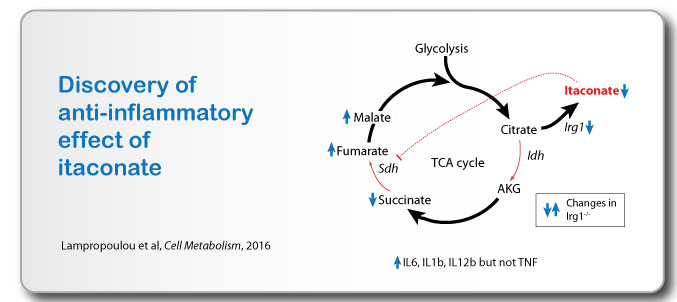
Maxim Artyomov is an Alumni Endowed Professor and Professor of Pathology and Immunology at Washington University School of Medicine , with affiliations to the Institute of Clinical and Translational Sciences (ICTS), Bursky Center for Human Immunology & Immunotherapy Programs (CHiiPs), and Siteman Cancer Center. His research spans Systems Immunology , Immunometabolism , and Cancer Immunology , focusing on integrating epigenetic, transcriptional, and metabolic regulation in immune cells. 2018 promoted to Associate Professor with Tenure 2017 awarded LEAP Inventor Challenge 2018 Unanue Prize for Innovative Research in Immunology Key research contributions include: Discovery of itaconate's anti-inflammatory role (2016) Metabolic reprogramming in macrophage polarization (2015) TREM2's function in microglial metabolic fitness (2017) Development of CORESH gene signature search engine (2025) His high-throughput omics pipelines enable cross-disciplinary analysis of immune responses in tuberculosis, Alzheimer's, and cancer. Notable collaborations include work with Schreiber's lab on immune checkpoint therapy (2018) and ITMO University on systems biology workshops (2017-2018). Awards and grants include the Unanue Prize (2018), LEAP Inventor Challenge (2017), and R01 grant from NIAID (2017). He mentors PhD/MSTP students and co-organizes international systems biology workshops.
Ralf Zimmer is a Full Professor for Practical Informatics and Bioinformatics at Ludwig Maximilian University of Munich (LMU) since 2001, affiliated with the Department of Informatics in the Faculty of Mathematica, Informatics and Statistics. He concurrently serves as Head of Section III and Head of the Research Group Network Regulation and Modeling / Machine Learning at the Leibniz Institute for Food Systems Biology at TUM (Leibniz-LSB@TUM) in Freising, Germany. His academic foundation includes a Diploma with distinction in Computer Science, Applied Mathematics and Operations Research from the University of Bonn (1981-1986), followed by a summa cum laude Doctorate in Computer Science and Applied Mathematics from CAU Kiel in 1990, where he received dual honors: the CAU Dissertation Award and Best Dissertation Award. Zimmer's research pioneers the integration of bioinformatics, systems biology, and machine learning to decode molecular food-consumer interactions. His group develops causal system models for biological networks, validated through in silico simulations and multi-omics perturbation experiments (transcriptomics/proteomics). Core methodologies include network regulation modeling, algorithmic bioinformatics, and database construction linking food compounds to biochemical networks and cellular phenotypes, with translational goals for food and biotech innovation. His 14 most recent publications (2012-2024) reveal dominant trends in multi-omics immunology and cardiovascular research, featuring computational innovations for high-throughput data analysis. Key themes include host-pathogen dynamics (viral infections), inflammatory disease mechanisms (atherosclerosis), and methodological advances in proteomics/transcriptomics, consistently bridging fundamental bioinformatics with clinical applications. Major scientific recognitions include: CAU Dissertation Award and Best Dissertation Award (1990) Director of LMU's Informatics Department (2010-2012) DFG Review Board membership for biomedical foundations (2008-2016) Leadership of the DFG Bioinformatics Munich Center (2001-2008) Academic Senate election at LMU München (2011) Zimmer directs LMU/TUM's joint B.Sc./M.Sc. bioinformatics programs since 2001 as founding architect of the DFG-funded Bioinformatics Munich initiative. His educational leadership spans spokesperson roles for international training groups (IRTG RECESS), collaborative research centers (SFB1123 Atherosclerosis), and elite programs (Data Science, Munich Center for Machine Learning). Grant stewardship includes directing the DFG Bioinformatics Munich Center and shaping national funding policy via the DFG review board. At Leibniz-LSB@TUM, his research group pioneers databases connecting food compounds to cellular phenotypes through molecular networks, collaborating with Munich universities, clinics, and biotech partners to develop high-throughput sequencing/proteomics applications for future food and health innovations.