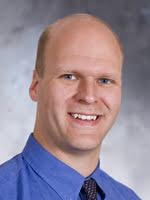
Daryl Armstrong Scott, Professor at Baylor College of Medicine in the Department of Molecular and Human Genetics , is a leading researcher in identifying genetic causes of congenital defects. His work focuses on congenital diaphragmatic hernia (CDH) , 1p36 deletion syndrome , and neurodevelopmental phenotypes . Education: BS (Brigham Young University, 1993), PhD (University of Iowa, 2000), MD (University of Iowa, 2000) Certifications: American Board of Pediatrics (General Pediatrics), American Board of Medical Genetics (Clinical Genetics) Research Interests: Identifying genes for CDH and cardiovascular malformations (CVM) Investigating RERE gene mechanisms in 1p36 deletion syndrome Studying esophageal atresia/tracheoesophageal fistula (EA/TEF) via machine learning Global collaborations on neurodevelopmental disorders (autism, intellectual disability) Scientific Awards: Spriestersbach Dissertation Prize (1999) Fulbright and Jaworski Faculty Excellence Award (2013) Outstanding Graduate Teaching Award (2011) Research Trends (2022-2019): Recent publications highlight his use of exome sequencing , mouse models , and DECIPHER data to link genes like GATA4 , RERE , and FGFRL1 to congenital defects, with a strong focus on genotype-phenotype correlations and neurodevelopmental syndromes .
Emanuela Di Martino is a Researcher at the University of Catania , with significant affiliations at the Natural History Museum, University of Oslo , and the Natural History Museum London . Her work bridges paleontology, marine biology, and evolutionary ecology, focusing on bryozoans as a model for understanding macroevolutionary processes and tropical biodiversity dynamics. Education: PhD in Geosciences, Utrecht University (2014) Master’s in Geological Sciences Applied to Land Management, University of Catania (2008) Bachelor’s in Geology Applied to Land Conservation, University of Catania (2006) Her research interests include: Paleobiodiversity hotspots in tropical regions Allometric and life-history evolution under climate change Paleoenvironmental reconstructions using multitaxon approaches Taxonomy and phylogeny of Mesozoic-to-Recent marine bryozoans Her publication trends emphasize: Long-term evolutionary patterns in bryozoans Macroevolutionary dynamics and diversification Ecological impacts of marine debris Morphometric analysis via AI tools (e.g., DeepBryo) Phylogenetic studies with genome-skimming Competitive outcomes in fossil communities Scientific Awards: 2025 Visiting Professorship at CR2P, Paris 2021 Medaglia Giovanni Merla, Società Paleontologica Italiana 2018 European Commission Seal of Excellence for project ESTIMATE She has led projects like SELECT (Norwegian RCN) and macroevolution.abc (ERC), and holds editorial roles at Journal of Paleontology and Zootaxa . Her work involves collaborations with institutions in Norway, the UK, Spain, and the US, and she contributes to understanding ancient ecosystems through colonial invertebrates.
Korbinian Bösl is a Researcher affiliated with the Computational Biology Unit at the Department of Informatics, University of Bergen . His work focuses on Research Data Management (RDM) within national infrastructures like ELIXIR Norway and Centre for Digital Life Norway , where he coordinates workshops, trains data stewards, and contributes to FAIR data policy development. Roles: Data Management Coordinator, ELIXIR Norway Helpdesk member, RDMkit editorial board, Software Carpentry instructor Education: PhD in Biomedicine from Norwegian University of Science and Technology (2019) Research interests include FAIR data principles , multiomics analysis of host-pathogen interactions , and proteogenomics in life sciences. His 15 most recent publications (2018-2024) demonstrate expertise in RDM practices across Norwegian research infrastructures, with specific contributions to data stewardship training , metadata standards , and software integration in projects like BioMedData. While no scientific awards are explicitly mentioned, Bösl has led critical infrastructure reports including Life Sciences DSW Knowledge Model and easyDMP integration studies . He provides RDM education through courses CCBIO906 and BT8121, and participates in the BioMedData and ELIXIR Norway consortia.
Steven Biller is an Associate Professor in the Biological Sciences department at Wellesley College. His research spans marine microbiology, systems biology, and genomics, focusing on the ecological and physiological interactions within microbial communities, particularly with the marine cyanobacterium Prochlorococcus . Teaching: Introductory Cellular and Molecular Biology (BISC 110), Genetics (BISC/BIOC 219), Genomics and Bioinformatics (BISC 333) Research Focus: Systems biology of marine microbes, extracellular vesicles, microbial interactions, and cross-scale ecological dynamics His work integrates genomics, computational biology, and oceanography to address critical questions about microbial survival strategies and ecosystem functions. He also contributes to genomic database development and public education about oceanic importance.
Sophie Allais is an Assistant Professor at the French Higher Education Institution in Agriculture, Food, Horticultural and Landscape Sciences, specializing in the Department of Animal and Food Sciences in Rennes, France. She contributes to advancements in genomic selection and animal breeding research. Current Position: Assistant Professor in Animal Genetics Research Focus: Genomic Selection, QTL Analysis, SNP Chip Optimization Collaboration: Part of Sylvie Rousset's Lab Her work centers on reducing genotyping costs while improving accuracy in poultry and beef cattle breeding programs. Techniques like ddRAD-seq validation, low-density SNP chip design, and imputation strategies are key areas of exploration. Recent publications emphasize cross-species QTL mapping and cost-effective genomic evaluation frameworks. Major trends in her research include: Development of reduced-representation sequencing methods for livestock breeding Comparative studies of ddRAD-seq vs. whole-genome sequencing Optimization of marker density for economic genomic selection Integration of crossbred animal data in genetic evaluation models
Prof. Milani Christian is an Associate Professor at the University of Parma, affiliated with the Department of Chemical, Life and Environmental Sustainability Sciences. His academic focus encompasses microbiology education and advanced research in microbial ecology. His research explores: Gut microbiota dynamics across human life stages, emphasizing infant health and aging. Probiotic mechanisms of Bifidobacterium and Lactobacillus species for therapeutic applications. Computational approaches (machine learning, genomics) to analyze microbial communities. Environmental microbiology , including bioremediation and extremophile adaptations. Milani's recent publications (2022–2025) demonstrate interdisciplinary integration, combining metagenomics, transcriptomics, and clinical insights to study host-microbe interactions. Predominant themes include probiotic development, microbial metabolism, and ecological modeling of gut/vaginal microbiomes. He coordinates multiple graduate programs in Environmental and Resource Sciences and Technologies, reflecting active academic leadership. No awards, grants, or student advisees are documented in available materials.
Mike Wallinga serves as a Lecturer in the Department of Computer Science at Northwestern College while concurrently holding a quarter-time position as Director of Institutional Research. With expertise spanning computational science and statistics, he teaches core computer science courses including introductory programming, data structures, databases, and parallel computing systems. His academic credentials include: Ph.D. in computational science and statistics from the University of South Dakota M.A. in computer science from the University of South Dakota B.A. in computer science and mathematics from Northwestern College Dr. Wallinga's research bridges bioinformatics, parallel computing, and pedagogical innovation. His bioinformatics work develops novel multiple sequence alignment algorithms using morphing techniques and particle swarm optimization, while his parallel computing research explores multi-core architectures for biological data processing. In computer science education, he designs immersive learning experiences such as semester-long game projects to engage programming students. Publication analysis reveals a strong focus on computational biology (71% of recent works), particularly multiple sequence alignment methodologies that dominated his 2017 output. His research trajectory shows progression from algorithmic development (2015-2017) toward educational innovation (2019) and theological integration in computing (2021), demonstrating interdisciplinary breadth within computer science. Recognition includes: Northwestern's 2018 Faculty/Staff Inspirational Service Award As a programming competition coach, he mentored two Northwestern College teams to global top-100 rankings in the ACM International Collegiate Programming Contest. His applied research extends to institutional analytics through his directorship, where he develops data-driven decision support systems using database technologies and visualization dashboards. Professional memberships include the Association for Institutional Research and Association for Computing Machinery. He maintains active leadership in competitive programming initiatives, creating structured team environments that prepare students for high-stakes algorithmic challenges through rigorous practice regimes and strategic problem-solving frameworks.
Ştefania-Gabriela Dumbravă is an Associate Professor in Computer Science at the École Nationale Supérieure d'Informatique pour l'Industrie et l'Entreprise (ENSIIE), part of Institut Polytechnique de Paris. She leads the ACMES team at Samovar Laboratory (Télécom SudParis) and participates in international working groups including the Property Graph Schema Working Group and European Research Network on Formal Proofs. Education: PhD in Computer Science, Université Paris-Sud (2016) MSc in Computer Science, Jacobs University Bremen (2012) BSc in Mathematics, Jacobs University Bremen (2010) Research Focus: Her work centers on formal methods for designing and verifying graph database algorithms, with emphasis on: certified database engines, property graph schemas, threshold queries, progressive querying techniques, and knowledge graph evolution. She integrates theorem proving (Coq/Isabelle) with practical database applications. Publication Trends: Her recent works demonstrate strong focus on graph database foundations (schemas, query processing) and practical verification techniques. Publications frequently appear in top-tier venues (VLDB, SIGMOD, ICDE) and emphasize both theoretical rigor and real-world applications in areas like bioinformatics, transportation, and networking. Awards & Honors: EASST Best Software Science Paper (ICGT 2025) ICDE/SIGMOD Distinguished Reviewer Awards (2025) SIGMOD Best Paper & Research Highlight (2023) VLDB Best Paper Runner-Up (2022) Students & Grants: Supervises Master's interns on graph database applications. Leads the ANR JCJC VERDI project (2025-2029) on verified distributed graph systems. Actively recruits PhD candidates for this initiative. Labs & Service: ACMES team at Samovar Lab. Serves on editorial boards (TODS, TGDK) and program committees (VLDB, SIGMOD, ICDE). Coordinates VLDB 2026 Demonstrations Track and co-organizes multiple workshops (GRADES-NDA, TGD).
Professor Edward S Tobias is a distinguished academic and clinician specializing in Medical Genetics and Genomics at the University of Glasgow. He holds the position of Professor of Genetic Medicine within the School of Medicine, Dentistry & Nursing, and serves as an honorary consultant clinical geneticist in the NHS. Professor Tobias is internationally recognized for his contributions to genetics education and research, currently leading the MSc in Medical Genetics & Genomics program which has received multiple awards at UK, Scottish, and university levels. Professor of Genetic Medicine, School of Medicine, Dentistry & Nursing Clinical Director of the MSc in Medical Genetics & Genomics Lead for the MSc Clinical Genomics course Lead for undergraduate MBChB Genetics teaching Co-chair of the Human Genome Organisation International Education Committee Professor Tobias holds an impressive array of qualifications including a BSc (1st class Hons), MBChB, MRCP, PhD (Molecular Biology), and fellowships including FRCP, FHEA, and FAoP. His educational journey laid the foundation for his dual expertise in clinical medicine and molecular genetics research. Professor Tobias's research focuses on the genetic basis of developmental disorders, particularly using whole-genome DNA sequencing and long-read sequencing technologies. His work has significant clinical applications, especially in understanding Disorders of Sex Development (DSD) conditions. He leads the ethically-approved Genetic Investigation of Rare Disorders study and serves as Chief Investigator on multiple genomic research projects. His collaborative approach extends to institutions including the Wellcome Trust Sanger Institute and the Francis Crick Institute. An enthusiastic innovator, he invented a 3D molecular-viewer virtual reality app for biomedical education that was shortlisted for a UK Technology & Innovation Award. Analysis of Professor Tobias's recent publications reveals a strong focus on translational genomics, with particular emphasis on Disorders of Sex Development, developmental disorders, and genomic education. His work bridges basic science discoveries with clinical applications, often leveraging large-scale genomic datasets to identify novel gene-disease associations. The publications demonstrate consistent contributions to both clinical genetics practice and educational frameworks for genomic medicine, with several appearing in high-impact journals including Nature, Nature Genetics, and Genetics in Medicine. Education Award 2021 of the European Society of Human Genetics Four personal student-awarded teaching awards Shortlisted for UK Technology & Innovation Award Prize from British Society of Human Genetics GSK Senior Clinical Research Fellowship MRC Training Fellowship As an educator and mentor, Professor Tobias has supervised numerous students who have gone on to win research prizes. His grant portfolio includes significant funding such as the £3.4m MRC/EPSRC Glasgow Molecular Pathology Node where he served as a work-strand leader, Wellcome Trust funding for exomic sequencing, and his role as co-investigator on the £6 million Scottish Genomes Partnership. He is also a lead educator for University of Glasgow MOOCs on FutureLearn and maintains EuroGEMS.org, an educational platform adopted by both ESHG and HUGO-International as their principal online education source. Professor Tobias leads an active research group with strong interests in the genetic basis of DSD conditions and collaborates extensively with researchers at the Sanger Institute and Francis Crick Institute. He is also a key member of an award-winning STEM public engagement team and serves as an invited co-chair of the Human Genome Organisation International Education Committee, leading efforts to standardize genomic education globally.
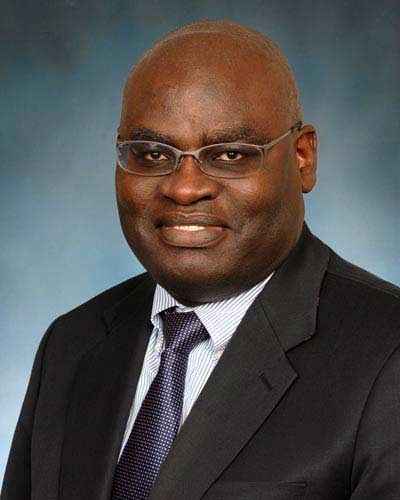
Clement Adebamowo is a Professor in the Department of Epidemiology and Public Health at the University of Maryland School of Medicine, where he serves as the Director of the Cancer Epidemiology Division. At the Marlene and Stewart Greenebaum Comprehensive Cancer Center, he holds dual leadership roles as Associate Director of the Population Sciences Program and Associate Director for Diversity, Equity, Inclusion, and Accessibility. Additionally, he serves as a Research Scientist at the Center for Bioethics and Research in Ibadan and the Institute of Human Virology Nigeria in Abuja. Dr. Adebamowo earned his BM, ChB (Hons) from the University of Jos in Nigeria (1978-1984), completed postgraduate surgical training in Oncology at University College Hospital, Ibadan (1987-1993), and received his Sc.D. in Nutrition Epidemiology with a minor in Biostatistics from Harvard University (2000-2004). His research spans multiple interconnected domains focused on improving health outcomes, particularly in African populations. Dr. Adebamowo leads the NIH-funded African Collaborative Center for Microbiome and Genomics Research (ACCME), part of the H3Africa initiative, conducting comprehensive studies on genomic and epidemiologic risk factors for cervical cancer, breast cancer, uterine fibroids, and viral infections. His work integrates host germline genomics, somatic genomics, viral genomics, epigenomics, microbiome, proteomics, and metabolomics data from a cohort of approximately 12,000 women followed every six months. He also directs the Baltimore Clinical Site of the NCI CASCADE Network, a global partnership optimizing cervical cancer screening and management for women living with HIV. Additionally, Dr. Adebamowo has developed innovative training programs in Research Ethics, Responsible Conduct of Research, and Research Methodology, creating short, medium, and long-duration graduate programs that have trained over 150,298 individuals. Dr. Adebamowo's recent publications demonstrate a strong interdisciplinary approach spanning cancer epidemiology, genomics, nutrition, and research ethics. His work shows a consistent focus on African populations, with particular attention to HPV-related cancers, uterine fibroids, and the ethical implications of data science in health research. The integration of genomic, microbiome, and epidemiological data represents a cutting-edge approach to understanding disease mechanisms in understudied populations. 2022 Jeff Cohen Service Award from PRIM&R for pioneering work in research ethics in Nigeria and West Africa Mamadou Gueye Prize from the West African College of Surgeons Member of Keystone Symposia Scientific Advisory Board Member of the Fogarty International Center Advisory Board Member of the Independent Review Panel for Vivli and CSDR As an educator, Dr. Adebamowo directs the graduate course in cancer epidemiology at the University of Maryland, which attracts students across the University System of Maryland and features lecturers from the National Cancer Institute and surrounding institutions. He has secured multiple NIH grants including the Scaling Up Research Ethics and Research Integrity (SURER) Project, Bridging Gaps in the ELSI of Data Science Health Research, and the Point of Care Diagnostic test for Molecular Subtyping of Breast Cancer study. He has also developed a Food Frequency Questionnaire and Food Composition Database for African foods, significantly enhancing nutritional research capacity in Africa. Dr. Adebamowo directs the NIH Fogarty-funded West African Bioethics Training program and has been instrumental in establishing research ethics infrastructure in Nigeria, including serving as founding chair of the Nigerian National Health Research Ethics Committee for ten years. His work implementing the Nigerian National System of Cancer Registries has significantly improved cancer surveillance in the country.
Julie C. Dunning Hotopp is a Professor in the Department of Microbiology and Immunology at the University of Maryland School of Medicine and a Member of the Institute for Genome Sciences. Her pioneering work on lateral gene transfer between bacteria and animals has reshaped understanding of host-microbe genomic interactions, with significant implications for human disease mechanisms. Her academic journey includes: B.S. in Microbiology and Immunology from the University of Rochester (1993-1997) Ph.D. in Microbiology and Molecular Genetics from Michigan State University (1997-2002) Postdoctoral Fellowship at The Institute for Genomic Research (2002-2005) Dunning Hotopp's research centers on lateral gene transfer (LGT) from bacteria to animal hosts. Her landmark 2007 Science paper demonstrated extensive LGT from Wolbachia to invertebrates, ranked 73rd in Discover Magazine's top 100 discoveries of 2007. She expanded this to human somatic genomes, presenting computational evidence of bacterial DNA integration in cancer genomes (PLoS Comput Bio, 2013). Her work spans Wolbachia symbiosis in insects/nematodes, pathogen genomics of Ehrlichia/Anaplasma/Neisseria, and developing bioinformatics tools for genomic analysis. Recent publications reveal three converging research trajectories: bacterial DNA integration mechanisms in human cancers, Wolbachia-host coevolution in filarial diseases, and pathogen genomics for emerging infectious diseases. Her team combines computational genomics with molecular validation to explore LGT's role in disease pathogenesis. Her major accolades include: NIH Director’s New Innovator Award (2010) Leading Women of Maryland (2010) Genome Technology Young Investigator (2010) NIH Transformative Research Award (2015) Supported by substantial NIH funding including the New Innovator and Transformative Research Awards, her laboratory trains next-generation genomic scientists while pioneering methods to detect bacterial DNA integrations. Current projects focus on validating LGT events in cancer genomes and identifying novel drug targets for lymphatic filariasis through transferred bacterial genes. She directs two research groups at the Institute for Genome Sciences: the Lateral Gene Transfer Lab (igs.umaryland.edu/labs/lgthgt/) and her primary laboratory (igs.umaryland.edu/labs/hotopp/), where interdisciplinary teams employ single-molecule sequencing, comparative genomics, and bioinformatics to investigate host-microbe evolutionary dynamics.
Bing Ma is an Assistant Professor at the University of Maryland School of Medicine, affiliated with both the Institute for Genome Sciences and the Department of Microbiology and Immunology. As a computational biologist, Dr. Ma specializes in integrating advanced 'omics' technologies to study host-microbe ecosystems. Education: PhD in Computational Biology from University of Wisconsin-Madison Postdoctoral Training: Laboratory of Dr. Jacques Ravel Research focuses on Microbiome analysis using Multi-‘Omics approaches, with particular emphasis on: Microbe-Host Interactions Biomarker discovery Live biotherapeutics development Systems Biology applications GI Health research Recent publications highlight trends in Metagenomics , Metatranscriptomics , and Metabolomics applied to vaginal microbiota characterization and preterm infant gut development.
Dr. C. (Can) Kesmir is an Associate Professor in the Bioinformatics group at the Faculty of Science, Utrecht University, where he leads research at the intersection of computational methods and immunological discovery. His work focuses on developing bioinformatics approaches to understand antigen presentation, T-cell recognition, and immune responses in health and disease. Dr. Kesmir studied Computer Science at Bosphorus University in Istanbul and Chemical Engineering at Danish Technical University, earning his Ph.D. in 1999 from the same institution. He completed postdoctoral training in the laboratory of Prof. Soeren Brunak at the Center for Biological Sequence Analysis in Copenhagen, Denmark, before establishing his independent research group at Utrecht University in 2006. His research interests center on computational immunology, with particular focus on: Development of bioinformatics methods to identify antigenic regions in genomes Evolution of antigen presentation and processing pathways Host-pathogen co-evolution, particularly using HIV-1 as a model system Genetic associations of infectious diseases Identification of neo-antigens in cancer immunotherapy Improving organ transplantation through HLA mismatch analysis Analysis of Dr. Kesmir's publication record reveals a consistent trajectory in computational immunology, with increasing focus on translational applications in infectious disease and cancer. His work demonstrates strong interdisciplinary integration between theoretical modeling, bioinformatics tool development, and experimental immunology validation. Recent publications show particular emphasis on T-cell receptor specificity, MHC-peptide interactions, and applications to emerging pathogens like SARS-CoV-2. Among his notable achievements is receiving the High Potential award from Utrecht University in 2007. He serves on the editorial board of the Immunomics journal and was a member of the Danish CensorNet for engineering students. Dr. Kesmir teaches courses including Animal Biology, Host-Microbe Interactions, Immunobiology, and Thesis Projects. He leads research within the Biodynamics and Biocomplexity group at Utrecht University and is associated with the Utrecht Molecular Immunology Hub, where his team develops computational approaches to address fundamental questions in immune recognition and response.
Michael Parker, PhD, is an Assistant Dean and Adjunct Professor in the Department of Biology at Georgetown University (Washington, DC). He advises undergraduate majors in Biology and Chemistry and leads research on biosecurity policy. His educational background includes a BS in Biology (Millersville University) and MS/PhD in Immunobiology (Yale University), where he studied innate immune responses to RNA viruses as a Gruber Fellow and NSF Graduate Research Fellow. Research Focus Dr. Parker specializes in biosecurity, virology, and policy analysis. His group investigates: Historical trends in biothreat risk assessments Regulatory frameworks for synthetic DNA and chimeric viruses Public commenting impacts on biosafety policies DNA synthesis provider screening practices Publication Trends Recent work (2022–2025) emphasizes biosecurity policy, risk assessment, and synthetic biology governance. Earlier publications (2014–2018) cover immunology, virology, plant genomics, and education tax policy. Awards Gruber Science Fellowship National Science Foundation Graduate Research Fellowship Research Group Dr. Parker directs a team focused on biothreat policy analysis. Current projects include the COBRA database for historical risk assessments and evaluations of DNA synthesis regulations.
Professor Seumas Miller is a philosopher at Charles Sturt University, affiliated with the Australian Graduate School of Policing and Security and Practical and Public Ethics Research Group . He is also a Distinguished Research Fellow at the Uehiro Centre for Practical Ethics, Oxford University. Role : Research Leader of Contemporary Threats to Australian Security (CTAS) Grants : Principal Investigator on European Research Council Advanced Grant (2016-2021) and ARC Discovery Grant Chief Investigator Research Focus : Ethics of national security intelligence, cybersecurity ethics, institutional corruption, collective responsibility, and moral foundations of social institutions. His work spans interdisciplinary collaborations in policing, biosecurity, and counter-terrorism. Scientific Awards : Distinguished Research Fellow, Uehiro Centre for Practical Ethics, Oxford University Recent Publications analyze ethical frameworks for robotics, national security intelligence, financial benchmarks, and biosecurity, emphasizing collective responsibility and institutional integrity.