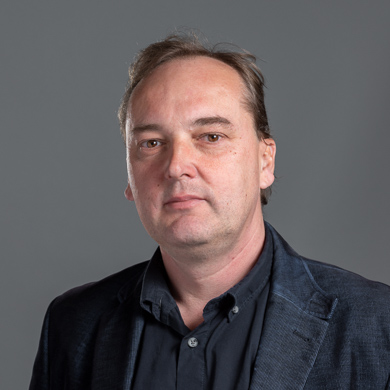
Jan Valouch is an Assistant Professor at Tomas Bata University in Zlín, affiliated with the Faculty of Applied Informatics and Institute of Safety Engineering. He specializes in electromagnetic compatibility and security futurology, with extensive experience in telecommunications from his 16-year military career (1993-2009). Holding a Ph.D. from the University of Defence (2007), his research focuses on shielding design, alarm systems, and security evaluation methodologies. Doctorate: University of Defence (2007) Military Academy in Brno (1994) His publications (40+ titles) analyze EMC of IoT devices, security cameras, and critical infrastructure. Key collaborations include Milan Adámek, Stanislav Kovář, and Hana Urbančoková. Valouch supervises both bachelor's and master's students in security engineering topics. Recent research trends include: 3D digital twin reconstruction EMC testing of Raspberry Pi and Arduino platforms Security evaluation algorithms Wireless relay susceptibility Shielding effectiveness calculation
Prof. Jiří Macháček, Ph.D. is a Professor and Head of the Department of Archaeology and Museology at the Faculty of Arts, Masaryk University in Brno, Czech Republic. He serves as Chairman of the Scientific Council of the Faculty of Arts and participates in various academic bodies including the Economic Commission, Industry Council, and Program Board for Archaeology programs. His office is located at Joštova 220/13 in Brno. Macháček specializes in the archaeology of the Middle Ages, with particular focus on early medieval Moravia. His habilitation thesis examined Pohansko near Břeclav as an early medieval socioeconomic system. His research integrates traditional archaeological methods with modern scientific approaches including archaeogenetics, geoarchaeology, and biochemical analysis to study Slavic expansion and early medieval settlement patterns. He maintains an active field research program at the Pohansko site near Břeclav. Macháček's recent publications demonstrate a strong interdisciplinary approach, with high-impact articles in journals like NATURE and GENOME BIOLOGY examining ancient DNA evidence for Slavic migration patterns. His work bridges traditional archaeology with cutting-edge scientific methods, while also engaging the public through the 'Středověk (jinak) trvá' series that connects medieval history with contemporary cultural issues. As Head of Department, Macháček oversees academic programs in Archaeology and Classical Archaeology at both bachelor's and master's levels. He has supervised numerous students through the Institute of Archaeology and Museology and has led significant research projects focused on early medieval Moravian sites. Macháček's research team at the Pohansko site represents a multidisciplinary collaboration involving archaeologists, geneticists, geoarchaeologists, and specialists in material culture analysis. The team has been instrumental in advancing our understanding of early Slavic settlement patterns and social organization in Central Europe through systematic excavation and innovative analytical techniques.
Tomáš Vojnar is a Professor at the Department of Intelligent Systems, Faculty of Information Technology, Brno University of Technology (FIT BUT), Czech Republic. He has been a faculty member since 1999, promoted to Associate Professor in 2007 and full Professor in 2012. He leads the VeriFIT research group and has extensive experience in academic leadership, including candidacy for Dean of FIT BUT in 2023 and chairing major conferences such as TACAS'19 and SV-COMP 2018. Research Interests: Static and dynamic analysis of programs, especially those with pointers and dynamic data structures Formal verification of concurrent and infinite-state systems Automata-theoretic and logical methods in verification Binary code analysis and performance analysis His recent publications show a strong trend in developing and applying static analysis tools for verifying memory safety, concurrency, and semantic equivalence in C programs. He has made significant contributions to tools like Predator, 2LS, and DiffKemp, which are widely used in the verification community and have achieved top rankings in international competitions such as SV-COMP. His work bridges theoretical foundations in automata and logic with practical software verification applications. Scientific Awards: Best theory paper award of ETAPS'10 (EATCS) Best paper awards at CADE'19 and CIAA'08 Best tool paper awards at ISSTA'18 and RV'12 Multiple gold, silver, and bronze medals in SV-COMP (Predator, 2LS, Symbiotic) Bronze Humies award for automated design of approximate circuits Gödel prize from FLoC 2014 Olympic Games 1 gold and 3 silver medals at SL-COMP'14 Siemens prize for outstanding PhD thesis (2001) Advising and Grants: He has supervised numerous PhD and Master's students who have contributed to major verification tools and publications. He has been actively involved in national and international research projects, including the Czech Science Foundation panel P103 (2019–2023), and has secured funding for research in formal methods and software verification. His collaborations span institutions in France (LIAFA, CNRS), Austria (TU Vienna), and beyond. Labs and Teams: He leads the VeriFIT research group at FIT BUT, which focuses on formal methods and software verification. The group develops state-of-the-art tools such as Predator (shape analysis), 2LS (heap verification), DiffKemp (semantic diffing), and others used in both academia and industry. The team actively participates in international verification competitions and collaborates with researchers worldwide.
Martin Pilát is an Associate Professor at Charles University's Faculty of Mathematics and Physics, specifically within the Department of Theoretical Computer Science and Mathematical Logic. His research and teaching focus on computational intelligence, genetic programming, and evolutionary algorithms. His work includes development of surrogate models in genetic programming, teaching materials for computational intelligence seminars, and implementation frameworks for evolutionary algorithms. He maintains a professional GitHub presence with repositories related to multi-agent systems, machine learning pipelines, and academic Python implementations. Contact details: Martin.Pilat@mff.cuni.cz
Dr. Dana Gášková is an Associate Professor at the Faculty of Mathematics and Physics, Charles University, affiliated with the Institute of Physics' Biophysics Division. With over 35 years of academic contributions since 1982, she has developed fluorescence methods for studying yeast membrane transporters and stress responses. Biophysics Division Head since 1999 Specializes in diS-C3(3) fluorescence assays for membrane potential studies Contributed to understanding MDR transporters in yeast and their medical implications Key research areas include: Fluorescence detection of microbial contamination Stress-induced membrane potential changes Yeast multidrug resistance mechanisms Mitochondrial membrane potential in C. elegans Her 15 most recent publications (2018-2012) demonstrate expertise in fluorescence spectroscopy, yeast membrane transport, and stress physiology. Collaborative grants through GAUK, GACR, and international programs highlight her interdisciplinary approach. Supervised students include 11 PhD candidates and 3 master's students, focusing on topics like: Membrane transporter function Drug resistance kinetics Plasma membrane potential Stress response mechanisms She leads the Biophysics Division's research on membrane transport systems and teaches courses ranging from Yeast Biology to Fluorescence Probe Methods in Charles University's physics and biophysics curricula.