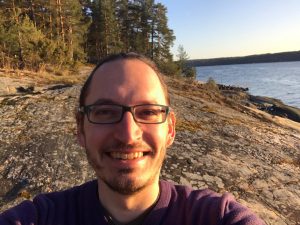
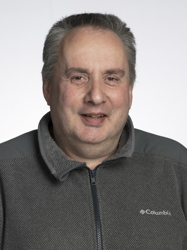
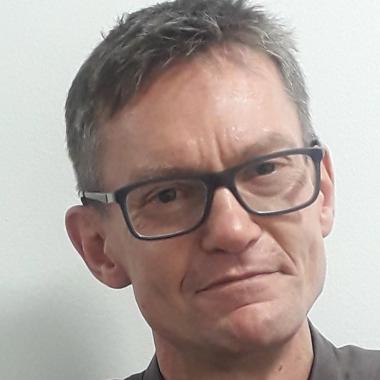
Toni Mattis is a Ph.D. researcher and teaching assistant at the Software Architecture Group of the Hasso Plattner Institute (University of Potsdam, Germany). His work integrates artificial intelligence into software engineering practices, focusing on live programming environments , code repositories mining , and test prioritization . His research interests center around: Software modularity and architectural knowledge reification Exploratory programming and live programming environments Machine learning applications on code repositories Test prioritization techniques using AI and lexical analysis Recent publications analyze: AI-generated dynamic context for program comprehension (2024) Parallel version control for exploratory programming (2025) Game-based contexts for example-driven development (2024) Task complexity modeling in software maintenance (2022-2023) Scientific recognition includes: 2018 3rd Prize ACM Student Research Competition 2017 2nd Prize ACM Student Research Competition German Academic Scholarship Foundation (2010-2014) Multiple national computer science contest awards (2009) As educator, he has designed and supervised: Master's seminars on AI for Programming (2024) Code repository mining courses (2017-2020) Software testing modules covering TDD, BDD, and mutation testing
María Mercedes Roldan Vendrell is a University Professor affiliated with the Department of Spanish Philology at the University of Jaén . She is associated with the University Institute for Research on Olive Groves and Olive Oil and a member of the research group Linguistic Analysis: Theory and Applications . Education: PhD from the University of Granada (1994), thesis on reduplication in native and non-native Spanish interlanguage. Research Interests: Her work focuses on syntax and morphosyntax in Spanish, particularly the reduplication of direct/indirect objects. She bridges theoretical linguistics with applications in interlanguage analysis and Spanish philology. Collaborations: Affiliated with the University Institute for Research on Olive Groves and Olive Oil, suggesting interdisciplinary engagement with linguistic applications in agricultural or cultural contexts.
Ventura Salazar García is a Professor in the Department of Spanish Philology at the University of Jaén. His research focuses on General Linguistics, particularly within the Linguistic Analysis: Theory and Applications research group. Education : PhD from the University of Granada (1995) with the thesis Lexicon and Grammatical Theory: An Approach to the Functional Study of 'Verbs of Understanding' in Spanish , supervised by Dr. Juan Martínez Marín. Research Interests : His work spans functional grammar, Spanish syntax, sign language studies, academic writing, and conversational pragmatics. Key topics include negation structures, lexical acquisition, grammatical theory, and the epistemological foundations of scientific language. Publications highlight trends in functional approaches to language, typological analysis, and didactic applications for Spanish as a second language. Recent works focus on sequentiality in sign languages (2019), additive negation (2024), and intentional vocabulary teaching (2025). Contact : vsalazar@ujaen.es
Bernabe Gomez Moreno serves as a Part-time Lecturer in the Department of Art at Miguel Hernández University, affiliated with the Arts Research Center and Art unit in Altea, Alicante. His teaching spans the Bachelor's in Fine Arts and Master's in Art Projects and Research programs, covering courses like Painting Composition Techniques, Syntax of the Pictorial Image, and Multimedia Fundamentals. His research centers on painting, photography, and multimedia art with emphasis on conceptual boundaries, epigenetic landscapes, and digital-analog hybridization. He investigates pictorial syntax and composition techniques while exploring urban spaces, landscape transformations, and medial interferences through experimental visual practices. Exhibition trends reveal consistent exploration of digital manipulation and conceptual photography, particularly through his "Fuzzy Boundaries" series and "Nowhere" installation. His work demonstrates recurring themes of urban exploration, landscape deconstruction, and bio-artistic interpretations across contemporary visual media. Notable accolades include: Runner-up prize in the Sant Joan photography competition First Prize for Signage from the University of Alicante (2015) UMH Award for Professional Competence (2014) Gomez Moreno supervises Final Degree Projects for both Fine Arts and Visual Design bachelor's programs while maintaining active artistic production. His professional competence award reflects integration of creative practice with pedagogical excellence in visual arts education. He actively participates in the Artistic Laboratory Interferences and Medial research group, driving experimental projects that bridge traditional painting techniques with digital media and audiovisual resources.
Jonas Blom is an Associate Professor at the Department of Journalism, University of Southern Denmark, focusing on media, journalism, and linguistic approaches to misinformation. He leads research projects like SafeChilDe (TrygFonden-funded) to improve children’s media literacy and Automatiseret nyhedsoplæsning on AI-generated news credibility. Research Interests : Misinformation and Fake News News Literacy and Social Media Clickbait and Linguistic Deviations AI Journalism and Synthetic Voice Technology Gender Stereotypes in Media Framing Spelling Errors and Language Attitudes Recent Article Trends : His work explores AI’s role in journalism, children’s critical engagement with misinformation, and linguistic pitfalls in media. Studies span from automated news reading credibility to historical spelling error analysis. Scientific Awards : Teacher of the Year at University of Southern Denmark (2018) Main Teacher of the Year at Faculty of Social Sciences, SDU (2018) Teaching & Supervision : He has taught courses like Newswriting, Reporting and Media Language and Language and Rhetoric , mentoring students such as C. Flyvbjerg and N. M. Mikkelsen. His supervision includes projects on AI’s linguistic fingerprints. Labs & Projects : Jonas collaborates on initiatives like SafeChilDe (protecting children from misinformation) and Automatiseret nyhedsoplæsning (AI voice credibility in news). He also contributes to public debates via media appearances.
Patrick G. Grosz is a Professor of General Linguistics at the Department of Linguistics and Scandinavian Studies, University of Oslo. He has held academic positions including Associate Professor (2016-2017) and Assistant Professor (2011-2016) at the same department and Eberhard Karls Universität Tübingen, respectively. His research focuses on syntax, semantics, and discourse particles within linguistics. Current Position: Professor of General Linguistics, University of Oslo (2017–present) Previous Positions: Associate Professor (2016–2017), Assistant Professor (2011–2016)
Kathleen O'Connor is a Lecturer in English Linguistics at the Department of English Studies (Angellier), Université de Lille. She is a member of UMR 8163 Savoirs, Textes, Langage and holds a doctorate in English linguistics from Charles-de-Gaulle University – Lille 3 (2008). Her academic career spans teaching and research roles in France and the USA, with a focus on syntax, phonology, and language acquisition. 1993: BA in French, magna cum laude, Washington and Lee University 1997-1998: MA in French Literature and Linguistics, Indiana University 2008: Doctorate in English linguistics, Université de Lille 3 Her research explores the syntax-phonology interface, particularly in apposition structures across English, French, and Shingazidja. She investigates learner autonomy, tandem language learning, and phonological development in children. Recent work examines metacognitive strategies in teletandem environments and dialectal features of Northern French. Notable trends in her publications include comparative syntax studies, prosody-syntactic interactions, and applications of Optimality Theory to language acquisition. Awards highlight teaching excellence (1999) and educational innovation (2011). Scientific Awards: Elizabeth C. Garrett Award, Washington and Lee University (1992) Award of Excellence & Peter Cannings Prize, Indiana University (1999) Educational Innovation Award, Université de Lille (2011) She has supervised students at the Language Resource Center (2007-2009) and currently leads English Language Readers at Université de Lille 3. Collaborations include co-authorships with Cyril Auran, Rudy Loock, and Cédric Patin.
Markéta Lopatková , Associate Professor at the Institute of Formal and Applied Linguistics (Faculty of Mathematics and Physics, Charles University), is a leading Czech computational linguist specializing in dependency syntax, valency theory, and formal language modeling. Her work focuses on the Prague Dependency Treebank and VALLEX valency lexicon, incorporating tectogrammatical representations and dependency analysis by reduction. She has coordinated major EU projects like LCT and CLARA, and served on editorial/review boards for journals and conferences. Ph.D. in Computational Linguistics (2001), Charles University M.Sc. in Mathematics (1992), Charles University Research spans Czech sentence ambiguity, non-projectivity, light verb constructions, and reflexive/reciprocal modeling using restarting automata. Her 15 most recent articles address topics like Uniform Meaning Representation conversion, cross-lingual dependency analysis, and reflexive construction detection in Czech. As principal investigator for projects such as VALLEX (2018-2020) and Delving Deeper (2012-2015), she advanced valency lexicon methodologies and linguistic theory feedback loops for NLP systems. Awards include Charles University's Silver Medal (2021), Monographs of Distinction (2016), and Slovník roku 3rd Place (2009). She has supervised 5 PhD students and 6 Master’s students, contributing to European Masters programs (LCT) and international conference committees (ACL, COLING, EURALEX). Scientific Leadership : Deputy Head of Institute (2021), Former Head (2012-2020) Teaching : Courses in Dependency Grammars, Mathematical Methods in Linguistics, and Mathematical Analysis (Czech)
Professor Hjalmar P. Petersen, Dr.phil., leads the Faculty of Faroese Language and Literature at The University of the Faroe Islands. With academic qualifications from University of Hamburg (PhD), Yale University (MA), University of Copenhagen (Cand. phil.), University of Iceland (BA), and University of the Faroe Islands (Exam. art.), he specializes in Faroese language history, phonology, morphology, and sociolinguistics. PhD in Gender Assignment in Modern Faroese (University of Hamburg, 2008) MA in Linguistics (Yale University, 1998) Cand. phil. in Nordic Philology (University of Copenhagen, 1993) BA in Linguistics (University of Iceland, 1991) Exam. art. in Faroese and Nordic (University of the Faroe Islands, 1983) His research focuses on Modern Faroese syntax, morphology, and phonology, with particular emphasis on language variation and change. His work explores language contact effects between Faroese, Danish, English, and Celtic languages, while his projects examine word order patterns, prosody, and language acquisition processes. Recent publications and projects reveal specialization in dialect variation, sociophonetic changes in Tórshavn, phonological interfaces, and multilingualism dynamics. He actively supervises PhD candidates in sociophonetics, language acquisition, and historical analysis. Bókmentavirðisløn M.A. Jacobsens (2020) Hjalmar supervises PhD students including Sandra Saxov-Lamhauge (sociophonetics), Iben Nyholm Debess (language acquisition), and Sissal M. Rasmussen (Old Faroese phonology). He collaborates internationally with institutions in Iceland, Greenland, and Finland.
Dr. Fintan Mallory is an Assistant Professor in the Department of Philosophy at Durham University , with research interests at the intersection of linguistics, machine learning, and philosophy . Prior to Durham, he held teaching and research positions at the University of Oslo, St. Catherine's College, Oxford , and King's College London , where he earned his PhD in 2019. Education: PhD in Philosophy (2019, King's College London) Research Focus: Mallory explores how neural networks represent knowledge, applying teleosemantics to analyze model interpretability. His work bridges philosophy of language (e.g., semantic competence in generative grammar) and social philosophy (e.g., AI's societal impact on capital-labor dynamics). Recent projects include stochastic measurement in AI and subspace analysis of philosophical texts. Key Contributions: His publications address recursion in generative grammar , AI ethics , and methodological challenges in computational linguistics. He has also developed open-source tools for PDF highlighting extraction and word2vec model training to aid researchers. Supervision: Currently advising PhD student Zekiye Goz Collaborations: Co-edited a special issue on Online Speech for Philosophy (2024) and contributed to debates on analytic-continental philosophy and dialectical materialism . Active in public philosophy , including discussions on Stanford Encyclopedia of Philosophy and AI bias.
Pius Wuchu Akumbu is a Director of Research (DR2) in African Linguistics at the French National Centre for Scientific Research (CNRS), working at the LLACAN laboratory (UMR 8135), which focuses on Language, Languages and Cultures of Africa. He previously held academic positions at the University of Bamenda (2017-2018), University of Buea (2008-2017), and has been a Visiting Scholar at several institutions including the University of Missouri (2021), University of Hamburg (2019-2021), University of California, Berkeley (2015-2016), and Kyoto University (2013). He earned his PhD in General Linguistics from the University of Yaoundé 1, Cameroon in 2007, following a DEA (2001), Masters (1999), and BA (1997) in Linguistics from the same institution. He also holds a Diploma for Secondary School English Teaching (DIPES II) from the Higher Teacher Training College at the University of Yaoundé 1 (2000). Akumbu's research focuses on Grassfields languages of Cameroon, with particular expertise in language documentation, comparative and diachronic linguistics, rural multilingualism, and language policy and planning. His work emphasizes community-based approaches to language documentation, particularly for endangered African languages. He has conducted extensive fieldwork on Babanki (Kejom), Bum, and other Grassfields languages, examining their phonological, morphological, and syntactic structures within their sociolinguistic contexts. His recent publications reveal a strong focus on documenting and analyzing the grammatical structures of Grassfields languages, particularly Babanki, with growing attention to broader issues of language revitalization, decolonization of linguistics, and the role of indigenous languages in education and public health. His work spans theoretical linguistics, language documentation, sociolinguistics, and applied linguistics, demonstrating both depth in specific language analysis and breadth across linguistic subfields. Georg Forster Research Fellowship from Alexander von Humboldt Foundation (2019-2021) Fulbright Visiting Scholar (2015-2016) DAAD Researcher (2011) Endangered Languages Documentation Programme (ELDP) Major Documentation Project grant (2024-2027) LABEX-EFL grant for Bantoid languages conference (2024) Akumbu has successfully supervised three PhD students to completion and currently advises one doctoral candidate. He has secured numerous research grants from prestigious organizations including the German Research Foundation (DFG), Alexander von Humboldt Foundation, Fulbright Program, and multiple endangered languages funding bodies. His organizational leadership is evident in directing major conferences including the First and Second Conferences on Bantoid Languages and Linguistics, and the 47th Annual Conference on African Linguistics (ACAL47). He leads the LLACAN laboratory's efforts in African language documentation and serves on multiple national and international committees including the CNRS National Committee (2024-2025), UNESCO's Expert Committee for the World Atlas of Languages (2024-2025), and the Scientific and Strategic Council of UMIFRE (2024-2028). His work bridges academic research with community language revitalization efforts, particularly through his involvement with the Endangered Languages Project.
Suneel Jethani is Senior Lecturer in Digital and Social Media at the University of Technology Sydney's School of Communication. His work interrogates the complex integration of digital technologies into everyday life, focusing on spatial transformations, data ethics, and the political implications of technological systems. PhD and MA in Media & Communication from University of Melbourne Grad Dip in Marketing from Monash University BSc in Computer Science from University of Melbourne Research interests span three main areas: Critical analysis of digital/data technologies' integration into daily life Emerging risk discourses around generative AI and knowledge workers Rhythm as analytical framework for understanding technology-mediated practices Recent publications examine: Data provenance as ethical methodology Surveillance capitalism's impact on leisure (2023 Griffith Review essay) Critical technopolitics frameworks Domestic deployment of punitive monitoring systems Rhythmanalytical approaches to technology studies He previously worked in open data policy reform for Victorian Government (2017-2020) and co-authored Openness in Practice (2021). His methodological approach combines: Technopolitical analysis Critical data studies Embodied computing critique Rhythmanalytical frameworks Decolonial design considerations Interdisciplinary ethical inquiry
Tulay Dixon is an Assistant Teaching Professor at Emory University, affiliated with the QTM & Linguistics departments. Her work bridges corpus linguistics , academic discourse , language attitudes , and technology in second language education . Key research areas include: Formality in academic writing (e.g., corpus studies on prescriptive rules). L2 spoken/written production (e.g., adverb placement, refusals). Educational technology (e.g., tools like Vocabulary List Generator, meta-analysis of digital gaming). Methodological rigor (e.g., coding protocols, reliability in corpus studies). She presents at conferences like AAAL, AACL, and CALICO, focusing on corpus-driven pedagogy and research transparency. Software projects include Vocabulary List Generator and Introduction to Research Methods App (IRMA) .
Dr. Johannes Graën is a Researcher at the University of Zurich , affiliated with the Department of Computational Linguistics under the Faculty of Arts and Social Sciences . He leads the Language Technology group within the Linguistic Research Infrastructure, focusing on corpus linguistics, computer-assisted language learning (CALL), and games with a purpose (GWAP). Primary Affiliation: University of Zurich Role: Researcher and Educator His research emphasizes corpus linguistics , NLP tools for education , and language learning games . He develops web-based infrastructures like the LiRI Corpus Platform and SwissBERT, a multilingual language model tailored for Swiss languages. His work often intersects with machine translation , word alignment , and multilingual resource exploitation . The trends in his publications highlight multimodal corpus analysis , CALL applications , and parallel corpora modeling . He has contributed to tools like Multilingwis and SPARCLING, which enhance the accessibility and annotation of multilingual datasets.
Andrew Caink is a Senior Lecturer in English Language and Linguistics at the University of Westminster, where he serves as Course Leader for the BA English Literature & Language program. He holds a PhD in Theoretical Linguistics from Durham University and has lectured at institutions including Durham, Lapland, and Wolverhampton. His career spans teaching and research in linguistics, English Language, and literary studies across the UK, Finland, Poland, and Bulgaria. Education: BA (Oxford), PGCE (Bristol), MA (Durham), PhD (Durham) Dr. Caink's research bridges theoretical linguistics and literary studies. His work focuses on: Grammatical theory, particularly closed-class ('grammatical') words in South Slavic languages (Bulgarian, Serbo-Croat) and English. Pragmatic theory, applying relevance theory to literary texts to analyze reader engagement and the interplay between linguistic and non-linguistic structures. Stylistic analysis of parallel structures, locative inversion, and literary repetition, notably in Muriel Spark's works. Empirical approaches to literary difficulty and multisensory language interpretation. His publications include formal linguistic studies (Journal of Literary Semantics, Journal of Slavic Linguistics) and creative fiction (Stand, Succour). He has supervised doctoral research on topics like multisensory language in botanic gardens and audio description accessibility, while contributing to academic communities via external examining and journal reviewing.