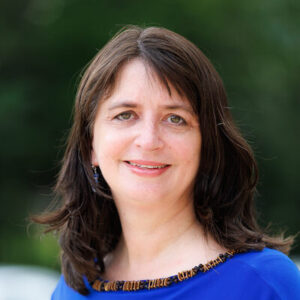
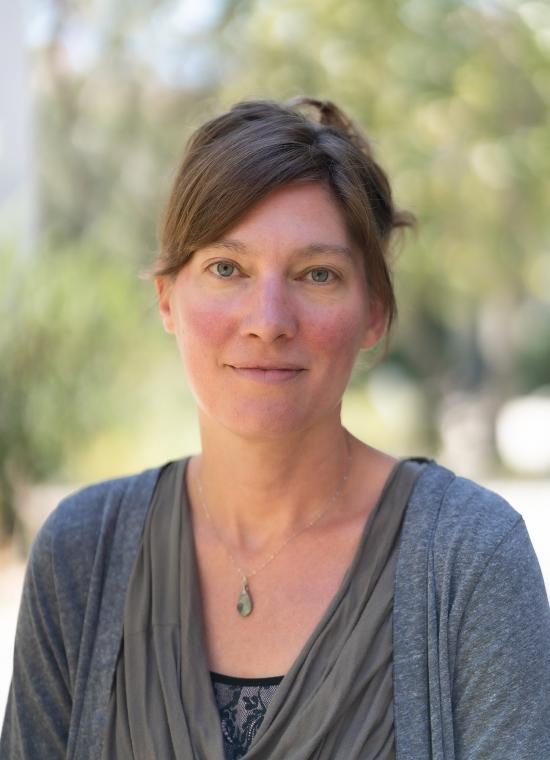
Erin O’Rourke is an Associate Professor of Spanish Linguistics at the Department of Modern Languages & Classics, University of Alabama. She specializes in intonation, sociolinguistics, and language contact phenomena, particularly focusing on Spanish dialects in the Andean and Amazonian regions. PhD in Spanish from University of Illinois at Urbana-Champaign MA in Spanish Linguistics from Pennsylvania State University BA in Spanish and BS in Chemistry from University of Illinois at Urbana-Champaign Her research explores: Intonation and prosodic variation in Spanish and Quechua Acoustic and articulatory phonetics in bilingual contexts Sociophonetic patterns and statistical methods in linguistics Language contact in the Amazon and Andean regions Recent publications analyze phonetic shifts in Amazonian Spanish-Quichua interaction and socioprosodic frameworks. She is affiliated with the PRESEEA project (Quito) and leads the LengUA Lab at the University of Alabama.
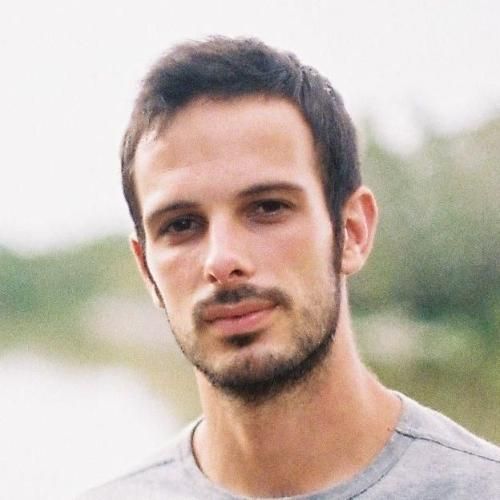
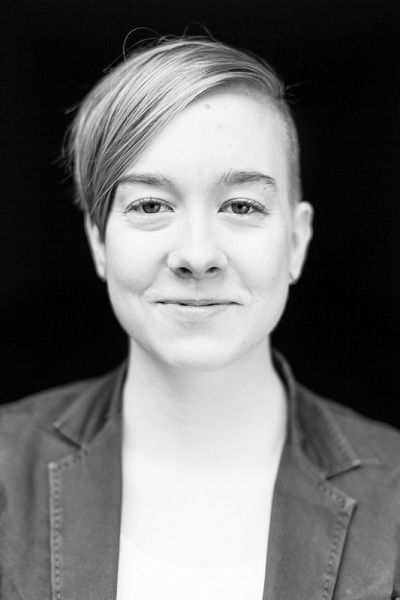
Dr. Anna Czypionka is a Lecturer and Postdoctoral Researcher in the Department of Linguistics at the University of Konstanz. Her research focuses on language comprehension across multiple levels, from single-word to discourse processing, with particular attention to interfaces between different linguistic components. She is actively involved with several research groups and projects including the Meaningful Silence and Noise (MeaNs) initiative, the German-Greek toolkit for Theory of Mind and Language in Autism (MiLA), the Center for Multilingualism, and the University of Wroclaw Questions at the Interfaces project (DFG Research Unit FOR2111). Dr. Czypionka is an alumna of the Konstanzia Fellowship, which supported her academic development. Her educational background includes extensive training in linguistics with a focus on experimental methodologies. Her primary research interests span language comprehension, sentence processing, multilingualism, language and autism, and interindividual differences in linguistic abilities. She employs diverse methodologies including EEG measurements, eye-tracking, self-paced reading, and various reaction time measurements, combining both lab-based and web-based techniques. Her work frequently explores processing at the syntax-pragmatics interface, examining how speakers navigate complex linguistic phenomena that require integration of multiple information sources. Analysis of Dr. Czypionka's recent publications reveals a consistent focus on experimental approaches to linguistic questions, particularly examining how speakers process complex linguistic phenomena at various interfaces. Her work spans multiple subfields including discourse particles, modal particles, case marking, animacy effects, and aspectual interpretation, primarily using German as the target language but also incorporating cross-linguistic comparisons with languages like Polish and Greek. A notable trend is her increasing focus on individual differences in linguistic processing and connections to autism spectrum disorder. Konstanzia Fellowship Dr. Czypionka collaborates extensively with researchers across institutions, particularly with Stephanie Durrleman and the Autism, Bilingualism, Cognitive and Communicative Development (ABCCD) group at the University of Fribourg. She has been involved in multiple funded research projects including the University of Konstanz Research Initiative project B06 on Interindividual variation at the syntax-pragmatics interface, the YKIDA project involving multiple universities, and the DFG Research Unit FOR2111. Her laboratory work takes place primarily in the Psycholinguistics lab and Neurolinguistics lab at the University of Konstanz, as well as the Center for Experimental Research on Natural Language. These facilities support her experimental research using various methodologies to investigate language processing phenomena.
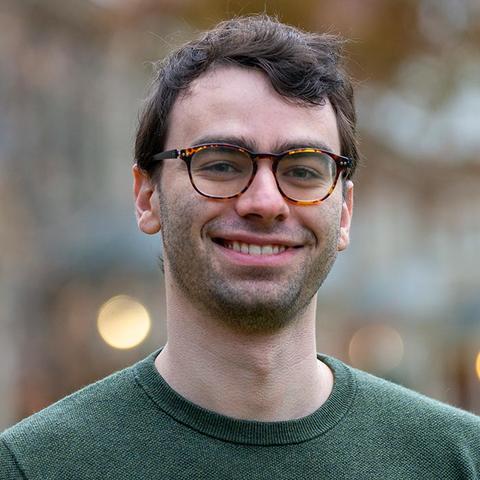
Jorge González Alonso is a Researcher at the School of Language and Education in Nebrija University , affiliated with the CINC (Nebrija Research Center on Cognition) and the AcqVA Aurora Center at UiT The Arctic University of Norway. His work bridges linguistics and cognitive neuroscience , focusing on early language learning mechanisms and neural correlates. PhD in Morphological Processing and Representation in Multilingualism (2015, University of the Basque Country) Research Interests : Investigates how the mind and brain process new languages from initial exposure, with emphasis on third language acquisition , bilingualism , neurolinguistic responses , and transfer phenomena . His projects analyze the cognitive frameworks enabling multilingual learning. Article Trends : Recent publications highlight third language acquisition , neurocognitive methodologies (EEG/ERP), virtual reality applications , translation priming , and heritage language processing . Keywords span linguistics , cognitive science , psycholinguistics , and educational technology . Labs & Collaborations : Active in CINC and AcqVA Aurora Center projects, utilizing experimental designs like artificial grammar learning and longitudinal studies to decode language acquisition dynamics.
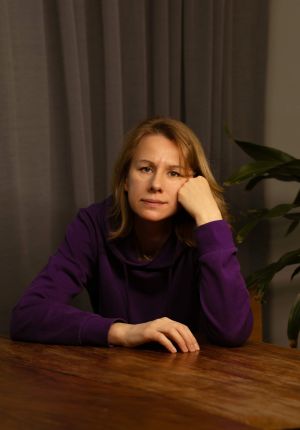
Dr. Joanna Śmiecińska is a Senior Lecturer at the Faculty of English, Adam Mickiewicz University, Poznań, Poland. Her academic career spans over two decades, with affiliations including research collaborations and visiting positions at institutions such as Eastern Michigan University and the University of Vienna. Education: MA in English (Poznań 1999), Ph.D. in English linguistics (Poznań 2003) Her research focuses on the syntax-phonology interface , evolution and neurobiology of language , and prosody , with particular interest in Polish-English contrastive grammar and bilingual speech processing. She has contributed to understanding prosodic development across age groups and prosody's interaction with non-verbal cognition. Publications highlight her work in: Prosody and syntax interactions Stative verbs' aspectual behavior Wh-scope marking mechanisms Bilingual cognitive control Children's prosodic perception Stroop effect in bilinguals Her conference presentations span prestigious venues like the Poznań Linguistic Meeting and Societas Linguistica Europaea annual meetings. Scientific awards and positions include University of Wales scholarship (1999) Visiting lecturer at Eastern Michigan University (2001-2002) Visiting lecturer at University of Vienna (2004-2006)
Gopalan Nadathur is a Professor in the Department of Computer Science and Engineering at the University of Minnesota , where he works in the Teyjus Project developing an efficient implementation of λProlog. His research focuses on higher-order logic programming , lambda calculus representations , and explicit substitution mechanisms with applications in formal verification and meta-programming . Key projects: Abella theorem prover, Bedwyr model checker Editorial roles: Theory and Practice of Logic Programming , Journal of Functional and Logic Programming Conference involvement: IEEE Symposium on Logic in Computer Science (2009), International Workshop on Logical Frameworks (2009) He has developed specialized techniques for: Higher-order pattern unification Modular logic programming Intensional lambda term reduction Binding structure representation
Jenny Ström Herold is a Senior Lecturer at Linnaeus University , Faculty of Arts and Humanities, Department of Languages. She coordinates the Non-fiction Translation Master Programme (German and English specializations) and serves as contact person for the Center for Technical Language (CFS) . Her work includes both teaching and research within contrastive syntax and corpus-based translation analysis. Linguistic research: Generative linguistics Translation studies: Phraseological phenomena Corpus analysis: English-German-Swedish comparisons Project member of Swedish Research Council-funded research (2023-2026) Her publications since 2006 focus on: Light verb constructions (e.g., "take a look"/"in Auftrag geben") Complex premodifiers ("do-it-yourself books") Punctuation strategies (dashes, colons, brackets) Anaphoric reference mechanisms Acronym translation patterns (BBC/PFC/CAPTCHA) Proper noun modifier translation
Colleen R. Rosenfeld is Professor of English at Pomona College, where she has been teaching since 2010. She currently serves as Interim Director of College Writing and is a core faculty member in the Department of English within the College of Letters and Science. Her scholarly work bridges literary criticism, Renaissance poetics, and interdisciplinary studies in the visual arts. Education: Ph.D., Rutgers University M.A., Rutgers University B.A., Reed College Her research centers on the relationship between style and epistemology in early modern poetry. She explores how rhetorical figures and formal innovation generate knowledge, particularly in the works of Sidney, Spenser, Wroth, and Shakespeare. Her work also extends into ekphrasis and comparative methodologies, notably linking Shakespeare’s sonnets with Picasso’s visual variations. She teaches courses on close reading, Renaissance poetry, Shakespeare, and genre studies. The recent articles published by Professor Rosenfeld reflect a sustained engagement with poetic form, rhetorical structure, and literary epistemology. Her publications span journals such as ELH , Modern Philology , and English Literary Renaissance , focusing on topics like rhyme, counterfactual mood, simile, and authorial identity. These works collectively demonstrate a methodological commitment to close reading and formal analysis across early modern literature. Scientific Awards and Honors: The Renaissance Project Workshop Grant (Alliance to Advance Liberal Arts Colleges, 2019–2020) Sontag Center Course Development Grant (2019–2020) Humanities Studio Faculty Fellowship (Pomona College, 2019–2020) Short-Term Fellowship, The Huntington Library (2019–2020) 2025 Halifax Prize, American Short Fiction (for 'The Skilled Anatomist') Professor Rosenfeld is actively involved in academic leadership and collaboration. She co-founded The Renaissance Project and co-organizes the Renaissance Literature Seminar at USC-Huntington EMSI. She has received grant support for interdisciplinary teaching, including a course co-taught with an art professor on Ovidian figures. While no formal advisees are listed, her mentorship is evident through her pedagogical innovation and institutional roles. Her current book project, Seeing Things Otherwise , promises to expand the scope of literary criticism through a dialogue between Shakespeare and Picasso. She maintains a research presence through publications in leading journals and is recognized for both her scholarly and creative writing. Her work continues to influence conversations on poetic form, knowledge production, and interdisciplinary humanities.
Ralf Vogel is a Professor of German Linguistics at the Faculty of Linguistics and Literature , Bielefeld University , since 2010. His research spans linguistic creativity , optimality theory , and the interface between syntax, semantics, and phonology . Education: Studied German, English, and Theater, Film, and Television at Giessen and Frankfurt am Main universities (graduated 1994); PhD in 1998 (Humboldt University Berlin) on "Polyvalent Verbs"; Habilitation in 2005 on "Output-Oriented Syntax" (University of Potsdam). Research Interests: Focuses on grammatical creativity , case conflicts , stochastic models in syntax , and sociocultural influences on language norms . His work integrates empirical methods with formal grammatical theories . Projects: Leads subprojects in SFB 1646 (Linguistic Creativity in Communication) from 2024-2027, including investigations into creative variations of multi-word expressions and empirical profiles of grammatical creativity . Publications: Authored/co-edited works on optimality theory , minimalism , and case theory in Germanic languages. Key themes: acceptability experiments , construction grammar , and language taboos .
Jutta Salminen is a Professor at the Department of Finnish and Scandinavian Studies, University of Greifswald, Germany. Her academic career spans linguistics research, teaching, and interdisciplinary collaborations with educational science. Education : Dr. phil. (University of Helsinki, 2020); MA in Finnish Language & Educational Science (University of Helsinki, 2012); BA in Finnish Language & General Literature (2011); B.Mus. in Music Education (Sibelius Academy, 2008). Her research focuses on Cognitive Grammar of Finnish , comparative analysis of Finno-Ugric languages, and language pedagogy. She has contributed to projects like "Suomen kognitiivista kielioppia sukukielten kehyksessä" and integrates linguistic theory with educational applications. Scientific Awards : Kone Foundation Scholarship (2013); Member of Young Science Academy of Finland (since 2020). Salminen has extensive teaching experience, including doctoral-level instruction at the University of Helsinki (2014–2016), and currently offers courses like "Finnish Syntax" and "Language Course C1: Kontrastiivisesti syvemmälle suomeen" at the University of Greifswald.
Noah Elkins is a Visiting Assistant Professor of Linguistics at Haverford College. His academic work is affiliated with the Department of Linguistics, focusing on general research areas within language studies. Research Interests : Linguistics, Syntax, Sociolinguistics, and Language Acquisition. These fields form the core of his scholarly contributions. Scientific Awards : No awards or honors were mentioned in the provided text.
Angela Bianchi is a tenured Professor at the University of Macerata's Department of Humanities - Languages, Mediation, History, Literature, Philosophy, with a focus on Glottology and Linguistics (GLOT-01/A). She holds a National Scientific Qualification as a First-Level University Professor until 2037. Historical Linguistics Leopardi's Linguistic Theories Saussurean Language Studies Metalanguage Analysis Applied Linguistics (pathological speech) Italian Language Teaching Her research explores the evolution of Romance languages from Latin, metalanguage in Port-Royal grammar, and interdisciplinary connections between linguistics, philosophy, and digital cultures. Recent publications focus on syntactic theories in European metalanguage and terminological development in historical contexts. Scientific awards include the Giacomo Leopardi Prize for PhD and Master's theses. She coordinates orientation activities for humanities students and contributes to editorial boards like Aretè and Digital Universities .
Charles Yang is a Professor at the University of Pennsylvania's Department of Linguistics, with joint appointments in Computer and Information Science and Psychology. As Chair of Linguistics and Director of the Program in Cognitive Science since 2011, he co-directs the Integrated Language Science and Technology group with John Trueswell. PhD in Computer Science, MIT AI Lab Faculty at Yale (2000-2008) Current roles: Chair of Linguistics, Director of Cognitive Science Program His research bridges linguistics, cognitive science, and computational modeling, focusing on human and machine language acquisition, phonological and morphological learning, and computational modeling of historical language change. He develops the Tolerance Principle for quantifying language acquisition thresholds and investigates neural language models as cognitive theories. Recent publications analyze language acquisition through computational models (2021-2024), with the 2025 work evaluating LLMs for low-resource languages. His 2016 book The Price of Linguistic Productivity won the Leonard Bloomfield Award and explores productivity in language systems. Guggenheim Fellowship (2018) Bloomfield Book Award (2018) NSF GRFP Fellowship Leonard Bloomfield Book Award (2016) Yang advises students in language acquisition, computational linguistics, and cognitive modeling. His lab collaborates with researchers like Bob Berwick, Johan Bolhuis, and Noam Chomsky on integrated approaches to language science.
Peter Thiemann is a Professor of Computer Science at the Institute of Computer Science, Faculty of Technology, University of Freiburg, Germany. He leads the Programming Languages research group and serves as a member of the examination committee. His extensive academic service includes chairing the steering committee of the European Symposium on Programming (ESOP) since 2017, having previously served as program chair for ESOP 2016 and general chair for ICFP'12. Thiemann's research spans multiple areas within programming languages, with particular focus on partial evaluation, program transformation, functional programming, type systems, and web programming. His work on the WASH (Web Authoring System Haskell) demonstrates his contributions to server-side web scripting with strong type safety guarantees. He has developed techniques for higher-order redundancy elimination, binding-time analysis, and adaptive programming. His research shows a consistent thread of connecting theoretical foundations with practical implementation concerns, particularly in the areas of program analysis and transformation. Thiemann has been deeply involved in the programming languages community, serving as vice chair of ACM SIGPLAN (2015-2018) and tutorial editor of the Journal of Functional Programming (2017-2020). His extensive program committee service across major conferences like POPL, ICFP, ESOP, and ECOOP demonstrates his standing in the field. He has also contributed to IFIP Working Group 2.8 on Functional Programming and chaired the steering committee for the ACM symposium on Partial Evaluation and Semantics Based Program Generation (2003-2005). His publications reveal a research trajectory focused on bridging theoretical concepts with practical implementation, particularly in the areas of partial evaluation, type systems, and program transformation. His work shows consistent contributions to both the theoretical foundations and practical applications of programming language techniques, with numerous publications in top-tier conferences and journals spanning over two decades.
Dr. Luisa Meroni is an Assistant Professor in the Department of Languages, Literature and Communication within the Faculty of Humanities at Utrecht University. Her research focuses on language acquisition, processing and disorders, with specialization in Italian language studies. Her areas of expertise include Bilingualism , Psycholinguistics , First Language Acquisition , Sentence Processing , and Second Language Acquisition . Dr. Meroni's work primarily investigates how children and adults process linguistic information, with particular attention to semantic constraints, logical expressions, and ambiguities in language. Her research employs experimental methodologies including eye-tracking to examine real-time language processing. Recent work has expanded to include cross-linguistic studies, particularly examining Mandarin Chinese collectives and Dutch language structures. Her publications reveal a consistent focus on the interface between linguistic theory and experimental evidence in language acquisition. Among her notable scientific contributions are studies on scalar implicatures, epistemic modals, and the acquisition of modality in Dutch. She has received research funding including a European Science Foundation grant and a Marie Curie grant. Dr. Meroni is actively involved in the academic community through conference organization (including Going Romance 2018), editorial work, and numerous invited presentations at international conferences. She has supervised research projects and collaborated with scholars internationally, particularly in studies involving Mandarin Chinese and Dutch language structures.
Dr. Aleksei Nazarov is an Assistant Professor at the Department of Languages, Literature and Communication within Utrecht University’s College of Humanities and a member of the Institute for Language Sciences . His research focuses on computational linguistics, phonology, and generative grammar, particularly exploring learnability of linguistic structures and interactions between rules and exceptions.