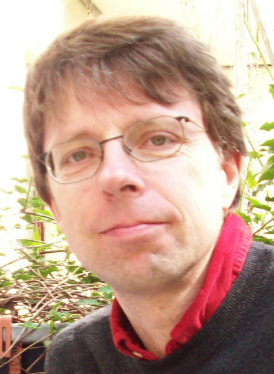
Terje LohndalView profile
Professor
Terje Lohndal is Dean of the Faculty of Humanities at the Norwegian University of Science and Technology (NTNU) since April 2025. He holds a Professorship in English Linguistics at the Department of Language and Literature, NTNU (2013–present), and an Adjunct Professorship in Linguistics at UiT The Arctic University of Norway (2015–present). His work bridges formal grammar, heritage languages, and the syntax-semantics interface. Education : PhD in Linguistics (University of Maryland, 2012); BA in Linguistics and Scandinavian Studies (University of Oslo, 2008). Research Interests focus on grammatical structures across languages, multilingualism (especially heritage languages and language mixing), and language change. He investigates grammatical gender in Norwegian dialects, its acquisition, attrition, and variation, with projects like GenVAC (€1.2M funded by the Research Council of Norway, 2020–2024) and MultiGender (€350k, CAS, 2019–2020). He co-leads the AcqVA research group (NTNU-UiT, 60 members). Trends in recent publications highlight his work on grammatical gender, heritage Norwegian syntax, and cross-linguistic influence. Collaborative studies with scholars like Marit Westergaard and Dave Kush explore dialectal variation, V2 word order, and morphosyntactic complexity in multilingual contexts. Scientific Awards : Research Council of Norway's Award for Young Outstanding Researchers (2018) Fridtjof Nansen Award for Younger Researchers (2018) Nils Klim Prize (2014) Royal Norwegian Society of Sciences and Letters' Humanities Award (2014) Grants and Leadership : Principal Investigator for GenVAC and MultiGender projects. He serves on editorial boards for Linguistic Approaches to Bilingualism , Glossa , and Heritage Language Journal , and reviews for agencies like the National Science Foundation and British Academy. Labs and Teams : Co-leader of the AcqVA research group (60 scholars) and affiliate of the Center for Language, Brain & Learning (C-LaBL) at UiT. His work integrates empirical studies with theoretical frameworks like generative grammar and feature reassembly.