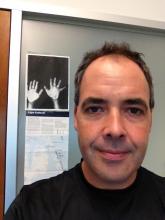
O.R. Tutunea-Fatan is a Professor in the Department of Mechanical and Materials Engineering at Western University, Canada. His academic roles include serving as Associate Chair for Graduate Research Programs (2025-2027) and Acting Associate Dean for Undergraduate Studies (2023-2024). He holds a Ph.D. from Western University and degrees from Transilvania University, Romania. Tutunea-Fatan’s research focuses on precision manufacturing, CAD/CAM integration, laser-based surface engineering, and biomedical applications such as computer-aided orthopaedic surgery. He has supervised over 40 graduate students and holds multiple teaching awards including the Edward G. Pleva Award (2023), Western’s highest teaching honor. Key Research: Laser polishing, ultraprecise cutting, composite materials, functional surface design Industry Collaborations: General Motors, DuPont, Dieffenbacher, Scisense Inc. His work bridges advanced manufacturing with biomedical innovation, emphasizing real-world applications in aerospace, automotive, and medical sectors. Recent projects include drag-reduction riblet surfaces and AI-driven process monitoring.
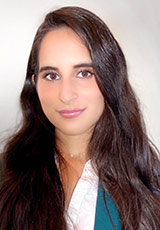
Maryam Kebbe is an Assistant Professor in UNB's Faculty of Kinesiology, teaching KIN 4481 (Exercise & Sport Nutrition). She holds a PhD in Medical Sciences from University of Alberta and completed postdoctoral training at University of Oxford and Pennington Biomedical Research Center. Her research investigates nutrition-physical activity interactions, breastmilk composition, infant microbiome development, and obesity programming across generations. Current projects examine prenatal/postnatal factors in obesity transmission and infant feeding impacts on development. Publications appear in Journal of Nutrition Education and Behavior, Nutrients, and BMC Medicine, analyzing maternal eating behaviors, dietary adherence impacts on mortality, and metabolic health. Research aims to develop sustainable obesity prevention interventions through physiological mechanism understanding.
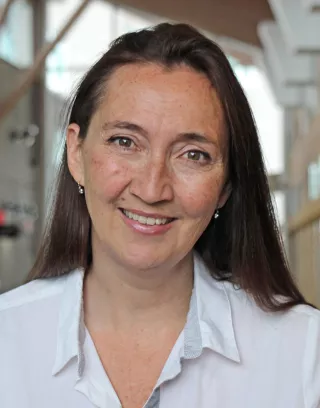
Dr. Julia Wimmers-Klick is a Senior Lab Instructor III, Regional Director of Faculty Development, and Portfolio Site Lead within the Northern Medical Program (NMP) at the University of Northern British Columbia. She holds an MD from the University of Innsbruck, Austria (1995), with a clinical background in Head and Neck Surgery and ENT (Otorhinolaryngology) at the University Hospital Innsbruck. Her academic focus includes teaching Year 1 Physiotherapy students and medical students in Years 1 and 2, combined with research in inter-professional healthcare pedagogy. She is affiliated with the Division of Medical Sciences and contributes to rural health education initiatives. Education: Doctor Medicinae Universae (1995), University of Innsbruck, Austria. Her research interests span inter-professional healthcare education, gender and women's studies, general health systems, and rural health services. She emphasizes collaborative approaches to medical training and has transitioned from clinical practice in Austria to academic leadership in Canada. No specific scientific awards or grants are listed in her profile. She oversees faculty development programs and site leadership within the NMP, contributing to curriculum design and inter-professional training. Languages spoken: English and German.
Jean-Francois Lamarche is an Associate Professor of Economics and Graduate Program Director at Brock University's Faculty of Social Sciences, specializing in econometric methods and applied economic analysis. Education: PhD in Economics, Queen's University (2002) MA in Economics, University of Victoria (1995) BSc in Economics, Université de Montréal (1992) His research focuses on developing econometric methodologies for structural change detection and applying statistical approaches to poverty and inequality measurement. Recent work includes innovative techniques for multidimensional poverty assessment and analysis of political influences on municipal budget cycles. Publications demonstrate consistent application of advanced econometric techniques to social policy questions, with emphasis on measurement theory and decomposition methods. Dr. Lamarche teaches econometrics, time series analysis, and mathematical economics. As Graduate Program Director, he oversees economics graduate studies and mentors students in research methods.
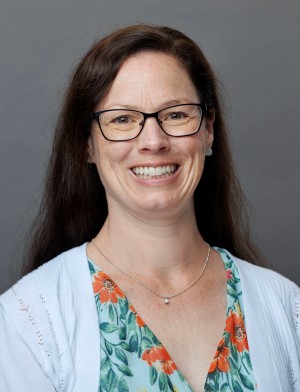
Shauna Pomerantz is a Professor in the Department of Child and Youth Studies at Brock University, serving as Undergraduate Program Director. Her research focuses on the intersections of youth, technology, media engagement, and gender, with a particular emphasis on TikTok's impact on girlhood and family dynamics. She has authored/co-authored key texts including Smart Girls: Success, School, and the Myth of Post-Feminism (2017) and Girls, Style, and School Identities (2008). Her work explores media studies, girlhood studies, and feminist theories, challenging traditional hierarchies in education and popular culture. Research Interests: Media studies, youth culture, gender education, posthuman theories, qualitative inquiry Key Publications: Over 20 peer-reviewed articles and book chapters, including award-winning works on feminist pedagogy and digital media Awards: 2015 Children’s Literature Association Honorable Mention Her recent projects analyze TikTok’s role in feminist knowledge-sharing and intergenerational relationships. She actively presents at international conferences, advocating for critical media literacy and equitable educational practices.
Jodie Bigalky is an Assistant Professor at the University of Saskatchewan College of Nursing . She has been affiliated with the College since 2004, teaching across all years of the Bachelor of Science in Nursing (BSN) program. Her clinical practice continues on the Labour and Birth unit at Regina General Hospital. Education: Bachelor of Science in Nursing (BSN) from University of Saskatchewan Master of Nursing (MN) from University of Saskatchewan PhD in Nursing from University of Regina Research Focus: Explores marginalized populations in healthcare contexts, including women with substance use disorders, menstrual equity, and intimate partner violence. Methodological expertise in qualitative research. Affiliations & Roles: Member, Canadian Association of Perinatal and Women’s Health Nurses Board of Directors (2016-2020) Member, Advocacy and Health Policy Committee (2023) Hold certification in perinatal nursing through the Canadian Nurses Association
Charles Boukaré is an Assistant Professor in the Department of Physics and Astronomy at York University, affiliated with the Faculty of Science. His research focuses on planetary interior dynamics, particularly the structure and evolution of rocky planet interiors, magma ocean solidification, and the interplay between thermodynamic processes and planetary evolution. He develops computational fluid dynamics models and thermodynamic frameworks to simulate planetary-scale multiphase flows and phase segregation. His work addresses fundamental questions about how planetary interiors evolve, including the formation of geochemical reservoirs, the generation of planetary magnetic fields, and the conditions conducive to life. Boukaré integrates experimental data (e.g., laser-heated diamond anvil cell experiments) with theoretical models to study processes like mantle solidification, cumulate overturn, and magma ocean dynamics. His research areas span computational fluid dynamics, planetary physics, and astronomy, with applications to both Earth and exoplanets. Recent studies include exploring lava planet interiors, magma ocean preservation in exoplanetary systems, and the role of magma oceans in maintaining surface water on M-dwarf planets. Boukaré is a Full Member of the Physics and Astronomy Graduate Program at York University and eligible to supervise graduate students in related fields. His interdisciplinary approach bridges geophysics, astrophysics, and computational modeling to advance understanding of planetary evolution.
Gloria Orchard is an Assistant Professor in the Department of Physics and Astronomy at York University, Faculty of Science. Her research focuses on experimental physics in radiation science and medical physics, alongside pedagogical innovations in physics education. She emphasizes active learning strategies such as in-lecture activities, group discussions, and hands-on laboratory experiences to enhance student engagement and problem-solving skills. Her experimental work involves detector development in radiation science, microdosimetry, and neutron field characterization at facilities like CERN. She also explores applications of optoacoustic systems for subsurface imaging and medical diagnostics. Orchard is eligible to supervise graduate students in the Physics and Astronomy program. Gloria Orchard’s research areas include Biological Physics, Pedagogical Research, and Science Education. She has contributed to advancing detector technologies and radiation measurement techniques through collaborations with institutions like CERN. Her educational initiatives aim to refine laboratory curricula and improve teaching methodologies in physics education.
Dr. Alvine Boaye Belle is an Assistant Professor in the Department of Electrical Engineering & Computer Science at Lassonde School of Engineering, York University. She leads the DARE! research group and serves on multiple international committees, including ICSE and RE conferences. Her work bridges software engineering with equity, diversity, and inclusion (EDI) initiatives. PhD in Software Engineering (École de Technologie Supérieure, University of Quebec) 2-year Industrial Postdoctoral (University of Ottawa) Graduate Diploma in Public Administration & Governance (McGill University) Dr. Belle's research focuses on system assurance for autonomous systems, generative AI applications in software engineering, and EDI in computing . She applies machine learning to safety case automation and vulnerability detection, as shown in her publications with high-impact journals. Her recent work explores deep learning and SVM models for Android malware detection with 99% accuracy. She mentors a diverse group of students across Bachelor's, Master's, and PhD levels, emphasizing accessibility and social impact in technology. Keynote speaker at Black History Month events Moderator of EDI-focused panels at ICSE conferences Editorial board member for journals like IEEE Software and Information and Software Technology
Hui Jiang is a Professor in the Department of Electrical Engineering and Computer Science at the Lassonde School of Engineering, York University in Toronto, Canada. He holds the professional engineering designation (P.Eng) and maintains an active research program in machine learning and artificial intelligence with an office located in Room 3014 of the Lassonde Building at 4700 Keele Street. Dr. Jiang's research focuses on machine learning and artificial intelligence, with particular emphasis on deep learning theory and methods, as well as their applications in speech and language processing and computer vision. His work spans from fundamental machine learning concepts to cutting-edge AI technologies including transformers, diffusion models, and neural network architectures. He has developed methods such as the Fixed-size Ordinally Forgetting Encoding (FOFE) for named entity recognition and contributed significantly to convolutional neural networks for speech recognition. His publication timeline shows consistent contribution to the field, beginning with foundational work in speech recognition and progressing to comprehensive frameworks in machine learning. His recent work focuses on explaining complex AI concepts through his blog and textbook, demonstrating a commitment to both research advancement and education in the AI community. IEEE SPS Best Paper Award (2016) for "Convolutional Neural Networks for Speech Recognition" Dr. Jiang has authored the textbook "Machine Learning Fundamentals" published by Cambridge University Press in 2021, which provides a comprehensive introduction to both traditional machine learning methods and modern deep learning techniques. He maintains an active technology blog where he shares detailed technical insights on machine learning concepts, with recent posts covering diffusion models, transformers, and GPT architecture. His complete publication list is available on his Google Scholar profile, and he can be reached via email at huijiang@yorku.ca for academic and research inquiries.
Dr. Laleh Seyyed-Kalantari is an Assistant Professor at York University's Lassonde School of Engineering, specializing in Responsible AI and Medical Imaging. She is also a Vector Institute faculty affiliate and has conducted postdoctoral research at the Vector Institute and the University of Toronto as an NSERC fellow (2019-2022). Her academic journey includes a Ph.D. in Electrical Engineering from McMaster University (2017) and prestigious scholarships such as the Research in Motion Ontario Graduate Scholarship (2015) and Queen Elizabeth II Graduate Scholarship (2014-2015). Research Interests: Dr. Seyyed-Kalantari focuses on responsible AI , generative AI , and AI fairness , particularly in medical imaging. Her work explores the ethical implications of AI systems, including underdiagnosis bias amplification and race detection in medical images. She has pioneered research on fairness in disease diagnosis and foundation models in medical imaging. Scientific Awards: Google Research Scholar Program award (2024) Banting Postdoctoral Fellowship to join MIT (2022-2024, declined) NSERC Postdoctoral Fellowship (2018-2020) Finalist, CIFAR AICan 3-M Impact Competition (2021) Winner, Toronto Health Data Hackathon (2019) Nominee, L’Oréal-UNESCO for Women in Science (2018) Ontario Graduate Scholarships (2013-2015, 2014-2015) Research in Motion Ontario Graduate Scholarship (2015) Policy & Advocacy: She contributes to the AI Insights for Policymakers Program by CIFAR and Mila, and her work has been highlighted in global tech news outlets like Nature Medicine , The Lancet Digital Health , and MIT News .
Dr. Marzieh Ahmadzadeh is an Associate Professor (Teaching Stream) at the Department of Electrical Engineering & Computer Science, York University. She holds a Ph.D. and MSc in Information Technology (Software Engineering) from the University of Nottingham, UK, and a BSc in Computer Engineering from Isfahan University. A certified Professional Engineer (P.Eng.) in Ontario, she has held academic positions at Shiraz University of Technology, University of Toronto, and University of Georgia, USA before shifting her focus to education research in 2015. Education: Ph.D., Information Technology (Software Engineering), University of Nottingham (2006) MSc, Information Technology (Software Engineering), University of Nottingham (2002) BSc, Computer Engineering, Isfahan University Her research intersects Computer Science Education and Human-Computer Interaction , with a focus on Applied Data Mining for educational analytics and security applications. She has published in prestigious venues like ACM SIGCSE, IEEE Transactions, and Future Generation Computer Systems. Recent publications demonstrate expertise in: Exam design and cognitive load optimization Ransomware detection in fog computing environments Breast cancer survivability modeling with imbalanced data Gender preferences in e-commerce UX design Academic integrity analysis in programming education
Dr. Manos Papagelis is an Associate Professor in the Department of Electrical Engineering & Computer Science at York University's Lassonde School of Engineering. He serves as the Graduate Program Director for the MSc and MScAI programs. His research focuses on data science and machine learning, particularly in data mining, graph mining, big data analytics, mobility analytics, and knowledge discovery. Education: PhD in Computer Science (University of Toronto), MSc and BSc in Computer Science (University of Crete, Greece). Prior to York, he held postdoctoral and research roles at UC Berkeley, Yahoo! Labs Barcelona, and FORTH, Greece. Research emphasizes trajectory analysis, emotion recognition, and scalable systems. Recent work includes TrajLearn (2025) and Disease Outbreak Detection (2025), highlighting contributions to mobility and health informatics. He has filed three U.S. patents and designed systems like Confious (conference management) and Green2.0 (socio-technical building analysis). Honors include the Lassonde Educator of the Year (2021) and IEEE MDM Best Paper Awards (2020, 2018). His advising spans interdisciplinary teams in AI and data science, with active involvement in grants related to mobility analytics and healthcare technologies. Labs/Teams: Director of the Data Mining Lab, collaborating on projects like trajectory prediction and emotion-aware systems.
Song Wang is an Associate Professor in the Department of Electrical Engineering and Computer Science at York University's Lassonde School of Engineering. He joined York University as an Assistant Professor in July 2019 and was promoted to Associate Professor in May 2024. He serves as an Associate Editor of ACM Transactions on Software Engineering and Methodology (TOSEM) and has established himself as a prominent researcher at the intersection of Software Engineering and Artificial Intelligence. Dr. Wang earned his Ph.D. in Computer Engineering from the University of Waterloo in December 2018 under Prof. Lin Tan. He received his MS degree from the Chinese Academy of Sciences in June 2014 under the supervision of Prof. Ye Yang, Prof. Wen Zhang, and Prof. Qing Wang. His undergraduate education includes a BE in Software Engineering and a BHRM in Human Resource Management from Sichuan University in June 2011. Prior to academia, he gained industry experience through internships at Microsoft Research, Morgan Stanley Capital International, Yahoo, and Baidu, and co-founded a startup named QualDivine. Dr. Wang's research focuses on two main directions: (1) leveraging AI technologies to address software reliability challenges (AI for SE), and (2) developing software reliability assurance techniques for AI systems (SE for AI). His recent work has particularly focused on how Large Language Models can optimize and reshape software testing practices. His research has practical impact, with tools and techniques that have detected hundreds of true bugs in real-world software systems. His work spans multiple application areas including mobile testing, fuzz testing, and functional testing. His recent publications (2024-2025) demonstrate a strong focus on the intersection of AI and software engineering, with significant contributions in automated vulnerability detection, API recommendation, bias analysis in generated code, and mobile application testing. His research combines empirical studies with innovative technical approaches, often involving benchmarking and systematic literature reviews to establish foundations for future work. He has published over 60 papers in prestigious IEEE/ACM Software Engineering journals and flagship conferences, with over 2,600 citations. Dr. Wang has received four best paper awards: a Distinguished Paper Award at APSEC'23, an ACM Distinguished Paper Award at ICPC'22, an ACM Distinguished Paper Award at ICSE'20, and a Best Paper Award at PROMISE'19. He was recognized as one of the top-10 most impactful early-career researchers in Software Engineering by the Journal of Systems and Software in 2020 and received the TOSEM Distinguished Reviewer Award in 2023. Dr. Wang currently supervises multiple PhD and Master's students including Mohammad Abdollahi, Haoran Xue, Jiho Shin, Nima Shiri Harzevili, and Moshi Wei. He has successfully guided several students to complete their theses, including Reem Al Eithan (Master's thesis defense in April 2025), Moshi Wei (PhD thesis defense in April 2025), and Nima Shiri Harzevili (PhD thesis defense in February 2025). His research group has received funding from various sources to support their work on software engineering and AI. Dr. Wang leads an active research group focused on AI and software engineering at York University. His team includes PhD students, Master's students, and research assistants working on various projects related to software testing, reliability, and AI applications in software engineering. The group has developed tools that have detected hundreds of true bugs in real-world software systems, with some findings documented in Jira issues and GitHub repositories across numerous open-source projects.
Dr. Adrian Correndo is an Assistant Professor and holds the Pick Family Chair in Sustainable Cropping Systems at the Department of Plant Agriculture, Ontario Agricultural College, University of Guelph in Guelph, Ontario, Canada. His research focuses on developing and evaluating sustainable cropping systems that address the challenge of producing food, fuel, and fiber without degrading natural resources. Dr. Correndo's educational background includes: B.S. in Agronomy from the University of Buenos Aires M.S. in Soil Science from the University of Buenos Aires Ph.D. in Agronomy from Kansas State University Dr. Correndo's research spans sustainable agriculture, soil science, and data analytics. His work heavily relies on maintaining and leveraging long-term trials at the Elora Research Station, where management practices such as tillage, crop rotation, cover crops, and fertilization management are studied. He is particularly interested in developing accessible digital tools that apply modern data analytics like machine learning and Bayesian statistics to agricultural challenges. His research bridges the gap between statistical methodology and practical farming applications, with a strong emphasis on reproducible programming and open-source software development. His publication record demonstrates a clear trajectory toward integrating advanced statistical methods with agricultural research. The majority of his work focuses on maize and soybean production systems, soil fertility, and nutrient management. A significant portion of his recent publications involves developing R packages and digital tools that make complex statistical analyses accessible to farmers and agricultural professionals. His research shows a strong commitment to creating practical, science-based solutions for sustainable farming systems in Ontario and beyond. Dr. Correndo has been awarded the prestigious Pick Family Chair in Sustainable Cropping Systems, established by Martin and Denise Pick to develop effective, simple-to-use cropping systems that address soil degradation. Before joining the University of Guelph, Dr. Correndo worked on research and extension in soil fertility and crop nutrition as the Assistant Agronomist (2008-2018) for the Latin America Southern Cone Program of the International Plant Nutrition Institute (IPNI), and from 2018 to 2023 at Kansas State University as a Graduate Research Assistant while pursuing his Ph.D. in Agronomy (2018-2021), and as a Post-doctoral Fellow (2022-2023) working on corn and soybean production research and extension. Dr. Correndo is actively involved with the Elora Research Station, where he maintains long-term trials examining various agricultural management practices. He emphasizes teamwork and mentoring as essential components of his professional and personal philosophy, working to inspire and support the next generation of agricultural leaders.