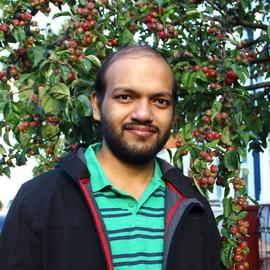
Andrea Saracino is an Associate Professor specializing in cybersecurity, privacy-preserving technologies, and machine learning applications. His research focuses on enhancing security in IoT systems, smart homes, and mobile devices, with a particular emphasis on Android malware detection and usage control frameworks. He has received the IEEE TCCPS Early-Career Award 2023 for his contributions. Key projects include the SIFIS-Home initiative for privacy in globalized smart homes and the ACE framework for access control. His work addresses challenges in balancing privacy, utility, and explainability in machine learning models, particularly in image and tabular data analysis. He actively explores cybersecurity in emerging domains like software-defined vehicles and industrial control systems.
Anantaa Kotal is an Assistant Professor of Computer Science at The University of Texas at El Paso (UTEP), commencing her position in Fall 2024. Previously, she completed her PhD at the University of Maryland, Baltimore County (UMBC) and gained industry experience at Amazon and IBM. Her academic credentials include: PhD in Computer Science, University of Maryland Baltimore County (UMBC), 2024 B.E. in Computer Science and Engineering, Jadavpur University, 2017 Dr. Kotal's research centers on Generative AI applications for privacy and security, with emphasis on privacy-preserving data sharing, synthetic data generation, and policy compliance verification. She integrates knowledge graphs, reinforcement learning, and neurosymbolic approaches to develop frameworks for secure data synthesis in healthcare, agriculture, and cybersecurity domains. Her work addresses critical challenges like policy ambiguity resolution and trustworthy AI code generation. Analysis of her 15 most recent publications (2021-2025) reveals a strong trajectory toward knowledge-infused generative models for privacy preservation, with increasing focus on large language models (LLMs) and real-world applications in distributed systems. Key thematic clusters include policy-aware data synthesis (12 publications), healthcare data security (7 publications), and knowledge-graph-enhanced cybersecurity (5 publications). Dr. Kotal is actively recruiting graduate students for her research lab at UTEP and currently teaches Data Mining (CS 5362/6362) in Fall 2024. She maintains active research collaborations with her doctoral advisor Dr. Anupam Joshi at UMBC and industry partners including IBM. She leads a research laboratory at UTEP focused on developing next-generation privacy-preserving AI systems, with current projects spanning healthcare data anonymization, agricultural data sharing frameworks, and policy-compliant synthetic data generation for cybersecurity applications.
Teresa Cristina de Freitas Gonçalves is an Associate Professor at the Department of Informatics, School of Sciences and Technology, University of Évora, where she has been employed since 1999. She serves as an integrated researcher at the ALGORITMI research centre and is the Director of the VISTA Lab (Video, Image, Speech and text Analysis Lab), the unit of the ALGORITMI research centre at University of Évora. Her leadership roles include Director of the Master programme in Informatics Engineering and deputy Director of both the Master programme in Artificial Intelligence and Data Science and the Doctoral program in Computer Science. She earned her PhD in Computer Science from University of Évora and a MSc degree in Informatics Engineering from New University of Lisbon. Her academic journey at University of Évora has included significant leadership positions including Head of the Computer Science Department (2011-2015), Director of the Bachelor programme in Informatics Engineering (2016-2021), and Deputy Director roles for various undergraduate and graduate programs. Dr. Gonçalves' research focuses on intelligent systems, particularly Machine Learning approaches, with substantial contributions in evolutionary algorithms, information extraction and retrieval, and supervised learning across multiple data modalities including tabular data, text (in both Portuguese and English), and images (medical and satellite). Her work bridges theoretical advances with practical applications in healthcare, remote sensing, and natural language processing. She has successfully supervised 6 doctoral theses, 19 master theses, and 3 postdocs, and currently mentors 5 doctoral and 6 master students from diverse international backgrounds including Bangladesh, Cabo Verde, Nepal, Philippines, India, Sri Lanka, China, Mongolia, and Portugal. Her publication record includes over 100 scientific articles indexed by Scopus with 640 citations and an h-index of 12, demonstrating significant international impact with 56% of her work involving international collaboration. Her recent research shows a strong trend toward applying advanced machine learning techniques to healthcare applications, information retrieval systems, and remote sensing analysis, with particular emphasis on transformer networks, learning-to-rank methodologies, and multimodal data analysis. Dr. Gonçalves has made substantial contributions to the academic community through her service as a reviewer for over 50 articles in prestigious international journals and conferences, and as chair for major international conferences including IDEAL 2023, PROPOR 2020, SKIMA 2017 and 2018, and CLEF 2016. She serves on the board of APRP (Associação Portuguesa de reconhecimento de Padrões) and as a jury member for APRP prizes for best MSc and PhD theses. Her current research portfolio includes coordination of the Horizon Europe MSCA Staff Exchange HarmonicAI project and local coordination of WP6 in the NewSpace Portugal mobilising agenda. She is also actively involved in numerous other international research initiatives including Interreg VI-B Sudoe SenforFire, PRR CANTE, La Caixa INCOME, Erasmus+ KA220-HED REDINEST, Interreg POCTEP TID4AGRO, and ATTRACT DIH projects. Previously, she led the FCT AI in the Public Administration SNS24.Scout.IA project and coordinated the FEDER R&D NIIAA project. As Director of the VISTA Lab, Dr. Gonçalves leads a dynamic research team focused on video, image, speech, and text analysis. The lab serves as the Évora hub of the ALGORITMI research centre and has established strong international collaborations. Under her leadership, the VISTA Lab has developed innovative approaches in medical image analysis, natural language processing for Portuguese, and satellite image classification, with applications spanning healthcare, environmental monitoring, and public administration.
Larry P. Heck is a Professor with a joint appointment in the School of Electrical and Computer Engineering and School of Interactive Computing at the Georgia Institute of Technology. He holds the Rhesa S. Farmer Advanced Computing Concepts Chair and is a Georgia Research Alliance Eminent Scholar . Education: BSEE, Texas Tech University (1986) MSEE, Georgia Institute of Technology (1989) PhD EE, Georgia Institute of Technology (1991) His research focuses on conversational AI , dialogue systems , and machine learning applied to natural language processing and speech recognition . He pioneered early industrial applications of deep learning in speech processing and has contributed to advancements in multimodal interaction, knowledge distillation, and real-time question answering systems. Recent publications emphasize moral reasoning in AI , multimodal dialogue , and large-scale dataset creation for conversational systems. His work bridges language modeling , sensor fusion , and ethical AI through innovations in contextual reasoning and interface masking. Scientific Distinctions: IEEE Fellow (2020) IEEE Signal Processing Society Best Paper Award Academy of Distinguished Engineering Alumni, Georgia Tech (2017) Distinguished Engineer Award, Texas Tech University (2017) Fellow, National Academy of Inventors (2025) He has secured significant funding from DARPA and NSA for speaker recognition systems and has led cutting-edge research at institutions including Microsoft, Google, and Samsung. His lab focuses on conversational systems and deep learning for speech and multimodal data.
Dr Cuong Nguyen is a Lecturer in the Department of Mathematical Sciences at Durham University, specializing in Machine Learning, Artificial Intelligence, and Statistics. His research bridges theoretical foundations with practical applications, with particular expertise in Bayesian methods, transfer learning, and multimodal systems. His educational background includes a PhD in Computer Science or a related field (specific institution not mentioned in provided data), with research focusing on machine learning theory and applications. Nguyen has established himself as a researcher with publications spanning top conferences including NeurIPS, UAI, and ACM Web Conference. Research Interests: Nguyen's work centers on lifelong learning systems that overcome catastrophic forgetting, transferability estimation between tasks, and multimodal learning applications. His research integrates Bayesian principles with deep learning to create more robust and adaptable AI systems. Recent Trends: Analysis of his 15 most recent publications reveals a strong focus on practical applications of theoretical machine learning concepts, particularly in security (CAPTCHA systems), real-world problem solving (fake advertisement detection), and fundamental learning theory (transferability metrics). Dr Nguyen has made significant contributions to understanding the theoretical underpinnings of transfer learning and continual learning, with his work on LEEP providing a practical metric for transferability estimation. His research on CAPTCHA systems demonstrates both theoretical rigor and practical security implications. Advising: While specific students aren't listed in the provided data, his publications show collaborations with researchers across institutions, suggesting active supervision of PhD and Master's students. Research Groups: He is affiliated with the Statistics research center within Durham's Department of Mathematical Sciences, contributing to the university's strength in mathematical and computational research.
Fosca Giannotti is a Full Professor at Scuola Normale Superiore in Pisa, Italy, and leads the Pisa KDD Lab - Knowledge Discovery and Data Mining Laboratory, a joint research initiative of the University of Pisa and ISTI-CNR. Founded in 1994, the Pisa KDD Lab is one of the earliest research labs focused on data mining. Giannotti is a pioneering scientist in mobility data mining, social network analysis, and privacy-preserving data mining. Her educational background includes a Master Degree in Computer Science from the University of Pisa (1982) with 110/100 cum laude. She has held numerous visiting positions including at MCC in Austin, CWI Amsterdam, UCLA, and the Barabasi Lab at Northeastern University. Giannotti's research focuses on social mining from big data, encompassing smart cities, human dynamics, social and economic networks, ethics and trust, and diffusion of innovations. She has authored more than 300 papers and coordinated tens of European projects and industrial collaborations. Her current work increasingly centers on Explainable AI (XAI), as evidenced by her prestigious ERC Advanced Grant for the XAI project focused on "Science and technology for the explanation of AI decision making." Her recent publications reveal a strong emphasis on trustworthy AI, with research spanning privacy-preserving techniques, fairness in machine learning, human-AI collaboration frameworks, and medical applications of explainable AI. The breadth of her work demonstrates how data mining principles are being applied across diverse domains from social sciences to healthcare. ERC Advanced Grant for XAI project Premio Internazionale Tecnovisionarie 2021 Intelligenza Artificiale Giannotti has coordinated numerous significant projects including SoBigData (the European research infrastructure on Big Data Analytics and Social Mining), XAI, TAILOR (Foundations of Trustworthy AI), HumanE-AI-Net, and AI4EU. As former coordinator of SoBigData, she led an ecosystem of ten cutting-edge European research centers providing an open platform for interdisciplinary data science. She leads the Pisa KDD Lab, which serves as a hub for research on knowledge discovery and data mining. The lab has been instrumental in developing techniques for mobility data analysis, social network mining, and privacy-preserving data analytics, with applications ranging from smart cities to pandemic response.
Hamid Karimi is an Assistant Professor of Computer Science at Utah State University (USU), where he leads the Data Science and Applications (DSA) lab. His research focuses on using AI and data mining for social good, including social media mining, educational data mining, and machine learning. He earned his Ph.D. in Computer Science from Michigan State University (MSU) in 2021, with a thesis on AI for social good. His interdisciplinary work includes the Teachers in Social Media project, which developed algorithms to improve PK-12 education quality. Dr. Karimi has received several awards, including the Best Paper Award at ASONAM 2018 and the International Faculty Recognition Award at USU in 2022. His research spans social media behavior analysis, misinformation detection, and fairness in machine learning. The DSA lab prioritizes practical solutions for socially impactful data science applications, such as cross-disciplinary projects in science and engineering. Education: Ph.D. in Computer Science, Michigan State University, 2021 Research Interests: Social Media Mining Educational Data Mining Graph Mining AI for Social Good Lab: Data Science and Applications (DSA) Lab, USU His work bridges theoretical data science with real-world applications, such as analyzing teacher behavior on Pinterest and leveraging GPT for scalable education tools. Dr. Karimi’s research emphasizes ethical AI practices and interpretable machine learning models.
Guang Cheng is a Full Professor of Statistics and Data Science at the University of California, Los Angeles (UCLA), and serves as the Graduate Vice Chair. He leads the Trustworthy AI Lab, focusing on generative data science, privacy-preserving synthetic data, and the theoretical foundations of machine learning. His research explores generative AI, trustworthy synthetic data, and high-dimensional statistics. Education : Ph.D. in Statistics, University of Wisconsin-Madison (2003-2006) B.A. in Economics, Tsinghua University (1998-2002) Research Interests : Generative Data Science, trustworthy AI, machine/deep learning theory, privacy-preserving techniques, high-dimensional statistics, and business intelligence applications in finance, healthcare, and marketing. His lab develops tools like artificially generated tables for privacy-preserving data sharing. Publications : Recent work includes advancements in generative models (e.g., TimeAutoDiff, MissDiff), fair classification algorithms, and theoretical analyses of deep learning (e.g., attention mechanisms, minimax analysis). Key themes include synthetic data utility/privacy trade-offs and adversarial robustness. Awards : IMS Fellow (2020), Adobe Data Science Award (2020), NSF CAREER Award (2012). Advising & Grants : Supervises PhD/Master’s/postdoc researchers in trustworthy AI and generative data science. Alumni hold roles at Meta, Amazon, and academia. Active in editorial roles for JASA - Theory & Methods and Canadian Journal of Statistics . Labs & Teams : Leads the Trustworthy AI Lab at UCLA, organizing workshops on synthetic data in finance and healthcare. Collaborates with Amazon as an Amazon Scholar.
Prof. Felix Bießmann holds a professorship in Computer Science and Media at Berlin University of Applied Sciences' Department VI. His research focuses on machine learning applications in diverse fields including healthcare, urban planning, environmental science, and robotics through his Cognitive Algorithms Lab. He teaches courses such as Machine Learning, Deep Learning, and Data Science Workflows, alongside roles at TU Berlin and Korea University. Education: PhD (Dr. rer. nat.) in Natural Sciences Research interests span machine learning theory and practical implementations across domains like computer vision, generative AI, and sensor data analysis. His work addresses challenges in automated systems, healthcare monitoring, and sustainable technologies. Recent student theses explore topics like license plate recognition, adaptive game soundtracks, and bird song detection using TinyML. Collaborations include projects with the Charité Berlin and Robert-Koch Institute. Lab: Cognitive Algorithms Lab (developing machine learning methods/applications) Contact: felix.biessmann@bht-berlin.de | Office D138, Berlin University of Applied Sciences.
Szymon Płotka is a Researcher in the Medical Imaging and Robotics department at the University of Amsterdam's Informatics Institute. His work focuses on advancing prenatal care through deep learning, particularly in fetal ultrasound analysis and AI-driven medical solutions. He holds a PhD in Computer Science from the University of Amsterdam (2024), with a thesis on enhancing prenatal care via machine learning. Research Interests : Integration of deep learning techniques for medical image analysis Development of AI tools for diagnostic accuracy and clinical workflow optimization Multimodal data fusion in healthcare Real-time surgical imaging applications Recent work emphasizes fetal biometry measurements, endoscopic synthetic datasets, and real-time placental vessel segmentation. His research bridges cutting-edge AI with clinical practice, aiming to improve accessibility and efficiency in medical imaging. Key Contributions : Advances in fetal ultrasound video analysis matching human expert accuracy Pioneering synthetic endoscopic dataset generation with diffusion models Development of BabyNet++ for birth weight prediction No formal students listed, but his projects likely involve collaborations with academic teams. Active in organizing and participating in medical imaging challenges (e.g., FeTA, FetReg).
Murat Kantarcioglu is an Ashbel Smith Professor of Computer Science at the University of Texas at Dallas within the Erik Jonsson School of Engineering and Computer Science. He holds visiting appointments at UC Berkeley and Harvard University, focusing on data privacy and security. With a Ph.D. in Computer Science from Purdue University (2005), he has made significant contributions to privacy-preserving data mining, blockchain analytics, and secure machine learning. Education: Ph.D. in Computer Science (Purdue, 2005) Current Roles: Ashbel Smith Professor (2021-present), Visiting Scholar at UC Berkeley (2020-present), Affiliate at Harvard (2013-present) Past Roles: Assistant (2005-2011), Associate (2011-2015), and Full Professor (2015-2021) at UTD His research focuses on data privacy , computer security , and machine learning , particularly addressing challenges in privacy-preserving distributed data mining , blockchain analytics , and adversarial machine learning . He has pioneered techniques for secure federated learning , topological analysis of blockchain networks , and privacy-utility tradeoffs in health data systems. Recent publications reveal a strong emphasis on IoT security , graph neural network vulnerabilities , and blockchain data structures . His work combines theoretical rigor with practical implementations using technologies like Intel SGX and homomorphic encryption. Notable Awards NSF CAREER Award (2009) IEEE Technical Achievement Award (2017) AMIA Homer Warner Best Paper Award (2014) Fellow of IEEE (2022), AAAS (2020), and ACM (2016) Key Projects Privacy-Preserving Genomics Data Sharing Adversarial Learning Frameworks Smart Contract Security Medical Data Protection Systems Labs Director of Data Security and Privacy Lab Collaborations with Vanderbilt, UC Berkeley (RISE Lab), and Harvard (Data Privacy Lab)
Dr. Adel Abusitta is an Assistant Professor in the Department of Computer Engineering and Software Engineering at Polytechnique Montréal, where he conducts research at the intersection of artificial intelligence and cybersecurity. With expertise in secure and resilient AI systems, IoT security, and malware analysis, Dr. Abusitta has established himself as a significant contributor to the field of AI-powered cybersecurity solutions. Education: PhD in Computer Engineering from Polytechnique Montréal Postdoctoral Fellow at University of Montréal Postdoctoral Fellow at McGill University Dr. Abusitta's research focuses on developing secure and trustworthy artificial intelligence systems with applications in cybersecurity. His work spans several critical areas including explainable AI for security applications, AI-powered malware analysis, intrusion detection systems, and IoT security. He has made significant contributions to the understanding of how AI can be both secured against attacks and used to enhance security systems. His research addresses the dual challenge of making AI systems resilient to adversarial manipulation while leveraging AI's capabilities to detect and prevent cyber threats in complex environments like cloud computing and IoT networks. Analysis of Dr. Abusitta's recent publications reveals a strong focus on the intersection of AI and cybersecurity, particularly in developing robust anomaly detection systems, explainable security solutions, and resilient architectures for IoT environments. His work demonstrates a consistent trajectory toward making AI systems both more secure and more useful for security applications, with increasing emphasis on practical implementations that can withstand real-world challenges. Dr. Abusitta has collaborated extensively with Defence Research and Development Canada (DRDC) on projects related to AI-powered data analytics for discerning malware intent. He has also worked with industrial partners through the Institute for Data Valorization (IVADO) to develop privacy-preserving machine learning techniques that maintain accuracy while protecting sensitive information. His research has practical applications in critical infrastructure protection and secure AI deployment.
Giovanni Squillero is a Full Professor in the Department of Control and Computer Engineering (DAUIN) at Politecnico di Torino, Italy. He leads the CAD group (Electronic CAD & Reliability) and serves on Politecnico's Joint Committee for Teaching and Ph.D. Steering Committee (Pure and Applied Mathematics).
Dr. Tieming Liu is an Associate Professor in the School of Industrial Engineering and Management at Oklahoma State University , where he has served since 2005, first as Assistant Professor and then promoted to Associate Professor in 2011. His expertise bridges operations research, supply-chain coordination, healthcare analytics, renewable-energy policy, and production scheduling. Education Ph.D. in Transportation and Logistics, Massachusetts Institute of Technology, 2005 M.S. in Industrial Engineering and Management Science, Northwestern University, 2001 M.S. in Control Theory and Control Engineering, Tsinghua University, 2000 B.S. in Control Theory and Control Engineering, Tsinghua University, 1997 Research Interests Dr. Liu’s scholarship is organized around three pillars: Supply-Chain & Logistics: coordination contracts, inventory bounds, responsive pricing, channel rebates, and production flexibility under uncertainty. Healthcare Analytics: machine-learning models for diabetic retinopathy and sepsis risk prediction, clinical decision-support systems, and handling imbalanced EHR data. Energy & Sustainability: renewable portfolio standards, capacity coordination with renewable energy certificates, and incentive mechanisms for renewable and conventional generators. Recent methodological contributions include hidden Markov models for continuous mortality prediction, tree-augmented Bayesian networks for sepsis risk, and tensor-completion-driven convolutional networks for longitudinal medical data. Scientific Awards & Honors EJOR Reviewer Award, 2019 IEM Faculty Award, 2019 Halliburton Outstanding Faculty Award, OSU, 2014 Merrick Foundation Teaching Award, OSU, 2013 Riata/Koch Faculty Fellow, OSU, 2012 Lockheed Martin Teaching Award, OSU, 2011 Student Organization Faculty Advisor of the Year, OSU, 2010 Student Mentorship & Collaboration Dr. Liu has advised or co-advised a large cohort of doctoral and master’s students whose names appear as first or co-authors on his publications. His collaborative network spans MIT, Northwestern, IBM T. J. Watson Research Center, and multiple departments across OSU, fostering interdisciplinary projects that integrate operations research with real-world healthcare, transportation, and energy challenges. Laboratories & Teams He conducts research within the analytics and optimization laboratories of the School of Industrial Engineering and Management, directing projects funded by federal agencies and industry partners aimed at next-generation decision-support systems for healthcare providers, logistics operators, and energy market regulators.
Abhirup Ghosh is an Assistant Professor at the School of Computer Science, University of Birmingham, and a visiting researcher at the Mobile Systems Research Lab, University of Cambridge. His research focuses on distributed machine learning, particularly Federated Learning and Gossip Learning, applied to mobile health and mobility analysis. He holds a PhD from the University of Edinburgh and has held roles at Imperial College London and Intel Inc. Education: PhD in Computer Science, University of Edinburgh (2019) M.Tech in Computer Science, Indian Institute of Technology Bombay (2011) Bachelor in Information Technology, Jadavpur University (2009) Research Interests: Distributed Machine Learning, Privacy-Preserving Algorithms, Mobile Health, and Mobility Analysis. His work emphasizes collaborative learning on edge devices while addressing resource constraints and privacy concerns. Recent projects include early Alzheimer’s detection using mobility data and federated learning for health diagnostics. Publications Trends: His work spans theoretical advancements (e.g., Gossip Learning convergence) and applied healthcare solutions (e.g., Alzheimer’s detection via outdoor mobility). Key areas include federated learning optimizations, privacy techniques, and domain generalization in activity recognition. Awards: Best Publication of the Year (2022) from University of Cambridge’s Department of Computer Science Lab & Collaborations: Collaborates with the Mobile Systems Research Lab at Cambridge on projects like MEDEA (Wellcome Trust-funded Alzheimer’s detection initiative). Leads efforts in cross-device learning and health data privacy.