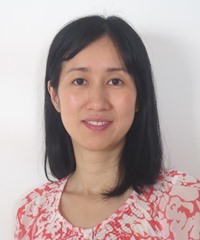
Dr. Marcel Dettling is a Group Lead in Data Analysis and Statistics at the ZHAW School of Engineering , focusing on predictive analytics, applied statistics, and complex data analysis. He also serves as a Lecturer at ETH Zurich , teaching advanced statistical methods. Education : PhD in Mathematics (2000-2004), ETH Zurich Postdoc in Applied Statistics (2004-2006), Johns Hopkins University His research spans predictive analytics (regression, classification, time series), data mining, and applications in health economics, transportation safety, social sciences , and business analytics . Recent work includes pharmaceutical cost group analysis for Swiss healthcare and predictive maintenance for marine vessels. Selected publications highlight his expertise in flight trajectory modeling , deep learning error mitigation , and statistical frameworks for rehabilitation finance . His projects address diverse fields like crowdworking in nursing, energy optimization for shipping, and customer behavior prediction.
Christophe VIGNAT is a Professor at CentraleSupélec, affiliated with the Laboratoire des Signaux et Systèmes (L2S). His research focuses on number theory, special functions, probability, and their applications in signal processing and control systems. He has held visiting professorships at École Polytechnique Fédérale de Lausanne (EPFL) and Tulane University. VIGNAT's work bridges pure mathematics and applied fields, with notable contributions to Bernoulli/Euler polynomials, multiple zeta values, and probabilistic methods in number theory. His recent publications explore topics like partition functions, theta functions, and Ramanujan-type identities. He has delivered talks at international conferences and collaborates widely with researchers in mathematics and physics. Research Interests: Number theory, special functions (Bessel, orthogonal polynomials), probability theory, signal processing, control systems, analytic combinatorics, and their interconnections. His work often employs symbolic computation and probabilistic approaches to uncover identities and structures in mathematical analysis. Publications Trends: Recent articles emphasize partition theory, zeta functions, and integrals related to classical polynomials. His collaborations highlight interdisciplinary efforts between pure mathematics and applied sciences. Over 150 refereed papers and conference contributions demonstrate his prolific output across diverse mathematical domains. Education: While specific academic history isn’t detailed, his roles and publications suggest advanced training in mathematics and engineering, typical for a full professor in systems and control.
Calin Belta is the Brendan Iribe Endowed Professor of Electrical and Computer Engineering and Computer Science at the University of Maryland, College Park. He is affiliated with the Institute of Systems Research (ISR) and the Maryland Robotics Center (MRC), and holds a Research Professor position at Boston University's College of Engineering. His work bridges control theory, formal methods, and machine learning to ensure safety in cyber-physical and data-driven systems, with applications in robotics, autonomous driving, and systems biology. Research Interests: Focus on dynamics and control theory, formal methods for verification and control synthesis, robotics, autonomous systems, and synthetic biology. Recent projects include PROGENIC (collaborating with MIT, UChicago, and UDelaware) and safety-critical control for heterogeneous robotic teams. Key Achievements: General Chair of the 2025 MRC Symposium, recipient of AFOSR Young Investigator Award (2008), NSF CAREER Award (2005), and IEEE Fellow. His work on formal methods for autonomous systems has led to impactful tools for safety assurance in robotics and AI. Grants: NSF EFRI PROGENIC grant (2024), multiple industry partnerships. Advising: Mentored students like Wenliang Liu (PhD 2024, now at Amazon), and collaborator Marius Kloetzer (shared HSCC Test of Time Award 2025). Labs/Teams: Maryland Robotics Center, Institute for Systems Research, and Boston University collaborations.
Adrian Linacre is a Professor and Chair in Forensic DNA Technology at Flinders University, within the College of Science and Engineering, Department of Biological Sciences. He is a leading figure in forensic science, with a focus on DNA analysis, wildlife forensics, and crime scene investigation. BSc in Biological Sciences (Hons), University of Edinburgh, 1984 DPhil in Molecular Genetics, University of Sussex, 1988 His research centers on getting more from less at crime scenes , particularly through developing highly sensitive DNA typing methods and studying the transfer and persistence of biological materials. He also pioneers the use of non-human DNA in forensic investigations, notably in wildlife forensic science , aiding in species identification and combating illegal wildlife trade. His recent publications reflect a strong trend in trace DNA analysis , body fluid identification , and DNA transfer dynamics , with applications in drug cases, sexual assault investigations, and environmental DNA degradation. His work increasingly integrates molecular techniques with real-world forensic challenges. Notable scientific awards include: Medal of the Order of Australia (OAM), 2020 Inspirational Scientist of the Year, Royal Society of Edinburgh, 2005 Fellow of the Royal Society for the Encouragement of Arts and Commerce (FRSA) Finalist, South Australian Science Excellence and Innovation Awards (2023, 2024) He has successfully supervised several students, including Piyamas Kanokwongnuwut and Alicia Haines, many of whom have won international recognition. He has secured significant research funding and contributed to national and international forensic policy, including a key review for the UK Home Office on low-template DNA. His professional leadership includes presidencies of the ANZFSS and ISFG, and vice presidency of the IAFS. Linacre is actively involved in editorial roles, serving as Associate Editor for Forensic Science International: Genetics and on the boards of Forensic Science, Medicine and Pathology and the Australian Journal of Forensic Science . He is a sought-after expert witness and media commentator in forensic science.
Krishna Gummadi is a Scientific Director and Professor at the Max Planck Institute for Software Systems (MPI-SWS) in Germany, where he leads the Networked Systems Research Group. He also holds a professorship at the University of Saarland, demonstrating his dual commitment to research and academic instruction in computer science. His educational background includes: Ph.D. in Computer Science and Engineering from the University of Washington (2005) B.Tech. in Computer Science and Engineering from the Indian Institute of Technology, Madras (2000) Gummadi's research spans networked and distributed computer systems with a current focus on social computing systems. His work addresses critical challenges in algorithmic fairness, privacy in social media, trustworthiness of online identities, and information dissemination in social networks. He approaches these problems through interdisciplinary methods combining user-centric studies, data-centric analysis, and systems-centric design to create practical solutions that enhance fairness, transparency, and user control in online platforms. His methodology integrates large-scale observational studies, computational modeling, and system implementation to tackle complex human-computer interaction challenges at societal scale. His recent publications reveal a strong emphasis on fairness in algorithmic decision making, with significant contributions to quantifying and addressing discrimination in machine learning systems. His work bridges computer science, social science, and ethics, creating frameworks for fair classification, understanding media bias, and developing privacy-preserving techniques that maintain functionality while protecting user data. The research demonstrates a progression from technical system design to addressing societal implications of computing systems. Among his notable scientific achievements: ERC Advanced Grant in 2017 for 'Foundations for Fair Social Computing' Test of Time Awards at ACM SIGCOMM and AAAI ICWSM Casper Bowden Privacy Enhancing Technologies (PET) and CNIL-INRIA Privacy Runners-Up Awards IW3C2 WWW Best Paper Honorable Mention Multiple Best Paper awards across prestigious conferences Gummadi has advised numerous PhD students and postdoctoral researchers who have gone on to prominent positions in academia and industry. His ERC Advanced Grant has supported extensive research into fair social computing, while his leadership in major conferences (including serving as General Chair for ICWSM 2016 and Program Chair for WWW 2015) has shaped research directions in the field. His teaching portfolio includes courses on Distributed Systems, Human-Centered Machine Learning, and Social Media Analysis. He leads the Networked Systems Research Group at MPI-SWS, which has developed several publicly available systems including tools for fair classification, privacy risk assessment, trust evaluation in social media, and information diet management. The group's work bridges theoretical advances with practical implementations that address real-world challenges in social computing, with numerous software releases and datasets made available to the research community.
Dr. Anett Hoppe is a research staff member at the Leibniz Information Centre for Science and Technology (TIB) in Hannover, Germany, where she works in the Visual Analytics research group. Her research focuses on the intersection of artificial intelligence, education technology, and information science, with particular emphasis on how people learn through search processes and educational video consumption. Dr. Hoppe completed her academic journey with: Ph.D. in Semantic Web technologies for online user profiles from the University of Burgundy, Dijon, France Her primary research interests span Search as Learning, software-based support for scientific reproducibility, and ethical considerations in computer-based decision making. She investigates how visual elements, reading sequences, and AI technologies impact knowledge acquisition during web search and educational video consumption. Her work bridges human-computer interaction, educational psychology, and information retrieval to create more effective learning experiences, with recent publications examining the role of large language models, vision-language models, and visual complexity in educational contexts. Analysis of her recent publications (2024-2025) reveals a strong interdisciplinary focus combining computer science, educational psychology, and information science. Her research examines video-based learning effectiveness, knowledge gain prediction, educational resource discovery, and the impact of visual elements on learning outcomes. She consistently explores how AI technologies can be leveraged to enhance educational experiences while maintaining attention to ethical considerations and scientific reproducibility. Dr. Hoppe maintains active collaborations with researchers across multiple institutions, with frequent co-authorship patterns indicating strong research partnerships, particularly with Ralph Ewerth and other members of the Visual Analytics group at TIB. Her work supports TIB's mission to advance knowledge infrastructure and scholarly communication through innovative technological solutions while directly addressing practical challenges in educational technology and information retrieval.
Academic Profile: Damir Filipovic is a Full Professor and the Swissquote Chair in Quantitative Finance at the College of Management of Technology (CDM) of École Polytechnique Fédérale de Lausanne (EPFL), Switzerland. He previously held academic positions at the University of Vienna, University of Munich, and Princeton University, and served as Head of the Vienna Institute of Finance. Research Focus: Quantitative finance, risk management, stochastic processes, term structure modeling, volatility risk, and machine learning applications in financial markets. Industry Collaboration: Co-developed the Swiss Solvency Test for insurance capital requirements while consulting for the Swiss Federal Office of Private Insurance. Publications: Contributed extensively to journals like Journal of Financial Economics, Mathematical Finance, and Annals of Applied Probability, with a textbook on Term-Structure Models. Academic Service: Editorial board member of multiple journals and organizer of advanced workshops on systemic risk and financial technology. Recent Research: His work emphasizes machine learning for portfolio risk management, kernel-based yield curve estimation, and robust stochastic modeling. Keynote speaker at international conferences on finance and insurance mathematics, with over 15 recent publications in 2023-2025 addressing high-dimensional financial problems, neural control systems, and causal inference in market data. Education: Ph.D. in Mathematics from ETH Zurich (2000). Graduate of ETH Zurich and University of Vienna. Teaching & Mentorship: Supervises current and former EPFL Ph.D. students in quantitative finance, including Nicolas Camenzind, Joshua Hayes, Andrea Ruglioni, and ten others. Former students like Damien Ackerer and Lotfi Boudabsa now lead research in risk management. Labs & Programs: Directs EPFL's Finance and Technology Programme, leads the Computational Finance Group (CSF) at EPFL, and contributes to Swiss Finance Institute initiatives. Scientific Leadership: Served on EPFL Committee of Academic Evaluation and Doctoral Program Finance committee.
Anu Sepp is a Senior Lecturer in Music Pedagogy at the Estonian Academy of Music and Theatre (part-time since 2019) and a University Lecturer in Music Education at the University of Eastern Finland (full-time since 2023). Her career includes roles as a post-doctoral researcher at the University of Helsinki, Associate Professor at EAMT, and extensive experience as a secondary school music/English teacher and choir conductor in Estonia and Finland. Education: PhD in Education, University of Helsinki (2008–2014) Master of Educational Sciences, Tallinn Pedagogical University (1999–2001) English Teacher Certification, Tallinn Pedagogical University (1992–1994) Music Teacher & Choir Conductor Diploma, Tallinn State Conservatoire (1981–1986) Her research explores music pedagogy, teacher training, curriculum innovation, and technology in education, with a strong focus on comparative studies between Estonia and Finland. She investigates interactive teaching methods, equity in music education, and the development of sustainable pedagogical frameworks. Her publications (2018–2023) predominantly analyze music teacher education, piano pedagogy, technology-enhanced learning, and curriculum design. Trends include longitudinal studies on student-teacher development, comparative education models, and integrating traditional pedagogical values with digital innovation. Scientific Awards: Riho Päts Foundation Laureate (2015) DKG International Scholarship (2013) Kristjan Jaagu Scholarship (2012) Ministry of Education Awards (2010, 2001) Teacher of the Year (1996) She has supervised 9 master’s theses and contributed to national curriculum reforms in Estonia. As a choir conductor, she led award-winning ensembles (1987–2023). She serves on committees for ISME, EAMT’s Scientific Board, and co-organizes international conferences like MISTEC.
Dr. Muhammad Rashed is an Assistant Professor in the Department of Computer Science and Engineering at the University of Texas at Arlington, within the College of Engineering. He holds a Ph.D. in Computer Engineering from the University of Central Florida (2024) and a B.S. in Electrical and Electronics Engineering from Bangladesh University of Engineering and Technology (2015). Ph.D. : Computer Engineering, University of Central Florida, 2024 B.S. : Electrical and Electronics Engineering, Bangladesh University of Engineering and Technology, 2015 His research focuses on electronic design automation (EDA), in-memory computing, AI acceleration, and sustainable computing. He explores novel computing paradigms to overcome the limitations of traditional architectures, particularly in data-intensive applications such as AI and scientific computing. His work emphasizes hardware-software co-design and leveraging emerging non-volatile memories for energy-efficient processing. The 15 most recent publications highlight a consistent focus on in-memory computing, particularly in path-based and flow-based architectures, logic synthesis, and AI acceleration. Key themes include optimization, fault tolerance, verification, and the use of advanced data structures like sentential decision diagrams. His work is published in top-tier venues such as DAC, ICCAD, ASP-DAC, and IEEE/ACM journals. Scientific Awards: UTA CARES Grant for OER Creation Research Experiences for Undergraduates (REU) Grant Alireza Seyedi Doctoral Research Innovation Endowed Scholarship David T. & Jane M. Donaldson Memorial Scholarship IEEE/ACM William J. McCalla ICCAD Best Paper Award Nomination Best Research Video Award, Design Automation Conference (DAC) Dr. Rashed advises several graduate and undergraduate students in the NextGen Computing Lab and is involved in research grants including the UTA CARES Grant and REU funding. He actively contributes to academic service through roles such as conference TPC member, journal reviewer (e.g., IEEE TCAD, ACM TODAES), and committee participation in the department and college. His lab, the NextGen Computing Lab, is dedicated to building scalable, energy-efficient computing systems for next-generation AI and scientific workloads, aligning with national initiatives in advanced computing.
Ju Sun is an Assistant Professor at the University of Minnesota, Twin Cities, in the Computer Science & Engineering department. He leads the Group of Learning, Optimization, Vision, Healthcare, and X (GLOVEX) and plays key roles in the UMN Data Science Initiative (DSI), Program for Clinical AI, and AI-CLIMATE institute. Research Focus : Theoretical foundations of machine learning, computer vision, and numerical optimization with applications in healthcare, inverse problems, and medical imaging. Grants : $4.5M+ in funding including NSF ACED Program and NIH R01 grants for constrained deep learning and imbalanced classification. Teaching & Leadership : Featured in UMN seminars and AI institutes, with affiliations across Electrical and Computer Engineering, Health Informatics, and Medical School. Recent Publications address inverse problems, federated learning, imbalanced classification, and phase retrieval using deep generative priors and diffusion models. His group website details these innovations. Scientific Awards : McKnight Land-Grant Professorship (2025–2027) 2021 AAAI New Faculty Highlights Advising : Mentored three PhD graduates now at Meta, Amazon, and UCLA. Collaborations span medicine, materials science, and biomedical engineering, integrating physics-informed constraints into AI.
Svitlana Rogovchenko is a Professor at the Department of Engineering Sciences, University of Agder, Norway. Her academic work bridges pure mathematical research in differential equations with innovative pedagogical approaches in engineering and interdisciplinary education. Educational Background: Doctor of Philosophy in Differential Equations (1988), Institute of Mathematics, National Academy of Sciences, Kyiv, Ukraine Master of Science in Mathematics (1983), Kyiv State University, Ukraine Research Interests: Qualitative theory of ordinary and impulsive differential equations, asymptotic methods in nonlinear mechanics, mathematical modeling, and the intersection of mathematics education with engineering and biology curricula. She focuses on conceptual understanding, pedagogical challenges, and commognitive conflicts in learning differential equations. Recent Publications Trends: Her work spans mathematical modeling of vehicle crashworthiness, interdisciplinary education for biologists and engineers, and pedagogical innovations in ordinary differential equations. Articles emphasize assessment design, group work tensions, and bridging mathematical theory with applied contexts.
Noah A. Smith is an Adjunct Professor of Computer Science and Engineering at the University of Washington. His work focuses on computational linguistics, machine learning, and natural language processing. He holds a Ph.D. in Computer Science from Johns Hopkins University (2006). His research explores ethical AI applications, multimodal systems, and foundational aspects of language models. Key research areas include: Ethical considerations in NLP, such as detecting rights abuses through text analysis Efficient decoding and alignment strategies for large language models Large-scale evaluation frameworks for multitask and multimodal generation Understanding pretraining dynamics and data composition effects Recent work emphasizes transparency in language models (e.g., tracing outputs to training data) and improving alignment through human feedback. He has contributed to open-source projects like OLMo and Dolma, advancing reproducibility in NLP research. No awards explicitly listed in provided texts. No specific advising or grant details available, though extensive publication output indicates active research involvement.
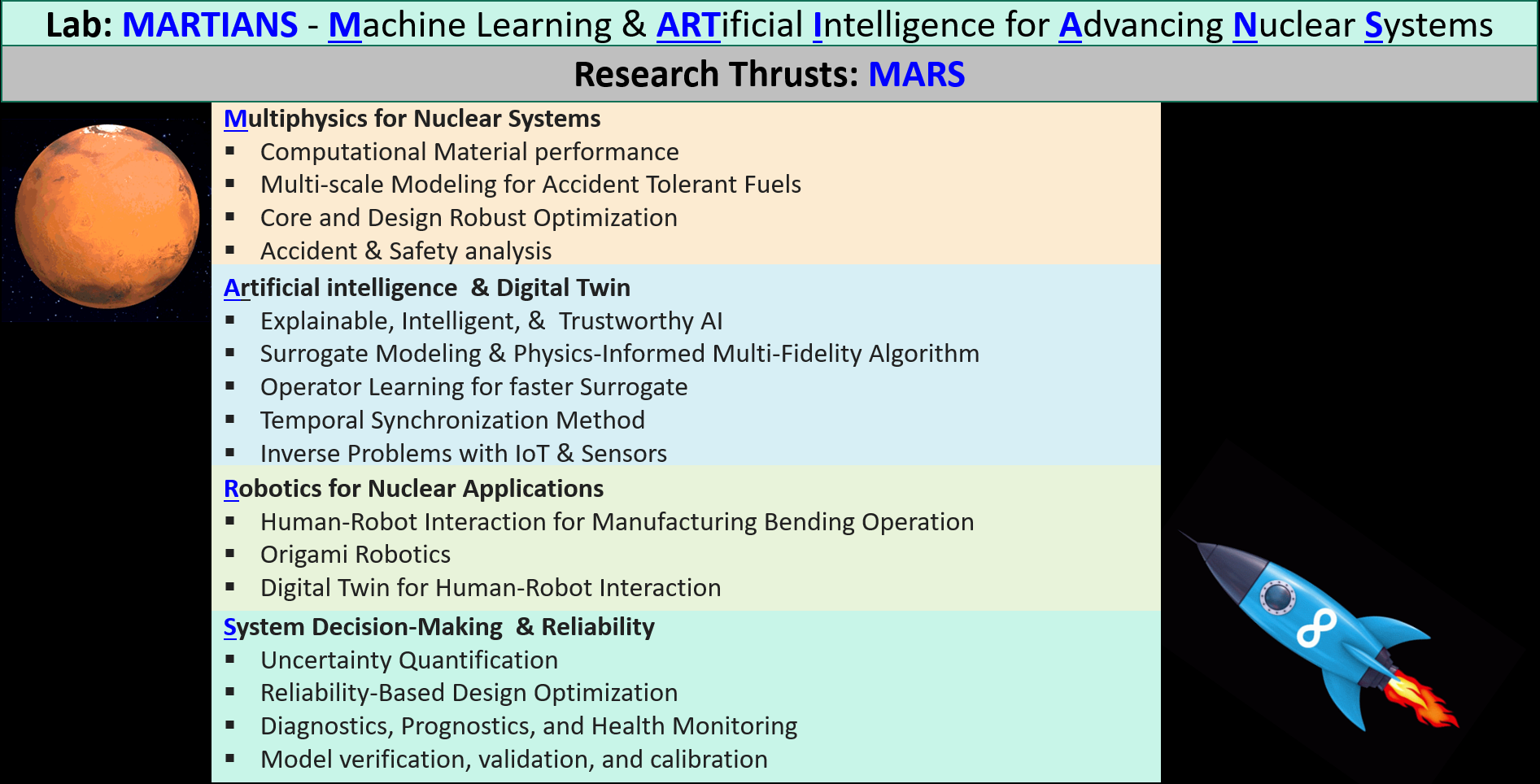
Syed Bahauddin Alam is an Assistant Professor at the University of Illinois Urbana-Champaign (UIUC) in the Nuclear, Plasma & Radiological Engineering department. He holds appointments in the Grainger College of Engineering and the National Center for Supercomputing Applications (NCSA). His research focuses on AI-driven digital twins, uncertainty quantification, and cybersecurity for nuclear systems. Education: B.Sc. in Electrical and Electronics Engineering, Bangladesh University of Engineering and Technology (BUET), 2011 MPhil in Nuclear Energy, University of Cambridge, 2013 PhD in Nuclear Engineering, University of Cambridge, 2018 Research Interests: AI and Digital Twins for Nuclear Energy Multiscale Modeling with Uncertainty Quantification Cybersecurity for Nuclear Systems Sensors and Instrumentation for Reactor Monitoring His work emphasizes explainable AI (XAI), physics-informed machine learning, and robust design optimization. Key contributions include AI-powered digital twins for nuclear systems, which received global media coverage and top 5% Altmetric scores. Awards & Honors: 2025 Dean’s Award for Excellence in Research (UIUC) 2024 Illinois Innovation Award Finalist 2022-2021 Outstanding Teaching Award (Missouri S&T) 2017 Cambridge Philosophical Society Research Studentship Award Grants & Funding: $700,000 U.S. Nuclear Regulatory Commission (NRC) Distinguished Faculty Development Award (2024) $2 million DOE grant for nuclear fuel storage solutions (2023) $500,000 NRC R&D Grant (2024) Labs & Teams: Leads the MARTIANS Lab (Machine Learning and ARTificial Intelligence for Advancing Nuclear Systems), focusing on hybrid data-physics-driven AI and explainable machine learning for nuclear engineering challenges.
Jonathan C. Pober is an Associate Professor of Physics at Brown University, leading research into the Epoch of Reionization (EoR) and Cosmic Dawn through low-frequency radio astronomy. His work focuses on detecting the highly-redshifted 21 cm line emission from neutral hydrogen during the early Universe, addressing challenges in separating this signal from astrophysical and human-generated radio interference. He develops novel analysis techniques and collaborates on cutting-edge experiments like the Murchison Widefield Array (MWA) and the Hydrogen Epoch of Reionization Array (HERA). Education: PhD in Physics, University of California, Berkeley (2013) MA in Physics, University of California, Berkeley (2010) MPhil in Physics, University of Cambridge (2008) BA in Physics, Haverford College (2007) Research Interests: Cosmic Reionization, Radio Astronomy, 21 cm Cosmology, Signal Processing, and Instrumentation Development. His lab explores methods to mitigate radio frequency interference and optimize interferometric calibration for precise EoR measurements. Teaching: Courses include Basic Physics B, Astronomy, Astrophysics and Cosmology, and Advanced Electromagnetic Theory. He emphasizes bridging theoretical concepts with observational techniques in his curriculum. Awards: NASA Roman Technology Fellow Lab & Projects: Directs the Pober Lab at Brown University, advancing experiments like FARSIDE (Farside Array for Radio Science Investigations of the Dark Ages and Exoplanets), a proposed lunar-based array to study the Dark Ages.
Roles and Affiliations: Full Professor at the School of Computing and Information Systems (SCIS), Singapore Management University (SMU). Research Advisor to Xiaosen Zheng and Kankan Zhou. Serves as Action Editor for Transactions of the Association for Computational Linguistics (TACL) , Program Co-Chair of EMNLP 2019, and Editorial Board Member of Computational Linguistics (2015-2017). Education: PhD in Computer Science, University of Illinois at Urbana-Champaign (2008) B.S. and M.S. in Computer Science, Stanford University Research Focus: Specializes in natural language processing (NLP), text mining, machine learning, and data mining. Current interests include question answering, social media content analysis, and combating misinformation. Explores topics like counterfactual syntax for cross-lingual understanding, interventional training for robust NLU, and bias detection in vision-language models. Publications: Over 100+ peer-reviewed papers across top conferences (ACL, EMNLP, NAACL) and journals. Recent work emphasizes multimodal analysis, hate speech detection in memes, and robustness improvements for large language models. Key themes include cross-lingual systems, knowledge base question answering, and misinformation mitigation. Grants & Advising: Supervises PhD/Master’s students in cutting-edge NLP research. Leads projects on model memorization studies, hate meme classification, and interventional training frameworks. Active in organizing conferences and editorial roles. Teaching: Teaches courses in software foundations and programming fundamentals, bridging theory and practical NLP applications.