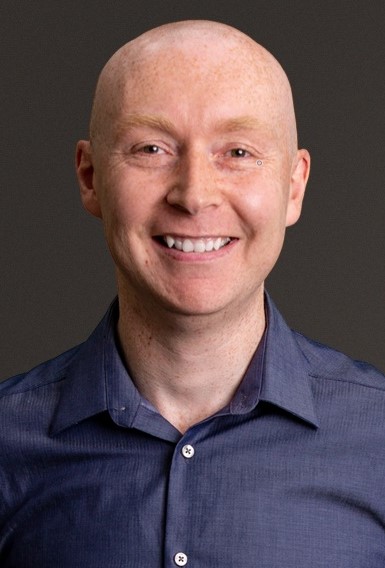
Dr. Wenbin Li is a Senior Lecturer (Associate Professor) in Robotics at the University of Bath's Department of Computer Science. He leads the Pering Laboratory (Perceptual Intelligence Laboratory), affiliated with the AI & Machine Learning and Visual Computing groups. Previously, he held postdoctoral positions at Imperial College London (2016-2018) and UCL (2014-2016), and earned his PhD from the University of Bath in 2013, with earlier degrees from Imperial College London (MSc, 2009) and Xidian University (B.Eng, 2008). His research focuses on unified autonomous systems, including multi-sensory localization/mapping, dynamic motion capture, and uncontrolled scene understanding with applications in manufacturing and professional capture. Key areas include Robotics, Computer Vision, Graphics, and Machine Learning. He actively supervises doctoral students in these fields and has funded PhD openings. Dr. Li has been involved in major initiatives such as the My World - Strength in Places Fund (2021–2027), SLAM with Reinforcement Learning (2022–2023), and the CAMERA MC2 Award (2019–2023). His work aligns with UN Sustainable Development Goals, particularly in advancing technology for societal benefit. Recent publications emphasize aerial robotics, autonomous systems, and computer vision applications, including UAV package delivery reviews, Bayesian optimization for balloon station-keeping, and generative models for intrinsic image decomposition.
Ali Shiri is a Professor in the School of Library and Information Studies and Vice Dean in the Faculty of Graduate & Postdoctoral Studies (GPS) at the University of Alberta. He holds a PhD in Information Science from the University of Strathclyde (2004). His research focuses on digital libraries, cultural heritage preservation, AI ethics, and learning analytics. He leads major funded projects like the Inuvialuit Voices initiative and the D-CRAFT toolkit development. Awards include the University of Alberta’s J. Gordin Kaplan Award for Excellence in Research (2021) and Emerald Literati Award (2023). Shiri’s work emphasizes community-driven design, ethical AI integration, and Indigenous knowledge preservation. Education: PhD in Information Science, University of Strathclyde (2004). Research Interests: Digital libraries, cultural heritage digitization, AI ethics, learning analytics, and Indigenous knowledge systems. His projects often involve collaborations with Northern Canadian communities to develop inclusive digital platforms. Recent work explores generative AI’s impact on education and research paradigms. Grants & Projects: SSHRC-funded projects totaling over $500,000, including Inuvialuit Voices (2019-2024) and Digital Library North (2014-2018). Current initiatives include intergenerational storytelling apps and the D-CRAFT assessment framework. Awards: Outstanding Paper Award, Emerald Literati (2023) J. Gordin Kaplan Award (2021) Faculty of Education Teaching Award (2016) Labs/Teams: Leads the Digital Libraries & Cultural Heritage Lab, collaborating with Inuvialuit communities on storytelling systems and metadata frameworks.
Dr. Philippe Pasquier is a Professor at Simon Fraser University's School of Interactive Arts and Technology, where he directs the Metacreation Lab for Creative AI. His research-creation program integrates scientific research on generative AI and machine learning with artistic practice in computer music and interactive art. Research focuses on creative AI systems for artistic tasks, including multi-track music composition (Calliope), timbre synthesis, visual synthesis (Autolume), and cross-modal generation. Applications span creative software tools, interactive installations, and audiovisual performances studied through HCI methodologies. Publications demonstrate consistent innovation in generative systems, with recent work exploring controllable music generation (MIDI-GPT), GAN-based visual synthesis, and evaluation frameworks for creative AI. Artistic works have been exhibited globally at venues including Ars Electronica, Centre Pompidou, and ZKM. Secured research funding from NSERC, SSHRC, CFI, and international agencies. Founded key academic initiatives including the International Workshop on Musical Metacreation (MUME), Movement and Computation conference (MOCO), and chaired ISEA2015. Teaches creative AI, sound design, and interdisciplinary computing approaches.
Peter Kedron is an Associate Professor in the Department of Geography at the University of California, Santa Barbara (UCSB), and a member of the Center for Spatial Data Science. Previously, he held faculty positions at Arizona State University (2018–2023), Oklahoma State University (2016–2018), and Ryerson University (2012–2016). He earned his Ph.D. in Geography from SUNY Buffalo, an MA in Economics from the University of Michigan, and BAs in Economics and Psychology from SUNY Buffalo. His research focuses on spatial analytical methods, particularly replication in geographic research, and improving evidence accumulation through statistical approaches. Key areas include computational reproducibility, spatial causal inference, and the integration of replication into GIScience education. He has published over 55 peer-reviewed articles and been consistently funded by the National Science Foundation (NSF). Dr. Kedron emphasizes bridging spatial data science with policy relevance, addressing challenges in urban inequality, environmental conservation, and healthcare accessibility. His work often employs cutting-edge techniques like digital twins, machine learning, and multi-source remote sensing to address complex spatial problems. He has supervised over 20 graduate students and post-doctoral scholars, fostering a collaborative environment. Notable contributions include frameworks for reproducible geospatial research and studies on urban-rural disparities, wildfire risk, and renewable energy sector dynamics. Labs/Teams: Active in UCSB’s Center for Spatial Data Science and collaborates with interdisciplinary teams on projects funded by NSF and industry partnerships.
Kevin Flores is an Associate Professor in the Department of Mathematics at North Carolina State University (NC State), and Director of the Biomathematics Graduate Program. He leads the Flores Lab, focusing on developing mathematical and statistical methods for parameter estimation, uncertainty quantification, and forecasting in Precision Medicine, Environmental Toxicology, and Synthetic Biology. His work bridges computational approaches with biological systems analysis. Dr. Flores earned his PhD in 2009 from Arizona State University. His research groups include the Mathematical Biology cluster within the Department of Mathematics. His affiliations include Cox Hall 406D and the College of Sciences at NC State. Research interests emphasize interdisciplinary applications: (1) Mathematical Biology involving tumor heterogeneity, viral dynamics, and angiogenesis modeling; (2) Biostatistics focusing on parameter estimation in complex systems; and (3) Computational Tools for biomedical image analysis and machine learning in healthcare. His lab pioneered methods like biologically-informed neural networks and topological data analysis for biological systems. Recent work highlights include: (1) tumor spheroid modeling predicting clinical variability; (2) BK virus infection dynamics in transplant patients; (3) EEG-based brain-computer interface improvements using GANs; and (4) few-shot learning for plant phenotyping. His methodologies address challenges in sparse data scenarios and integrate mechanistic understanding with data-driven approaches. Awards and recognition : None explicitly listed in provided texts. Advising and grants: No specific advisees or grant details provided in texts. His lab's software tools support image segmentation and population modeling. Labs/teams: Directs the Flores Lab for Mathematical Biology at NC State, specializing in hybrid computational-experimental approaches. Collaborates across departments in biomathematics and engineering.
Augusto Gerolin is an Assistant Professor jointly appointed in the Departments of Mathematics and Statistics and Chemistry and Biomolecular Sciences at the University of Ottawa. He holds a Tier II Canada Research Chair in Artificial Intelligence at the Interface of Chemistry and Mathematics. His research focuses on Optimal Transport Theory, Mathematical Physics, Theoretical and Computational Chemistry, and Machine Learning. Gerolin’s work bridges quantum chemistry, mathematical analysis, and computational methods, with applications in Density Functional Theory and quantum information science. He obtained his PhD from the University of Pisa and was a Marie Skłodowska-Curie fellow at Vrije Universiteit Amsterdam. He is a member of the European Laboratory for Learning and Intelligent Systems (ELLIS) and leads a research group exploring AI-driven solutions in chemistry and mathematics. His current projects include developing optimal transport frameworks for quantum systems, advancing machine learning algorithms in scientific computing, and fostering collaborations across disciplines through initiatives like the OQMG Network. Gerolin’s research has led to advancements in multi-marginal optimal transport, entropy-regularized methods, and the strong-interaction limit of density functional theory. His group actively collaborates with institutions worldwide, including the Fields Institute, IPAM, and the University of Genoa. He has supervised numerous PhD, Master’s, and undergraduate students, many of whom have contributed to cutting-edge studies in computational chemistry, quantum algorithms, and mathematical analysis. Key awards include the Canada Research Chair designation, and his work has been supported by grants from NSERC, MITACS, and the University of Ottawa. Gerolin is also committed to diversity in science, endorsing principles such as the Diversity Axioms, and advocates for academic solidarity with researchers affected by global conflicts.
Xu Chu is an Assistant Professor in the School of Computer Science at the Georgia Institute of Technology. He holds a PhD from the University of Waterloo's Data Systems Lab (2017), supervised by Ihab Ilyas. His research focuses on AI applications in healthcare, particularly human-AI collaboration in pathology and medical diagnostics. Key research areas include computational pathology tools for mitosis quantification, interactive AI systems for medical workflows, and crossmodal generative creativity. He has developed systems like NaviPath and XPath to enhance pathologists' workflow efficiency through AI integration. His recent work emphasizes improving trust in AI medical tools via majority voting mechanisms and leveraging eye-gaze data for AI training. Publications span 2023–2025, reflecting strong contributions to both technical AI development and human-centered medical system design.
Overview Prof. Gudrun Klinker is a Professor at Technische Universität München (TUM), leading the Chair of Computer Science Applications in Medicine & Augmented Reality. She holds a PhD from Carnegie-Mellon University and has extensive experience in academia and industry, including roles at Digital Equipment Corporation and Fraunhofer Institute. Affiliations Professor (C3/W2) since 2000 Head of the FAR (Augmented Reality) research group Member of the CAMP (Computer Aided Medical Procedures) interdisciplinary team Research Dr. Klinker specializes in augmented reality (AR) with focuses on industrial applications, sensor fusion, 3D interaction, and healthcare integration. Her work bridges computer science with medical and industrial challenges, emphasizing user-centric design and real-world deployment. Key projects include: AR-based maintenance systems for complex machinery Healthcare applications like serious games for nutrition education VR/AR training environments for medical and aerospace domains Awards and Recognition Robert Sauer Prize (2010) for contributions to Bavarian science ISMAR Lasting Impact Award (2014) for influential AR research Teaching and Mentorship Prof. Klinker teaches courses on 3D user interfaces, AR fundamentals, and game design. She advises students in thesis projects, focusing on AR applications, HCI, and medical computing. Labs and Collaborations Her research is supported by partnerships with industry and institutions, leveraging TUM's interdisciplinary environment to advance AR/VR systems for real-world impact.
Benedetta Catanzariti is a British Academy Postdoctoral Fellow at the University of Edinburgh's School of Social and Political Science, with dual affiliation as a PostDoctoral Affiliate at the Centre for Technomoral Futures within the Edinburgh Futures Institute. She actively contributes to the AI Ethics & Society network, focusing on the social, historical, and political dimensions of data-driven technologies through qualitative STS (Science and Technology Studies) methodologies. Her work critically examines machine learning data practices, classification systems in algorithmic decision-making, and engineering cultures across industry, research, and educational contexts. Education: PhD in Science, Technology and Innovation Studies, University of Edinburgh (2023) MScRes in Science and Technology Studies, University of Edinburgh (2019) Master in Philosophy, University of Turin (2016) Her research investigates how data objectivity claims emerge within specific cultural imaginaries, with current emphasis on translating medical uncertainty into diagnostic AI outputs. Recent projects analyze facial expression recognition in healthcare, generative AI threats to parliamentary democracy, and ethical integration in computer science curricula. She develops reflexive tools to address algorithmic harm while documenting global labor practices in AI development and anti-surveillance resistance tactics. Article trends reveal escalating focus on AI's societal crises: 2025 works dissect objectivity construction in data annotation and AI governance metaphors, while 2024 outputs target democratic vulnerabilities (Chamberfakes), CS curriculum politics, and translational ethics teaching. Medical AI and emotion recognition studies (2020-2023) establish foundations for current work on medical imaging uncertainty. All publications consistently apply STS lenses to expose hidden power structures in data systems. Scientific Awards: SPS Outstanding Dissertation Award (2023) for 'Seeing affect: knowledge infrastructures in facial expression recognition systems' AsSIST-UK Andrew Webster PhD Prize (2024) She supervises Oksana Dorofeeva (visiting PhD, Aarhus University) and four CDT project students (Jacqueline Rowe, Amanda Horzyka, Osman Batur Ince, Cyndie Demeocq), previously guiding Sandra Wheeler's MSc in Data Science for Health and Social Care. Funded by a British Academy Postdoctoral Fellowship (2023-2026) for 'Technology in Translation: Investigating Organizational Contexts of AI Development', she also secured DCMS Policy Fellowship support under AHRC's BRAID programme. Current teaching includes Data and AI Ethics as Practice (2025) and Data Ethics in Health and Social Care (2024). Operates within the Centre for Technomoral Futures and AI Ethics & Society network, collaborating with Scottish Centre for Crime & Justice Research on parliamentary democracy threats. Organizes key events like the 2024 'AI as the Broken Machine' conference and 2022 'Ethics of Care and Community in AI Practice' workshop, while developing conceptual tools for medical AI practitioners through her active British Academy project.
Dr. sc. hum. Richard Zowalla is a researcher at the Faculty of Computer Science, Heilbronn University, specializing in health informatics and software engineering. He works at the Interdisciplinary Center for Machine Learning (ZML) and focuses on health web analysis, text mining, and open source software. Education: Doctorate in human sciences (Dr. sc. hum.), dissertation on German health web data analysis (2022) Research interests include health information systems, focused web crawling, text mining, and software quality management in agile environments. His work bridges healthcare and computer science through data-driven analysis of online medical resources. Publication trends show expertise in health web readability, multilingual health data comparison, and AI-driven service innovation. His articles emphasize practical applications of machine learning and data visualization in healthcare contexts. Teaching: Software Lab (2016-2025), Advanced Programming Techniques (2020-2024), Database Internship (2014-2025), Distributed Systems (2016-2017) Labs & Teams: Active member of the Interdisciplinary Center for Machine Learning (ZML) at Heilbronn University, contributing to collaborative research in health data analysis.
Professor Michael McTear is affiliated with Ulster University in the Department of Computer Science . His research focuses on Artificial Intelligence and Large Language Models , with significant contributions to Chatbot Technology , Data Fusion , and Digital Mental Health interventions. Active in Computer Science with expertise in Information Retrieval , Human-Computer Interaction , and Multimodal Interfaces Recent work includes machine learning applications for depression detection and sensor technology in the e-VITA project His publications (102 total) demonstrate sustained academic activity since 1979, with notable research output in 2024-2025. Current projects emphasize generative AI , voice biomarkers , and elderly care technology . Scientific recognition includes: Best Journal Paper Award (ACM Transactions on Computing for Healthcare, 2025) Outstanding Interdisciplinary Research Team Award (2024)
Philipp Slusallek is a Professor for Computer Graphics at Saarland University since 1999 and Scientific Director at the German Research Center for Artificial Intelligence (DFKI), leading the "Agents and Simulated Reality" research area since 2008. He has held leadership roles such as Director for Research at the Intel Visual Computing Institute (2009-2017) and Dean of the Faculty of Computer Science and Mathematics (2002-2004). His affiliations include being a Principal Investigator in the German Excellence Cluster "Multimodal Computing and Interaction" (2007-2019) and a Visiting Professor at NVIDIA Research (2007-2008). PhD in Computer Science from Erlangen University Diploma in Physics from Frankfurt and Tübingen University His research spans computer graphics, artificial intelligence, and high-performance computing, with contributions to real-time ray tracing, digital reality, motion synthesis, and domain-specific languages (DSLs). Recent work includes visual programming tools for image processing (2022), DSL frameworks for high-performance libraries (2018), and compiler optimizations for vectorized code (2018). Key themes include simulation technologies, programming models, and computational sciences. Scientific honors include Fellow of Eurographics, Associate Editor of Computer Graphics Forum , membership in acatech (German National Academy of Science and Engineering), and advisory roles in AI policy. He has led research groups at institutions like Stanford University (Visiting Assistant Professor, 1998-1999) and the University of Tübingen (Researcher, 1990-1992).
Gulsen Tore Yargin serves as Senior Lecturer in Design and Innovation Strategy at Brunel Design School within Brunel University London's College of Engineering, Design and Physical Sciences. Previously, she held Assistant Professor of Industrial Design position at Middle East Technical University where she directed the METU/BILTIR-UTEST Product Usability Unit. Her academic journey includes postdoctoral research at University of Cambridge Engineering Design Centre following a PhD focused on user research communication methodologies. PhD: Effective Communication of User Research Findings (University of Cambridge postdoctoral work) Postdoc: Engineering Design Centre, University of Cambridge Assistant Professor: Middle East Technical University (Industrial Design) Dr. Tore Yargin's research spans human-centered design in emerging technologies with emphasis on UX research methods, conversational agents, sensor-based innovations, and wellbeing design. Her work bridges academic theory with industry applications across white goods, home electronics, automotive, and defense sectors. Recent publications demonstrate methodological innovation in remote research during crises, animal-computer interaction, and voice interface design for diverse populations. Analysis of her 15 most recent publications reveals strong interdisciplinary trends connecting design theory with psychology, animal behavior, and public health. Key thematic clusters include pandemic-adapted research methodologies (2020-2023), animal laterality studies (2023-2024), and conversational agent design for elderly populations (2023). Her work consistently applies human-centered principles to novel contexts while developing new measurement frameworks. No scientific awards are currently documented in available sources. Dr. Tore Yargin has secured multiple research grants including TÜBİTAK-funded projects on remote UX research during COVID-19 and canine stress behavior analysis, plus industry collaborations with Arcelik-Beko on voice interfaces. Her co-author network spans veterinary science, psychology, and design fields including Dr. Dominik Havsteen-Franklin and Dr. Cristina Asenjo Palma. Current projects focus on technology-mediated human-canine interactions and remote research methodologies. Her research operates through interdisciplinary collaborations rather than dedicated physical labs, with emphasis on field-based studies in domestic and public settings. Current work explores canine wellbeing through non-invasive measurement techniques and voice interface adoption in emerging markets.
Desara Dushi is a postdoctoral researcher specializing in the intersection of law, technology, and human rights . Her work primarily addresses cybercrime , online child protection , and data governance , with a focus on EU legal frameworks such as the GDPR and AI Act. She is affiliated with the Law, Science, Technology & Society group and has contributed to interdisciplinary projects like ALTEP-DP and CoHuBiCoL . Ph.D. in Law from the University of Bologna (2019). Current projects: Regulating AI, GDPR compliance automation, and child safety in digital spaces. Active in international conferences and policy discussions, including the IAIL 2022 workshop. Her research explores how emerging technologies challenge legal norms, particularly in law enforcement , privacy , and human rights . She has published extensively on topics like AI-generated abuse material , facial recognition , and cybercrime prosecution . Recent publications highlight trends in AI regulation (2024-2022), data protection (2024), and child safety (2024-2019). Her work often combines legal analysis with technological insights to propose policy solutions. Co-organizer of the 2023 Re-articulating data? conference. Speaker on facial recognition ethics (2022) and emerging tech regulation (2022). Contributor to EU-level debates on automated decision-making (2022).
Ryen W. White is a Partner Research Director and Deputy Lab Director at Microsoft Research in Redmond, leading the LEAP research area (Language, Learning, Audio, Privacy) and engineering organizations. He holds an Affiliate Professor position at the University of Washington , where he contributes to academic research while maintaining his industry leadership. Research focuses: Information Retrieval, Human-Computer Interaction, Computational Health Key projects: AutoGen multi-agent systems, WHAM for gameplay ideation, action engine frameworks His work emphasizes user-centered search systems , privacy-preserving personalization , and advanced interaction paradigms . Recent publications analyze long-term behavioral modeling, decision biases in search, and next-generation search interfaces, spanning subfields like implicit feedback mechanisms , task completion algorithms , and generative AI applications . Scientific honors include: ACM Fellow (2021) Tony Kent Strix Award (2022) ASIST Best Information Science Book Award (2017) SIGIR Test of Time Awards (2010, 2022) BCS Distinguished Dissertation Award (2005) As Workshop Chair for HCIR series and Program Chair for SIGIR 2017, he has shaped research agendas through community-building initiatives. His book Interactions with Search Systems established foundational principles for exploratory search interfaces and privacy-aware information access .