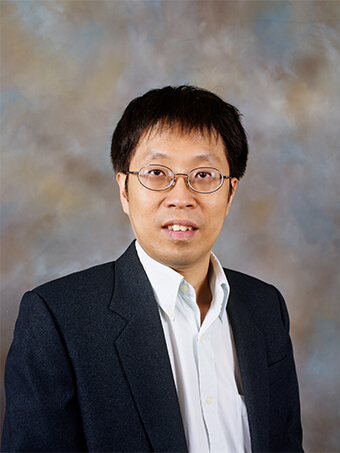
Phil CHAN Aik Hui is an Associate Professor in the Department of Physics at the National University of Singapore (NUS), specializing in High Energy Particle Physics and Physics Education. His research spans QCD Soft-hadron Phenomenology, Neutrino Physics, and the Large Scale Structures of the Universe, with practical applications in educational observatory design via collaborations like the CMS experiment at CERN. Education: PhD in High Energy Particle Physics from NUS (1993). Research Interests: Focuses on theoretical and experimental aspects of particle physics, including neutrino mixing, dark matter effects, and parton branching dynamics, alongside innovative contributions to astronomy education through observatory development. Scientific Awards: NUS Outstanding Educator Awardee IPS Cadi Scientific Awardee Fellow of Institute of Physics Singapore IPS Fellow Fellow of Institute of Physics (UK) Leadership & Projects: Served as Deputy Head of NUS Physics Department (2014-2022) and NUS Chair for General Education (2012-2018). Led the establishment of five educational observatories, including the SSTS 3m-NisshinDome Observatory (2024) and NJC Roll-off-Roof Observatory (2012).
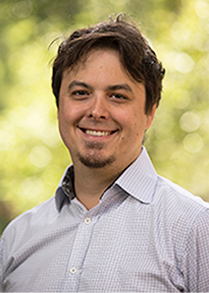
Simonetta Liuti is a Research Professor in the Department of Physics at the University of Virginia. She holds a Ph.D. in Physics from La Sapienza University (1989) and a Laurea in Physics from Università degli Studi di Perugia (1984). Her work focuses on theoretical nuclear and particle physics, particularly the internal dynamics of protons governed by quantum chromodynamics (QCD). Education Ph.D., Physics, La Sapienza University (1989) Laurea in Physics, Università degli Studi di Perugia (1984) Research Interests Professor Liuti specializes in understanding the proton's spin, mass, and mechanical properties through QCD. Her research explores the role of quark and gluon orbital motion, utilizing 3D parton distributions (Wigner distributions) and the Electron Ion Collider (EIC) to create tomographic images linking quantum phenomena to macroscopic matter. Her work has implications for neutron star physics. Scientific Awards & Recognition APS Fellowship (2017) SESAPS Francis Slack Prize (2019) DOE Topical Collaboration Award (2017, with student Abha Rajan) Physical Review C Editorial Board member (2017-2020) Service & Leadership Liuti has held leadership roles in the American Physical Society, including serving as Vice Chair of SESAPS (2012-2016) and organizing workshops to promote inclusion in physics. She contributes to institutional committees at UVA, such as the Physics Community and Outreach Committee and Grievance Committee.
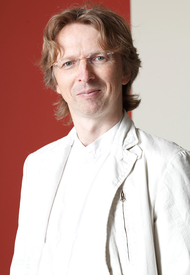
Michael Paolone is Assistant Professor of Physics at New Mexico State University, specializing in experimental medium-energy nuclear physics. His research at Jefferson Lab investigates nucleon structure using particle detectors like CLAS12, focusing on gluon distributions and neutron properties. Research explores fundamental questions in quantum chromodynamics through measurements of generalized parton distributions, nucleon resonances, and polarization observables. Work includes developing Cherenkov detectors for particle identification in high-energy experiments. Recent publications concentrate on precision measurements of spin structure, deeply virtual Compton scattering, and resonance electroproduction. Trends show strong emphasis on multidimensional hadronic structure studies using polarized beams and targets. Instrumentation contributions include optimizations for the Solenoidal Large Intensity Device (SoLID), enhancing detection capabilities for next-generation experiments.
Marc Vanderhaeghen is a Professor at the Institute of Nuclear Physics at Johannes Gutenberg University Mainz (JGU). His research focuses on theoretical nuclear and hadron physics, with groundbreaking contributions to two-photon physics and baryon structure. Recognized as a Fellow of the American Physical Society in 2013, his work explores quantum chromodynamics, generalized parton distributions, and symmetry predictions in electromagnetic processes. His research interests span quantum chromodynamics, two-photon exchange processes, and the structure of baryons, positioning him at the forefront of theoretical particle physics research. Vanderhaeghen has received the prestigious APS Fellowship for exceptional contributions to physics. His research is conducted within the Cluster of Excellence PRISMA+ and Collaborative Research Center 1044.
Andrei Afanasev is a Professor of Physics at The George Washington University, specializing in theoretical nuclear physics and quantum optics. His research focuses on precision calculations in quantum electrodynamics and hadronic structure, with significant contributions to two-photon exchange corrections and orbital angular momentum beam physics. His primary research interests include Theoretical Nuclear Physics (particularly QED corrections in lepton-nucleon scattering) Quantum Optics (structured light, orbital angular momentum beams) Photonics (twisted photon applications, polarization singularities) Hadron structure imaging via deep-inelastic scattering His work bridges fundamental quantum theory with experimental applications at facilities like Jefferson Lab. Analysis of his 15 most recent publications reveals a strong emphasis on radiative corrections for precision hadronic measurements, with 60% of articles addressing two-photon exchange effects. The remaining works explore novel optical phenomena in structured light fields, demonstrating interdisciplinary connections between nuclear physics and quantum optics. Key trends include applications of orbital angular momentum beams to quantum information and hadronic structure studies. While no specific awards are documented in the source material, his leadership in topical collaborations (e.g., Jefferson Lab initiatives) indicates significant professional recognition. Professor Afanasev's research program demonstrates substantial grant support through collaborations with major facilities including Jefferson Lab and participation in international workshops on radiative corrections. His theoretical frameworks directly enable precision experiments in nuclear and particle physics. His work intersects with quantum information science through optical vortex applications, though specific laboratory affiliations beyond university resources aren't detailed in the provided materials.
Andreas Metz is a Professor of Physics at Temple University, specializing in Theoretical Nuclear and Hadronic Physics. His research focuses on the quark and gluon structure of strongly interacting particles like protons, with an emphasis on QCD factorization, lattice-QCD calculations, and Monte Carlo-based data analysis. He has contributed significantly to understanding parton correlation functions, power corrections, and the proton's mass decomposition. Education: Ph.D. in Physics, University of Mainz (1997) Research Interests: Multi-dimensional quark/gluon structure of hadrons QCD factorization and non-perturbative effects Lattice QCD applications Proton spin and mass decomposition Parton fragmentation functions Publication Trends: His work emphasizes Generalized Parton Distributions (GPDs), lattice-QCD studies of proton structure, and theoretical support for upcoming Electron-Ion Collider (EIC) experiments. Recent studies explore axial-vector GPDs, twist-3 effects, and proton tomography via lattice methods. Awards: 2023 APS Fellow (Topical Group on Hadronic Physics) Advising & Grants: While no advisees are listed, his research aligns with major initiatives like the EIC Theory Alliance and Jefferson Lab projects. Collaborative efforts focus on interpreting experimental data from high-energy facilities. Labs/Teams: Involved in LHCSpin project and EIC-related theoretical collaborations, though specific lab affiliations are not explicitly stated.
Julie Roche is a Professor in the Department of Physics and Astronomy at Ohio University, within the College of Arts and Sciences. She serves as Director of the Institute of Nuclear and Particle Physics (INPP) and as Undergraduate Chair for the department. Her research is centered on experimental nuclear and particle physics, particularly the internal structure of protons and neutrons governed by the Strong force. She conducts experiments at major national facilities such as Jefferson Lab (JLab) and MAMI in Germany, with future involvement at the Electron-Ion Collider. Her research interests include the 3D tomographic imaging of nucleons via Deeply Virtual Compton Scattering (DVCS) and exclusive meson production. She is the spokesperson for three JLab experiments with scientific grading A. Her work aims to test models of the Strong force and explore physics beyond the Standard Model through precision measurements. Supported continuously by the National Science Foundation since 2007, her research has led to over 77 peer-reviewed publications and nearly 4,000 citations. The trends in her recent publications highlight a strong focus on generalized parton distributions (GPDs), high Q² and high Bjorken-x physics, DVCS, and exclusive reactions. These studies are instrumental in mapping quark and gluon dynamics inside the proton, with implications for quantum chromodynamics (QCD) and nucleon structure. Her work bridges experimental data with theoretical models to advance understanding of hadronic matter. Scientific Service and Leadership: Chair, DNP Education Committee, APS (2024–Present) Co-convenor, Working Group 5: Spin and 3D Structure, DIS2024 Conference Chair, JLab Users Organization (2018–2019) Chair, Photonuclear Reactions Gordon Conference (2018) Member, Executive Committee, APS Division of Nuclear Physics (2019–2021) Chair, Hall A/JLab Coordinating Committee (2013–2014) Chair, Jefferson Lab/Hall C Steering Committee (2008) Julie Roche is actively involved in mentoring and advising. She serves as academic advisor to approximately ten undergraduate physics students annually and has been a faculty advisor for the Women in Physics and Astronomy (WIPHA) group. She has received teaching buy-outs and sabbatical support from JLab and JSA, reflecting her research productivity. She teaches a range of courses, including advanced undergraduate laboratories and graduate-level nuclear physics, and is passionate about physics education and equity in STEM. She leads the Nucleon Electro-Weak Structure research group at Ohio University, which includes graduate and undergraduate researchers. Her lab collaborates extensively with JLab and international partners, contributing to major collaborations such as the Hall A Collaboration. Her group’s work is supported by multiple NSF grants, including awards #2209199, #1913170, #1614479, and others dating back to 2007.
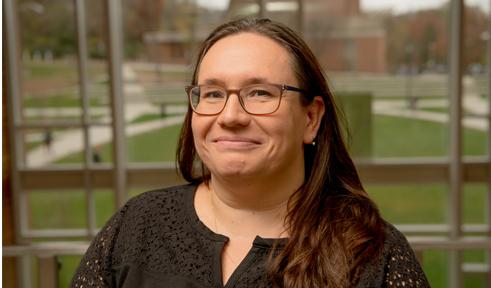
Xiaoxuan Chu is an Associate Scientist (Researcher) in the Physics Department at Brookhaven National Laboratory (BNL), conducting experimental research in high-energy and nuclear physics. She actively contributes to the STAR experiment at RHIC and the ePIC experiment at the Electron-Ion Collider (EIC), focusing on nucleon structure, proton spin, and 3D proton imaging to unravel fundamental matter properties. Her educational background includes: Ph.D. from Central China Normal University & BNL (2018) Dr. Chu's research centers on gluon saturation , 3D proton tomography , EIC detector development , and p-Carbon polarimetry . Her work bridges theoretical QCD predictions with experimental validation through heavy-ion collisions and polarized proton studies. She investigates how gluons govern proton spin and structure, leveraging cutting-edge collider data to create multidimensional proton maps. Analysis of her publications reveals dominant themes in Electron-Ion Collider physics and RHIC spin studies. Key trends include advancing gluon saturation signatures, developing polarized beam techniques, and simulating next-generation detectors for 3D nucleon imaging. Her work increasingly integrates machine learning for collision data analysis and emphasizes mass-number dependence in nuclear QCD effects. Her scientific recognition includes: BNL LDRD Award (2024-2026): $500,000 BNL LDRD Award (2023-2024): $110,000 DOE Highlight: Signs of gluon saturation in particle collisions Dr. Chu mentors DOE SULI program students and serves the community as referee for Phys. Rev. Lett. , Phys. Rev. D , and JINST , plus NSF Mid-Scale RI-1 reviewer. She leads the STAR Collaboration's Spin/Cold QCD working group (2022-2025) and contributes to polarimetry R&D for the EIC's precision measurements. She operates within BNL's Cold QCD group, collaborating with STAR and ePIC teams on detector calibration, data analysis, and physics working groups. Current efforts focus on p-Carbon polarimeter development and EIC detector simulations for the upcoming collider era.
Zhoudunming (Kong) Tu is an Associate Adjunct Professor in the Department of Physics and Astronomy at Stony Brook University and Associate Physicist at Brookhaven National Laboratory's Physics Department, where he leads the EIC Group. As an experimental nuclear and particle physicist, he investigates fundamental Quantum Chromodynamics (QCD) questions, particularly color confinement—the mechanism binding quarks and gluons into hadrons. His educational background includes: M.S & Ph.D in high energy nuclear physics, Rice University, 2018 B.S. in Physics & Mathematics, University of Kansas, 2013 Dr. Tu's research spans both 'hot' QCD (studying quark-gluon plasma via heavy-ion collisions at RHIC) and 'cold' QCD (probing proton structure through deep inelastic scattering at the EIC). His work addresses the color confinement problem through quantum entanglement studies, gluonic structure measurements in nuclei, and investigations of the Chiral Magnetic Effect. He actively contributes to the EPIC experiment at the EIC, STAR experiment at RHIC, and previously participated in CMS at the LHC (2012-2018) and H1 at HERA. Analysis of his 11 publications (2017-2024) reveals a distinct trend toward applying quantum information science to particle physics, particularly through entanglement entropy in QCD. His experimental focus on J/ψ photoproduction has yielded breakthroughs in mapping gluonic nuclear structure, while his precision studies of azimuthal correlations have reshaped understanding of topological effects in heavy-ion collisions. Dr. Tu's scientific contributions have been recognized with: ElCUG award for early career scientists (2024) Inter-American Network of QCD Challenges exchange award (2022) Brookhaven LDRD Award with $400,000 funding (2022-2024) Goldhaber Distinguished Fellowship (2018) Quark Matter Conference Young Scientist Award (2017) Committed to scientific development, Dr. Tu mentors students through the DOE SULI program and actively recruits diverse talent into his research group. He serves as a peer reviewer for Physical Review Letters and grant reviewer for the US Department of Energy and National Science Center of Poland, emphasizing his dedication to advancing both research and scientific community standards. As a core member of Brookhaven's EIC Group, Dr. Tu collaborates across international teams including STAR and EPIC, leveraging major facilities like RHIC and the future EIC. His work integrates theoretical frameworks with cutting-edge experimental techniques to address foundational questions about matter's structure in the universe.
Dr. Marcin Ziembicki serves as an Assistant Professor at the Institute of Radioelectronics and Multimedia Technology within the Faculty of Electronics and Information Technology at Warsaw University of Technology. His research integrates experimental particle physics with advanced detector development, focusing on neutrino interactions and nuclear phenomena through major international collaborations. His primary research interests include: Neutrino oscillation physics and cross-section measurements Development of photomultiplier-based detection systems for water Cherenkov experiments Analysis of hadronic final states in deep-inelastic scattering Spin-dependent asymmetries in polarized targets Real-time FPGA-based data acquisition systems Recent publications demonstrate concentrated activity in T2K and Hyper-Kamiokande neutrino experiments, with significant contributions to oscillation parameter measurements, neutron capture studies in oxygen targets, and detector calibration techniques. His work spans theoretical modeling and hands-on hardware implementation, particularly in FPGA-based readout systems for particle detectors. With 168 publications and an h-index of 49 (Scopus), his experimental work has advanced precision measurements in neutrino physics. He has supervised 7 promoted theses and participated in 14 research projects, including the T2K Near Detector upgrade and Hyper-Kamiokande photosensor development. Dr. Ziembicki maintains active roles in the COMPASS spin physics collaboration and the AMBER experiment, where he develops specialized electronics for hadron spectroscopy. His technical expertise bridges particle physics with electrical engineering, particularly in signal processing and detector electronics design for high-radiation environments.
Tracy McAskill is a Senior Lecturer in the Department of Physics and Astronomy at Wellesley College. She holds a Ph.D. in Physics from Tufts University and has dedicated her career to optimizing physics education through narrative-driven teaching methods. Education : B.S. from Texas Tech University, M.S. and Ph.D. from Tufts University Her research focuses on particle physics phenomenology, particularly modeling weak production of mesons at mid-range energies to study chiral odd general parton distributions and nucleon quark content. She teaches courses like Fundamentals of Mechanics, Physics 106, Physics 107, Physics 108, and Physics 302, emphasizing conceptual frameworks over rote memorization. McAskill’s teaching philosophy centers on logical progression from foundational concepts, making physics accessible by demystifying intimidating theories. She has led independent studies in general relativity and particle physics, and her non-academic expertise includes contortion, fitness, and injury prevention for flexible individuals.
Professor Carl Gwilliam is a faculty member in the Department of Physics at the University of Liverpool's School of Physical Sciences. His research focuses on particle physics, particularly through experiments at CERN's Large Hadron Collider (ATLAS, FASER) and the SHiP experiment at the SPS. He has made significant contributions to Higgs boson studies and searches for new physics beyond the Standard Model, including dark matter and long-lived particles (LLPs). Education: Ph.D. in Experimental Particle Physics (H1 Experiment at DESY, 2006) His research explores particle physics through collider experiments, detector development, and simulation. Recent work emphasizes Higgs boson properties, LLP detection, and jet reconstruction techniques. He integrates computational physics into undergraduate teaching and advocates for inclusive education as the Departmental Disability Coordinator. Selected research outputs include: Higgs boson pair production analysis in bbττ decay channels LLP searches via dark photons and heavy neutral leptons Jet energy calibration and track reconstruction software for ATLAS Forward physics facility detector optimization studies He has supervised numerous BSc, MPhys, and PhD students and coordinated international collaborations like ATLAS's Exotics Working Group and FASER's physics program.
Anna Martin is an Associate Professor at the Department of Physics, University of Trieste, and serves as Head of the Nucleon Spin Structure: COMPASS at CERN research group within the Particles, Astroparticles and Gravitational Waves research strand. She actively participates in departmental governance as a member of the Department's Board, Boards of Studies, and multiple Doctoral Studies Boards across various physics cycles (XXIX-XXXIX). Her research focuses on fundamental particle interactions and nucleon structure investigations. Staff ID: 3410 Phone: 040 558 3363 Homepage: http://wwwusers.ts.infn.it/~martin/univ/ Professor Martin's research interests center on experimental particle physics, particularly the spin structure of nucleons and hadron spectroscopy. Her work addresses fundamental questions in quantum chromodynamics (QCD), including how proton spin is carried by its constituents and whether exotic hadronic states exist beyond conventional quark models. She leads investigations into gluon polarization in longitudinally polarized nucleons, transverse spin distribution functions, and generalized parton distributions through deep virtual Compton scattering. Her research group participates in the COMPASS experiment at CERN, a fixed-target experiment investigating hadron structure and spectroscopy using high-energy muon and hadron beams. The Trieste group under her leadership contributes to detector development, data processing and analysis, and phenomenological interpretation of experimental results in collaboration with theoretical physicists. Professor Martin's group collaborates with international institutions through research grants from INFN, European Union (STRONG-2020), University of Trieste (FRA programs), and MIUR (PRIN2008). The group includes faculty members Andrea Bressan, Piero Ciliberti, and Jan Matousek, along with several PhD students and collaborators from INFN and ICTP. As an educator, Professor Martin serves on multiple Boards of Studies for Physics degree programs (SM20, SM23) and Doctoral Studies Boards across numerous cycles (XXIX-XXXIX), contributing to curriculum development and doctoral supervision in physics education at the University of Trieste.
Dr. Jan Kretzschmar is a Senior Lecturer in the Department of Physics at the University of Liverpool, actively contributing to experimental particle physics through the ATLAS and H1 collaborations. His work focuses on precision measurements of W and Z boson production, Higgs boson decays, and searches for beyond-Standard-Model phenomena at the LHC. Academic affiliation: University of Liverpool Key collaborations: ATLAS, H1 Research themes: QCD, proton structure, Higgs phenomenology His research spans precision electroweak measurements, dark matter exploration, and Monte Carlo generator development for detector simulations. He has led analyses of Drell-Yan cross sections, deep inelastic scattering, and Higgs decay modes, contributing to fundamental understanding of particle interactions. Recent publications include studies on jet energy calibration, W boson pair production, and top-quark-associated Higgs signals. He received the Guido Altarelli Award (2016) for his HERA contributions. Professional roles involve convening sessions at EPS-HEP and Moriond conferences, with teaching responsibilities in computational physics and W/Z boson luminosity monitoring.
Professor Frank Krauss is a Royal Society Wolfson Fellow at the Department of Physics and a Professor in the Institute for Particle Physics Phenomenology at Durham University. His work focuses on high-energy particle physics, particularly in developing Monte Carlo event generators like Sherpa and Alaric. Research Interests : Quantum Chromodynamics (QCD), parton showers, Higgs boson phenomenology, and beyond Standard Model physics. Awards : Royal Society Wolfson Fellowship Supervision : Currently supervising Zara Graham-Jones . Publications highlight advancements in color-coherent parton evolution, machine learning applications for LHC simulations, and precision studies of Higgs and diboson production. His work bridges theoretical predictions with experimental validation through tools like Sherpa and OpenLoops.