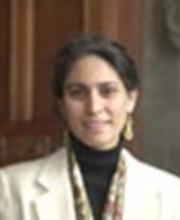
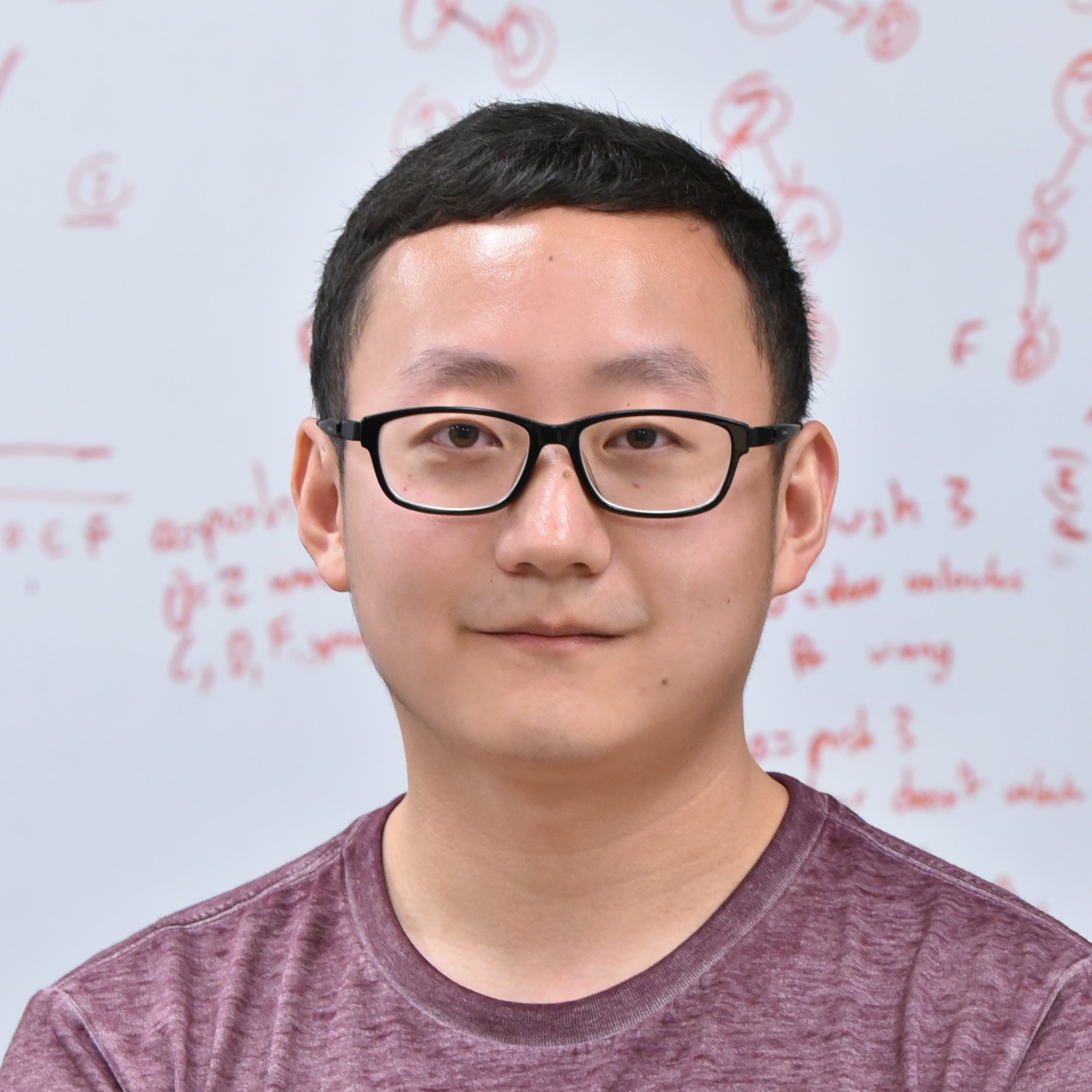
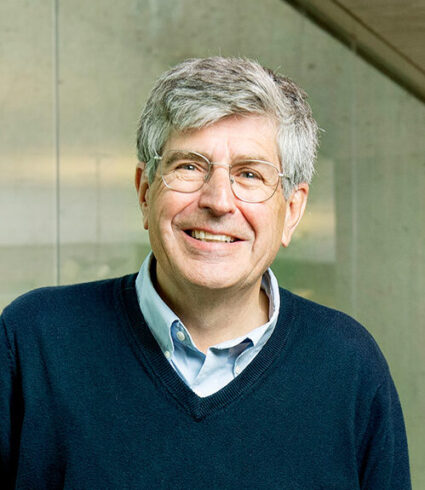
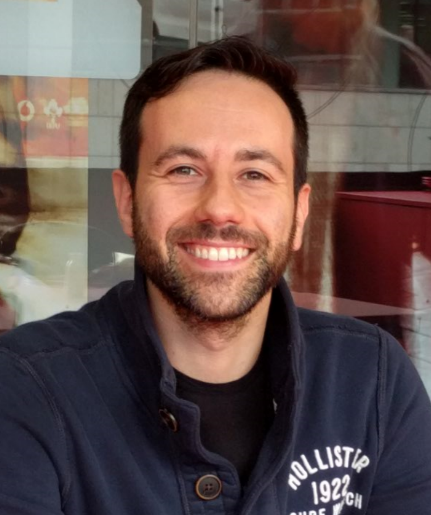
Edouard Oyallon is a CNRS Researcher at Sorbonne University's MLIA team within the Institute of Intelligent Systems and Robotics (ISIR). His research focuses on machine learning foundations, particularly the symmetries of deep neural networks, and large-scale distributed/decentralized training algorithms. He has contributed to frameworks like Kymatio for wavelet scattering transforms and collaborates on projects such as SHARP (Frugal Learning) and ADONIS (ANR-funded). He advises multiple PhD and postdoctoral researchers and teaches advanced deep learning courses at Institut Polytechnique de Paris (IPP). Grants include the ADONIS project (ANR/Sorbonne) and participation in VHS and CoCa4AI initiatives. His work spans theoretical and applied aspects, with recent emphasis on optimizing LLM training at exascale. He maintains active roles in academic service, including organizing workshops on federated learning and graph machine learning.
Miao Zhengjie serves as an Assistant Professor in the School of Computing Science at Simon Fraser University (SFU), joining in October 2023 after a research scientist position at Megagon Labs. His work centers on enhancing data science pipelines through innovations in database systems and artificial intelligence. His academic foundation includes: Ph.D. in Computer Science from Duke University (2022) M.S. in Computer Science from Columbia University (2016) B.S. in Computer Science and Technology from Peking University (2015) Dr. Miao's research spans Database Systems , Data Management , Data Curation , and Data Provenance , with emphasis on AI-driven solutions for data pipeline efficiency. His methodology bridges theoretical database concepts with practical data science applications through novel algorithm development. Analysis of his 15 most recent publications reveals persistent focus areas: query explanation systems (35% of works), data augmentation frameworks (27%), and human-AI collaboration tools (20%). These contributions appear consistently in premier venues including SIGMOD, VLDB, and CHI, demonstrating methodological evolution from foundational query debugging (2019) to LLM-integrated annotation systems (2024). He actively participates in the SFU Data Science Research Group , contributing to interdisciplinary initiatives in large-scale data processing. Current information indicates no formal advisees or grant details are publicly documented in his institutional profile.
Mahzarin R. Banaji is the Richard Clarke Cabot Professor of Social Ethics at Harvard University and a Harvard College Professor. She is affiliated with the Department of Psychology and is a key figure in the Mind, Brain, and Behavior (MBB) Interfaculty Initiative. Her research is centered at the intersection of social cognition, implicit bias, and ethical behavior. Institution: Harvard University School: Harvard College Department: Psychology Email: banaji@fas.harvard.edu Dr. Banaji earned her Ph.D. from Ohio State University and has been a leading scholar in the study of unconscious bias. Her work explores how implicit attitudes shape perception, judgment, and behavior outside conscious awareness. She co-developed the Implicit Association Test (IAT) , a groundbreaking tool for measuring unconscious biases related to race, gender, age, and other social categories. Her research spans social cognition, prejudice, stereotyping, moral psychology, and the neuroscience of social behavior . More recently, she has extended her work into the domain of artificial intelligence, investigating how human-like biases emerge in large language models. The 15 most recent publications reflect a strong trend toward computational social science , combining psychological theory with natural language processing and AI. Her team analyzes bias in digital corpora, studies the transmission of stereotypes in AI systems, and develops tools to measure intersectional and implicit attitudes at scale. These works bridge psychology, ethics, and technology, highlighting the societal implications of implicit cognition. Among her notable scientific honors are: Fellow of the American Academy of Arts and Sciences William James Fellow Guggenheim Fellowship Kurt Lewin Award (SPSSI) Harvard College Professorship Dr. Banaji has advised numerous graduate students, including Tessa Charlesworth and Kerry Morehouse, many of whom are now active researchers in social and cognitive psychology. She has secured major grants through the Mind, Brain, and Behavior Initiative and has led interdisciplinary teams exploring bias in education, law, and technology. She is also the co-creator of OutsmartingHumanMinds.org , a public education platform on implicit bias. Her lab serves as a hub for collaborative research on implicit social cognition, bringing together psychologists, neuroscientists, and computer scientists to understand and mitigate unconscious bias in human and artificial systems.
Tianmin Shu is an Assistant Professor in the Department of Computer Science at Johns Hopkins University , with a joint appointment in the Department of Cognitive Science . He is the founding director of the Social Cognitive AI (SCAI) Lab and was previously a Research Scientist at MIT, working with Josh Tenenbaum and Antonio Torralba. His research goal is to advance human-centered AI by engineering machine social intelligence —building systems that understand, reason about, and interact with humans in real-world settings. His work is inherently interdisciplinary, integrating machine learning, computer vision, robotics, and social cognition. Research Interests: Theory of Mind Reasoning: Developing models that infer human mental states from multimodal behavioral data. Embodied Assistance: Creating agents capable of assisting humans in physical environments through verbal and non-verbal collaboration. Learning from Human Feedback: Extracting reward-relevant preferences from rich human input to guide agent behavior. Social Scene Understanding: Recognizing and reasoning about group activities and social roles from visual and physical cues. Computational Social Cognition: Modeling how humans perceive and interpret social and physical interactions. Scientific Awards: Outstanding Paper Award at ACL 2024 for "MMToM-QA: Multimodal Theory of Mind Question Answering" Grants & Collaborations: Tianmin Shu has led or co-organized several high-impact workshops and tutorials, including the NeurIPS 2023 Tutorial on "Language Models Meet World Models" and the RSS 2024 Workshop on "Social Intelligence in Humans and Robots". His lab has also developed open-source platforms like VirtualHome-Social and SimWorld for multi-agent interaction research. Lab & Team: As director of the Social Cognitive AI (SCAI) Lab at Johns Hopkins University, Tianmin Shu leads a multidisciplinary team focused on building socially intelligent systems. His lab is located in Malone Hall 213 and collaborates closely with the Departments of Computer Science and Cognitive Science.
Professor Klavs F. Jensen is the Warren K. Lewis Professor of Chemical Engineering and Professor of Materials Science and Engineering at MIT. His research focuses on integrating automation, machine learning, and robotics to accelerate materials discovery and pharmaceutical synthesis. He leads the Jensen Research Group, pioneering automated reaction systems with online analytics and optimization algorithms. Education: MS in Chemical Engineering (Technical University of Denmark, 1976); PhD in Chemical Engineering (University of Wisconsin, 1980). Research Interests: Thermochemistry, electrochemistry, photochemistry, Bayesian optimization, high-throughput experimentation, and AI-driven synthesis planning. He collaborates with MIT’s Machine Learning for Pharmaceutical Discovery Consortium to develop algorithms for drug development and process chemistry. Awards: Member of National Academy of Sciences (2017), Member of National Academy of Engineering (2002), Fellow of the American Association for the Advancement of Science (2007), and Fellow of the National Academy of Inventors (2022). Grants & Labs: Editor-in-Chief of Reaction Chemistry and Engineering ; holds 63 US patents and over 490 journal articles. His lab’s innovations include ASKCOS (open-source synthesis planning software) and automated platforms for closed-loop molecular discovery.
Elena Simperl is a Professor of Computer Science and Deputy Head of Department for Enterprise and Engagement at King's College London's Department of Informatics. She co-directs the King's Institute for Artificial Intelligence and serves as Director of Research for the Open Data Institute. As a Hans Fischer Senior Fellow at the Technical University of Munich's Institute for Advanced Study, she leads the Trustworthy Knowledge Graphs focus group and contributes to advancing human-centric AI research across European institutions. Professor Simperl obtained her doctoral degree in Computer Science from the Free University of Berlin and her diploma from the Technical University of Munich. Prior to joining King's, she held academic positions in Germany, Austria, and at the University of Southampton, and was a Turing Fellow. Her career trajectory demonstrates consistent leadership in bridging academic research with practical applications in data ecosystems. Her research sits at the critical intersection of AI and social computing, focusing on human-centric approaches to building sociotechnical systems that integrate data, algorithms, and human capabilities. She investigates how to make knowledge engineering more accessible, how to leverage collective intelligence for data quality improvement, and how to design participatory AI systems that address societal challenges like misinformation. Her work spans knowledge graphs, semantic technologies, crowdsourcing, and open data, with particular emphasis on the social dimensions of data-intensive systems and the governance frameworks needed for trustworthy AI deployment. Analysis of her recent publications reveals a strong evolution toward integrating large language models with traditional knowledge engineering practices while maintaining human oversight. There's a clear trajectory from foundational work on knowledge representation toward increasingly applied research addressing real-world challenges in media ecosystems, citizen science, and data governance, with growing attention to policy implications of AI technologies. Fellow of the British Computer Society Fellow of the Royal Society of Arts Hans Fischer Senior Fellow at TUM-IAS (2023) Ranked among top 100 most influential scholars in knowledge engineering of the last decade Included in Women in AI 2000 ranking Professor Simperl has led 14 major European and national research projects totaling millions in funding, including MediaFutures (a Horizon 2020 program tackling online misinformation), QROWD, ODINE, Data Pitch, and ACTION. She currently co-chairs the Croissant working group in ML Commons developing data standards for AI, and serves as president of the Semantic Web Science Association. Her research has directly influenced the development of data ecosystems supporting startups and citizen science initiatives across Europe, demonstrating exceptional ability to translate theoretical advances into practical impact. As Director of Research at the Open Data Institute, she oversees initiatives connecting data entrepreneurs with artists and civic organizations. Her leadership in the MediaFutures project established a data-driven innovation hub that supported 51 startups/SMEs and 43 artists through three open calls, creating a sustainable model for arts-technology collaborations addressing media challenges. Her work with the ODINE project helped create a European ecosystem for data-driven startups, demonstrating her commitment to building practical applications of open data principles.
Aykut Erdem is an Associate Professor of Computer Engineering at Koç University, affiliated with the KUIS AI Center. He earned his PhD, MSc, and BSc in Computer Engineering from Middle East Technical University (METU), with visiting researcher experiences at Virginia Tech (2004) and MIT (2007). His research focuses on learning-based approaches for visual data understanding, including image editing, visual saliency estimation, and vision-language integration. Research Interests: Vision and Graphics, Machine Learning, Artificial Intelligence, Computer Vision, Natural Language Processing, Generative Artificial Intelligence. Recent work includes text-guided image/video editing, diffusion models for object removal, and GAN-based frameworks for domain adaptation. Scientific Awards: Young Scientist Award (BAGEP 2021) by Science Academy in Computer Engineering Best Paper Award at 5th Multimodal Learning and Applications Workshop (2022) Collaborations and Funding: Principal investigator for TUBITAK 1001 project on generative AI for visual data (2021-2024), Adobe Research Gift (2023), and co-investigator for multiple TUBITAK grants. Serves as Associate Editor for IEEE Transactions on Image Processing (2022-present).
Carme Torras Genís is a Research Professor at the Spanish National Research Council (CSIC), affiliated with the Institute of Robotics and Industrial Informatics (IRI) in Barcelona and the Technical University of Catalonia (UPC). Her career spans over three decades, focusing on robotics, neurocomputing, and artificial intelligence with applications in healthcare and deformable object manipulation. M.Sc. in Mathematics (University of Barcelona, 1978) M.Sc. in Computer Science (University of Massachusetts, 11981) Ph.D. in Computer Science (UPC, 1984) Research Interests : Robotic manipulation of deformable objects (especially textiles) Neurocomputing and machine learning for robotic control Human-robot interaction and assistive robotics Computational topology for cloth state representation Ethics in social robotics and AI Medical applications of robotics for neuromuscular disease assessment Scientific Leadership : ERC Advanced Grant recipient (2016) IEEE and EurAI Fellow Coordinator of Horizon Europe project SoftEnable and former ERC project CLOTHILDE Editorial leadership in IEEE Transactions on Robotics and multiple journals Active in ethics committees and AI policy advisory boards Advisory Committee of Ethics in AI (Catalan Government) Vice-President of CSIC Ethics Committee Member of Royal Academy of Engineering (Spain)
Gian Antonio Susto is an Associate Professor at the Department of Information Engineering , University of Padova . With a Ph.D. in Information Technology and post-doctoral experience at National University of Ireland, Maynooth, he leads research in Machine Learning , Semiconductor Manufacturing , and Industrial IoT . His work bridges Anomaly Detection , Continual Learning , and Algorithmic Fairness with applications in Hydroelectric Power Plants , Particle Accelerators , and Smart Mobility . B.Sc. and M.Sc. in Controls Engineering, University of Padova (cum laude) Ph.D. in Information Technology, University of Padova (2013) Post-Doc at National University of Ireland, Maynooth (2012-2013) Assistant Professor at University of Padova (2013-2021) His research focuses on Explainable AI , Virtual Metrology , and Deep Learning for manufacturing and infrastructure monitoring. Recent projects include the AIMS5.0 (AI for Manufacturing Sustainability) and MICS (Circular Economy in Italy) initiatives. His publications span Engineering Applications of Artificial Intelligence , IEEE Transactions , and Information Processing & Management , with 15+ recent papers on topics like Fault Diagnosis , Continual Learning , and Fair Ranking . Key scientific awards include: IEEE CCTA Best Student Paper Award (2021) IP&M 2020 Ph.D Paper Award Best Industry Paper Award, European Workshop on Advanced Control and Diagnosis (ACD 2019) He has supervised Ph.D. students on projects involving Particle Accelerators , Plant Behavior Modeling , and Explainable AI , with alumni now at institutions like Max Planck Institute , IBM , and Scripps Research . Current teaching includes Reinforcement Learning and Explainable Machine Learning at graduate and Ph.D. levels.
Thomas Bäck is a Professor at the Leiden Institute of Advanced Computer Science (LIACS) , Leiden University , Netherlands, and a member of the interdisciplinary programme Society, Artificial Intelligence and Life Sciences (SAILS) . His academic career spans roles at Leiden University (1996–present) and leadership positions at the Center for Applied Systems Analysis in Dortmund (1994–2000). Education : Diplom-Informatiker (Computer Science), Technische Universität Dortmund (1990) Dr. rer. nat. (Computer Science), Technische Universität Dortmund (1994) Research Interests : Dr. Bäck specializes in evolutionary computation , machine learning , and their applications in sustainable smart industry and healthcare . Recent work focuses on integrating large language models (LLMs) and quantum computing into optimization frameworks, with projects like CIMPLO (predictive maintenance), ECOLE (experience-based optimization), and SAPPAO (airline operations optimization). Scientific Contributions : His 526+ publications cover evolutionary algorithms, quantum optimization, and LLM-driven design, with recent trends including: Quantum computing (e.g., quantum approximate optimization, quantum advantage challenges) LLM integration (e.g., hyperparameter tuning, mutation control, code evolution graphs) Healthcare and industry (e.g., predictive maintenance, anomaly detection, melt quality prediction) Algorithm benchmarking (e.g., IOHprofiler, MA-BBOB, explainable benchmarking) Scientific Awards : IEEE Fellow (2022) Royal Netherlands Academy of Arts and Sciences (KNAW) member (2021) Academia Europaea member (2022) IEEE Computational Intelligence Society Evolutionary Computation Pioneer Award (2015) Fellow, International Society of Genetic and Evolutionary Computation (2003) Best Ph.D. thesis award, German Society of Computer Science (GI) (1995) Advising and Grants : He supervises Ph.D. candidates in evolutionary computation and machine learning and has secured 7 major grants from organizations like the Dutch Research Council , European Commission , and The Research Council of Norway . His editorial roles include Editor-in-Chief of the Evolutionary Computation Journal and associate editorships in leading AI journals.
Berrak Sisman is an Assistant Professor in the Department of Electrical and Computer Engineering at Johns Hopkins University, affiliated with the Data Science and AI Institute and the Center for Language and Speech Processing (CLSP). She leads the Speech & Machine Learning Lab (SmILe Lab), focusing on AI-driven speech technologies. She received her PhD from the National University of Singapore in 2020 and was previously a tenure-track faculty member at the University of Texas at Dallas (2022–2024). Research Interests: Her work spans artificial intelligence, speech synthesis, voice conversion, emotion analysis in speech, medical speech applications, and secure speech technology. She develops neural models for expressive and adaptive speech processing. Publications: Her recent articles (2024–2025) emphasize speech emotion recognition, zero-shot prosody control, accent conversion, and disentangled representations in TTS, reflecting a focus on cross-modal learning, robustness, and real-world applications. Awards & Grants: NSF CAREER Award (2024) Amazon Faculty Research Award (2022) Singapore Ministry of Education Award (2021) A*STAR Singapore International Graduate Award (2016–2020) Leadership: She directs the SmILe Lab, recruiting PhD/Master’s students for projects in neural speech modeling. Her grants include NSF and Amazon funding for voice conversion and emotion synthesis research.
Rogério de Lemos is a Senior Lecturer in Computing Science and Director of Postgraduate Research (PGR) at the School of Computing, University of Kent. He previously served as an invited assistant professor at the University of Coimbra, Portugal, and as a Senior Research Associate at the Centre for Software Reliability (CSR) at the University of Newcastle upon Tyne, UK. Dr. de Lemos' research focuses on architecting resilient systems, particularly in resilient AI, self-adaptive software systems, and authorization infrastructures. He belongs to both the Programming Languages and Systems Group and the Cyber Security Group at the University of Kent. His specific research interests include: Software engineering for self-adaptive systems assurances and resilience evaluation Dynamic generation of processes Handling insider threats using self-adaptive authorization Architectural abstractions for fault tolerance Verification and validation of dependable software architectures Software development for safety-critical systems Dependability and bioinspired computing His publication trends show increasing emphasis on practical applications of self-adaptive systems in cyber security contexts, with recent work spanning network traffic analysis, cryptographic function detection, and cloud-edge security architectures. His research bridges theoretical foundations with practical implementations, particularly in cyber security and resilient systems architecture. Dr. de Lemos currently leads the "Collaborative and Confidential Information Sharing and Analysis for Cyber Protection" project funded by the European Union's Horizon 2020 Programme. His past projects include "ADAAS: Assuring Dependability in Architecture-based Adaptive Systems" and multiple collaborations with NCR on sensor fusion and fault tolerance. As Director of Postgraduate Research, he oversees the School of Computing's research degree programs and likely supervises PhD students in resilient systems and cyber security, though specific student names are not listed in the available information.
Jenny Y. Yang is a Professor in the Department of Chemistry at the University of California, Irvine. Her research focuses on the development of inorganic electrocatalysts for chemical fuel generation and utilization, emphasizing bio-inspired secondary coordination sphere effects and thermochemical property optimization. Institution: University of California, Irvine Department: Chemistry Research Interests: Oxygen activation mechanisms Hydrogen production and oxidation Carbon dioxide reduction for fuel synthesis Thermochemical property effects on catalysis Secondary coordination sphere engineering Electrochemical carbon capture systems Scientific Trends: Recent work spans from 2023–2025, covering CO2-to-methane conversion, quantum dot hybrid systems for hydrogen evolution, and computational approaches to CO2 capture agent design. Articles highlight interdisciplinary methods combining inorganic chemistry, electrochemistry, and sustainability-focused engineering. Contact: Office: 4080 ISEB | Phone: 949-824-1533 | Email: j.yang@uci.edu
Dr Nga Wun (Doris) Li is a Senior Lecturer at the University of Technology Sydney (UTS) within the Faculty of Design, Architecture and Building, Department of Fashion and Textiles. She leads research in seamless knitting technology, smart textiles, and sustainable fashion innovation. PhD in Fashion & Textile Design (HK PolyU, 2021) BA (Hons) in Fashion & Textiles (HK PolyU, 2012) Certifications in Wholegarment Machine (Shima Seiki, Japan) and Higher Education Pedagogy (UTS) Her research focuses on functional garments, knitting technology, and bio-informed textile design. Key projects include smart socks for DVT prevention , one-size sports bras , and buoyant swimwear for children . She combines knitting with machine learning and 3D printing for material innovation. Recent publications highlight her work on compression textiles (2025), wearable glucose sensors (2025), and knitted metasurfaces for acoustic comfort (2024). She has secured AU$52,000+ in grants across 5 funded projects. Fashion Design Award (Jeanswest, China) Outstanding Presentation & Research Paper Awards (2024) Dr Li supervises PhD and MPhil students in smart textiles and sustainable design while coordinating machine knitting courses. She collaborates with AiDLab (Hong Kong) and Powerhouse Museum (Australia).
Dr. Yujie Tang is an Assistant Professor in the Faculty of Computer Science at Dalhousie University, Canada, where she has been serving since September 2022. Prior to this, she was an Assistant Professor at Algoma University (2019–2022) and a Post-Doctoral Fellow at the University of Waterloo (2017–2019). Her academic journey includes a PhD from the University of Waterloo and earlier degrees from Harbin Institute of Technology and Lanzhou Jiaotong University. PhD – University of Waterloo (2017) M.E. – Harbin Institute of Technology, Shenzhen, China B.E. – Lanzhou Jiaotong University, Lanzhou, China Her research focuses on intelligent networking and computing technologies for future IoT and 5G/6G systems. Key areas include Internet of Vehicles (IoV), AI-empowered edge computing, resource management in heterogeneous networks, software-defined networking, and UAV-assisted communications. She employs machine learning and optimization techniques to design energy-efficient and high-performance network protocols. The most recent publications reflect a strong trend in applying AI and machine learning to solve complex problems in vehicular networks, edge caching, and spectrum management. Her work spans top-tier IEEE journals such as IEEE Transactions on Vehicular Technology , IEEE Internet of Things Journal , and IEEE JSAC , with a clear emphasis on real-world deployable solutions for next-generation wireless systems. Faculty Research Startup Fund, Dalhousie University, 2022 NSERC Discovery Grant, 2021–2026 Algoma University Research Fund, 2021 Faculty Research Startup Fund, Algoma University, 2019 Best Speaker Award, University of Waterloo, 2017 Faculty of Engineering Award (4 times), University of Waterloo, 2013–2017 University of Waterloo Graduate Scholarship, 2013–2015 International Doctoral Student Award, 2012–2016 Graduate Research Studentship (twice), 2011–2012 Provost Doctoral Entrance Award for Women, 2011 Dr. Tang actively supervises graduate and undergraduate students and has secured competitive research grants, including the NSERC Discovery Grant. She serves on the technical program committees of major IEEE conferences such as INFOCOM, GLOBECOM, and ICC, and regularly reviews for top journals like IEEE JSAC , IEEE TWC , and IEEE TVT . She currently leads a research group focusing on B5G/6G networks, IoV, and edge computing, and she is actively recruiting new students and visiting scholars. Her research group operates within the Faculty of Computer Science at Dalhousie University, where she leads projects in intelligent resource management, AI-driven networking, and integration of space-air-ground networks. She is a member of IEEE, IEEE Communications Society, and IEEE Vehicular Technology Society.