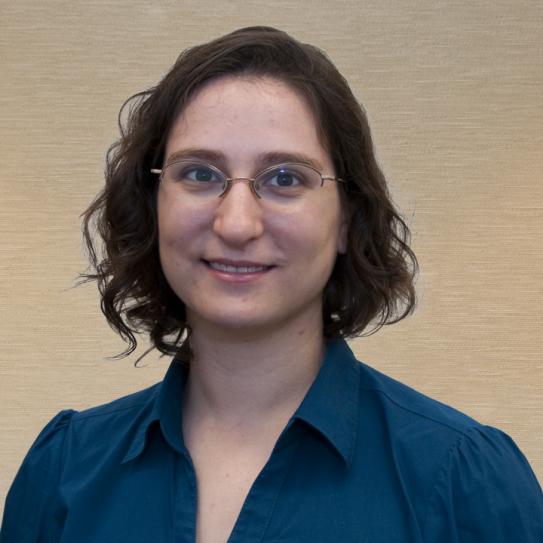
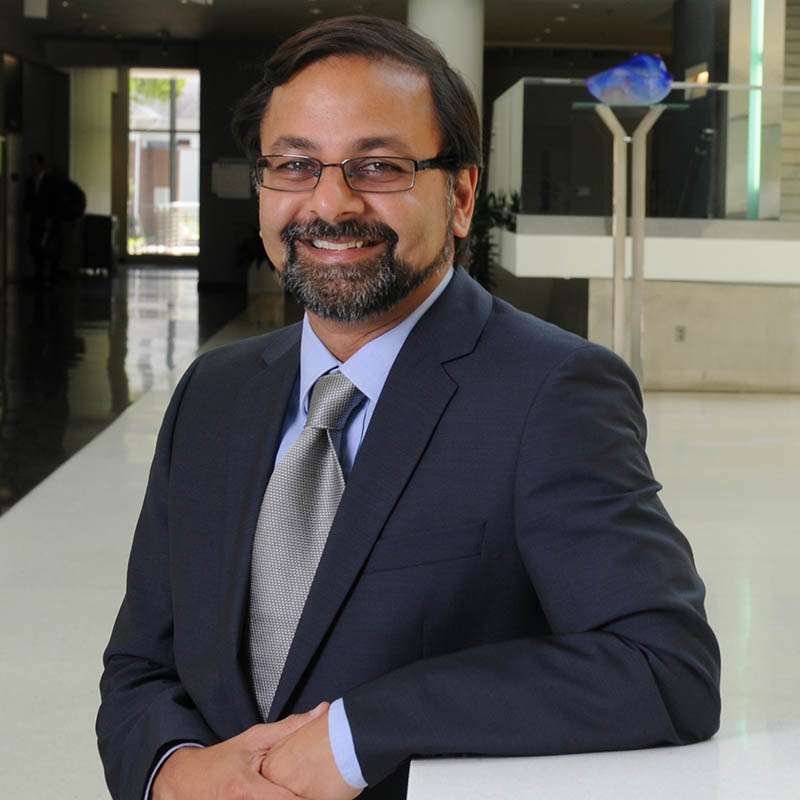
Rachel Greenstadt is Professor of Computer Science at NYU Tandon School of Engineering and core faculty at NYU Center for Cybersecurity. Her research develops trustworthy intelligent systems at the intersection of AI, privacy, and security. Education: B.S. in Computer Science, MIT (2001) M.S. in Electrical Engineering and Computer Science, MIT (2002) Ph.D. in Computer Science, Harvard University (2007) Research Focus: Designs systems that balance autonomy with integrity through: Privacy-enhancing technologies and anonymity systems Detection of AI-generated content and deepfakes Analysis of online harassment and disinformation ecosystems Adversarial attacks on machine learning systems Leadership: Founded and directs the Privacy, Security, and Automation Laboratory (PSAL). Serves on editorial boards for Proceedings on Privacy Enhancing Technologies and organizes ACM AI & Security workshops. Recent studies examine limitations of large language models for propaganda detection and usability challenges in privacy tools.
Prof. Jaap Wieringa is a Full Professor of Research Methods in Business at the University of Groningen's Faculty of Economics and Business, Department of Marketing. He holds an MSc in Econometrics (1994) and a PhD in Economics (1999), both from the University of Groningen. His research focuses on Data Science, Marketing Analytics, and Privacy, with notable contributions to the understanding of privacy-utility trade-offs and digital transformation challenges. Wieringa has been recognized as one of the top teachers in his faculty, winning the 'Best Teacher of the Year' award three times and the 'Web-Prize' for best teacher in 2011. He has co-authored influential books such as *Creating Value with Data Analytics in Marketing* and served as an editor for key journals like *International Journal of Research in Marketing*. His work bridges academic rigor with practical applications, including consultancy in quality improvement programs like Six Sigma. Wieringa also holds a visiting professorship at Exeter Business School and has taught globally. His current research emphasizes privacy in data science and marketing model building. Wieringa’s extensive publications span journals like *Journal of Marketing* and *Journal of Interactive Marketing*, addressing topics such as pharmaceutical marketing, consumer privacy, and energy market dynamics. His teaching spans all academic levels, with a focus on data-driven methods. Ancillary roles include board memberships in the Data & Insights Network and EMAC, reflecting his leadership in marketing academia.
Hong Wan is an Associate Professor in the Department of Industrial and Systems Engineering (ISE) at North Carolina State University (NC State). She holds a Ph.D. in Industrial Engineering and Management Sciences from Northwestern University (2004), with earlier degrees in Chemistry (Peking University, 1998), Materials Science (Northwestern, 2001), and Industrial Engineering (Northwestern, 2002). Before joining NC State, she was an Associate Professor at Purdue University’s School of Industrial Engineering, where she directed the Purdue Blockchain Lab and co-directed the Smart Design Lab. She is also affiliated with the SEED Center for Data Farming at the Naval Postgraduate School. Her research focuses on blockchain analysis, complex simulation modeling, healthcare systems simulation, and game theory applications in quality management. She leads NC State’s ISE Blockchain Lab, studying blockchain as a complex system using simulation, optimization, and statistical methods. Notable contributions include modeling Bitcoin network dynamics, developing sequential elimination procedures for optimization, and integrating machine learning with blockchain systems. Education: B.S. in Chemistry (Peking University, 1998) M.S. in Materials Science (Northwestern University, 2001) M.S. in Industrial Engineering & Management Sciences (Northwestern University, 2002) Ph.D. in Industrial Engineering & Management Sciences (Northwestern University, 2004) Awards: 2017 Featured Paper in IIE Transactions 2014 Best Student Paper Finalist (QSR) 2013 Military Application Society Koopman Prize (INFORMS) Labs/Teams: ISE Blockchain Lab (NC State) Purdue Blockchain Lab (former) SEED Center for Data Farming (Naval Postgraduate School) Her work bridges operations research and emerging technologies, emphasizing strategic decision-making in decentralized systems and healthcare applications. Recent projects explore generative AI for simulation and blockchain’s role in supply chain transparency.
Rodrigo Cetina Presuel is the Associate Dean for Education and Academic Affairs and a Senior Lecturer in Law and Public Policy at the UPF Barcelona School of Management (UPF-BSM) , part of Universitat Pompeu Fabra . He holds a PhD in Communication Law and Policy from Complutense University of Madrid . His research focuses on the legal and regulatory challenges posed by digital technologies, particularly AI systems, algorithmic governance, and platform content moderation. He critically examines how private entities shape digital public spheres and the evolving legal frameworks impacting fundamental rights such as freedom of expression and privacy. Professional roles include serving as Head of Department for Management, Law, Society & Humanities at UPF-BSM, General Secretary of UPF-BSM, and Executive Director of the Real Colegio Complutense-Harvard. He has also held research positions at Harvard Law School . His academic leadership includes coordinating master’s programs in Public and Social Policies, Data Analytics for Business, and Responsible Management of AI. His research interests span AI regulation , digital governance , content moderation ethics , and comparative constitutional law . He analyzes how emerging technologies challenge traditional legal frameworks, advocating for balanced policies that protect rights while fostering innovation. Recent work emphasizes systemic risk management under the EU Digital Services Act (DSA), AI’s impact on bureaucratic decision-making, and transnational copyright norms in generative AI contexts. Cetina Presuel’s interdisciplinary approach bridges law, communication studies, and public policy. He has authored over 15 journal articles, 10 book chapters, and serves as a reviewer for international conferences. His publications address topics like blockchain regulation, disinformation countermeasures, and the ethical implications of algorithmic systems.
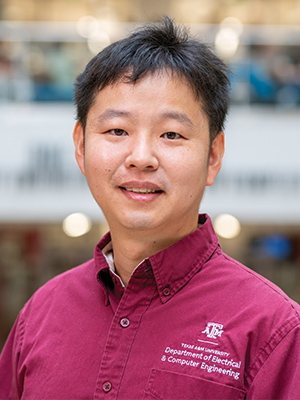
Jang Wonhyeok is a Lecturer in the Department of Electrical & Computer Engineering at Texas A&M University, located in WEB 310MD. His professional roles include teaching and research in power systems and renewable energy integration. He holds a B.S. (2008) and M.S. (2010) from Sungkyunkwan University, followed by a Ph.D. (year unspecified) in Electrical & Computer Engineering from the University of Illinois at Urbana-Champaign. His research focuses on power system modeling, renewable energy integration, grid restoration, and engineering education innovation. Notable projects include developing visualization tools for grid management using eye-tracking technology and creating synthetic PMU data for cybersecurity validation. He also explores fast-responding storage systems for grid stability and multirate methods for dynamic analysis. Recent publications (2021–2024) emphasize pedagogical advancements in electrical engineering education while maintaining core contributions to power system dynamics, protection algorithms, and resilience engineering. His work bridges theoretical research with practical applications in grid modernization and operator training systems. Jang’s research has been supported by collaborative projects with industry and academic partners, though specific grants or lab affiliations are not detailed in the provided texts. His contributions extend to curriculum development and active learning strategies in technical disciplines.
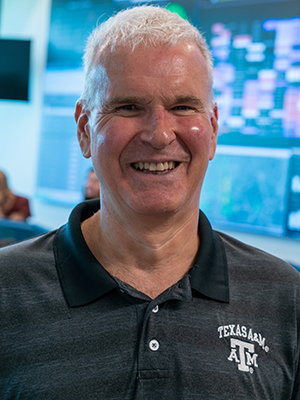
Thomas Overbye is a Professor in the Department of Electrical & Computer Engineering at Texas A&M University, holding the O'Donnell Foundation Chair III and serving as Director of the Smart Grid Center. He is a member of the National Academy of Engineering and an IEEE Fellow, recognized for contributions to power system resilience and education. Education: Ph.D., Electrical Engineering, University of Wisconsin (1991) M.S., Electrical Engineering, University of Wisconsin (1988) B.S., Electrical Engineering, University of Wisconsin (1983) Research Interests: Overbye’s work focuses on power system analysis , grid resiliency , geomagnetic disturbance impacts , electric vehicle integration , and big data applications . His team develops tools for large-scale grid modeling, cybersecurity, and visualization of system behavior. Key Trends in Publications (2021–2025): Recent work emphasizes synthetic grid creation , renewable energy drought mitigation , and multi-domain resilience strategies . He explores solar eclipse effects on geomagnetic fields and integrates weather data into grid optimization models. Awards: IEEE Fellow (2021) Outstanding Power Engineering Educator Award (IEEE) Distinguished Achievement Award, UW-Madison College of Engineering IEEE Third Millennium Medal Grants & Labs: Leads the Smart Grid Center at Texas A&M, focusing on cyber-physical systems and grid security. Collaborates with industry on GMD vulnerability assessments and grid optimization competitions. Teams: Active in interdisciplinary teams addressing grid resiliency, including the PERFORM consortium and the Grid Optimization (GO) Competition. His lab develops tools like the Geomagnetic Disturbance Integrated Tool (GeoIT) .
Alexis Kwasinski is an Associate Professor at the University of Pittsburgh, specializing in resilient energy systems, microgrids, and disaster-resilient critical infrastructure. His research focuses on enhancing the sustainability and reliability of power and communication networks during extreme events. Education: PhD, Electrical Engineering, University of Illinois at Urbana-Champaign (2007) MS, Electrical Engineering, University of Illinois at Urbana-Champaign (2005) BS, Electrical Engineering (Power and Energy Systems), Buenos Aires Institute of Technology (1993) Research Interests: Resilient power systems and microgrids Renewable energy integration and storage Disaster resilience of telecommunications infrastructure Power electronics for distributed generation Critical infrastructure interdependencies Awards: 2014 IEEE Globecom Best of Globecom Paper Award 2009 NSF CAREER Award 2011 IBM Faculty Innovation Award Featured in Christian Science Monitor and IEEE Spectrum for Sandy resilience analysis Advising & Grants: Recipient of NSF and industry grants for resilience research Active in field damage assessments post-disasters (e.g., Tohoku, Christchurch) Invited to DOE workshops on microgrids and energy efficiency Labs/Teams: Leads research collaborations on resilient energy systems and disaster forensics.
Dr. Mariya Stoilova is a Research Officer at the London School of Economics and Political Science (LSE), affiliated with the Global Kids Online initiative under the Department of Media and Communications. She holds a PhD from the University of Leeds, focusing on gender, generation, and societal transitions in Bulgaria. Her research prioritizes child rights, digital technology impacts, wellbeing, and social inequalities, emphasizing multi-method and cross-national approaches. Key projects include UNICEF-funded research on online child sexual exploitation (2019), ICO studies on children’s data privacy (2018–19), and the Global Kids Online project (2015–present). Her work explores digital literacy’s role in safeguarding children, mitigating online risks, and enhancing mental health resilience. Recent studies address platformization’s effects on family dynamics and adolescent vulnerability. Education: PhD in Social Sciences, University of Leeds (2008), ORSAS/Open Society funded. Grants: UNICEF, NSPCC, ICO, ESRC, and LSE KEI Fund. Her research highlights the need for policies that balance digital opportunities with protections, particularly for marginalized groups. She collaborates on global frameworks to improve children’s digital literacy and rights realization. Current projects investigate pathways between digital activity and mental health, emphasizing resilience and reciprocity in adolescent development. Mariya’s work spans policy advocacy, empirical studies, and participatory design of digital tools. She advocates for equitable access, ethical data practices, and culturally responsive interventions to address digital inequalities.
Radiana COZZA is an Associate Professor of General Botany (BIO/01) at the Department of Biology, Ecology and Earth Sciences (DiBEST), University of Calabria, Italy. She has been a faculty member since 2006, following a full-time researcher role from 1992 to 2006. She teaches courses such as Plant Biology, Biotechnologies for Environmental Management, and Marine Botany at both undergraduate and graduate levels. She also contributes to teacher training programs in Natural Sciences. Her research focuses on molecular and epigenetic mechanisms in metal-tolerant algae, coastal marine monitoring using multiscale approaches (gene expression, biochemical, and morphological analyses), phytoplankton community characterization with classical and molecular techniques, and bioprospecting for functional foods and bioactive molecules from algae and xerophytic plants. She employs advanced methodologies including PCR, FISH, immuno-cytochemistry, and omics approaches. Her recent publications highlight trends in algal stress responses, DNA methylation, toxic diatom detection, and sustainable food production from microalgae. These works span disciplines such as environmental botany, marine biotechnology, molecular ecology, and ecotoxicology, reflecting a strong interdisciplinary focus on plant and algal responses to environmental stressors. Zanichelli Editore Award 2012 for best scientific contribution in Environmental Botany at the 107th Congress of the Italian Botanical Society She has supervised numerous PhD and master’s students, serving as thesis supervisor for multiple PhD cycles in Plant Science and Life Sciences. She leads or participates in significant research projects such as DIRCA, PRoDIA, DEMETRA, and MUSMAP, often as local principal investigator or scientific referent. Her grants focus on coastal monitoring, food safety, and environmental protection. Radiana COZZA is a key member of the Plant Biology Laboratory (BioVeLab) and the 'Biologia Vegetale' research group at DiBEST. She also contributes to public engagement through Researchers' Night, school orientation, and scientific dissemination initiatives under the PLS (Piano Lauree Scientifiche) program.
Dr Marc Mimler is a Senior Lecturer at the City Law School, City, University of London, where he joined in 2021. He previously held academic positions at Bournemouth University, Queen Mary University of London, UCL, King's College London, and LSE. He holds a PhD and LLM in Intellectual Property from Queen Mary University of London, and is a fully qualified German lawyer with degrees from Ludwig-Maximilians-Universität München and professional training in Bavaria. His research focuses on intellectual property law, particularly its intersections with human rights, international trade, competition law, information technology, and digital innovation. He has a special interest in exceptions to IP rights, and is currently working on a monograph on this topic. His scholarly work spans diverse areas including 3D printing, AI, video games, geographical indications, and Brexit-related IP issues. His recent publications reflect a strong trend toward interdisciplinary research, especially at the intersection of law, technology, and public policy. He frequently publishes on digital trade, medical 3D printing, AI governance, and the regulation of interactive entertainment. His work emphasizes legal challenges in emerging technologies and crisis response scenarios. ECTA Award (2021) : Recognizing contributions to IP scholarship. Herchel Smith Scholarship (2008) : Prestigious award for advanced study in IP law. Marc Mimler has supervised PhD students and serves as an external examiner at Queen Mary, University of London, the University of Alicante, Kent Law School, and Coventry Law School. He is actively involved in academic leadership, having served as LLM Director at both City Law School and Bournemouth University. He is a founding and current General Editor of the Interactive Entertainment Law Review and an Editorial Advisor for the Japanese journal Patents & Licensing . He holds visiting appointments at Waseda University (Visiting Scholar, 2025) and Meiji University (Visiting Research Fellow, 2023–2024), and is a member of ATRIP. He is fluent in German, English, French, Japanese, and Spanish.
Professor Joe Nellis is a leading academic at Cranfield University, serving as Professor of Global Economy and Deputy Dean at the Cranfield School of Management. He is affiliated with the Department of Economics, Finance and Business Data Analytics and has been a central figure in establishing the school’s globally recognized economics teaching, ranked #1 in the world by the Financial Times in 2017. He holds visiting professorships in Germany, Belgium, Austria, the Netherlands, Hungary, the USA, and Ghana. BSc(Econ), University of Ulster MA, University of Warwick PhD, Cranfield University His research spans global macroeconomics, business environmental analysis, strategic thinking, and management development. He has published over 200 academic and practitioner articles and 19 books, focusing on fiscal and monetary policy, financial institutions, housing markets, and international economic developments. His collaborative work frequently examines policy impacts in both OECD and emerging economies. The 15 most recent publications reveal a strong trend in analyzing fiscal consolidation, monetary and macroprudential policies, institutional investors, and intellectual property enforcement. These works employ advanced econometric methods and panel data analysis, often with a focus on policy evaluation in Greece, Indonesia, and the UK. The breadth of journals reflects interdisciplinary engagement across economics, finance, innovation, and sustainability. CBE (Commander of the Order of the British Empire) Adam Smith Tassie Medallion (top Economics graduate, University of Ulster) Outstanding Professor Award (Hungary, TEMPUS Programme) Distinguished Graduate Award (University of Ulster) Multiple Best Professor Awards (Purdue University, Tilburg University) FT Rank: #1 globally for MBA economics teaching (2017) Professor Nellis has advised numerous private and public sector clients, including Cisco, Vodafone, Procter & Gamble, UCL, and UK government departments. He has held senior leadership roles such as Director of the Full-Time MBA, Academic Dean, and Pro-Vice Chancellor. He co-developed the UK’s leading house price indices (Halifax and Nationwide) and remains active in research, teaching, and consultancy. He is a frequent speaker at international conferences and contributes to policy debates on economic strategy and financial regulation. He is a key member of the Economics Group at Cranfield, which he founded, and continues to lead research initiatives in macroeconomic modeling, financial systems, and global economic trends. His work often involves collaboration with scholars across Europe, Africa, and Asia, reflecting his international academic network and influence.
Deven Desai is the Sue and John Staton Professor in Business Law and Area Chair of the Law and Ethics Program at the Georgia Institute of Technology’s Scheller College of Business. He specializes in intellectual property law, privacy, and the societal impacts of new technologies. Prior to Scheller, he served as an associate professor at Thomas Jefferson School of Law and held roles at Google Inc. and Princeton’s Center for Information Technology Policy. His research bridges legal frameworks with technological innovation, addressing topics like generative AI ethics, cybersecurity, and regulatory policy. Education: B.A. from UC Berkeley (highest honors) and J.D. from Yale Law School, where he co-edited the Yale Journal of Law & the Humanities . His scholarship has appeared in top law reviews and journals, including the Georgetown Law Journal and Minnesota Law Review. He frequently engages with media on issues like facial recognition technology and data privacy, contributing to platforms like Concurring Opinions and Madisonian . Research Themes: His work examines how business interests and economic theories shape IP law and privacy regulations, with a focus on balancing innovation with societal welfare. Recent emphases include AI governance, cybersecurity risk management, and the ethical implications of generative technologies. Awards: Winner of the Jurimetrics’ Loevinger Prize (2023) for his paper on critical infrastructure cybersecurity. Recognized for contributions to debates on algorithmic fairness, data privacy, and the intersection of law with emerging technologies. Professional Contributions: Advises on policy matters related to technology law, serves as a speaker at forums like Quantitative Futurist events, and collaborates with institutions like ML@GT Lab. His insights span academic, corporate, and public sectors, emphasizing real-world applications of legal and ethical principles.
Susanne Motameny is a **Researcher** and **Head of NGS Bioinformatics** at the Cologne Center for Genomics (CCG) and a staff member at the West German Genome Center (WGGC) at the University of Cologne. She holds a PhD in Applied Mathematics from the University of Cologne. Her work focuses on developing and maintaining NGS data analysis pipelines for genomic studies, particularly in human exomes, whole genomes, and smallRNA sequencing. She collaborates closely with IT infrastructure teams to optimize high-performance computing environments for genomic data analysis. **Education**: Mathematics and Computer Science, Friedrich Schiller University, Jena, Germany PhD in Applied Mathematics, University of Cologne **Research Interests**: Computational Biology, Genomics, NGS data management, bioinformatics pipelines, and automation of genomic workflows. She also leads initiatives in data stewardship and infrastructure development for genomic data. **Publications**: Over 40 peer-reviewed articles, with recent work focusing on genomic analyses of rare variants in diseases like fetal akinesia, epilepsy, and host genetics in COVID-19. Her contributions span multi-institutional collaborations in genetic epidemiology and precision medicine. **Grants & Activities**: Co-Spokesperson of the German Human Genome-Phenome Archive (GHGA), leader of Data Hubs Operations and Data Stewardship Workstream (since 2020), and leader of Special Interest Group 5 “Data Management & Protection” (since 2018). Active in national and international genomic research networks. **Labs & Teams**: CCG Bioinformatics Team, WGGC, and collaborations with IT Center University of Cologne for genomic infrastructure projects.
Professor Nirajan Shiwakoti is a leading academic in transport engineering at RMIT University, holding a Professorship since 2025. He specializes in transport safety, automated vehicles, and sustainability, with global recognition including top 2% citation status in logistics and transportation. His research focuses on resilient transport systems, decarbonization, and cybersecurity in emerging technologies. Shiwakoti leads the Intelligent Transport and Mobility Systems group, addressing societal impacts of technologies like EVs and CAVs. He has over 20 awards, including honors from Fresh Science Australia and the International Association of Traffic and Safety Sciences. Teaching roles include program director for Sustainable Systems Engineering and course coordination in Intelligent Transport Systems. His work integrates interdisciplinary methods like agent-based modeling and life cycle assessment to solve complex transport challenges. Research Focus: Pedestrian safety, CAV cybersecurity, decarbonization, supply chain resilience Awards: CASS Foundation, ARRB, ISTTT (Berkeley), IATSS Teaching: Sustainable engineering, transport systems courses Recent Projects: Automated vehicle simulation, cold supply chain optimization, rail dwell time modeling Shiwakoti’s 196+ publications span safety frameworks, automated vehicle deployment, and sustainability transitions. He advises international bodies like the Transportation Research Board and FEHRL. His lab develops innovative solutions for smart cities and global transport networks, emphasizing interdisciplinary collaboration and real-world impact.
Prof. Jens Großklags is a Full Professor (W3) of Cyber Trust at the Technical University of Munich (TUM), leading the Chair of Cyber Trust within the Department of Computer Science. His role includes academic leadership in the TUM School of Computation, Information and Technology since 2017. Previously, he held positions at Penn State University, Princeton University, and UC Berkeley. His interdisciplinary research focuses on security economics, privacy behaviors, and policy implications of emerging technologies like AI and social credit systems. Education: Ph.D. in Information (UC Berkeley, advised by John Chuang), dual Master's in Computer Science and Information Management. His work bridges technical, behavioral, and policy domains, addressing issues such as data privacy on social networks, genetic information protection, and algorithmic governance in China. Publicly recognized with four Best Paper Awards and Google Faculty Research Awards. Research Interests: Cybersecurity policy, behavioral privacy economics, algorithmic regulation, and sociotechnical systems. Active in policy advisory roles with the FTC, NSF, and European agencies. Editor roles at IEEE Security & Privacy and other journals. Supervised numerous PhD/Master’s students including Benjamin Johnson and Julia Sasse. Awards: ACM and IEEE Senior Membership, Distinguished Paper (USENIX 2023), and National Merit Foundation Scholar (1999–2002). Directs the Cyber Trust Lab, collaborating on global projects like the EU AI Act and cross-national AI ethics studies.