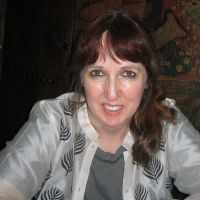
Professor Lizelle Bisschoff is a Professor of Film Studies at the University of Glasgow’s School of Culture & Creative Arts. She specializes in African cinema with particular focus on gender representation, digital technologies, and film festival curation. Her research bridges academic scholarship and practical initiatives, such as co-founding the Africa in Motion Film Festival (AiM). She holds a PhD from the University of Stirling and has held prestigious fellowships including the Leverhulme Trust (2010-2012) and Lord Kelvin Adam Smith (2012-2015). Education: PhD in African Cinema (University of Stirling, 2009) MSc in Cultural Studies (University of Edinburgh, 2005) Research Interests: Gender dynamics in African filmmaking Emerging digital film industries across sub-Saharan Africa Postcolonial cinema and modernist aesthetics Her work emphasizes decolonizing film studies through projects like AiM Festival and edited volumes such as Women in African Cinema . Recent research explores African science fiction and feminist archives. She has secured £115k in grants for film restoration and educational outreach programs. Awards: Leverhulme Trust Postdoctoral Fellowship AHRC Follow-on Funding for Impact (£90k) British Federation of Women Graduates Scholarship Teaching: Convenes MSc Film Curation program Teaches Introduction to African Cinemas and Race on Screen Key Projects: Lead curator for Africa’s Lost Classics restoration initiative Organized international symposia on African art and activism
Panpan Yang is a Lecturer in Arts and Visual Cultures of Modern China at the School of Arts, SOAS University of London. She joined SOAS in 2021 after completing her joint PhD at the University of Chicago under the direction of Wu Hung, Tom Gunning, W. J. T. Mitchell, Judith Zeitlin, and Dana Polan. Her interdisciplinary work bridges art history, screen studies, East Asian studies, and digital humanities, with a focus on innovative methodologies in art historical writing. Dr. Yang earned a dual BA from Peking University, double majoring in art and philosophy, followed by an MA from Tisch School of the Arts at NYU, and a PhD from the University of Chicago. During her undergraduate studies, she served as president of the Society of Dream of the Red Chamber Studies, which informed her secondary academic interest in Redology and the visual material world of the novel Hong lou meng. Panpan Yang's research explores how minor discourses can deterritorialize the terrains of both art history and screen studies. Her work demonstrates a multimethodological approach attentive to archival research, material practices, close visual analysis, computer-aided vision, and cross-cultural theorization. She is particularly interested in Chinese animation history, calligraphic imagination in contemporary art, and the intersections between traditional Chinese art forms and new media. Her publications reveal a consistent focus on Chinese visual culture across multiple media forms, with particular attention to animation, film, and calligraphy. Yang's work demonstrates how traditional Chinese art forms engage with contemporary digital media, creating new hybrid forms that challenge disciplinary boundaries. Her research shows a trajectory from historical analysis of Chinese animation to contemporary explorations of calligraphy in digital contexts, revealing the ongoing relevance of traditional Chinese aesthetics in modern media. Dr. Yang has received several prestigious awards for her scholarly and creative work: China's National Young Screenwriter Award Domitor Essay Award Dean's Distinguished Dissertation Award Nomination Honourable Mention from the Association for Chinese Animation Studies As a Principal Investigator, Dr. Yang leads the AHRC-funded research project "Stroke by Stroke: Calligraphic imagination in contemporary Chinese art and emergent media" (2023-25) with Shane McCausland. She was also a collaborating partner on the NEH-funded "Media Ecology Project." Her research has received additional support from the Getty Foundation and the Sino-British Fellowship Trust. At SOAS, she works closely with faculty and graduate students interested in Chinese arts and cultures, art theory, cinematic arts, and digital art history. Dr. Yang is currently developing innovative research at the intersection of traditional Chinese calligraphy and contemporary digital media through her AHRC-funded project. This work explores how calligraphic imagination manifests in contemporary art and emergent media contexts, creating new pathways for understanding Chinese cultural heritage in the digital age.
Dr. Luke Robinson is an Associate Professor in Film Studies at the University of Sussex's School of Media, Arts and Humanities, where he has been since 2014. Previously, he taught at the University of Nottingham's Department of Culture, Film and Media. He holds a BA from the University of Cambridge, an MA and PhD from SOAS (University of London), and a certificate from the Hopkins-Nanjing Center. His research focuses on Chinese independent cinema, film festivals as sites of cultural translation, and the global circulation of documentary media. Robinson is co-editor of influential volumes like Chinese Independent Cinema and Chinese Film Festivals , and his work bridges cultural studies, visual anthropology, and media policy analysis. He maintains the Chinese Independent Film Archive and has published widely on topics ranging from Taiwanese subimperialism to the cultural politics of Sundance and CNEX. His teaching spans global cinema studies, film festival curating, and East Asian media aesthetics. Education: BA, History, University of Cambridge MA, Chinese Studies, School of Oriental and African Studies (SOAS), London PhD, Film and Media Studies, SOAS Certificate in Chinese Studies, The Hopkins-Nanjing Center Research Themes: Chinese independent film ecosystems, transnational film festival circuits, documentary as public culture, and the intersection of politics with audiovisual media. Recent work examines humanitarian intervention narratives in documentaries and the evolving role of non-state cultural agents in soft power dynamics.
Dr. Marle Hammond is a Professor at SOAS University of London in the School of Languages, Cultures and Linguistics, specializing in Arabic Literature and Middle Eastern and North African cinema. She earned her PhD from Columbia University in 2003 and has held prestigious fellowships at St. John's College and as a British Academy Postdoctoral Fellow at Oxford University before joining SOAS in 2010. Her educational background includes: PhD in Arabic Literature from Columbia University (2003) Postdoctoral Fellowship at St. John's College Research Centre (2002-2006) British Academy Postdoctoral Fellowship at Oxford University (2007-2010) Dr. Hammond's research focuses on Arabic women's writing across historical periods, examining grammatical gender and sexed subjectivities in Arabic and Persian literary traditions, the intersection of madness and poetry, and Arabic-language cinema with particular attention to early Egyptian melodramas. Her scholarly approach combines literary analysis with gender studies and cultural history perspectives. Her recent publications demonstrate a strong focus on recovering and analyzing historical women writers and poets from the Islamic world. Through works like "Rayhana 'The Mad': Her Persona and Poetry" (2024) and biographical entries on figures such as Sara al-Halabiyya, Hafsa bint al-Hajj, and Taqiyya bint Ghayth al-Suriyya, she has contributed significantly to expanding the canon of women's literary contributions in pre-modern Islamic societies. Her book "Arab World Cinemas: A Reader and Guide" (2024) represents a major contribution to film studies of the region. Dr. Hammond has received notable recognition for her work: Winner of the First Annual Journal of Middle East Women's Studies Book Award (2011) for "Beyond Elegy: Classical Arabic Women's Poetry in Context" British Academy Midcareer Fellowship (2017-2018) British Academy Postdoctoral Fellowship (2007-2010) External Examiner for Oxford University (2018-2020) and Exeter University (2018-2021) Associate Editor for the Palgrave Encyclopedia of Women's Writing in the Global Middle Ages (2022) Dr. Hammond has supervised doctoral students including Kubin, K. (2023) on "Affects of Shame and the Postcolonial: Identity, Recognition and Belonging" and Boulos, T. (2023) on "Breaking the Silence: Pain, Torture, Resistance and Bearing Witness in the writings of Palestinian Prisoners of War and Administrative Detainees." She has served on editorial boards and as Book Review Editor for Middle Eastern Literatures (2014-2015). Her scholarly influence extends through invited talks at institutions including Oxford, UCL, and King's College London, as well as appearances on BBC Radio 4's "In Our Time."
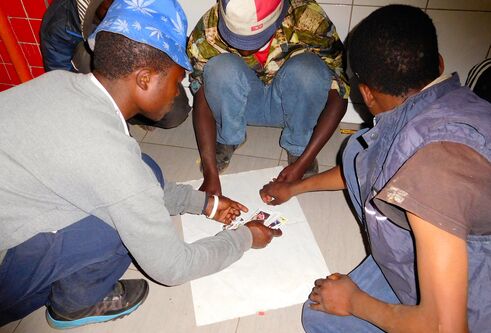
Lorraine van Blerk is a Professor of Human Geography at the University of Dundee's School of Humanities, Social Sciences and Law. She serves as Chair of Human Geography and leads the Research Centre for Transformative Change: Educational & Life Transitions (TCELT) in Education and Society. Her work focuses on street children/youth, refugees, and global inequalities. Academy of Social Sciences Fellow (2021) Stephen Fry Awards - Public Engagement Project of the Year (2017) Market Research Society President’s Medal (2015) Research interests include: Street youth resilience mapping Intergenerational partnerships Transitions to adulthood in crises Policy development for marginalized groups Coastal socio-ecological systems Cultural geographies of homelessness Recent publications address global street youth resilience frameworks (2REST project) and cinema's role for Harare street youth. Key collaborations include universities in Pretoria, Cape Town, Makerere, and Ryerson University. Scientific contributions recognized through: 6 major research prizes 16 funded projects 149+ research outputs International visiting appointments (Toronto Metropolitan University, National University of Singapore)
Dr. Rebecca Wynne-Walsh is a Lecturer in Film, English & Creative Arts, actively accepting PhD students since 2022. Her research focuses on horror cinema, regional identity, auteur theory, and trauma studies, with notable contributions to Basque, Gothic, and African film analyses. She is affiliated with the Television Studies Research Group, ESAL (Spanish & Latin American Studies), and the Emergent Media & Entertainment Research Group. Her work explores intersections of cultural memory, transgression, and decolonial frameworks, as seen in studies of Steve McQueen’s Hunger and post-Franco Gothic fiction. Recent presentations include an oral talk on interactive horror narratives at a 2024 conference. Despite her prolific output, she has not been explicitly linked to awards or grants in the provided texts.
Dr. David Miranda-Barreiro is a Senior Lecturer in Hispanic Studies at Bangor University’s School of Language, Culture and the Arts. He serves as Undergraduate Course Director and Head of Hispanic Studies, teaching modules in Spanish language, literature, and cinema. His academic journey began with a BA in Hispanic Studies from the University of A Coruña, followed by an MA and PhD at Bangor University, where his thesis Spanish New York Narratives 1898–1936 won the 2012 AHGBI Publication Prize. Research Interests: Mobility (travel writing, migration, exile), Galician-US cultural connections, comics/graphic novels, national/transnational identities. Key Publications: Monograph on Spanish New York narratives (2014), co-editor of Galicia 21 journal, and articles on Galician migration, comics, and exile literature. Awards: AHGBI-Spanish Embassy Postgraduate Prize (2012), Santander Mobility Grant (2009-2010). Co-organizer of conferences on diaspora, comics, and Iberian mobility. Supervision: First supervisor for PhD projects on migrant literature, Galician diaspora, and transnational identities; second supervisor for completed theses on feminist TV series, translation, and women-authored narratives.
Terence McSweeney is a Senior Lecturer in Film & TV at Solent University, affiliated with the Film and Media department and the Contemporary Screen Studies Research Group. His academic work focuses on American cinema, science fiction, cultural artifacts, and post-9/11 media representations. He has contributed to critical analyses of major franchises like James Bond and the Marvel Cinematic Universe, exploring themes of continuity, identity, and societal impact. McSweeney has led or co-led projects such as the 2024-2025 'Mapping the Marvel Cinematic Universe,' examining narrative and cultural dynamics in the franchise. His research spans global film studies, including works on directors like Alfonso Cuarón and Frank Darabont, and he has engaged in activities like invited talks on African identity and consultancy for cultural narratives. McSweeney’s publications bridge film theory, cultural criticism, and genre analysis, with recent works addressing topics like superhero films, post-Endgame cinematic futures, and the intersection of cinema with social movements like #MeToo. Education details are not explicitly provided in the text, but his academic trajectory is evident through his prolific research output. His research interests, as highlighted by institutional fingerprints, include American cinema, science fiction, cultural artifacts, and the War on Terror’s impact on media. McSweeney has collaborated internationally, hosting academic visitors and engaging in external research visits, such as his 2018-2019 stint at UCL’s Institute of Advanced Studies. His advising and grants involvement includes co-leading a Solent University internal project on the Marvel Cinematic Universe. He has also contributed to edited volumes and peer-reviewed chapters, demonstrating leadership in curating critical perspectives on film franchises. McSweeney’s work often integrates historical context with modern socio-political themes, reflecting a commitment to analyzing cinema as a cultural battleground and artifact.
Dr. Katherine Angel is a Senior Lecturer at Queen Mary University of London's School of English and Drama and a Fellow at the Institute for Humanities and Social Sciences. She specializes in literary non-fiction, with research focusing on sexuality, feminism, gender, psychoanalysis, and psychiatry. Her notable works include Unmastered (2012), Daddy Issues (2019), and Tomorrow Sex Will Be Good Again (2021), which explore themes of desire, consent, and post-MeToo dynamics. Angel holds a PhD in History and Philosophy of Science from Cambridge University and has held postdoctoral fellowships at the University of Warwick and Queen Mary. Previously, she taught at Birkbeck College and Kingston University, where she led creative writing programs. She is also undergoing psychoanalytic training at the Site for Contemporary Psychoanalysis. Her research spans medical humanities, queer theory, and feminist critique. Angel’s work has been translated into 13 languages and widely praised in media outlets like The Guardian , New York Times , and Boston Review . She actively engages in public discourse through lectures, podcasts, and festivals globally, advocating for nuanced discussions on sexuality and consent. Her current project critiques the historical tensions between psychoanalysis and feminism. Angel’s academic contributions include publications in History of the Human Sciences , Studies in Gender and Sexuality , and Current Opinion in Psychiatry . She welcomes doctoral students interested in her research areas and collaborates with institutions like the Freud Museum and Wellcome Collection. Her interdisciplinary approach bridges literature, science, and culture, reflecting a commitment to advancing critical feminist and queer scholarship.
Derek Duncan serves as Professor of Italian at the University of St Andrews' School of Modern Languages, specializing in Italian Cultural Studies. Previously holding a professorship at the University of Bristol, he directs the Italian Centre for Contemporary Art and contributes significantly to transnational humanities research. His educational background includes French and Italian studies at Aberdeen University followed by doctoral work at Edinburgh. Duncan's research centers on intersections of sexuality/gender and race/ethnicity in modern Italian culture through queer and critical race theory frameworks, with notable courses including 'Black Italians,' 'Fascist Italy,' and 'Cultures of Migration.' Analysis of his recent publications reveals consistent focus on Mediterranean migration narratives, transnational identity formation, and creative humanities methodologies. His work frequently connects historical events like the Arandora Star sinking with contemporary migration crises, emphasizing transcolonial continuities. Leverhulme Major Research Fellowship (2019-2022) Multiple AHRC-funded projects including Transnationalizing Modern Languages Founding editor of Liverpool University Press series: Transnational Italian Cultures and Transnational Modern Languages Duncan actively supervises research and collaborates with artists like Davide D'Elia on projects such as Tiepido Cool. His work with the Centre for Poetic Innovation demonstrates commitment to bridging academic research and artistic practice, while his global challenges project in Namibia reflects international engagement. Current research examines Mediterranean migration through the lens of the Arandora Star disaster and its contemporary resonances.
Professor Hilary Owen is a Senior Research Fellow in the Sub-Faculty of Portuguese at the University of Oxford and Professor Emerita in Portuguese and Luso-African Studies at the University of Manchester. She specialises in feminist theory, postcolonial studies, Lusophone African literature, and cinema. Her research focuses on women writers, gender dynamics, and postcolonial narratives in Portuguese-speaking contexts. She has led or collaborated on major projects, including the AHRC-funded 'Invisibles e insumisas' (2021–2026), exploring leading women in Portuguese and Spanish cinema. Her work bridges literary and cinematic analysis, with a particular emphasis on Mozambican literature and feminist perspectives. Education and Career: Taught at Queen’s University Belfast (1995–2016) and Leeds before joining Manchester. Retired in 2016 but remains active in research and guest lecturing at institutions like the University of Coimbra, Utrecht, and UC Irvine. Her publications span monographs, edited volumes, and articles on topics like women’s writing, colonialism, and cinema. Research Interests: Postcolonialism, feminist film theory, Lusophone African cinema, and the intersection of gender and empire. Notable works include Women's Cinema in Contemporary Portugal (2020) and co-edited volumes on transnational Portuguese studies and postcolonial nations. Grants/Awards: Fellow of the British Academy (2022), AHRC funding for cinema studies, and FCT-funded projects on intersexuality and postcolonial narratives. Her articles and monographs have been published in top journals like Portuguese Studies and Journal of Romance Studies . Future Work: Contributing to an upcoming book on Ana Luísa Amaral (2026). Active in international collaborations and guest lectures, reflecting her commitment to transnational scholarship.
Dr. Benjamin Colbert is Reader in English Literature and Deputy Director of the Centre for Transnational and Transcultural Research at the University of Wolverhampton. He is Course Leader for the MA in English and Co-Editor of the European Romantic Review , the journal of the North American Society for the Study of Romanticism (NASSR). Research Interests: His work centers on Romantic Period literature (1780-1840), with a focus on travel writing, women’s writing, the Shelley circle, print culture, and bibliography. He pioneered the British Women’s Travel Writing, 1780-1840 database and co-edits the Continental Tourism, Travel Writing, and the Consumption of Culture, 1815-1900 series with Lucy Morrison. Publications: His scholarship spans authored books, scholarly editions, and chapters analyzing the intersection of Romanticism, tourism, and transnational cultural exchange. Key projects include the Routledge Research Companion to Travel Writing and studies on hybrid identities in Southey’s and Blanco White’s travel letters. Awards: Senior Fellowship, Higher Education Academy (2016) Supervision: Dr. Colbert supervises PhD topics on mobility in Andrea Arnold’s films, paratextuality in The History of Mary Prince , and collective trauma in African women’s writing. He welcomes proposals in Romantic poetry/prose, travel writing, and cross-cultural literary relations.
Professor Oriana Baddeley is Dean of Research at the University of the Arts London (UAL) and Professor of Transnational Art History and Theory. She is a co-founder of the Research Centre for Transnational Art, Identity and Nation (TrAIN) at UAL, where she conducts research at the intersection of globalization, identity studies, and contemporary art practice. Her work spans academic leadership, research supervision, and significant contributions to the understanding of transnational art histories. Professor Baddeley studied History and Theory of Art at the University of Essex. Her doctoral research focused on the historiography of definitions of 'art' in relation to Ancient Mexico, which informed her work on the 1992 Hayward exhibition, The Art of Ancient Mexico. Professor Baddeley's research focuses on transnational art history, with particular emphasis on Latin America and Mexico. Her work explores how geographic contexts impact definitions of creative practice and how these definitions are interpreted across cultural boundaries. She has written extensively on contemporary Latin American art, including the influential works 'Drawing the Line: Art and Cultural Identity in Contemporary Latin America' (1989, co-authored with Valerie Fraser) and 'Beyond the Fantastic: Art Criticism from Contemporary Latin America' (1996, co-edited with Gerardo Mosquera). Her research also examines the histories of exhibiting art from these regions and how traditions of display have been responded to within global contemporary art structures. Professor Baddeley's recent publications demonstrate a consistent focus on Mexican and Latin American visual culture, particularly examining artists like Frida Kahlo, Teresa Margolles, and Gabriel Orozco. Her work frequently addresses themes of identity, victimhood, cultural stereotypes, and the politics of representation. She has also conducted significant archival research, notably on Swiss photographer Fred Boissonnas, exploring themes of identity and myth in travel photography. Professor Baddeley holds several prestigious positions and memberships: Dean of Research at University of the Arts London Member of REF2021 Sub-Panel 32 Chair of the Practice Research Advisory Group-UK steering committee Trustee of the Saint Catherine Foundation Member of the Ashley Family Foundation Member of the International Advisory Committee of the University of Essex Collection of Latin American Art Member of the editorial board of Art History Professor Baddeley has supervised numerous PhD and research-based degree students across diverse topics including Latin American art, indigenous representation, fashion in cinema, and transnational artistic practices. She has secured research grants including the 'Boissonnas in Egypt' project funded by EFG Bank (2017), a Newton Fund Official Development Assistance allocation from HEFCE (2017), and the 'Boissonnas Archive' grant from St Catherine's Foundation (2010). As a co-founder of the TrAIN research center, Professor Baddeley leads a vibrant research community focused on transnational art, identity, and nation. The center hosts regular open lectures, collaborates with international institutions like Tate Britain, and conducts significant research projects examining the interconnectedness of cultures across national boundaries.
Richmond, The American International University in LondonUnited Kingdom
Professor Dominic Alessio is a historian specializing in postcolonial, political, and cultural history of imperialism, with additional interests in the history of the extreme right. He holds a PhD from Victoria University of Wellington, New Zealand, and has taught at institutions including McMaster University, Victoria University of Wellington, and Trinity St David’ University. Currently based in the Department of Social Sciences & Humanities, he serves as Vice President International Programmes. His research explores empire formation, non-state actors in imperialism, and the intersection of the occult with far-right movements. Key recent projects include Folk, Faith and the Far Right (under contract with Manchester University Press) and studies on corporate imperialism in Africa and territorial acquisitions in the South China Sea. Alessio is a Fellow of the Royal Historical Society, a Senior Fellow of the Higher Education Academy, and a Fellow of the Royal Geographic Society. Research interests span theories of empire, the occult and far-right ideologies, and science fiction/fantasy/horror media. His work bridges historical analysis with contemporary geopolitical issues, emphasizing decolonial frameworks and the persistence of imperial legacies. Notable publications include analyses of U.S. imperialism, Pacific geopolitics, and the role of religion in non-state empires. He has delivered over 100 conference papers globally, including keynotes on West Papua and African corporate imperialism. Engagement includes roles as Senior Fellow at the Centre for the Analysis of the Radical Right and Research Associate at Teesside University’s Centre for Fascist/Anti-Fascist Studies. His interdisciplinary approach integrates historical scholarship with cultural critique, addressing modern manifestations of historical imperial and far-right dynamics.
Dr. Catalin Brylla is a Principal Lecturer in Film and Television at Bournemouth University and Deputy Director of the Centre for the Study of Conflict, Emotion and Social Justice. He holds a PhD in Media and Communication from Goldsmiths, University of London, and has served as an external examiner for media programs at the University of Newcastle and the University of Glasgow. His research focuses on media audiences, representation, stigma reduction, and the social impact of media, with a particular emphasis on marginalized groups such as disabled individuals, African communities, and women in minority contexts. Brylla’s work is practice-led and impact-driven, aiming to challenge stereotypes through documentaries and interdisciplinary collaborations. He has produced several films, including Zanzibar Soccer Dreams (2016), June’s Patchwork (2018), and The Terry Fragments (2021), which explore themes of disability, gender, and cultural identity. His academic contributions include co-editing volumes such as Cognitive Theory and Documentary Film and Documentary and Disability , and publishing extensively on cognitive film theory and social justice. Brylla’s accolades include being a Fellow of the Society for Cognitive Studies of the Moving Image and the Higher Education Academy. He has secured grants from the AHRC, British Academy, and others for projects addressing disability advocacy and media engagement in marginalized communities. His editorial roles include serving on the boards of Screen Bodies and Disability & Society Journal , and he actively promotes diversity and inclusion in academic and media sectors through his leadership roles. As a supervisor, he mentors PhD students researching topics like media mapping for dementia patients and gentrification activism in Hackney. His teaching spans documentary practice, media theory, and ethics, reflecting his commitment to bridging academic research, creative practice, and societal impact.