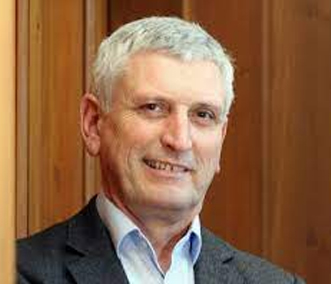
Chandra Theegala is a Professor in Biological and Agricultural Engineering at LSU's College of Engineering. His research develops sustainable technologies for water/energy systems, including algal biofuels, hydrothermal liquefaction, and precision irrigation management. Key innovations include UAV-based LiDAR for agricultural surveying, thermodynamic modeling of biomass gasification, and water treatment systems for aquaculture. His work bridges fundamental engineering principles with practical applications in agriculture and renewable energy.
Christian Ludwig is an Adjunct Professor at the École Polytechnique Fédérale de Lausanne (EPFL), affiliated with the School of Engineering (ENAC) and the Department of Environmental Engineering. He also leads the joint EPFL-PSI Professorship in Solid Waste Treatment, heading the Ludwig Group (GR-LUD) at EPFL and the Chemical Processes and Materials (CPM) group at the Paul Scherrer Institute (PSI). His research focuses on sustainable resource management, including waste treatment technologies, nanoparticle synthesis, and recycling of critical materials like rare earth elements. Ludwig holds a PhD in Chemistry from the University of Berne and has extensive experience in academia and industry, with roles spanning from postdoctoral research to senior leadership at PSI since 2000. Education: PhD in Chemistry, University of Berne (1993) Master's in Chemistry, University of Berne (1990) Postdoctoral Fellowships at UC Davis and EAWAG Research Interests: Solid waste treatment, bioenergy technology, nanoparticle characterization, trace element fate analysis, and resource recovery from waste. His work emphasizes developing innovative materials and processes for cleaner energy and sustainable resource cycles. Publications: Over 150 peer-reviewed articles, with recent contributions in Environmental Science & Technology , ACS Nano , and Proceedings of the National Academy of Sciences . Research trends include supercritical water gasification, aerosol analysis, and rare earth metal recycling. Grants & Awards: Multiple projects funded by Swiss National Science Foundation and EU Horizon programs, focusing on circular economy and environmental technologies. Recognized as a 'World's Best Scientist' in 2025. Labs & Teams: Leads the Ludwig Group (GR-LUD) at EPFL, collaborating with PSI's CPM group to advance chemical processes and material sciences. Active in interdisciplinary projects merging environmental engineering with nanotechnology.
Peter Lamp is a Rudolf Diesel Industry Fellow at the Technical University of Munich (TUM) and Head of the Battery Technology department at BMW Group. He holds a MSc in Physics from TUM (1989) and a PhD in Physics from the Max Planck Institute for Physics, Munich (1993). His research focuses on electrochemical energy storage, Li-ion/SOFC technologies, and charge transport in materials. He leads advanced battery R&D at BMW, collaborating with TUM’s Electrochemical Systems department under Prof. Hubert Gasteiger. His work bridges academic innovation and industrial application in sustainable energy systems. Education: MSc Physics, Technical University of Munich (1989) PhD in Physics, Max Planck Institute for Physics, Munich (1993) Research Highlights: His work spans battery materials development, fuel cell systems, and energy conversion. Key areas include optimizing lithium-ion conductors, understanding electron transport in gases, and advancing sorption cooling technologies. His recent TUM-IAS fellowship publications address solid-state electrolytes and energy material dynamics. Grants & Collaborations: Leverages industry-academia partnerships through BMW and TUM’s Institute for Advanced Study. Focuses on scalable battery solutions for electric mobility and sustainable energy systems. Labs & Teams: Leads BMW’s Battery Technology department and collaborates with TUM’s Electrochemical Interfaces in Batteries focus group. Engages in interdisciplinary projects on electrochemical interfaces and materials characterization.
Münür Sacit HERDEM is an Associate Professor at the Department of Mechanical Engineering, Faculty of Engineering, Adiyaman University. He holds a PhD from the University of Waterloo (Canada) and has conducted postdoctoral research there. His work focuses on energy conversion systems, renewable energy technologies, and AI-driven energy management. He has led projects on smart energy infrastructure and waste-to-energy systems. Education: Bachelor's in Mechanical Engineering, Gaziantep University (2010) Master's and PhD in Mechanical and Mechatronics Engineering, University of Waterloo (2013–2019) Research Interests: Big data applications in energy systems, artificial intelligence for renewable energy optimization, biomass gasification, hydrogen production, and sustainable energy infrastructure design. Awards: University of Waterloo Postgraduate Scholarship (14 terms) Poster Award for Low Carbon Transportation Research (2019) TUBITAK and Turkish Ministry of Education scholarships (2010–2014) Grants and Projects: Component Level Analysis and System Optimization for Net Positive Energy Infrastructure (2020–2023), Waste to Energy (2017–2019). Labs/Teams: Involved in the Waterloo Institute for Sustainable Energy and co-founded ASMAOLUK ENERGY SOFTWARE INDUSTRIAL CO. in Gaziantep Technopark (2022).
Thomas Alan Adams II is a Professor at the Norwegian University of Science and Technology (NTNU) within the Department of Energy and Process Engineering. His research focuses on sustainable energy systems, chemical process design, and eco-techno-economic assessments. He leads the Adams Research Group, which addresses global challenges in energy and chemical systems, including carbon capture, hydrogen technologies, nuclear energy, and waste-to-energy conversion. His work integrates advanced process modeling, simulation, and optimization, often collaborating with industry and government to develop practical solutions. Key areas include flexible polygeneration systems, exergy analysis, and risk assessments of emerging green technologies. He is a leader in developing ISO standards for eco-techno-economic analysis (eTEA). Notable achievements include the Editor’s Choice Award in the Canadian Journal of Chemical Engineering (2023) for proposing a Trans-Atlantic Energy Bridge to enhance European energy security. His recent publications span topics like chemical recycling of plastics, hydrogen production on LNG carriers, and risk quantification for CO2-avoiding technologies. He advises multiple PhD students and contributes to open-access resources like Exergy Tables and Aspen Plus tutorials.
Jan L. Rouvroye is an active academic researcher specializing in risk management, safety systems, and operational resilience. Their work spans fields such as power generation, natural resource utilization, and organizational decision-making frameworks. Key collaborations include contributions to safety integrity standards and resilience engineering methodologies. Research Focus: Risk management, safety instrumented systems, operational resilience. Methodologies: Bayesian networks, proactive risk assessment, partial valve stroke testing. Research output trends highlight a focus on improving industrial safety and system availability through interdisciplinary approaches. While no explicit university affiliation is provided in the scraped text, their work contributes to global Sustainable Development Goals (SDGs) related to natural resources and energy efficiency.
Feridun Hamdullahpur is a Professor of Mechanical Engineering and President Emeritus of the University of Waterloo, where he served from 2010 to 2021. He holds a PhD in Chemical Engineering from the Technical University of Nova Scotia (1985), and earlier degrees from Istanbul Technical University (BSc 1976, MSc 1979). His research focuses on energy conversion systems, fluidized beds, and fluid dynamics, with over 500 publications and 50+ supervised graduate students. He has received prestigious awards, including the Canadian Academy of Engineering Fellowship (2014), Royal Society of Canada’s Specially Elected Fellowship (2018), and the Queen Elizabeth II Diamond Jubilee Medal (2013). His recent teaching includes ME 659: Energy and Environment (2023). His publications emphasize energy systems, fuel cells, and hydrogen production, reflecting his interdisciplinary approach to sustainable engineering. While not currently accepting graduate students, he retains Sole-Supervisory Privilege Status (SSPS).
Sami Khan is an Assistant Professor in the Department of Sustainable Energy Engineering at Simon Fraser University's Faculty of Applied Sciences. His research focuses on surface and interfacial engineering, electrochemical energy systems, and technoeconomic assessments for energy technologies. He holds a Ph.D. in Mechanical Engineering from MIT (2020), with additional graduate degrees in Technology and Policy and Mechanical Engineering from MIT (2016), and a B.A.Sc. in Chemical Engineering from the University of Toronto (2012). His research interests include corrosion-resistant coatings, CO2 electrocatalytic conversion, and scalable manufacturing techniques. Notable work includes developing lubricant-impregnated surfaces for corrosion protection and 3D printing of fluoropolymer powders on metal substrates. He teaches courses in statics, sustainable energy engineering, and directed studies. Recent publications explore microtextured surfaces for soot oxidation, scandium recovery via silicon substrates, and compact xerographic additive manufacturing systems. His work bridges fundamental material science with industrial applications, emphasizing sustainability and economic feasibility. Dr. Khan is affiliated with the Sustainable Energy Engineering Research Labs and has contributed to patent innovations in hydrophobic materials. His interdisciplinary approach integrates chemical thermodynamics, catalysis, and policy analysis to address energy and environmental challenges.
Feyza Kazanç is an Associate Professor at the Middle East Technical University (Ankara, Turkey), located at Dumlupınar Boulevard No:1, 06800 Çankaya/Ankara. She holds a B.Sc. from METU (2009) and a Ph.D. from Northeastern University (2013). Her research focuses on advanced energy technologies, including clean combustion systems, biomass utilization, biochar production, and waste-to-value processes. Key areas include the synthesis of nanomaterials from waste, pyrolysis, gasification, and emission reduction strategies for sustainable energy solutions. Her work bridges fundamental science with practical applications in environmental and materials engineering. No specific grants, advising roles, or recent publications are documented in the provided texts. She maintains an academic profile at cctl.metu.edu.tr .
Professor Shanyong Wang is a leading academic in geotechnical engineering at the University of Newcastle's School of Engineering, where he serves as a Professor in the Priority Research Centre for Geotechnical Science and Engineering. His research focuses on developing innovative techniques to improve weak ground mechanics through fundamental studies of fracture and compaction grouting, with applications in civil infrastructure design including underground structures, roads, retaining walls, and foundations. Professor Wang's research interests span rock mechanics, slope stability, experimental and numerical analysis of grouting in soils and rocks, soil nailing systems, and coupled multi-physics modeling of fractured formations. His work combines sophisticated testing techniques with advanced computational methods to transform grouting from an art into a predictable science. His recent publications demonstrate a strong focus on advanced material formulations for geotechnical applications, multiscale modeling of fracture processes, and innovative solutions for tunnel engineering and mining challenges. The research consistently bridges fundamental mechanics with practical engineering applications, particularly in subsurface construction and ground improvement technologies. Professor Wang has received numerous scientific awards including the prestigious 2018 John Booker Medal in Engineering Science. He currently supervises five PhD students and one postdoctoral researcher, and has secured substantial research funding exceeding $3 million, including ARC Future Fellowship and Early Career Researcher awards. He leads research in the Geotechnical Science and Engineering group, developing laboratory facilities for grouting technologies and novel computational methods. His team's experimental and numerical work has applications in both civil and mining engineering sectors.
Dr. Xiang-Zhao Kong is a Lecturer at the Institute of Geophysics, ETH Zurich, within the Department of Earth and Planetary Sciences (D-EAPS). He holds a PhD in Environmental Engineering from ETH Zurich (2010), where he was awarded the ETH Medal for his dissertation. His career includes postdoctoral research at the University of Minnesota and a Research Fellowship at the University of Queensland before returning to ETH Zurich in 2015. His research focuses on geothermal energy, flow and transport processes in porous media, reactive transport modeling, and subsurface engineering. Key areas include fractured formations, geothermal reservoir optimization, and CO₂ sequestration. He employs advanced computational methods like lattice-Boltzmann solvers and machine learning for subsurface flow modeling and reservoir characterization. Dr. Kong’s work bridges experimental and theoretical approaches, with notable contributions to mineral precipitation dynamics, fluid-rock interactions, and phase transition fracturing. His publications span geothermal systems, carbon capture, and subsurface energy storage. Recent efforts emphasize de-risking CO₂-Plume Geothermal (CPG) technologies and advancing fracture modeling via neural networks. Awards: ETH Medal for PhD Dissertation (2011) Teaching: Leads the 'Groundwater' course (Autumn Semester 2025).
Maria Cristina Carvalho Fernandes is an Assistant Professor at the Department of Chemical and Biological Engineering at Instituto Superior Técnico, University of Lisbon. She specializes in chemical engineering education, teaching courses such as Biofuels, Process Synthesis, and Mass and Energy Balances. Her research focuses on biomass utilization, energy efficiency, and process integration in industrial systems, with particular attention to forest biomass applications and sustainable energy solutions. Dr. Fernandes has contributed extensively to educational materials in chemical engineering and developed software tools like FI²EPI for process heat integration analysis. She collaborates actively with industry partners to optimize energy systems and reduce environmental impact. Despite her prolific academic contributions, no scientific awards are explicitly listed in her profile. Her work spans technical areas including waste-to-energy conversions, industrial process optimization, and bioenergy production strategies. She has published over 50 peer-reviewed articles since 2021, many co-authored with experts like Clemente Pedro Nunes and Henrique Matos. Her research emphasizes practical applications of process integration principles to improve energy efficiency in sectors ranging from food processing to forest management.
Kim Sørensen is an Associate Professor at Aalborg University (AAU), affiliated with the Department of Thermal Engineering within The Faculty of Engineering and Science. He also contributes to AAU Energy and the BLUE – Marine & Maritime Research initiative. His academic background includes a Graduate Diploma in Business Administration from AAU (1992) and an MSc in Mechanical Engineering from the Technical University of Denmark (1986). His research focuses on energy systems, thermodynamics, heat transfer, and marine exhaust gas cleaning technologies, with emphasis on computational fluid dynamics (CFD), particle dynamics, and system engineering. Education : MSc in Mechanical Engineering (Physic and Energy), Technical University of Denmark (1986) Graduate Diploma in Business Administration, Aalborg University (1992) Key Projects : Geothermal based Optimized Energy Systems (2022–2025) Integration of Large Scale Heat Pumps in the Energy System (2021–2022) Separation of Particulate Matter from Marine Scrubber Washwater (2020–2022) His research interests span thermal energy systems, including boiler technology, waste heat recovery, and marine scrubber design. Recent work involves optimizing packed bed scrubbers for ocean-going vessels, analyzing turbulent flow dynamics, and advancing smart grid infrastructure for water supply systems. He has supervised 4 PhD students and contributed to over 60 research outputs since 2002. Notable collaborations include work on district heating concepts, thermal energy storage, and emission reduction technologies. His projects often bridge engineering and environmental sustainability, addressing challenges in energy efficiency and marine pollution control.
Professor Hywel Thomas is a Distinguished Research Professor in the School of Engineering at Swansea University, specializing in Geo-Energy and Geo-environmental Engineering. His research focuses on coupled processes such as Thermo/Hydraulic/Chemical behavior, with applications in waste disposal, ground contamination cleanup, geothermal energy, and carbon storage. He holds prestigious fellowships from the Royal Society and Royal Academy of Engineering, and serves as President of the Learned Society of Wales. Education & Affiliations: Swansea University, School of Engineering (current position) Research Interests: His work addresses critical challenges in subsurface engineering, including radioactive waste management, geoenergy systems, and environmental remediation. Key areas include: Thermo-hydraulic-chemical-mechanical-biological (THMCB) coupled processes Numerical modeling of porous media behavior Subsurface microbial processes and reactive transport Recent Research Trends: Publications span advanced modeling techniques (e.g., machine learning for heat transfer) and practical applications like mine water utilization for district heating. His work bridges computational methods with real-world environmental and energy challenges. Awards & Recognition: Fellow of the Royal Society Fellow of the Royal Academy of Engineering Member of Academia Europaea President of the Learned Society of Wales Grants & Supervision: Supervised multiple PhD students on topics like deep foundation construction simulation and porous media deformation. Active in collaborative projects involving reservoir simulation integration and stress-sensitive permeability studies. Labs & Teams: Leads interdisciplinary teams within Swansea University, focusing on geotechnical and environmental engineering challenges. Collaborates with institutions on projects involving computational modeling and subsurface energy systems.
Associate Professor Chaoshui Xu is affiliated with the School of Chemical Engineering and the Department of Mining and Petroleum Engineering at the University of Adelaide. With over 30 years of experience in academia and industry, his research spans rock mechanics, geostatistics, mine planning, and innovative mining technologies. He is eligible to supervise Masters and PhD candidates in areas such as stochastic rock fracture modeling, geothermal systems, and mine-to-mill optimization. Research Interests: Stochastic rock fracture modeling and fluid flow in fractured rock masses Geostatistics and mineral resource evaluation Rock mechanics and fracture toughness testing In-situ recovery of minerals and underground coal gasification Rock fragmentation and dynamic rock mechanics Publications: His recent work (2023–2024) focuses on topics such as borehole rockburst mechanics, enzyme-induced soil reinforcement, and numerical modeling of fracture networks. These studies highlight advancements in understanding rock behavior under extreme conditions and optimizing mining processes. Awards: No scientific awards explicitly mentioned in the provided text. Advising & Grants: Supervises graduate students and contributes to grants focused on mine planning and geothermal systems. Active in professional associations related to rock mechanics and mining engineering. Affiliations: Located at Engineering North, North Terrace, Adelaide. Contact via chaoshui.xu@adelaide.edu.au or +61 8 3135 421.