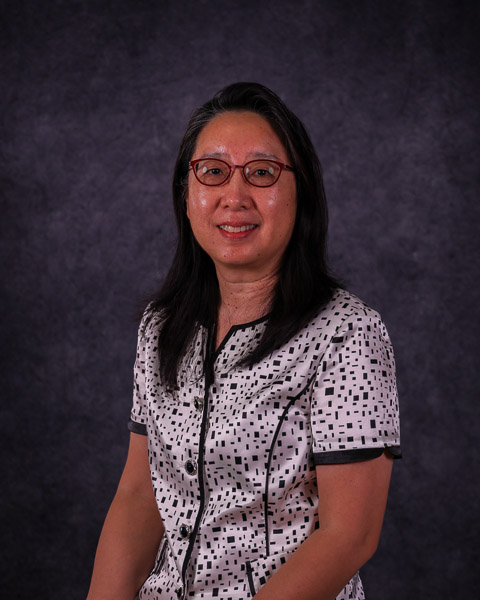
Jenny ZhouView profile
Professor
Jenny Zhou is a Professor and Chair of the Department of Mechanical Engineering at Lamar University in Beaumont, Texas, with over two decades of academic leadership and research excellence. Her work bridges theoretical mechanics with practical applications in microelectronics and biomechanics. Education: Ph.D. in Mechanical Engineering, University of Maryland, Baltimore County (2003) M.S. in Mechanical Engineering, Chongqing University, China (1988) B.S. in Mechanical Engineering, Chongqing University, China (1985) Her research focuses on dynamic responses of micro-electronic systems under mechanical and thermal loads, plant biomechanics for crop structural optimization, multi-scale modeling of moisture-induced failures, and innovative engineering education methodologies. She pioneered techniques for analyzing hygroscopic swelling in electronic packages and developed haptic learning tools that transform dynamics education. Her work on drop/shock testing established industry standards for portable electronics reliability. Analysis of her 15 most recent publications reveals dominant themes in moisture diffusion modeling (40%), electronic packaging reliability (30%), and engineering education technology (20%), with emerging work in plant biomechanics and combustion emissions. Key trends include computational modeling of moisture-vaporization failures and haptic-augmented STEM pedagogy. Scientific Awards: Leland Best Distinguished Faculty Fellow in Teaching (2016-2019) Multiple Presidential Faculty Fellowships for Teaching Innovation and Research (2014-2015) Who’s Who in the World (2009) University Merit Award (2007) She has mentored 21 graduate students through doctoral dissertations and master's theses, with research spanning electronic packaging, biomechanics, and sustainable energy systems. Funded by NSF grants including RET Site for high school engineering curriculum development and SCOPE scholarships for mechanical engineering students, her projects integrate industry partnerships with K-12 outreach. Current initiatives focus on capstone design competitions where student teams compete in SAE Mini-Baja, ASME Human Powered Vehicle, and NASA challenges. Her research group operates advanced laboratories for drop/shock testing, moisture diffusion analysis, and haptic learning systems, collaborating with semiconductor manufacturers and agricultural researchers. Future work includes AI-driven moisture diffusion modeling and expanding NSF-funded educational outreach to rural communities.