Eduardo Antonio Ahedo Galilea is a Full Professor in the Department of Aerospace Engineering at Universidad Carlos III de Madrid (UC3M), leading the Plasmas and Space Propulsion Team (EP2). His research focuses on plasma propulsion systems, particularly Hall thrusters, magnetic nozzles, and helicon plasma thrusters, with expertise in plasma dynamics, wave-plasma interaction, and spacecraft-plume effects. Current projects: MLPLUS-CM (2025-2028), PROPULSION ELECTROMAGNETICA POR EFECTO HALL (2023-2026) International collaborations: European Commission, Airbus Defense and Space, SENER His recent publications analyze non-stationary plasma expansions, electron cooling mechanisms, and magnetic nozzle physics across multiple thruster designs. He supervises theses on turbulent transport, wave-plasma interaction, and fluid-kinetic thruster modeling. Grants include funding from the European Commission Research Executive Agency, Agencia Estatal de Investigación (AEI), and regional programs like RIS3-CAM.
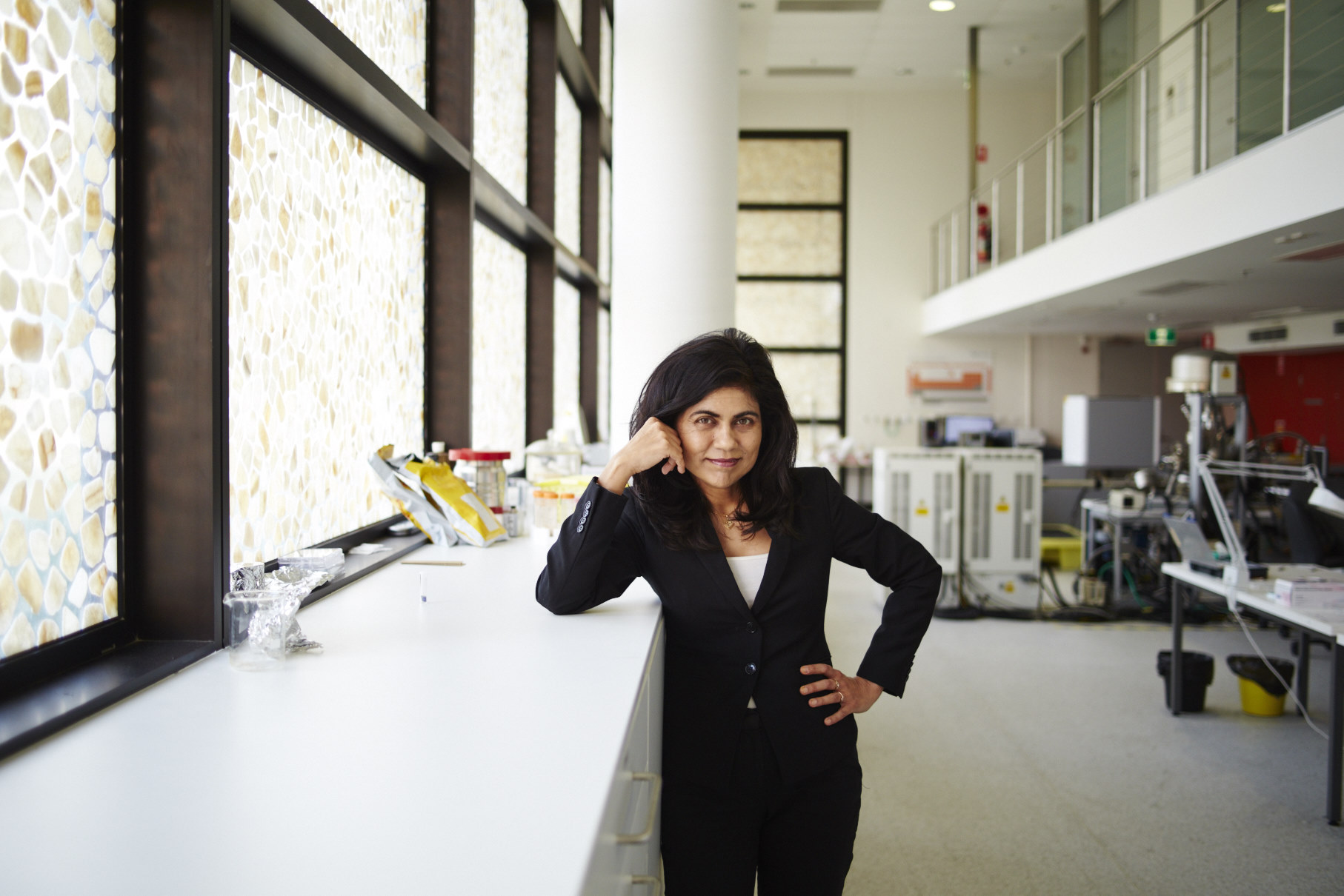
Scientia Professor Veena Sahajwalla is an ARC Laureate Professor and founding Director of the Centre for Sustainable Materials Research & Technology (SMaRT) at the University of New South Wales. She also heads the ARC Industrial Transformation Research Hub for 'green manufacturing' and serves as Director of the NSW Circular Economy Innovation Network. Professor Sahajwalla is internationally recognized for revolutionizing recycling science through her pioneering work in high-temperature transformation of waste into 'green materials.' Professor Sahajwalla's research focuses on sustainable materials engineering, waste transformation, and circular economy implementation. Her work spans materials engineering, metallurgy, polymer science, and environmental technologies. She has developed groundbreaking approaches to recycling complex waste streams including e-waste, plastics, and automotive waste, transforming them into value-added materials for manufacturing applications. Her research integrates fundamental scientific understanding with practical industrial applications to create economically viable and environmentally sustainable solutions. Professor Sahajwalla's publications demonstrate consistent innovation in waste-to-resource conversion technologies, particularly in microrecycling approaches and high-temperature material transformation. Her work shows a clear progression from fundamental research to practical implementation through her microfactory model, which brings recycling solutions directly to waste sources. The research spans multiple disciplines including materials science, metallurgy, polymer engineering, and environmental technology, with increasing focus on decentralized manufacturing systems and circular economy implementation. Fellow of the Australian Academy of Science (2018) PLuS Alliance Prize for Research Innovation (2017) Jubilee Professorship by Indian Academy of Sciences (2017) Australia's Most Innovative Engineers (2016) Australia's 100 Most Influential Engineers (2015) ARC Laureate Fellowship (2014) Howe Memorial Lecture Award (2013) Australian Innovation Challenge Winner for Green Steel (2012) Professor Sahajwalla has secured over $40 million in research funding from diverse sources including the Australian Research Council, NSW Government, and industry partners. Her leadership extends to mentoring programs for girls in science (Science 50:50) and extensive public engagement through media appearances, TED talks, and community outreach. She has established the world's first e-waste microfactory (2018) and plastics microfactory (2019), demonstrating practical applications of her research. As founding Director of the SMaRT Centre at UNSW, Professor Sahajwalla leads a multidisciplinary team focused on sustainable materials research and technology development. The Centre collaborates with industry partners, government agencies, and international research institutions to translate scientific discoveries into real-world environmental and economic benefits through the microfactory model and other innovative approaches to waste valorization.
Prof. Dr.-Ing. Stefan Lechner has been full Professor of Energy Economics and Energy Systems at the Technical University of Central Hesse (THM) , Giessen, since March 2015. He is affiliated with the Department of Mechanical Engineering and Energy Technology and the Institute THESA – Institute of Thermodynamics, Energy Process Engineering and Systems Analysis . Additionally, he leads the Laboratory for Energy Economics and is a core member of the Competence Center for Energy Technology and Energy Management (etem.THM) . Education & Career Dr.-Ing., Brandenburg University of Technology (BTU) Cottbus, 2012 – Dissertation on steam-fluidized-bed drying of lignite. Dipl.-Ing. (FH) Mechanical Engineering, Georg Agricola University of Applied Sciences Bochum, 2002 – specialising in Future Energies. Supplementary doctoral studies & economics coursework at BTU Cottbus and FernUniversität Hagen. Professional experience at Vattenfall (plant management, power-plant planning & R&D) and Kreisel Umwelttechnik (Head of Development) before entering academia. Research Interests Prof. Lechner’s work centres on the techno-economic analysis and optimisation of energy systems in transition . Core themes include renewable energy integration , thermal energy storage (particularly Carnot batteries using ceramic high-temperature stores), sector coupling between electricity, heat and mobility, and 5th-generation cold district-heating networks (5GDHC). Methodologically, he combines experimental thermal engineering with open-source simulation frameworks , agent-based demand modelling , and electricity-market modelling . Recent activities expand into waste-heat recovery from data centres and transcritical CO₂ heat-pump systems for low-temperature district heating, always targeting cost-effective, grid-friendly and sustainable solutions . Publication Trends Between 2017 and 2024 his output highlights a clear evolution from fundamental studies on pressurized steam fluidized-bed drying and lignite heat-transfer toward system-level analyses of storage-based sector coupling . A dominant cluster addresses Carnot batteries , covering high-temperature storage materials, gas-turbine re-conversion concepts, and demonstration results. Parallel streams examine GIS-based rooftop PV potential , agent-based settlement energy-demand modelling , and regulatory frameworks for cross-sector energy markets. Scientific Awards & Honours No specific awards are mentioned in the provided material. Research Funding & Teams Prof. Lechner has secured and coordinates projects worth > €10 million (THM share ≈ €6.5 million) funded by BMBF, BMWK/BMWi, Hessian ministries (HMWK, HMWEVW), WI-Bank and ERDF : LOEWE 3 DUWä (2025-2027) – transcritical CO₂ dual-use heat pumps for cold district heating. EnEff:Stadt FlexQuartier2 (2023-2027) – hybrid storage optimisation in Giessen’s Philosophenhöhe district. KNW-Plus (2022-2023) – design & online tool for cold local heating networks. Innovative waste-heat use from data centres (2022-2023). FlexQuartier Gießen (2018-2023) – integrated hybrid storage & sector coupling in a new-build district. Kommun:E (2018-2022) – municipal energy-supply transformation under Germany’s Energiewende. High-T-Stor (2017-2019) – cross-sector high-temperature storage for renewable balancing. FES (2019-2021) – Research Center for Energy Storage and Sector Coupling. These projects involve interdisciplinary consortia including municipalities, grid operators, SMEs, and research partners across Germany. Teaching & Academic Leadership He lectures in Energy Economics and Sector Coupling, Energy Markets, Heat Transfer, Renewable Energy Technology and Energy System Analysis . He also serves as Programme Manager for the part-time continuing-education M.Sc. Energy Efficiency Management (StudiumPlus, Wetzlar) and contributes to advanced master’s courses on energy law and thermodynamics.
Tamás Benedek is an Associate Professor at the Department of Fluid Mechanics, Budapest University of Technology and Economics (Faculty of Mechanical Engineering). His research focuses on aeroacoustics, computational fluid dynamics (CFD), and turbomachinery design optimization. He has published extensively on axial and radial flow fans, noise reduction techniques, and vortex dynamics. Education: Ph.D. in Fluid Mechanics (2018, BME) M.Sc. in Fluid Mechanics (2012, BME) Research Interests include: Tip leakage vortex quantification in axial fans Phased array microphone techniques for noise source localization CFD simulation of aeroacoustic phenomena Industrial fan design optimization for contaminated gas flows Acoustic duct design and flow-induced noise control Beamforming methods for rotating machinery diagnostics Publications highlight his work on: URANS simulations for vortex dynamics Hybrid CFD-experimental noise modeling Statistical analysis of turbulent flow effects on noise Blade geometry influence on aerodynamic loss coefficients Flow separation mechanisms in ducted systems Acoustic-transparent duct design Contact: benedek.tamas@gpk.bme.hu
Dr. Ebenezer Miezah Kwofie holds the position of Assistant Professor within the Department of Bioresource Engineering at McGill University's Macdonald Campus, where he also serves as Co-Director of the Integrated Food and Bioprocess Engineering Program. His research focuses on sustainable food systems, with particular emphasis on agri-food life cycle assessment and circular bioeconomy development in the Canadian context. Dr. Kwofie's primary research interests include agri-food life cycle assessment , sustainable food systems , and circular bioeconomy . He investigates environmental impacts such as greenhouse gas emissions and resource use across food supply chains, while also considering nutritional outcomes and food security dimensions. His methodological approach frequently employs life cycle sustainability assessment (LCSA), multi-criteria decision analysis (MCDA), and systems modeling to evaluate trade-offs and identify sustainable pathways for agricultural and food processing systems. Analysis of Dr. Kwofie's recent publications (2023-2025) shows a growing emphasis on integrating environmental and health considerations in food system analysis. His work increasingly applies advanced computational methods, including deep learning, to develop decision support tools for sustainable healthy diets. Key research themes include circular bioeconomy accounting, plant-based dietary transitions, and the development of holistic frameworks for net-zero food systems, with many studies focusing on Canadian case examples. No scientific awards, fellowships, or major honors were documented in the provided faculty profile and related materials. While Dr. Kwofie's role as Assistant Professor and Co-Director of the Integrated Food and Bioprocess Engineering Program indicates involvement in graduate education, specific details about current or past students were not provided. Similarly, information about research grants, funding sources, or collaborative projects was not included in the available text. The source materials did not specify any dedicated research laboratory or core research team associated with Dr. Kwofie. However, his research focus suggests collaboration within McGill's Department of Bioresource Engineering and potentially with external partners in the Canadian agri-food sector.
Udo Bachhiesl is an Associate Professor and Deputy Head of the Institute of Electricity Economics and Energy Innovation at Graz University of Technology. With a background in energy economics, he has established himself as an expert in energy and electricity economics, renewable energies, and energy innovation. His research focuses on energy transition modeling, power system economics, and renewable energy integration. Bachhiesl has contributed significantly to understanding the challenges of integrating renewables into electricity markets and developing modeling frameworks for energy system optimization. His work spans regional (particularly Styrian and Austrian), European, and international contexts including Africa and the Indian subcontinent. Bachhiesl's recent publications reveal a strong focus on hydrogen integration, energy system optimization models (including LEGO and ATLANTIS), and regional energy transition pathways. His work combines technical power system analysis with economic modeling to provide comprehensive insights into energy transitions. Klimaschutzpreis 2003 der Österreichischen Bundesregierung Young Scientist Best Paper Award 2003 As Deputy Head of the Institute, Bachhiesl oversees numerous research projects including UrbanHP (heat pump integration), iKlimET (climate and energy system models), and the Styria Energy Report series. His work connects academic research with practical energy policy implementation, particularly in the Styrian region of Austria. He has also contributed to the Energy Innovation Symposium series at TU Graz and maintains the ATLANTIS simulation model for European electricity systems.
Dmitri Romanov is a Research Professor in the Department of Physics at Temple University. His research focuses on strong-field quantum control in complex systems, including femtosecond laser filamentation, nonlinear optics of filament wake channels, and electronic dynamics in molecules and nanostructures. He explores applications such as light scattering in turbid media and dispersion law engineering for quasiparticles. Key contributions include studies on Rabi sideband control, transient optical nonlinearities, and the development of machine learning algorithms for particle identification in high-energy physics experiments. Romanov has authored influential works on femtosecond laser-matter interactions and co-authored the textbook Modern Advanced Mathematics for Engineers (Wiley, 2001). His recent projects involve collaborations with the Electron-Ion Collider (EIC), focusing on detector design and real-time data processing using FPGA-based systems. Romanov’s work bridges theoretical physics, experimental optics, and applied nanotechnology, with implications for advanced materials and medical imaging.
Tonya DelSontro is an Assistant Professor at the University of Waterloo specializing in Aquatic Biogeochemistry and Limnology. Her research at the Aquatic Greenhouse Gas Dynamics Lab focuses on human and climate-induced changes in aquatic carbon cycles, particularly methane emissions from lakes, reservoirs, and wetlands. She integrates fieldwork with laboratory experiments to develop predictive models spanning local to global scales. PhD (2011) and MSc (2006) from ETH Zurich and University of California, Santa Barbara Teaches courses in Geochemistry, Environmental Geology, and Geoliminology Her work addresses critical climate-water intersections through projects like freshwater reservoir emission quantification , methane ebullition scaling , and anthropogenic impact assessments . Key findings include demonstrating how nutrient enrichment exacerbates methane emissions and identifying sediment-trapped carbon as methane production hotspots. Recent publications span topics from arctic carbon dynamics to tropical reservoir variability , with methodological contributions to eddy covariance measurements and bubble size distribution analyses . She has received major awards including the Marie Curie Fellowship and Swiss National Science Foundation support . 2019 Marie Skłodowska-Curie Individual Fellowship 2014 Swiss National Science Foundation Fellowship 2012 Outstanding Poster Award, EGU
Jonas Rose is a Professor at Ruhr University Bochum's Faculty of Psychology, serving as Spokesperson of the Research Department of Neuroscience and leading the Neural Basis of Learning lab at the Institute for Cognitive Neuroscience. His work focuses on comparative cognitive neuroscience, investigating how avian and mammalian brains independently evolved similar cognitive mechanisms despite divergent evolutionary paths. Position: Spokesperson of Research Department of Neuroscience Location: GA 04/48, Universitätsstr. 150, 44801 Bochum, Germany Contact: +49 (0)234 32-27135 Research interests center on cross-species comparisons of working memory, attention, sequential memory, and categorization using neurophysiological recordings from crows and pigeons. His team employs high-channel count electrophysiology to study single neuron activity and local field potentials across multiple brain regions simultaneously. Key Techniques: Multi-channel Neurophysiology Primary Subjects: Corvids and pigeons Evolutionary Focus: Parallel Cognitive Development Recent publications highlight comparative studies on neural oscillations in avian brains, computational parallels between crows and monkeys, and spatial computing principles in memory systems. His work challenges traditional cortical-centric views of intelligence by demonstrating equivalent cognitive capabilities in birds with differently structured brains. Students trained under his supervision include PhD graduates Aylin Apostel and Lukas Hahn, and master's awardee Farina Lingstädt. The lab's activities include international conferences (ACN 2024) and collaborative research projects with institutions like SFB 874.
Ejub Džaferović is a Full Professor at the Department of Energy and Department of Process Engineering, Faculty of Mechanical Engineering, University of Sarajevo. He has been serving at this institution since 1984, progressing through academic ranks from Assistant to Full Professor, and served as Dean of the Faculty from 2007-2015. His academic journey began with a Diplomirani mašinski inžinjer degree in 1982, followed by a Magistar in 1995, and culminating in a PhD in Technical Sciences in 2002, all from the University of Sarajevo. His educational background includes: 2002: PhD in Technical Sciences, Faculty of Mechanical Engineering, University of Sarajevo 1995: Master of Technical Sciences, Faculty of Mechanical Engineering, University of Sarajevo 1982: Diplomirani mašinski inžinjer, Faculty of Mechanical Engineering, University of Sarajevo Professor Džaferović's research spans fluid mechanics, pneumatic and hydraulic transport systems, energy engineering, renewable energy technologies, and computational fluid dynamics. His work demonstrates a consistent focus on practical engineering applications with environmental considerations, particularly in the areas of sustainable energy systems and pollution control technologies. He has made significant contributions to understanding viscoelastic fluid behavior, particle transport mechanisms, and thermal processes in industrial applications. His recent publications reveal a strong trend toward addressing contemporary energy challenges, with increasing focus on renewable energy integration, climate neutrality pathways, and advanced computational methods for fluid dynamics problems. His research has evolved from fundamental pneumatic conveying studies to more complex systems involving sustainable energy solutions and advanced measurement techniques using computational methods and machine learning. Among his scientific recognitions are: 2006: Certificate of Appreciation from the Association of Students of the Faculty of Mechanical Engineering in Sarajevo 1983: Award as the best and youngest graduate from the Faculty of Mechanical Engineering Sarajevo 1981: Nikola Tesla Award for young researchers in Kumrovec Professor Džaferović has mentored 12 doctoral dissertations, 5 master's theses, and 50 bachelor's theses throughout his career. He has led numerous significant research projects including the doctoral study 'Renewable Energy Sources and Environmental Technologies,' the postgraduate specialist study 'Local Environmental Infrastructure' in collaboration with KTH University, Sweden, and the organization of the international postgraduate study 'Sustainable Energy Engineering' at the Faculty of Mechanical Engineering. His project portfolio demonstrates a strong commitment to developing sustainable energy solutions for the Western Balkan region. His laboratory work focuses on fluid mechanics, energy systems, and sustainable technologies, with particular emphasis on experimental validation of computational models for particle transport, energy efficiency optimization, and renewable energy integration. His research group has established collaborations with institutions across Europe, including Imperial College London, LSTM Erlangen, and KTH University in Sweden.
Professor Huiru (Jane) Zheng is a Professor of Computer Science at the School of Computing, Ulster University. She serves as Theme Leader of Data Analytics and Systems in the AI Research Centre and is a full member of the Computer Science Research Institute. As a Fellow of the UK Higher Education Academy and Senior Member of IEEE, she has established herself as a leading researcher with significant contributions to bioinformatics and healthcare informatics. Her educational background includes: PhD in Bioinformatics (2003) from Ulster University Postgraduate Certificate in Teaching in Higher Education (2005) from Ulster University Professor Zheng's research spans multiple domains of data science with applications in healthcare, agriculture, and environmental monitoring. Her primary interests include integrative data analytics in systems biology, machine learning for healthcare decision support, and assistive technology development. She has particular expertise in applying advanced data mining techniques to complex biological datasets, with a focus on improving healthcare outcomes and supporting independent living through technology. Her extensive publication record demonstrates a clear trend toward interdisciplinary research that bridges computer science with practical applications. Recent work shows increasing focus on real-world implementations of AI in digital health, precision agriculture, and environmental monitoring systems. The breadth of her research interests is evident in publications ranging from gait analysis using smart insoles to methane prediction in dairy farming and wildfire monitoring using UAVs. Professor Zheng has received notable recognition for her contributions: Fellow of the UK Higher Education Academy Senior Member of IEEE As a principal investigator, Professor Zheng has successfully secured substantial research funding from diverse sources including EPSRC, TSB, DEL, NHS, Invest NI, Innovation UK, and the European Commission. Her leadership extends to editorial roles for international journals and organizing major conferences such as the UK Workshop on Computational Intelligence. She has supervised numerous research students through her various projects. Professor Zheng leads several active research initiatives including the AI Research Centre's Data Analytics and Systems theme. Her current projects involve developing digital twin technology for personalized healthcare, AI-assisted systems for post-stroke rehabilitation, methane prediction models for sustainable dairy farming, and age-friendly built environment assessment systems. These projects often involve multidisciplinary collaboration across computer science, healthcare, agriculture, and environmental science domains.
Matthias Beekmann is a CNRS Researcher (Statut: DR CNRS) affiliated with the Laboratoire Interuniversitaire des Systèmes Atmosphériques (LISA), focusing on atmospheric chemistry, air pollution, and environmental modeling. His work bridges satellite observations, ground-based measurements, and advanced chemistry-transport models like CHIMERE. Key Research Areas: Organic carbon fate in atmosphere, large-scale pollution dynamics, oxidant and particulate pollution, and climate-air quality interactions. Modeling Expertise: Specializes in CHIMERE model applications for simulating aerosol transport, ozone pollution, and biomass burning impacts across Europe and globally. Campaigns: Involved in ACROSS, MEGAPOLI, and other international field campaigns analyzing urban and regional pollution episodes. Recent Article Trends: Investigates atmospheric variability in aerosols during the ACROSS campaign (2025), Siberian biomass burning radiative effects (2025), ozone pollution dynamics during the pandemic (2022), and machine learning applications for AOD calibration (2023). Studies span from Siberian wildfires to Mediterranean pollution and Parisian urban air quality. Collaborative Network: Works extensively with teams from Université Paris-Est Créteil, European research institutions, and international climate scientists on topics including wildfire emissions, ammonia trends, and health impacts of particulate matter.
Prof. Ursula Eicker is the Canada Excellence Research Chair in Smart, Sustainable and Resilient Cities and Communities at Concordia University , leading cutting-edge research in urban energy systems. Her work integrates 3D city modeling, renewable energy systems, and sustainable transport to develop zero-carbon city strategies. PhD in Solid State Physics (Heriot-Watt University) Habilitation in Renewable Energy Systems (Technische Universitat Berlin) Research Interests focus on urban simulation platforms, district energy networks, and climate-resilient infrastructure. The INSEL4Cities platform enables holistic urban modeling for building demands, transportation, and greenery. Her Residential Densification studies demonstrate 65% energy reduction through retrofits and solar integration. Recent publications explore urban solar shading , transactive energy systems , green infrastructure equity , and decentralized hydrogen production . Awards include the German-African Innovation Incentive and recognition for photovoltaic research in Egypt. Over 50 graduate students in her lab examine zero-carbon pathways. Teaches ENCS 691 on urban energy systems. Secured 10M CAD for the CERC chair and multiple grants. Co-Director of Concordia's Next Generation Cities Institute .
Grant Allen is a Professor of Atmospheric Physics at the University of Manchester's School of Earth and Environmental Sciences. His research focuses on atmospheric composition, greenhouse gas emissions, and remote sensing technologies, particularly using drones and aircraft. He has led multiple national and international projects, including NERC-funded initiatives such as GAUGE, MOYA, and MOMENTUM. His work integrates field measurements, satellite data, and modeling to address climate change mitigation and environmental policy challenges. Allen holds a PhD in Infrared Remote Sensing of Peroxyacetyl Nitrate from the University of Leicester (2005). He is a Fellow of the Royal Meteorological Society and actively contributes to global environmental assessments through organizations like the NERC Peer Review College. Research interests include drone-based methane quantification, Arctic methane dynamics, and shale gas environmental baselining. Key projects include developing UAV technology for regulatory monitoring and quantifying emissions from landfills, oil platforms, and biomass burning. Allen’s work has informed UK policy on methane reduction and global climate budgets. His expertise spans atmospheric physics, spectroscopy, and interdisciplinary environmental solutions aligned with UN Sustainable Development Goals.
Dr John Grigor is a Senior Lecturer in the Department of Built Environment and Life Sciences at Abertay University, within the Faculty of Social and Applied Sciences. He holds a PhD in Sweet Taste from Reading University (1990) and has over two decades of experience in consumer and sensory science research and consultancy. Educational Background: BSc (Hons) in Food Technology, Reading University (1987) PhD in Sweet Taste, Reading University (1990) His research centers on understanding eating behavior through the interplay of physiological, psychological, and contextual factors. Key areas include hedonic responses measured via facial electromyography, dynamic sensory perception, oral processing, and the development of healthy and functional food products. He has conducted extensive work in cross-cultural food choice, particularly with industries in New Zealand and Singapore. The recent publications reflect a strong trend in sensory evaluation methodologies (e.g., TDS, fEMG), food product innovation, and the science of flavor and texture. His work spans from traditional foods like whisky and carrots to novel ingredients such as cricket flour and seaweed, demonstrating a broad and applied research scope. Scientific Awards and Esteem: Invited judge, New Zealand New Food Product Awards (2010–2013) Appointed Associate Investigator, Riddet Institute CoRE (2010) External PhD examiner for Otago, Auckland, and Southern Cross Universities Reviewer for top journals including Food Quality and Preference , Journal of Food Science Invited speaker and session chair at international conferences Dr Grigor has secured significant research funding as Principal Investigator from Interface Food and Drink, the Ministry of Business Innovation and Employment (New Zealand), and the Riddet Institute. He has supervised numerous PhD and Master’s students and collaborates widely with food industries and academic institutions globally. He has also contributed to public understanding through media appearances on TV and radio as a sensory expert.