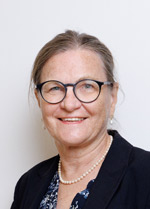
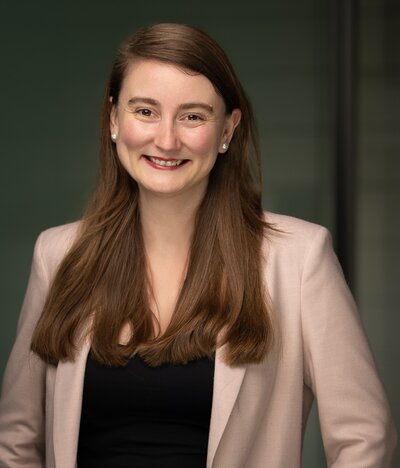
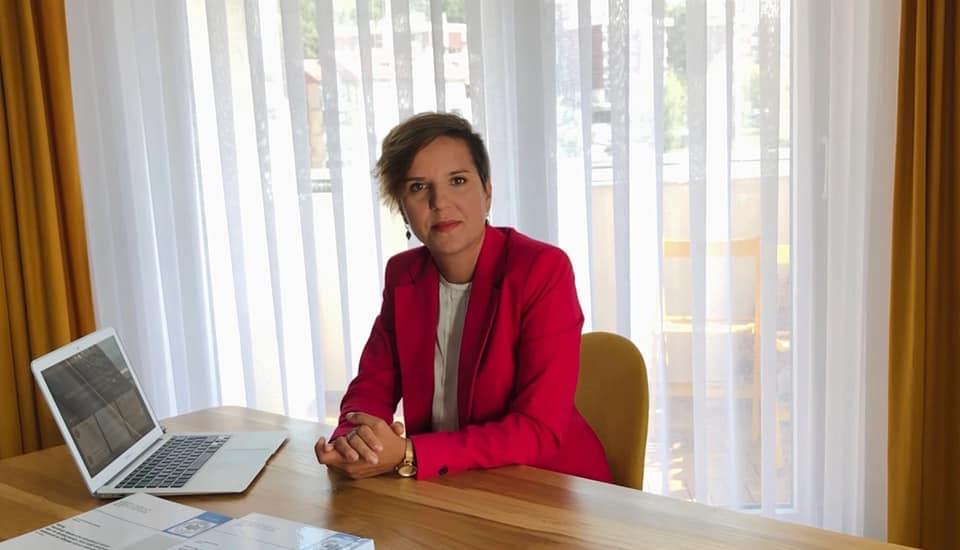
Ulrike Diebold is a University Professor at the Institute of Applied Physics, Vienna University of Technology, where she leads the Research Unit of Surface Physics. She concurrently serves as Vice President (part-time) of the Austrian Academy of Sciences (ÖAW). Her research focuses on atomic-scale investigations of oxide surfaces, catalysis, and water-oxide interactions using scanning probe microscopy and surface science techniques. Research interests span surface physics, chemical physics, and solid-state phenomena, with emphasis on TiO₂, Fe₃O₄, and perovskite oxides. Key themes include surface defects, polaron dynamics, water adsorption, and catalytic mechanisms. Her group develops advanced methodologies for surface characterization and collaborates extensively on computational modeling. She has received prestigious awards including the Wittgenstein Prize, ERC Advanced Grants (twice), and the Arthur W. Adamson Award. Major honors include memberships in the German Academy of Sciences (Leopoldina), Academia Europaea, and the American Academy of Arts and Sciences. Her laboratory utilizes STM, AFM, LEED, and PLD systems for surface synthesis and analysis. Current projects investigate single-atom catalysis, electrochemical interfaces, and oxide thin-film growth. She leads an active research group with international collaborations and extensive third-party funding.
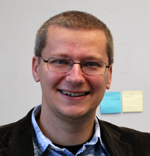
Konrad Patkowski is an Associate Professor in both the Department of Chemistry and Biochemistry and the Department of Physics at Auburn University's College of Sciences and Mathematics (COSAM). He serves as Graduate Program Officer (GPO) for the Chemistry and Biochemistry department. Dr. Patkowski leads a theoretical and computational chemistry research group focused on weak intermolecular interactions and the development of accurate computational methods to study them. Education M.S. in Chemistry, University of Warsaw, Poland (1999) Ph.D. in Chemistry, University of Warsaw, Poland (2004) Postdoctoral Fellow, University of Delaware (2003-2010) Research Interests Dr. Patkowski's research focuses on theoretical and computational study of weak intermolecular interactions, which are fundamental to understanding molecular behavior in various contexts from liquid water properties to protein structure. His work particularly emphasizes: Development of Symmetry-Adapted Perturbation Theory (SAPT) methodology and software Computational studies of molecules physisorbed on metallic and graphite/graphene surfaces Development of ultra-accurate potential energy surfaces for weakly interacting systems His group uses quantum mechanical methods and high-performance computing to investigate the properties of molecules and clusters, with particular emphasis on accurate calculation of interaction energies. Research Trends Dr. Patkowski's recent publications demonstrate a strong focus on advancing computational methods for studying intermolecular interactions, particularly through the development and application of Symmetry-Adapted Perturbation Theory (SAPT). His work spans from fundamental theoretical developments to practical applications in materials science and biochemistry. A significant portion of his recent research involves improving the accuracy and efficiency of computational methods for calculating weak interactions, with applications ranging from gas-phase dimers to more complex systems like metal-organic frameworks and carbon nanotubes. Scientific Awards The OpenEye Outstanding Junior Faculty Award in Computational Chemistry, American Chemical Society (2015) NSF CAREER Award (2014) European Union-funded visiting professorship at Nicolaus Copernicus University, Torun, Poland (2015) Best M.S.c. thesis in Chemistry, Polish Chemistry Society (2000) Bronze Medal, International Chemistry Olympiad, Hong Kong (1994) Bronze Medal, International Mathematical Olympiad, Hong Kong (1994) Advising and Grants Dr. Patkowski has successfully mentored multiple graduate students to completion of their degrees, including Daniel G. Smith (who received the ACS Chemical Computing Group Excellence Award for Graduate Students in 2015) and Sicheng Li. His current research group includes graduate students Jonathan Waldrop, Monika Kodrycka, and Reza Hemmati, as well as postdoctoral researcher Narendra Nath Dutta. His research has been supported by significant grants including an NSF CAREER award (2014) for developing a multireference variant of symmetry-adapted perturbation theory, and funding from the American Chemical Society Petroleum Research Fund for studying hydrocarbon physisorption on carbon nanotubes. Laboratory and Research Team Dr. Patkowski leads a vibrant research group that maintains a high-performance computing cluster with 26 nodes and 544 cores. His group collaborates extensively with researchers worldwide, including institutions in Poland, Taiwan, China, and multiple US universities. The Patkowski lab has made significant contributions to the development of the SAPT (Symmetry-Adapted Perturbation Theory) software suite, which is widely used for calculating intermolecular interaction energies.
Ali Mohraz is a Professor in the Department of Chemical and Biomolecular Engineering with a joint appointment in Materials Science and Engineering at the Samueli School of Engineering, University of California, Irvine. He also serves as the Associate Dean for Graduate and Professional Studies Student Affairs, demonstrating his leadership role within the engineering school. Dr. Mohraz received his educational training from: B.S. in Chemical Engineering from Azad University (1996) M.E. in Chemical Engineering from The City University of New York (1999) Ph.D. in Chemical Engineering from University of Michigan (2004) Post-Doctoral training in Materials Science and Engineering from University of Illinois (2004-2006) Dr. Mohraz's research focuses on the physics of colloidal dispersions, rheology of soft materials, and self-assembly in multiphase fluids . His work bridges fundamental understanding with practical applications in healthcare, energy, and nanotechnology. He specializes in designing and synthesizing novel microstructured materials and composites through bottom-up approaches. His teaching interests include Transport Phenomena, Chemical Engineering Thermodynamics, Colloid and Interface Science, and Computational and Analytical Engineering Mathematics. Analysis of Dr. Mohraz's recent publications reveals a strong focus on bijels (bicontinuous interfacially jammed emulsion gels), porous materials, and their applications in energy storage and biomedical engineering. His research demonstrates a consistent thread connecting fundamental colloidal science with practical engineering applications, particularly in battery technology and drug delivery systems. The interdisciplinary nature of his work is evident in the range of journals where he publishes, spanning chemical engineering, materials science, and biomedical engineering. Dr. Mohraz leads the Colloid Science Laboratory (Soft Matter Engineering Laboratory) at UC Irvine, where his team investigates the microstructural design of advanced materials. His lab focuses on developing novel fabrication techniques for creating structured materials with applications in energy storage, biomedical devices, and advanced composites.
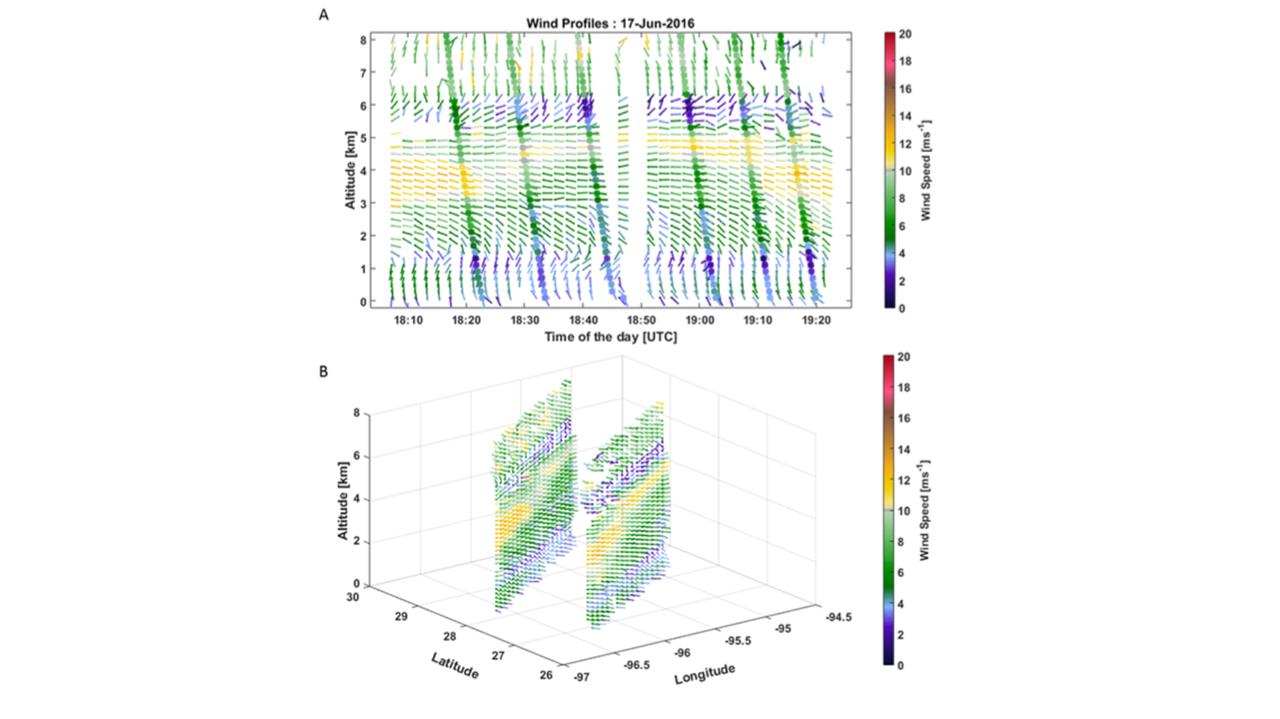
Robert Michael Hardesty is a CIRES Senior Research Scientist and Director of CIRES Environmental Observations at the University of Colorado Boulder. He holds a Ph.D. from the Naval Postgraduate School (1984) and specializes in atmospheric remote sensing using lidar technology. Dr. Hardesty's research interests center around development, evaluation, and application of optical remote sensing techniques to investigate atmospheric processes. Lidar techniques are used to investigate a broad range of phenomena, including boundary layer dynamics, winds and turbulence, air pollution, and greenhouse gas emissions. His work involves deploying lidars on various platforms including surface vehicles, ships, aircraft, and satellites. His research improves understanding, modeling, and forecasting of weather and climate processes, identifies sources of air pollution, and enhances renewable energy production. Currently, Dr. Hardesty is focused on developing and deploying a Doppler lidar in space to measure wind profiles globally. He's working with Ball Aerospace and a CIRES postdoc on the Optical Autocovariance Wind Lidar (OAWL) based on a Mach-Zender interferometer. He's also collaborating with ESA on their Aeolus space-based lidar winds mission, which completed a successful 4-year mission. Both NOAA and ESA are examining Doppler lidar techniques for future space-based wind measurements in the 2030 time frame. His recent publications demonstrate a strong focus on advancing wind profiling technology, particularly through lidar applications. The research spans satellite mission concepts, instrument development and validation, urban meteorology, and greenhouse gas monitoring. Key themes include the integration of passive and active remote sensing techniques, improvements to numerical weather prediction models, and applications to renewable energy and urban air quality. Fellow of the Optical Society of America (1987) Fellow of the American Meteorological Society (1990) NOAA Distinguished Career Award (2014) Lifetime Achievement Award, International Radiation Commission/International Coordinating Group on Laser Atmospheric Studies (2017) Dr. Hardesty has been involved in numerous collaborative research projects, particularly those focused on atmospheric observation systems and their applications to weather forecasting and climate research. His work with NASA, NOAA, and ESA demonstrates significant grant funding and international collaboration. While specific student advising information isn't provided in the text, his role as a senior research scientist suggests he likely mentors postdoctoral researchers and graduate students. He is associated with the Cooperative Institute for Research in Environmental Sciences (CIRES), which connects graduate students and postdocs from various academic units for research collaboration. His work on the Optical Autocovariance Wind Lidar and collaboration with ESA on the Aeolus mission represent significant contributions to atmospheric observation technology.
David Kylhammar is an Adjunct Assistant Professor at Linköping University's Department of Health, Medicine and Care (HMV), Faculty of Medicine and Health Sciences. He serves as co-leader of the SCAPIS Linköping echocardiography study and contributes to research on cardiovascular risk stratification, pulmonary arterial hypertension (PAH), and cardiac involvement in systemic lupus erythematosus (SLE). His work bridges clinical physiology with population-based research through the Swedish CArdioPulmonary bioImage Study (SCAPIS). MD and PhD in Clinical Medicine (Cardiology) from Lund University (2012, 2016) Clinical Fellow at Wallenberg Centre for Molecular Medicine (2023) Scientific Secretary of Swedish Society of Clinical Physiology (2021–) His research focuses on cardiovascular risk assessment through advanced imaging techniques like echocardiography and MRI, pulmonary arterial hypertension pathophysiology and risk stratification, and cardiac manifestations in SLE . Recent work includes assessing diabetes' impact on cardiac function and developing novel biomarkers for PAH progression. The SCAPIS study underpins much of his research, analyzing cardiovascular and pulmonary risks in 30,000 population-based participants. His publications span European Heart Journal , ERJ Open Research , and Cardiovascular Diabetology , covering subfields like aortic valve calcification, ventricular-arterial coupling, and pulmonary hemodynamics. Scientific Awards : Associated Clinical Fellow at Wallenberg Centre for Molecular Medicine Recipient of 2023 strategic research funding (Region Östergötland and WCMM) As an educator, Kylhammar teaches gas transport and work/respiratory physiology across medical programs, leads the Advanced Course in Magnetic Resonance Imaging (Cardiac Focus) , and contributes to clinical research training. He also serves on committees for the Swedish Pulmonary Hypertension Society. Current projects include coffee-cardiovascular health associations (WCMM-funded), diastolic function assessment , and multi-organ interactions in type 2 diabetes through MRI and echocardiography. He collaborates with researchers in the CircM network and participates in national PAH registry analyses.
Dr. Alston Misquitta is a Lecturer in Condensed Matter and Materials Physics at the School of Physics and Astronomy, Queen Mary, University of London . His research focuses on intermolecular forces, symmetry-adapted perturbation theory (SAPT), and computational modeling of molecular and solid-state systems. Research Interests Development of ab initio and non-empirical force fields Intermolecular interaction energy decomposition Electronic structure theory applied to molecular and nanoscale systems Crystal structure prediction and validation High-pressure materials science Publication Trends Dr. Misquitta’s publications span computational chemistry, condensed matter physics, and materials science, with a strong emphasis on SAPT-based methods, polarizable force fields, and molecular dynamics simulations for organic and inorganic systems. His work addresses challenges in modeling hydrogen bonding, dispersion interactions, and excited-state phenomena. Contact Information Email: a.j.misquitta@qmul.ac.uk Phone: 020 7882 3427 Room: G Jones 216 Address: 327 Mile End Road, London, E1 4NS
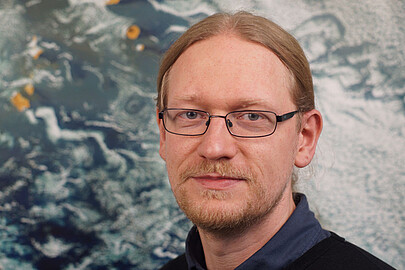
Prof. Dr. Björn Maronga is a Professor of Boundary Layer Meteorology at the Institute of Meteorology and Climatology within the Faculty of Mathematics and Physics at Leibniz Universität Hannover. His office is located at Herrenhäuser Straße 2, 30419 Hannover (Building 4105, Room F126). He holds multiple administrative roles including chair of the Meteorology Examination Board, BAföG representative, and practical training coordinator for Meteorology, as well as representing professors on the selection commission and faculty council. Prof. Maronga's research focuses on boundary layer meteorology and urban climate modeling, with particular expertise in Large-Eddy Simulations (LES) using the PALM model system. His work spans from fundamental atmospheric physics to practical urban climate applications. He investigates urban heat islands, radiation fog dynamics, land-atmosphere interactions, and the development of high-resolution urban climate models. His research group is deeply involved in the [UC]² national research program focused on developing building-resolving atmospheric models for entire city regions. Analysis of his recent publications reveals a strong trend toward increasingly sophisticated urban climate modeling techniques. His work with the PALM model system has evolved from basic boundary layer studies to comprehensive urban climate simulations incorporating chemistry, detailed radiative transfer, and land-surface interactions. Recent research emphasizes practical applications for urban planning, climate adaptation, and thermal comfort assessment. His collaborative network spans numerous international institutions, with particular focus on European research partnerships. Prof. Maronga is actively involved in several significant research projects including the MOSAIK initiative for model-based city planning under climate change and the ISOBAR project studying Arctic boundary layer processes. His work has contributed substantially to the development and validation of the PALM model system, which has become a leading tool for high-resolution urban climate simulations worldwide. He has supervised numerous PhD students and postdoctoral researchers who have contributed to the extensive publication record associated with the PALM modeling framework.
Santiago Arellano is a Researcher at Chalmers University of Technology within the Geoscience and Remote Sensing unit. His work focuses on the physics of volcanic and atmospheric processes via spectroscopic remote sensing , including instrument development, fieldwork, and data analysis for volcanic gas emissions (SO2, CO2, mercury) to understand geophysical and environmental risks. Research Themes: Volcanic gas emissions and atmospheric interactions Remote sensing techniques (DOAS, FTIR, UAVs) Environmental risk assessment Global volcanic monitoring networks (NOVAC) Recent Publications (2025-2016): Volcanic plume dynamics and atmospheric scattering SO2 emission trends and dispersion modeling Mercury depletion in plumes Drone-based gas plume measurements Multi-sensor integration for activity analysis Global volcanic volatile budgets Projects: Global Volcanic and Atmospheric Observation Programme NOVAC (Network for Observation of Volcanic and Atmospheric Change) ECMWF CAMS2_61 Emissions DECADE initiative for volcanic outgassing
Claudia Lopez Camara is an Assistant Professor at the Mechanical Engineering Department of Eindhoven University of Technology (TU/e) , appointed in January 2024. Previously, she held postdoctoral positions at the University of Duisburg-Essen (2021-2023) and completed her Ph.D. in Numerical Combustion at the University of California, Irvine (2020). Education : BSc in Chemical Engineering (University Rovira i Virgili, Spain), MSc in Nanotechnology and Nanoscience (University Rovira i Virgili) Her research focuses on gas-phase synthesis of nanomaterials , particularly graphene and mesoporous silica nanoparticles for sensors and energy applications . Current work explores experimental methods including flame, plasma, and hot-wall reactors for nanomaterial production. Recent publications highlight her expertise in nanoparticle morphology control and composite sensor development , with 10 Scopus-indexed works between 2015-2025. Key collaborations exist with institutions including KAUST, LLNL, and UW-Madison . Scientific Awards & Funding Undergraduate Mobility Balsells Fellowship Grant of Excellence Catalunya-La Pedrera NSF Intern Fellowship DFG research unit FOR2284 & SPP2289 International Max Planck Research School SurMat As Principal Investigator of the Group López Camara at EIRES Research , she leads projects involving scalable aerosol-based synthesis and self-folding graphene mechanisms . Her work combines numerical modeling with experimental validation to advance nanomaterials engineering.
Natalia Aseeva is Dean of the Faculty of Informatics, Mathematics and Computer Science at HSE University – Nizhny Novgorod campus, Head of the Department of Information Systems and Technologies, Associate Professor, and Academic Supervisor of the Software Engineering programmes (full-time and part-time). A member of the HSE Academic Council, she has been with the university since 2003. Education 2007 – Candidate of Sciences (PhD equivalent) in Fluid, Gas and Plasma Mechanics, Nizhny Novgorod Technical University 2001 – Candidate of Sciences (first degree), Nizhny Novgorod Technical University Research Interests Dr Aseeva’s research bridges two domains. In applied physics she investigates nonlinear wave dynamics, soliton theory and numerical simulation , publishing on soliton propagation in inhomogeneous dispersive media. In information systems she focuses on business-process modelling, enterprise architectures and IT-business alignment , developing visual modelling techniques and strategic alignment frameworks that are applied to economic clusters and digital-transformation projects. Publication Trends Her 2012-2022 output is split between high-impact physics journals (JETP Letters, Chaos, Physics Letters A) and leading business-informatics venues (Springer series on digital transformation, BIR conference proceedings). Collectively, the work advances both fundamental understanding of soliton dynamics and practical methodologies for diagnosing and correcting IT-business misalignment. Awards & Recognition HSE Young Faculty Support Programme – Category “Future Professoriate” (2009–2010) Teaching & Advising She currently teaches Business Process Modelling and Requirements Management and Information Systems Design to bachelor and master students across HSE Nizhny Novgorod, HSE Graduate School of Business and HSE Faculty of Economics. Student theses under her supervision cover enterprise modelling, IT project evaluation, and automation of administrative regulations. Laboratory & Leadership Roles As Dean she oversees the strategic development of one of HSE’s largest regional faculties; as Department Head she leads the Department of Information Systems and Technologies; and as Programme Academic Supervisor she guides the Software Engineering curricula delivered both on campus and in part-time formats.
Amra Hasečić is an Associate Professor at the Faculty of Mechanical Engineering, University of Sarajevo. She specializes in Computational Fluid Dynamics (CFD) with a focus on environmental fluid mechanics and industrial flow systems. Current research on wind-induced particle resuspension and contamination effects in flow meters Developing CFD models for pipeline corrosion and urban pollen dispersion Principal investigator for ERASMUS MUNDUS Joint Master Program in Computational Mechanics Her recent publications highlight applications of deep learning to fluid dynamics and energy efficiency in industrial drying systems. Collaborative projects span environmental science, mechanical engineering, and digital twin technologies.
Paolo Oresta serves as an Associate Professor within the Department of Mechanics, Mathematics & Management at the Polytechnic University of Bari, Italy, with primary contact via paolo.oresta@poliba.it and departmental address at Via Orabona 4, 70125 Bari. His research program centers on fluid mechanics and thermal engineering, with core expertise in nanofluid thermal conduction, turbulent convection phenomena, energy recovery systems, and fluid machinery design. He investigates heat transfer enhancement mechanisms, multiphase flow dynamics, and thermal energy storage optimization through computational modeling and experimental validation. Analysis of his 15 most recent publications (2023-2017) reveals consistent focus on nanoscale heat transfer in fluid suspensions, 3D flow reconstruction techniques, and Industry 4.0 applications for industrial plants. His work bridges theoretical fluid dynamics with practical energy systems engineering, particularly in thermal storage and pressure recovery devices, demonstrating strong interdisciplinary integration across mechanical, thermal, and computational domains.
Boyka Bratanova is a Senior Lecturer in Management at the School of Management, University of St Andrews , with a focus on sustainability, economic inequality, and organizational behavior. Her work bridges social psychology and management, emphasizing how wealth and inequality shape human thought, prejudice, and organizational diversity. Education: PhD in Social Psychology (University of Melbourne), Postdoctoral roles (University of Surrey, Université libre de Bruxelles, University of Melbourne). Research interests include the moral bases of pro-environmental behavior, the effects of inequality on eating habits and cognitive performance, and applications to managerial practice. She explores salary dispersion and resource scarcity in organizations, linking these to gender equality and minority discrimination. Recent publications highlight employee ownership as a remedy for inequality, cross-linguistic cognition, and psychosocial drivers of obesity. Her work contributes to UN Sustainable Development Goals like SDG 1 (No Poverty) and SDG 10 (Reduced Inequality). Projects include a study on employee-owned businesses during the pandemic. She supervises postgraduate research and chairs the School Ethics Committee.
DERYA KAPUSUZ YAVUZ serves as Associate Professor at Gaziantep University's Faculty of Engineering, Department of Metallurgy and Materials Engineering, specializing in advanced functional materials development. Her research bridges materials science with biomedical and environmental applications through innovative nanomaterial synthesis. Her educational background includes: Doctorate (2016) in Metallurgical and Materials Engineering from Middle East Technical University Master's (2009) in Metallurgical and Materials Engineering from Middle East Technical University Licence (2006) in Materials Science and Engineering from Anadolu University Her research focuses on nanomaterials engineering for photocatalytic environmental remediation and biomaterials development for orthopedic applications. Key expertise includes sol-gel processing, ZnO/TiO2 nanostructure synthesis, calcium carbonate polymorph control, and composite material design. Recent work demonstrates significant advances in RNA delivery systems and photoactive microrobots. Analysis of her 23 publications (2013-2024) reveals three dominant research thrusts: (1) photocatalytic nanomaterials (ZnO/TiO2) for environmental applications, (2) biomimetic calcium-based materials for bone regeneration, and (3) hybrid composites for dental/orthopedic use. Her work increasingly integrates nanotechnology with biomedical engineering, evidenced by rising publications in Q1/Q2 journals. She actively mentors graduate researchers, having supervised two theses in 2024 on DLP-additive manufacturing composites and ZnO nanostructures. Her grant portfolio includes four TÜBİTAK-funded projects where she served as Principal Investigator (2018-2022) and Consultant (2019-2020), focusing on MXene-epoxy composites and antibacterial dental resins. As Department Chair since 2022 and former Erasmus Coordinator (2017-2022), she leads laboratory infrastructure development and international collaborations. Her research group operates within Gaziantep University's advanced materials characterization facilities, with ongoing projects in photocatalysis and biomaterials synthesis.
Oliver Kröcher is an Adjunct Professor at the École Polytechnique Fédérale de Lausanne (EPFL) within the School of Basic Sciences (SB) , specifically in the Institute of Chemical Sciences and Engineering (ISIC) and the SCGC-ENS group. His research focuses on heterogeneous catalysis for environmental and energy applications, including emission control, NOx and N2O abatement, methane oxidation, and CO2 utilization. He also contributes to educational initiatives, such as Catalysis for emission control and energy processes .