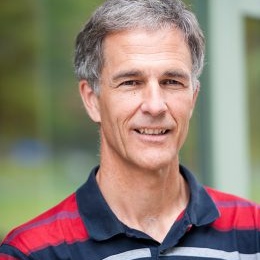
Erik CordesView profile
Professor
Erik Cordes is a Full Professor and Chair of the Department of Biology at Temple University's College of Science and Technology. He is a leading ecological oceanographer and deep-sea researcher, specializing in deep-sea corals, hydrocarbon seeps, seamounts, and the impacts of global ocean change and human activities on deep-sea ecosystems. Education: M.S., Moss Landing Marine Labs Ph.D., Penn State University Post-doctoral Fellow, Harvard University Dr. Cordes’s research focuses on understanding the ecology, physiology, genetics, and conservation of deep-sea organisms. He studies cold-water corals, chemosynthetic ecosystems like seeps, and seamount biodiversity, using tools such as submersibles, ROVs, AUVs, CTDs, marine aquaria, phylogenetics, RNAseq, and predictive habitat modeling. His work addresses critical issues including climate change (ocean acidification, warming, deoxygenation), oil and gas impacts, fisheries management, and marine spatial planning. He conducts expeditions across the Gulf of Mexico, U.S. Southeast, Caribbean, Costa Rica, and the Phoenix Islands. His recent publications reflect a strong trend in deep-sea ecological research, integrating field observations, experimental physiology, molecular biology, and modeling to understand species distributions, connectivity, adaptation, and ecosystem vulnerability. The work spans conservation science, evolutionary biology, and climate impact assessment, with increasing use of genomics and large-scale biogeographic analysis. Professional Affiliations & Roles: Pool of Experts, U.N. World Ocean Assessment Steering Committee, Challenger 150 Advisory Board, Earth Percent Dr. Cordes actively mentors students and leads the Cordes Lab at Temple University, where he supervises research on deep-sea systems. He collaborates extensively with scientists, filmmakers, artists, and communicators to promote public engagement with ocean science. He has secured significant research funding for deep-sea exploration and conservation, though specific grants are not detailed. His lab website (http://sites.temple.edu/cordeslab) serves as a hub for ongoing projects and outreach. Research Infrastructure: Cordes Lab – leads field expeditions and laboratory-based research in deep-sea ecology Active use of manned submersibles (47 dives, including to 6000 m), ROVs, and oceanographic instruments Marine aquaria for experimental physiology studies Genomics and bioinformatics capabilities (RNAseq, population genetics)