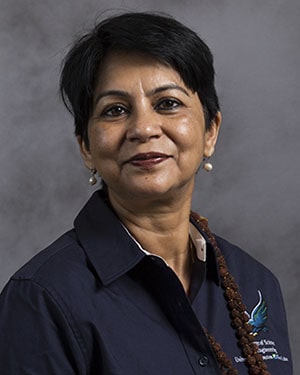
Mohd Ridhwan Abdullah is a Lecturer at the University of Reading Malaysia, serving as Head of the Foundation, Study and Language Institute (FSLI). He holds a Master of Applied Linguistics (MAL) and is an Associate Fellow of the Higher Education Academy (AFHEA), with a teaching background in academic English, research writing, and student-centred learning methodologies. Education: Master of Applied Linguistics, B.Ed (TESL), Certificate in Training (HRDF) His research interests focus on English for Academic Purposes (EAP) , Teaching English as a Second Language (ESL) , discourse analysis , and semiotics . His recent publications explore peer coaching in language learning, the psychological impact of social outreach projects, gamification in ESL education, and collaborative learning techniques through panel discussions. As Head of FSLI, he oversees programs like the International Foundation Programme , Pre-Sessional English Programme , and General Studies Programme (MPU) , with a focus on expanding the institute’s academic reach and ensuring pedagogical quality in Malaysia. He is actively involved in training educators for IELTS, TOEFL, and classroom management, while also promoting e-learning and student-centred pedagogy.
Ashkan Negahban is an Associate Professor of Engineering Management at Penn State University's Engineering Division (Great Valley). His work focuses on simulation-based learning, stochastic modeling, and optimization techniques in engineering education and transportation systems. NSF-funded project on immersive simulated environments for STEM education (2020–2025) Active in hybrid simulation methodologies and spatial analysis validation Contributions to bike-sharing system analytics and UAV communication modeling His research combines agent-based simulation with deep reinforcement learning , particularly examining immersion effects in educational settings. Key application areas include smart building energy control and manufacturing process optimization . Recent publications demonstrate a strong focus on Wasserstein distance applications, 3D blockage modeling , and stochastic supply chain planning . His technical contributions span simulation validation methods, bike station inventory analysis, and material handling system optimization.
Martin Christof Kindsmüller is a Professor of Human-Computer Interaction at the University of Applied Sciences Brandenburg , holding this position since September 2014. Previously, he served as Acting Professor of Human-Computer Interaction at the University of Hamburg (2012-2014). Member of GI e.V. - Fachbereich MCI Associated with Zentrum Mensch-Maschine-Systeme (ZMMS) at TU Berlin Co-founder of IUUI Research Group - Intuitive Use of User Interfaces Research Interests: His work spans User Experience (UX) , Usability Engineering , and Intuitive User Interfaces , with applications in Smart Applications , Medical Systems , and cross-platform development. He has contributed to frameworks like HCD3A for data-driven app design and theories of trend literacy. Recent Publication Trends: His 2025 studies focus on tangible interfaces and collaborative spatial interaction , while 2024 work addresses artistic data visualization and media informatics education . Earlier research (2021-2017) emphasizes UX implementation in SMEs , zooming UIs , and emotional computing . Academic Contributions: He has served on program committees for Mensch & Computer , CogSci , and KogWis conferences, and as reviewer for Behaviour & Information Technology . His teaching focuses on media informatics curricula and practical UX integration.
Edoardo Battegazzore is a Research Fellow at the Department of Control and Computer Engineering (DAUIN) at Politecnico di Torino , where he also serves as an external lecturer and teaching assistant. His work spans virtual and augmented reality applications in medical training, cognitive psychology, and public safety, supported by funded projects such as Holo-BLSD (2024-2025). Education: Completed his PhD (XXXV Cycle) with a thesis titled "Virtual and Augmented Reality Applications for Public Health and Safety" (2024), advised by Andrea Bottino and Fabrizio Lamberti Research interests focus on: Virtual Reality (VR) and Augmented Reality (AR) for medical training and cognitive testing Human-Computer Interaction in collaborative AR environments Simulation Modeling for seismic and pedestrian evacuation dynamics Gamification in education and behavioral studies Recent publications highlight trends in VR/AR applications for prosthetics, airway management, and public health, alongside behavioral studies on cooperation and competition. His work also covers usability evaluations of AR/VR devices for industrial and emergency training. Current affiliations include: CGVG - Computer Graphics and Vision Group (DAUIN) Collaborator on funded projects like Holo-BLSD (2024-2025)
Stefano Calzolari is a Ph.D. candidate in Computer and Systems Engineering at the Department of Control and Computer Engineering (DAUIN), Polytechnic University of Turin. He is also an external lecturer and teaching assistant at DAUIN, contributing to courses such as Game Design and Gamification, Computer Science, and Aerospace Engineering. Education MSc in Cinema and Media Engineering (LM-32), Polytechnic University of Turin (2023) PhD in Computer and Systems Engineering (2023–present) Stefano's research focuses on Embodied Conversational Agents (ECAs) for Extended Reality (AR/VR) applications. His work integrates animation techniques (Motion Matching and Inverse Kinematics), emotion modeling (PAD and Circumplex models), speech technologies (STT/TTS), and AI-based behavior planning (FSM, BT, GOAP, and LLMs). The goal is to enhance user believability through UX questionnaires and interaction data analysis. Research Groups Computer Graphics & Vision Group (CG&VG) Teaching Contributions Master's Degree Course in Game Design and Gamification (2024/25) Bachelor's Degree Course in Computer Science (2025/26 and 2024/25) for Aerospace Engineering
Giacomo Garaccione is a Ph.D. candidate in Computer and Systems Engineering at the Polytechnic University of Turin , affiliated with the Department of Control and Computer Engineering (DAUIN) and the SOFTENG - Software Engineering Group . He holds an MSc in Computer Engineering (Software) from the same institution. Current Role : Ph.D. candidate (38th cycle, 2022-2025) Teaching : External lecturer and teaching assistant for Information Systems and Software Engineering courses in Engineering and Management and Computer Engineering programs (2022-2025). His research focuses on applying gamification to software engineering education , with emphasis on conceptual modeling and GUI testing . He develops gamified tools like UMLegend and GERRY , integrating artificial intelligence and natural language processing for automated model validation and feedback. Publications analyze gamification’s impact on student productivity and perception in UML/BPMN education. Scientific recognition : Nominated for merit awards (2025). Collaborator on multiple studies involving large language models and gamified IDE plugins , with ongoing work to create a comprehensive gamified environment for software modeling and requirements training.
Luis Fernandez Sanz is a Professor in the Department of Computer Science at the University of Alcala (Spain). His primary affiliation is with the 'Information Technologies for Training and Knowledge' research group, where he investigates e-learning systems, software quality, cybersecurity, and digital accessibility. Research Focus: Professor Sanz's work spans: Development of adaptive e-learning platforms and accessibility standards Software quality measurement and testing methodologies Cybersecurity in cloud computing and data science applications Integration of gamification in educational technology EU digital competence frameworks and industry skill alignment Project Leadership: He has secured significant EU funding for projects including: DEDALUS (data literacy courses for universities) Be@CyberPro (cybersecurity career awareness game) e-Skills Match (ICT professional standards) Multiple contracts with UNINFO and European Commission bodies Teaching: He instructs courses in Software Quality/Testing, Project Management, and ICT applications across undergraduate and graduate computer engineering programs. Scholarly Output: His publications demonstrate consistent focus on emerging technologies, with recent work analyzing AI security threats, blockchain applications in banking, sustainable IoT systems, and accessibility engineering. Research often incorporates empirical validation and industry collaboration.
Inés López Baldominos is a Researcher in the Department of Computer Science at the University of Alcalá (UAH), where she teaches Project Management courses across multiple Computer Engineering degree programs. She is an active member of the Tecnologías de la Información para la Formación y el Conocimiento research group, contributing to various research lines in educational technology and digital systems. Her research interests span several interconnected domains: Digital accessibility implementation and European Accessibility Directives compliance E-learning technologies, standards, and adaptive learning systems Software quality, measurement, and engineering practices Cybersecurity applications (cloud and legal aspects) Digital competencies frameworks and assessment methodologies Gamification and motivation in learning environments Data science applications for analyzing professional skills requirements From 2020-2023, López Baldominos has maintained consistent scholarly output focused on practical implementation challenges in digital accessibility, European digital competence frameworks, and soft skills development for IT professionals. Her work demonstrates a strong connection between regulatory requirements, technical implementation, and user-centered design principles in educational technology contexts. Key research contributions include: Implementation methodologies for European Accessibility Directives in professional organizations Analysis of digital competencies frameworks across European educational systems Development of data-driven approaches to match soft skills with labor market demands Investigations into the integration of accessibility as a fundamental element in educational technology López Baldominos collaborates extensively with researchers including Luis Fernández-Sanz and Vera Pospe-lova, indicating strong research partnerships. Her work bridges theoretical research with practical applications, particularly in the implementation of accessibility standards and the development of frameworks for professional skills assessment in technology fields.
Professor Zuzana Kubincová serves as a Professor at the Department of Didactics of Mathematics, Physics and Informatics within the Faculty of Mathematics, Physics and Informatics at Comenius University in Bratislava, Slovakia. Her academic profile combines teaching responsibilities across programming and database courses with research focused on innovative assessment methodologies in computer science education. Her research expertise spans: Computer Science Education pedagogy Programming education techniques including code review implementation Peer assessment systems and digital badge applications Teamwork evaluation frameworks for collaborative learning Gender stereotype analysis in computing through cultural adaptation of the Draw-A-Scientist Test Professor Kubincová's scholarly contributions reveal a consistent focus on practical assessment tools that bridge professional software engineering practices with educational contexts. Her recent publications demonstrate particular innovation in developing 'negative badges' as constructive feedback mechanisms and adapting industry code review processes for classroom implementation. She actively supervises master's thesis students through the Diploma Thesis Seminar while teaching core courses including Programming (3), Database Principles, and the International Team Research Project. Her collaborative research network includes prominent colleagues like Iveta Demková and Martin Homola, with publications appearing in respected venues such as the Advances in Intelligent Systems and Computing series and the Journal of Universal Computer Science.
Professor Antonija Mitrovic is Head of Department and Professor of Computer Science and Software Engineering at the University of Canterbury's Faculty of Engineering. With a PhD from the University of Nis (1994), she has been faculty since 1994. Her leadership includes serving as President of the International Artificial Intelligence in Education Society (2013-2015). Research interests center on Intelligent Tutoring Systems , Learning Analytics , and Educational Technology , with specialization in constraint-based modeling. Her work bridges computer science education and professional skills development, particularly in software engineering contexts. Recent publications focus on AI-driven educational tools, video-based learning analytics, and soft skills training. Trends show strong emphasis on: Explainable AI in tutoring systems Video interaction analytics Industry-aligned software engineering education Social learning platforms Awards include: Distinguished Researcher Award, Asia-Pacific Society for Computers in Education (2011) She actively supervises 25+ graduate students, with projects spanning adaptive learning systems, gamification, and communication skills training. Current work explores AI ethics in assessment and international educational collaborations.
Dr. James Atlas is a Senior Lecturer in the Department of Computer Science and Software Engineering at the University of Canterbury's Faculty of Engineering, where he has been employed since July 2018. His primary affiliations include full-time academic responsibilities at this institution. His research spans: Core CS : Artificial intelligence, machine learning, constraint optimization Systems : Distributed and high-performance computing Applied domains : Medical data analysis (CT reconstruction, health prediction), earth/space exploration (flood mapping, environmental monitoring), and multi-agent systems Education : Curriculum development, threshold concept gamification Recent publication analysis (2019-2025) reveals dominant themes in deep learning applications for medical imaging (spectral CT reconstruction, bioacoustic analysis) and environmental sensing (3D tree modeling, vineyard monitoring, flood prediction), with consistent interdisciplinary collaboration. He actively supervises 10 graduate students researching: Machine learning for global flood exposure mapping CT reconstruction algorithms and artifact correction EMG-EEG hybrid prosthetics Hierarchical reinforcement learning Automated 3D digital tree modeling Bioacoustic monitoring systems
Dr. Carmen Chai Wang Er serves as a Lecturer in Information Technology at Swinburne University of Technology, Sarawak within the Faculty of Engineering, Computing and Science since January 2024, leveraging expertise in serious games for digital health and educational interventions. Her academic credentials include: PhD in Computer Science from SUTS (2022) M.Sc. in Research (Computing) from SUTS (2018) B.Sc. in Computer Science and Software Engineering from SUTS (2012) Dr. Chai's research pioneers serious game applications for vulnerable populations, developing evidence-based tools to enhance spatial navigation for visually impaired children and treatment adherence for pediatric cancer patients. Her work bridges game design, human-computer interaction, and clinical health outcomes with emphasis on user-centered development and motivational frameworks. Recent publications reveal a trajectory toward rigorous clinical evaluation of game efficacy in healthcare settings, with increasing international collaboration and focus on measurable patient outcomes. Her research excellence is recognized through: 2022 InTEX Gold Award for childhood cancer motivational game intervention 2018 InTEX Gold Award for visual impairment spatial navigation tool As a supervisor, Dr. Chai actively recruits PhD and Master by Research students for projects in serious games and digital health, with award-winning track record suggesting strong funding support. She maintains industry connections from prior roles at Sarawak Information Systems and Pyxidust Studio. Her collaborative research approach includes international partnerships, as evidenced by 2022 publications with Bangladeshi co-authors, though no formal laboratory structure is documented.
Dr. Sridhar Chimalakonda serves as Associate Professor and Head of the Department of Computer Science & Engineering at the Indian Institute of Technology Tirupati, with an adjunct appointment as Associate Professor at the University of Waterloo. His academic leadership spans software engineering research and educational innovation. His educational qualifications include: Ph.D. from International Institute of Information Technology Hyderabad, India MS by Research from International Institute of Information Technology Hyderabad, India Research expertise encompasses: Software Engineering : Empirical studies, quality assurance, reuse methodologies, product lines, architecture, ontologies, and gamification Educational Technologies : Instructional design optimization, personalized learning systems, and VR/AR applications for educational storytelling and laboratories Human Computer Interaction : User-centered design in educational and software development contexts Publication analysis (2021-2024) reveals a strategic evolution from foundational software engineering research toward integrated educational applications, particularly in gamified machine learning education for K-12 audiences and sustainable software practices. His work demonstrates consistent methodological rigor in empirical studies while expanding into cross-disciplinary educational technology innovation.
Valeria Borsotti is a Postdoctoral Researcher at the Department of Public Health, Faculty of Health and Medical Sciences, University of Copenhagen, and affiliated with Medical Museion. Her work bridges computer science and anthropology to address critical issues of equity and accessibility in digital systems. Education: PhD in Computer Science, University of Copenhagen (awarded April 12, 2024) MS in Anthropology, Department of Anthropology (awarded November 20, 2011) Dr. Borsotti's research focuses on the complex mechanisms behind organizational change towards equity and accessibility. With a mixed background in Computer Science and Anthropology, she employs experimental, interventionist ethnographic approaches, mixed methods, and co-creation techniques - including game development - to investigate how digital systems can be made more inclusive. Her current work examines the ethical challenges and opportunities of digitizing human remains, while her previous research has explored equity and organizational accountability in tech institutions; accessibility and neurodiversity in higher education; and issues of access in public digital systems. Her publication record demonstrates a consistent focus on equity and accessibility across multiple domains. She has made significant contributions to understanding organizational barriers to accessibility in universities, developing design artifacts for equity in computer science education, and examining how humor and stereotypes affect institutional accountability in computing. Her innovative approach often involves creating interventions like DOREEN, a game designed to provoke new ambitions for equity in computing. Scientific Awards: DIKU PhD Community Leadership Award 2023 ACM-SIGSOFT Distinguished Paper Award - ICSE-SEET'18, Software Engineering Education & Training (2018) Jury's Prize (Prix "Choix du jury") UMIX Hackathon in Information Architecture - ENS de Lyon, France + ENSSIB (2014) As an active member of the academic community, Dr. Borsotti supervises students interested in her research areas and collaborates with organizations including the Bevica Foundation Universal Design Hub and the EASA Applied Anthropology Network. She is fluent in Italian, English, Spanish, and Danish, which enhances her ability to conduct cross-cultural research. Her work sits at the intersection of digital anthropology, human-computer interaction, and social justice, with practical applications in museum studies, higher education, and public sector digital services.
Dr. Soma Datta serves as Associate Professor and Program Chair in the Software Engineering department at University of Houston-Clear Lake's College of Science and Engineering. Her academic leadership spans curriculum development, graduate supervision, and innovative teaching methodologies. Dr. Datta's research focuses on three interconnected domains: Agile software development frameworks and hybrid methodologies Applied machine learning for predictive modeling in education and IoT systems Gamification techniques for enhancing software engineering education Her work bridges theoretical research with practical applications through projects like virtual laboratory development for disaster-resilient education and ADHD learning tools. Her publication record from 2017-2020 shows consistent output in agile methodologies (40%), machine learning applications (30%), and educational innovation (30%), with notable contributions to hybrid agile processes and gamified learning environments. Professional recognition includes: Instructional Innovation Award Honorable Mention (2020) IEEE conference best presentation awards (2017, 2019) Featured as 'Professor to Know' in online software engineering education New Faculty Teaching Award (2018) Dr. Datta actively mentors graduate students in agile frameworks and software implementation, emphasizing conference presentation opportunities. She founded UHCL's Code for Girls Camp for middle-schoolers and has taught data science internationally to sixth-graders, demonstrating commitment to STEM pipeline development. Current research includes virtual labs for the MicroCURE network and machine learning applications for student recruitment.