Hamish Stening is a Researcher at Macquarie University , affiliated with the School of Psychological Sciences and the Department of Linguistics . His work bridges Deep Learning , Video Games , and Human-AI Collaboration , focusing on how humans interact with synthetic agents and adaptive systems. Research Interests : Deep Learning & Reinforcement Learning : Developing AI agents that learn from human interaction. Cognitive Science : Exploring decision-making and situational awareness in dynamic environments. Collaborative Systems : Designing tools like DesertWoZ to test team dynamics with AI. Recent Activities include presentations on Quantifying Situation Awareness and Realistic Dialogue for Synthetic Teammates at the 2023 Cognitive Science Conference . His work has been published in venues like Frontiers in Psychology and Cognitive Science .
Mirjam Palosaari Eladhari is an Associate Professor (Docent) at the Department of Computer and Systems Sciences, Stockholm University. Her work bridges AI-based game design, interactive narratives, and co-creation, focusing on meaningful play experiences for mental health and cultural representation. Teaching: Game design and research methods Research: Interactive digital narratives, assistive technology, queer representation in games Projects: EU COST Action INDCOR, Sweden’s Female-Forward Creative Industries, Autism support platform Mirjam leads the Distributed Immersive Participation research group, exploring participation in physical and virtual societies. She contributes to organizations like Higher Education Video Game Alliance and Society for the Advancement of the Study of Digital Games . Her practical work includes games under the label Otter Play and digital art projects.
Professor Ian Mitchell is a faculty member in the Department of Computer Science at the University of British Columbia's Faculty of Science. He received his B.A.Sc. and M.Sc. from UBC and PhD in Scientific Computing and Computational Mathematics from Stanford University. His research focuses on algorithms for hybrid systems, level set methods for Hamilton-Jacobi PDEs, control systems for cyber-physical applications, assistive technology development, and reproducible research practices. Key research contributions include the Toolbox of Level Set Methods Development of Dijkstra-like ordered upwind methods Advancements in safety-preserving control algorithms Applications in smart wheelchair navigation and user interface design His recent publications demonstrate expertise in Hamilton-Jacobi equation solving, robotics applications of level set methods, and assistive technology design. While no explicit awards are listed, his work spans multiple disciplines including computer science, control theory, and biomedical engineering. He teaches both graduate (CPSC 5xx) and undergraduate (CPSC 4xx and below) courses in computational robotics and parallel computing.
Dr. Sanghoon Park serves as Associate Professor and Learning Design and Technology program coordinator at the University of South Florida's College of Education. He teaches graduate courses including 'Current trends of Instructional Technology,' 'Interactive Media,' and 'Motivational Design in Learning Technology,' focusing on creating optimal learning environments through integrated teaching, research, and service. His research centers on enhancing educational experiences through instructional design and emerging technologies. Primary focus areas include motivational interventions for online learners, multimedia technology in K-16 STEAM education, and applications of augmented reality, virtual simulations, and AI-chatbots. This work drives innovations in learning experience design while addressing challenges in engagement and accessibility across diverse educational contexts. Recent publications (2023-2025) reveal strong trends in immersive technology applications for teacher training, AI-driven student support systems, and motivational design frameworks. Key thematic clusters include VR/AR simulation development, cognitive load management in immersive environments, and chatbot implementations for academic advising and regulatory support. Dr. Park's scientific recognition includes: Multiple Outstanding Publication awards from AERA and AECT Crystal award and Best Practice award Immersive Learning award and Young Researcher award USF Innovation in Online Design and Teaching award (2023) He has mentored approximately 100 doctoral students and over 200 master's/specialist students while coordinating USF's Master of Science in Learning Design and Technology. Current grant activities include Florida Department of Education-funded projects on civics literacy excellence through emerging technologies, alongside international collaborations with South Korean researchers on virtual teaching simulations and Learning Experience Analysis (LxA) frameworks. Dr. Park actively collaborates within USF's College of Education and maintains international research partnerships, particularly with Korean institutions. He contributes to professional communities through leadership roles in AECT, AERA, and AACE, including editorial boards, program committees, and special interest group coordination focused on advancing educational technology research and practice.
Kenneth S. McAllister is a Professor of Public & Applied Humanities at the University of Arizona's College of Humanities. He serves as Co-Director of the Learning Games Initiative Research Archive and Associate Dean of Research and Program Innovation. His scholarly work bridges rhetoric, digital humanities, and game studies. Ph.D. in English (Rhetoric) from University of Illinois at Chicago M.A. in Creative Writing (Poetry) from University of Illinois at Chicago B.A. in English (American Literature) from University of Illinois at Chicago His research focuses on the history of Western rhetorics , computational rhetorics , archival studies , and maker culture . He explores intersections between digital humanities , game design , and pedagogical innovation . The 15 most recent publications reveal trends in game preservation , VR pedagogy , and collaborative media analysis . McAllister co-founded the UA CATalyst Studio (iSpace) - a transdisciplinary maker lab for immersive technologies. He has received grants including funding from the Center for Educational Resources in Culture, Language, and Literacy for "Fluency in Play" research.
Yatsko Oksana Myroslavivna is an Associate Professor at the Department of Computer Science, Chernivtsi National University named after Yuriy Fedkovych. She holds a Candidate of Pedagogical Sciences degree (specialty 13.00.02 - theory and methods of teaching informatics) and has been certified as an Associate Professor since 2022. Her research focuses on computer-oriented methodological systems for teaching computer disciplines, with specializations in data mining for business applications, game theory implementation in economic decision-making, web technologies development, and algorithm design. She actively contributes to educational literature with multiple textbooks on Discrete Mathematics, Operations Research, Web Technologies, and Systems Modeling. Her professional engagements include membership in the Bukovina Information Technology Cluster, Chernivtsi Mathematical Society, and participation in international conferences like SPIE Optical Engineering and Correlation Optics. She has completed advanced certifications in machine learning, data visualization, and online education technologies from Prometheus, SoftServe, and other institutions. Her publications demonstrate expertise in strategic business analysis, cross-platform decision support systems, and educational software development. The 15 most recent works (2023-2024) cover data structures, game theory applications, web development tools, and polarization-based biomedical diagnostics. She serves as an expert for Ukraine's Ministry of Education and National Agency for Quality Assurance in Higher Education.
Dr. Susanne Schmidt is a Researcher at the Human-Computer Interaction Group within the Department of Informatics at the University of Hamburg . Her work focuses on Spatial Augmented Reality (Projection Mapping), Tangible Interfaces , and Intelligent Virtual Agents , with a strong emphasis on natural interaction techniques. Research Interests Human-Computer Interaction Projection Mapping Tangible Interfaces Computer Graphics Game Engines Her recent publications highlight trends in Extended Reality (XR) , including Neural Radiance Fields for immersive environments, multimodal interaction , and depth perception in projection-based systems. She contributes to advancing assistive interaction techniques and inclusive VR design . Labs & Teams XR Lab Human-Computer Interaction Research Group
Dongping Zhang is a Research Scientist at the National Renewable Energy Laboratory (NREL), specializing in AI and data visualization. He works within the Computational Science Center's Data, Analysis, and Visualization group and AI, Learning, and Intelligent Systems group. Education: Ph.D. and M.S. in Technology and Social Behavior from Northwestern University M.A. in Computational Social Science from University of Chicago B.A. in Economics and Statistics from University of California, Berkeley His research focuses on quantifying and visualizing uncertainty in machine learning models for renewable energy, energy efficiency, and transportation. This includes developing decision-support systems, explainable AI interfaces for black-box models, and tools for strategic decision-making in competitive multi-agent environments. Recent publications highlight his work on conformal prediction sets for AI-advised tasks, probabilistic graph visualization (NetHOPs), and predictive interfaces for strategic environments. His methods bridge machine learning, human-computer interaction, and behavioral economics. Scientific Awards: Best Paper Honorable Mention at CHI Conference (Top 5% of 4,028 submissions) Segal Design Institute Research Cluster Fellowship Regents' and Chancellor's Scholarship (UC Berkeley, top 2%) Berkeley Club of Hong Kong Undergraduate Scholarship He has contributed to open-source tools like the NetLogo Taxi Cabs Model and collaborates with interdisciplinary teams including Jessica Hullman (Northwestern), Eytan Adar (University of Michigan), and Jason Hartline (Northwestern).
Dr. Camille Dickson-Deane serves as Deputy Head of School Research in the School of Professional Practice and Leadership at the University of Technology Sydney (UTS), Australia. She joined UTS's Faculty of Engineering and Information Technology in 2023 after holding positions at University of Melbourne, University of Missouri-Columbia, and University of the West Indies Open Campus. As a Senior Lecturer, she brings extensive expertise in educational technology and learning sciences to her academic leadership role. Her educational background includes a PhD in Information Science and Learning Technologies from the University of Missouri-Columbia, an MSc in Software Development and Management from Rochester Institute of Technology, and a BSc in Computer Science from the University of the West Indies. She holds additional certifications including Blended Learning Designer from University of Central Florida, Creative Commons Educator, Project Management Professional (PMP), and Six Sigma. Dickson-Deane's research focuses on the intersection of learning sciences, usability evaluation, human-computer interaction, educational technology, and individual differences. Her work consistently addresses issues of equity, inclusion, and accessibility in digital learning environments, with particular attention to cultural contexts and diverse learner needs. She has developed frameworks for evaluating digital learning tools through a strength-based lens and has contributed significantly to understanding how learning technologies can be designed to support all learners. Her extensive publication record demonstrates a clear trajectory toward addressing contemporary challenges in educational technology, with recent work focusing on generative AI applications in education, equitable learning design, and postdigital educational futures. Through her 70+ research outputs including the open-source Springer book 'Global Perspectives on Educational Innovations for Emergency Solutions,' she has established herself as a thought leader in creating accessible, flexible, and just educational technologies. Instructor of the Year 2013 from University of Missouri Excellence award 2012 from Project Management Institute Outstanding Publication award 2018 from Association for Education Communications and Technology Leaner Engagement and Social Impact awards 2022 As an academic leader, Dickson-Deane supervises Masters and PhD students while serving on multiple editorial boards including Education Technology Research and Development, Internet and Higher Education, and Journal of Computing in Higher Education (as Associate Editor). She actively contributes to shaping educational policy through committee work at UTS including the Faculty Academic Board, EdTech Ethics Working Group, and Assessment Working Group. Her leadership extends to international organizations as an Expert Panel Member for the EDUCAUSE Horizon Report and Executive Board Member of the Association for Educational Communications and Technology.
Giulia Wally Scurati is a Postdoctoral Fellow at the Department of Mechanical Engineering, Blekinge Institute of Technology, specializing in using virtual reality (VR) , augmented reality (AR) , and serious games for sustainable behavior change and product development. Her research spans mechanical engineering , human-computer interaction , and environmental psychology . She has a PhD in Mechanical Engineering from Politecnico di Milano, with a thesis on design methods for VR/AR in sustainable behavior. Current projects include AXESS (Assessment in XR Environments for Sustainable Solutions). Key Research Areas: Sustainable behavior, VR/AR applications, product-service systems (PSS), multisensory feedback, gamification, and human-robot interaction. Collaborations: Works with institutions like Politecnico di Milano, Politecnico di Torino, and University of Twente.
Lorenzo Laudadio is a PhD Student in Computer and Systems Engineering at the Politecnico di Torino (Department of Control and Computer Science - DAUIN) since 2023, with an expected completion in 2026. Additionally, he holds the role of a Lecturer and/or teaching assistant within the same department, contributing to courses like Business Information Systems and Visualizing Quantitative Information. Education : Master's in Computer Engineering (2023) with a thesis on privacy-oriented software development. Research Group : Software Engineering Research Group (Softeng Polito). Research Focus : Application of gamification to enhance web and mobile application testing, particularly end-to-end testing . This involves integrating game-design mechanics (leaderboards, scores, customization) into testing workflows to improve engagement and performance, addressing the repetitive nature of testing activities. His work also intersects with GDPR compliance and accessible development through tool creation. Key Research Themes : The articles co-authored by Laudadio reflect trends in gamification-driven testing tools (GAppium, ScoutDroid), privacy compliance (MINOS), and data visualization in software engineering research. His work bridges theoretical frameworks with practical implementations, often involving tool prototyping for real-world application. Academic Contributions : As a course collaborator, he has supported teaching across multiple academic years (2023/24 to 2025/26), primarily in Computer Science Engineering and Management Engineering programs. His involvement spans curriculum design, student mentorship, and empirical research guidance.
Vedad Hulusic serves as Associate Professor and Deputy Head of the Creative Technology Department within Bournemouth University's Faculty of Science and Technology. He previously held positions as Assistant Professor at University Sarajevo School of Science and Technology and Post-doctoral Researcher at Télécom ParisTech, and acted as REF 2021 Output Champion for Computer Science and Informatics (UoA11). His academic credentials include: PhD in Engineering, University of Warwick, UK BSc in Computer Science, University of Sarajevo, Bosnia and Herzegovina Hulusic's research spans serious games, digital cultural heritage, XR technologies, assistive technology, and cross-modal interaction. His work bridges computer graphics with real-world applications in education, healthcare, and cultural preservation, emphasizing user-centered design and accessibility. Recent projects focus on multi-user XR for cultural heritage and haptic interfaces for children with disabilities. Analysis of his publication record reveals consistent innovation in XR applications for cultural heritage, with growing emphasis on accessibility and user experience. His work demonstrates strong interdisciplinary collaboration with museums, industry partners, and healthcare institutions, while maintaining technical rigor in image quality assessment and perceptual modeling. His scientific recognition includes: Four international best paper awards (CGVC 2023, EG GCH 2021, EG GCH 2018, ACM SCCG 2008) Innovative Value Award (Kingston University London, 2023) Vice Chancellor Scholarship (University of Warwick, 2007) Hulusic actively mentors PhD candidates including Zhenhao Tian, Ethan Southall, Nicholas Lindfield, and Wenjun Liu, focusing on XR and serious games applications. His funded projects include the HEIF-supported 'Feeling the UNfelt (FUN)' assistive technology initiative and current industry collaboration with Noho Ltd on multi-user XR. He has participated in EU frameworks including V-MusT.net and HDRi projects, demonstrating sustained success in securing competitive research funding. As core member of Bournemouth's Centre for Computer Graphics (CCG) and Studio for Games and Animation Technology (SGAT), he drives collaborative research with cultural institutions and industry partners to advance digital heritage preservation and accessible technology design.
Gerit Götzenbrucker is an Associate Professor at the University of Vienna's Faculty of Social Sciences, Institute of Journalism and Communication Studies. With an ORCID ID of 0000-0002-2626-8182, they have over 20 years of publications and research activity. Their work focuses on media education, social interaction, and ICT-mediated urban mobility solutions, particularly for vulnerable populations. Key research areas: Media Education, Social Learning, Urban Mobility, and Digital Integration Projects: 'Serious Beats' (2011-2013) analyzing digital integration of migrants, and 'myITS' (2012) receiving Smart City recognition Academic leadership: Active in inter- and transdisciplinary research connecting social sciences with technology development Their recent work explores TikTok's feminist discourse (2023) and ICT applications for anxiety disorder support in public transportation (2025). They have contributed to over 127 publications and participated in 116 academic activities, including methodological workshops on visual analysis (2023). Scientific awards include: Bank Austria Stiftungspreis (2001) for interdisciplinary research 'Good Practice/Innovations' Call-Preis (2013) for 'Serious Beats' 'Smart City' Partnerpreis der Wiener Stadtwerke (2012)
Kirsten Hermes serves as Senior Lecturer in Music Performance Technology at the University of Westminster since 2016, merging academic research with professional practice as electronica artist Nyokee. Her work bridges psychoacoustic engineering, electronic music performance, and creative technology development. Her educational foundation includes an EPSRC-funded PhD in Sound Recording and Psychoacoustic Engineering from the University of Surrey, where her thesis focused on spectral clarity predictors in music mixes. Research centers on automatic music mixing tools and spectral clarity modeling , expanding into AI's impact on creativity, virtual artist identities, and chiptune culture. Recent work examines pandemic adaptations in online music communities and audiovisual integration in live electronic performance, emphasizing practical applications for musicians. Analysis of her 15 most recent publications (2021-2025) reveals an evolution from core psychoacoustic research toward interdisciplinary exploration of AI, virtual performance, and cultural adaptation in electronic music. Key trends include human-AI collaboration frameworks, chiptune's digital resilience, and the role of 3D avatars in artist identity construction. She currently supervises doctoral researcher Clara Colotti, whose thesis investigates audiovisual expansion of orchestral cultural scope. While specific grant details aren't provided, her EPSRC-funded PhD demonstrates research funding capability. Affiliated with the university's Music Research Group, she actively engages the electronic music community through Nyokee performances at MAGfest, Comic Con, and Hyper Japan, blending academic inquiry with stage practice.
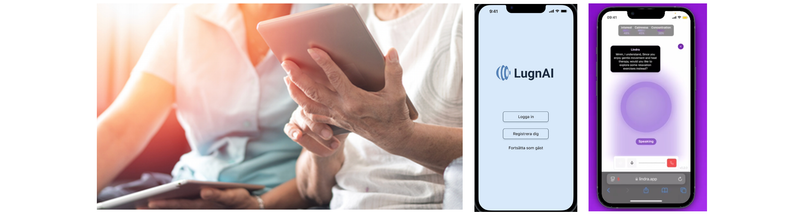
Sanna Kuoppamäki is an Assistant Professor in Technology in Health Care at KTH Royal Institute of Technology, working within the Department of Health Informatics and Logistics in the School of Engineering Sciences in Chemistry, Biotechnology and Health. Holding a PhD in Sociology, she conducts interdisciplinary research focused on user-centric digital technologies for health and well-being, with particular emphasis on healthy ageing applications. Her research program investigates the use and design of interactive technologies for healthy ageing through social robotics, wearable technologies, and mobile health applications. Dr. Kuoppamäki develops innovative methodologies that involve users throughout the design process, particularly focusing on older adults and children. Her work is theoretically grounded in social practice theory, media and communication studies, and participatory design methodologies, with a strong emphasis on understanding how technologies shape and are shaped by everyday life to create more inclusive solutions. Current research themes include conversational AI for mindfulness coaching, social robotics for elderly care, wearable technologies for physical activity monitoring, and AI-driven platform care systems. Analysis of Dr. Kuoppamäki's recent publications reveals a clear evolution toward increasingly sophisticated AI applications in elderly care contexts. Her work consistently bridges computer science, sociology, healthcare, and design disciplines, with growing emphasis on large language models, multi-modal interaction, and ethical considerations in technology deployment. The research demonstrates strong methodological rigor, with frequent use of participatory design approaches and qualitative user studies to ensure technologies meet the specific needs of older adult populations. Dr. Kuoppamäki currently leads or co-leads multiple significant research projects including 'Robots as Welfare Technologies and Actors for Elderly Care' (NORDFORSK, 2025-2029), 'AI-driven platform care (CareQuAI)' (FORTE/MYBL, 2025-2027), 'Adaptive Intelligent Homes' (Digital Futures, 2024-2025), 'Conversational AI for digital mindfulness with older adults (LugnAI)' (2023-2025), and 'Enhancing older adults' physical activity through inclusive design of interactive wearable sensor devices (Age-Wear)' (Kamprad Family Foundation, 2024-2026). As an educator, Dr. Kuoppamäki serves as course responsible and examiner for 'Entrepreneurship in Technology and Health' and 'Sociocultural Perspectives to Innovative Technologies,' while also teaching 'Industrial Marketing.' She has supervised numerous PhD and Master's students working on projects related to conversational AI applications, social robotics, and wearable technologies for elderly care, with several students completing theses on topics including age-inclusive mindfulness apps, conversational agents for cognitive assistance, and interactive wearable technologies for physical activity monitoring.