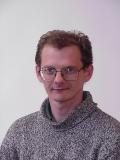
Professor Neil Strickland is a faculty member at the University of Sheffield's School of Mathematical and Physical Sciences, holding the rank of Professor. He earned his PhD from the University of Manchester in 1992 and held positions as a C.L.E. Moore Instructor at MIT and a Research Fellow at Trinity College Cambridge before joining Sheffield in 1998. He received the prestigious Whitehead Prize from the London Mathematical Society in 2005. His research focuses on stable homotopy theory, exploring connections between topology, algebraic geometry, and category theory. Key areas include formal group laws, chromatic homotopy theory, and equivariant cohomology. Prof. Strickland emphasizes translating topological problems into algebraic frameworks, leveraging category theory for structural insights. Grants: He has led EPSRC-funded projects, including 'Symmetric Powers of Spheres' and 'Equivariant Elliptic Cohomology and Class Field Theory,' and collaborated on grants like 'Higher Structures on Elliptic Cohomology.' Teaching: Prof. Strickland instructs courses such as MAS334 Combinatorics and MAS435 Algebraic Topology. His homepage provides further academic resources and materials. Awards: His recognition includes the Whitehead Prize, reflecting contributions to algebraic topology and homotopy theory.
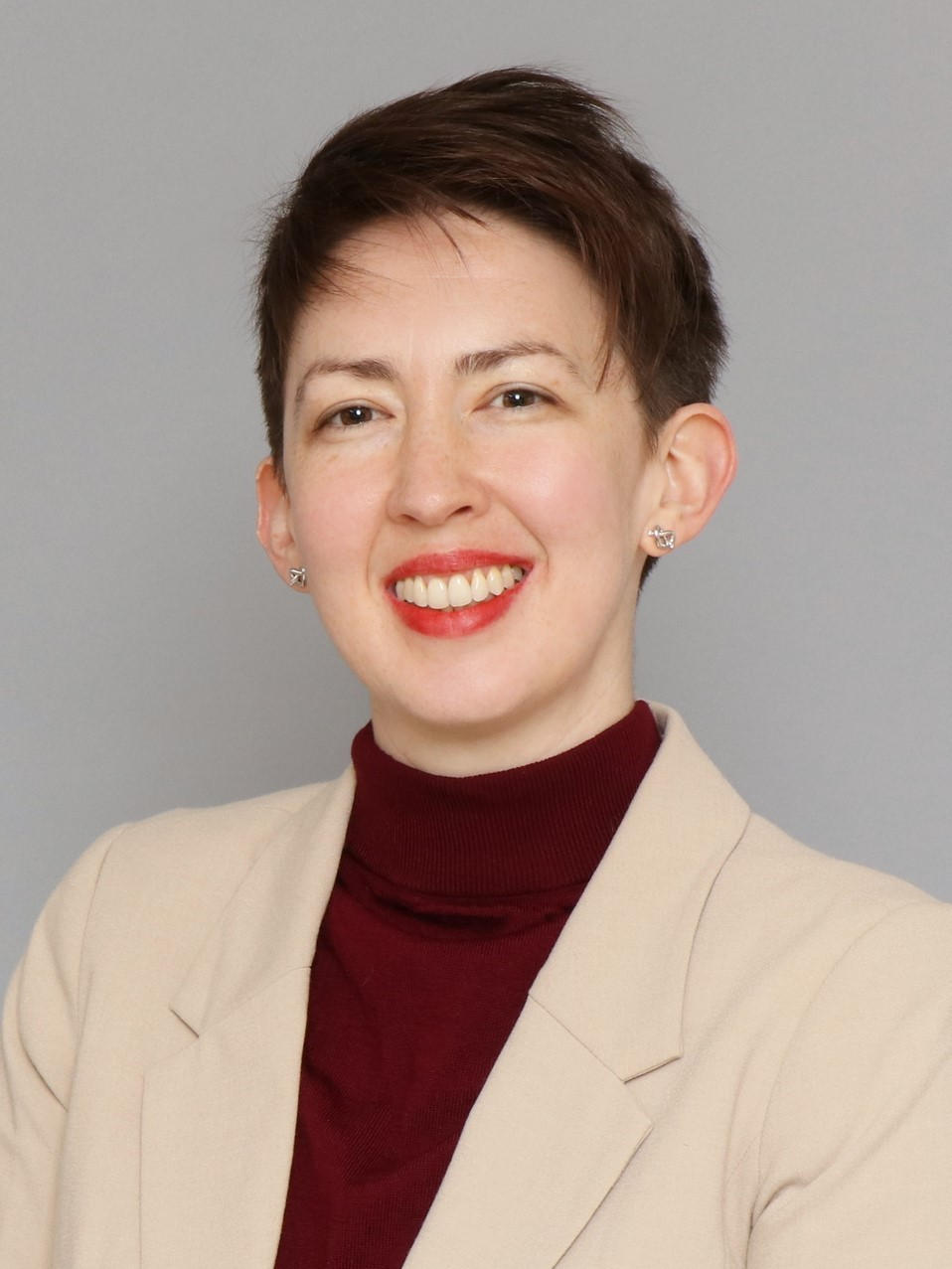
Melanie Matchett Wood is the William Caspar Graustein Professor of Mathematics at Harvard University. Her research spans number theory, arithmetic statistics, algebraic geometry, and probability theory, with a focus on distributions of class groups, Galois groups of unramified extensions, and random algebraic structures. She has been supported by prestigious awards including the Packard Fellowship, the NSF Waterman Award, and the MacArthur Fellowship. Her work connects number theory to topology through function field analogs, studying moduli spaces of curves and their statistical properties. She has made significant contributions to understanding the universality of random matrix cokernels and their applications to sandpile groups of graphs. Her editorial roles include the Journal of the American Mathematical Society and Algebra and Number Theory . Recent publications emphasize arithmetic topology, proving universality theorems for 3-manifold groups, and developing new heuristics for class group torsion. She organizes seminars on arithmetic statistics and topology-number theory interactions. Her teaching includes advanced courses like Algebraic Number Theory and Class Field Theory, with research supervision spanning PhD and undergraduate projects. Scientific Awards: Packard Fellowship for Science and Engineering National Science Foundation Waterman Award MacArthur Fellowship
Søren Galatius is a Visiting Professor at the Department of Mathematical Sciences, University of Copenhagen. His research focuses on algebraic topology with an emphasis on moduli spaces, homology spheres, K-theory, and cobordism categories. He holds a PhD and has established himself as a leading figure in geometric topology and algebraic structures in mathematics. Recent research has explored topics such as general linear groups over finite fields, Pontryagin classes, and tropical geometry applications to moduli spaces. His work bridges pure algebraic topology with geometric and combinatorial methods, contributing foundational insights into modern mathematical frameworks. Key collaborations include projects with Oscar Randal-Williams and Martin Hairer, advancing understanding of cobordism categories and topological field theories. His articles consistently appear in top-tier journals like Annales Scientifiques de l'Ecole Normale Superieure and Inventiones Mathematicae . No scientific awards or grants are explicitly listed in the provided materials, though his publication record speaks to significant academic contributions. No advisee students are documented here.
Colin Ingalls is a Full Professor in the School of Mathematics and Statistics at Carleton University. His research focuses on Noncommutative Algebra and Algebraic Geometry, with contributions to areas such as noncommutative resolutions, quiver representations, and birational geometry. He has advised numerous graduate students, including Master’s and PhD candidates, whose theses cover topics like Hochschild cohomology, McKay quivers, and Brauer pairs. Ingalls has an extensive publication record, with recent work exploring reflection groups, discriminant loci, and derived categories of algebraic structures. His research interests span the intersection of algebra and geometry, emphasizing noncommutative methods to address classical geometric problems. He maintains active collaborations, evidenced by co-authored papers on topics such as minimal model programs for orders and applications of Koszul duality. Ingalls’ work bridges abstract algebraic theory with geometric constructions, contributing to foundational advancements in these fields.
Katrina Honigs is an Assistant Professor in the Department of Mathematics at Simon Fraser University (SFU), located on the unceded traditional territories of the Coast Salish peoples. Her research focuses on algebraic and arithmetic geometry, particularly varieties over fields of positive characteristic, Q-rational points, and derived categories of coherent sheaves. She earned her Ph.D. in Mathematics from UC Berkeley in 2015, preceded by an MASt from the University of Cambridge (2009) and a BA from Grinnell College (2008). Her research explores topics such as derived equivalences, abelian varieties, and geometric structures like Kummer varieties. Recent work includes studies on symplectic involutions, theta characteristics, and the Brauer-Manin obstruction on Calabi-Yau threefolds. Honigs has taught courses at SFU (e.g., Math 818, 817, 240) and previously at the University of Utah and University of Oregon. She actively contributes to academic service, organizing conferences like the Mathematics Research Community on Derived Categories and co-organizing the SFU Number Theory and Algebraic Geometry seminar. Honigs has authored or co-authored over 15 refereed articles and preprints, with a focus on categorical methods in algebraic geometry and arithmetic applications. Her outreach includes talks on Pythagorean triples and algebraic geometry for diverse audiences. Professional activities include participation in workshops at institutions like BIRS and Cornell, reflecting her engagement with both foundational and applied aspects of her field.
Prof. Dr. Eugen Hellmann is a full Professor at the Mathematical Institute of the University of Münster , within the Department of Mathematics and Computer Science . He is a leading researcher in arithmetic geometry and representation theory, actively contributing to the CRC 1442 Geometry: Deformations and Rigidity and Mathematics Münster excellence cluster. His work focuses on the p-adic aspects of the Langlands program, moduli spaces of Galois representations, and p-adic Hodge theory. Research Interests: His primary research areas include Arithmetic Algebraic Geometry , the Langlands Program (especially its p-adic and categorical formulations), p-adic Hodge Theory , p-adic Galois Representations , and p-adic Automorphic Forms . His work often involves the study of (phi,Gamma)-modules, eigenvarieties, and deformation spaces, aiming to understand the deep connections between automorphic forms and Galois representations in the p-adic setting. Publication Trends: His most recent publications (2022–2023) show a strong focus on the derived and categorical aspects of the p-adic Langlands program, including the derived category of Hecke algebras and a categorical framework for the entire program. Earlier works established foundational results on the smoothness of eigenvarieties, the geometry of trianguline varieties, and the structure of moduli spaces for Galois representations. His research consistently bridges abstract algebra, number theory, and algebraic geometry. Scientific Awards: No specific awards or fellowships are mentioned in the provided texts. Advising and Grants: While a list of former research group members (e.g., Dr. Claudius Heyer, Dr. Damien Junger) is provided, their exact status as PhD advisees is not explicitly confirmed. He leads significant research projects funded by the DFG, including CRC 1442 - A01: Automorphic forms and the p-adic Langlands programme and CRC 1442 - A02: Moduli spaces of p-adic Galois representations , as well as a project within the EXC 2044 - A1: Arithmetic, geometry and representations cluster. He is also a co-author on a preprint titled "Patching and multiplicities of p-adic eigenforms," indicating active collaboration on grant-funded research. Labs and Teams: He is a central figure in the arithmetic geometry group at Münster. He organizes and leads the Research Seminar "p-adic arithmetic" and the Mittagsseminar "Arithmetic" , which serve as key forums for his research group and collaborators to present and discuss current work. His research team has included several postdoctoral researchers and doctoral students, contributing to a vibrant research environment focused on cutting-edge problems in number theory.
Alp Bassa is a Professor of Mathematics at Boğaziçi University, affiliated with the Department of Mathematics. He holds a Ph.D. in Mathematics from Universität Duisburg-Essen (2007) and dual bachelor's degrees in Computer Engineering and Mathematics from Middle East Technical University (2004). His research focuses on Number Theory, Algebraic Geometry, and their applications in Cryptography and Finite Fields. Education: Ph.D. in Mathematics, Universität Duisburg-Essen, 2007 Bachelor of Science in Computer Engineering & Mathematics, Middle East Technical University, 2004 Research Interests: Professor Bassa investigates algebraic structures over finite fields, including Drinfeld modules, function fields, and their cryptographic applications. His work bridges Number Theory and Geometry, with contributions to coding theory and the construction of algebraic curves with optimal properties. Recent Projects: TÜBİTAK 2509: Curves over Finite Fields, Jacobian Varieties, and Abelian Varieties (2018–2020) BAP-10540: Curves over Finite Fields and Irreducible Polynomials (2015–2017) Teaching: Recent courses include foundational mathematics (Math 101, Math 102), advanced topics (Math 344, Math 525), and specialized courses in cryptography and algebraic geometry.
Serban Raianu is a Professor in the Department of Mathematics at California State University Dominguez Hills since 2004. His research focuses on Hopf algebras , quantum groups , and their applications to algebraic structures. He has published extensively on topics such as graded rings , crossed coproducts , and co-Frobenius Hopf algebras , often collaborating with leading mathematicians like S. Dăscălescu and C. Năstăsescu. His work in number theory includes recent studies on arithmetic properties of 3-cycles in quadratic maps (2022), extending the abc conjecture and exploring connections to Diophantine equations . He has also contributed to linear algebra with a 2005 paper on Jordan forms and matrix optimization . Key research contributions: Hopf algebras acting on algebras and coalgebras Quantum groups and their representations Duality theories for finite Hopf algebras Dr. Raianu has received notable scientific awards , including the Gheorghe Titeica Prize from the Romanian Academy (2001) and the first prize in the annual scientific contest for students at the University of Bucharest (1981). He has advised undergraduate research projects on partition problems , harmonic number differences , and Green's theorem applications , supported by grants such as the PUMP Undergraduate Research Grant (2016-2017) and NSF-Cal State grant (2003-2006).
Moritz Kerz is a Professor of Mathematics at the University of Regensburg's Faculty of Mathematics. His research spans arithmetic geometry and algebraic K-theory, with significant contributions to class field theory and cohomological methods. He leads a research group including postdoctoral scholars and doctoral candidates. Research Focus: Kerz's investigations center on: Non-archimedean K-theory and its applications to geometric problems Arithmetic invariants in positive characteristic Higher-dimensional class field theory constructions Monodromy representations and density theorems Publication Trends: Recent work demonstrates a consistent focus on K-theoretic invariants in arithmetic contexts, particularly through: Innovative applications to rigid analytic geometry Interactions between étale cohomology and representation theory Non-commutative generalizations of class field theory Awards: Minkowski Medal (2020) K-theory Prize (2014) Carus Medal (2011) Heinz Maier-Leibnitz Prize (2011) Cultural Prize of Bavaria (2009) Research Group: Current team members include Carolyn Echter, Lukas Krinner, Andrea Panontin, Yanshuai Qin, Yuenian Zhou, and Paul Ziegler, with research spanning arithmetic geometry and K-theory applications.
Simon Wadsley is a Lecturer in the Department of Pure Mathematics and Mathematical Statistics (DPMMS) at the University of Cambridge's Faculty of Mathematics. His research focuses on algebraic structures, particularly in the realm of Iwasawa algebras, p-adic representation theory, and noncommutative geometry. He is affiliated with the Algebra research group and contributes to foundational work in D-modules on rigid analytic spaces and equivariant line bundles over p-adic spaces. Academic Position: Lecturer, DPMMS, University of Cambridge Research Group: Algebra Contact: S.J.Wadsley@dpmms.cam.ac.uk | Room C0.05 His research interests span prime ideals in Iwasawa algebras , p-adic analytic groups , and equivariant geometric structures . He explores connections between algebraic geometry and number theory, with notable contributions to the theory of D-modules in rigid analytic settings and the study of representations of p-adic Lie groups. Recent work includes investigations into global sections of line bundles on p-adic upper half planes and holonomicity properties of D-modules. Publications highlight advancements in p-adic analysis, including work on Kashiwara equivalences and weak holonomicity. His research also extends to categorical frameworks like PROPs for linear systems and foundational studies in noncommutative algebraic structures. Wadsley collaborates widely, with key contributions to Iwasawa theory and invariant ideals in noncommutative rings.
John Voight is a Professor in the School of Mathematics and Statistics at the University of Sydney, where he is also a member of the Algebra and Computational Algebra groups. His research focuses on arithmetic algebraic geometry, modular forms, and computational number theory. He collaborates with the Magma computational algebra system development team and contributes to databases like the LMFDB. Affiliations: University of Sydney (2024–present), Dartmouth College (2007–2024), University of Vermont (2007–2013). Key research interests include modular curves, Shimura varieties, elliptic curves, and abelian varieties. He explores algorithmic methods for computing with algebraic structures, such as quaternion algebras and ideal class groups. Publications span over 90 articles, including works on Hilbert modular forms, Belyi maps, and paramodular varieties. Notable achievements include the Selfridge Prize (2010 and 2018) and Simons Foundation grants. He advises numerous PhD students and has contributed to major projects like the LMFDB, advancing computational tools for number theory.
Cristian Popescu is a Professor of Mathematics at the University of California, San Diego (UCSD), where he has been a faculty member since 2003. He previously held positions at Johns Hopkins University (2000-2003) and postdoctoral roles at the Mathematical Sciences Research Institute (Berkeley) and the University of Texas at Austin. His research focuses on algebraic number theory and arithmetic geometry, particularly Iwasawa Theory, L-functions, and Drinfeld modules. He has organized numerous conferences, including the Iwasawa Congress (2010) and Stark's Conjectures workshops. Education: Ph.D. in Mathematics from Ohio State University (1996), supervised by Karl Rubin. Postdoctoral mentors included Ken Ribet and John Tate. Research interests span special values of L-functions, Fitting ideals, Galois module structure, and étale cohomology. Key contributions include proofs of the Equivariant Main Conjecture in Iwasawa Theory and advancements in the Equivariant Tamagawa Number Conjecture. He has been recognized with awards such as the Simons Fellowship (2015-2016), the Simion Stoilow Prize (2005), and election as an AMS Fellow (2021). His work is funded by grants from the Simons Foundation and NSF. Teaching includes advanced courses on algebraic number theory, abstract algebra, and calculus. Advised over 15 Ph.D. students, many now in academia. Active in mentoring postdoctoral researchers through programs like the SEW Assistant Professorships. Leadership roles include organizing conferences on Iwasawa Theory and Stark conjectures. Collaborations with researchers like Cornelius Greither and Grzegorz Banaszak have produced foundational papers in the field. Current projects explore geometric main conjectures in function fields and applications to t-modules.
Alexander S. Merkurjev is a Professor of Mathematics at the Department of Mathematics, University of California, Los Angeles (UCLA). He specializes in algebraic K-theory, Galois cohomology, quadratic forms, and cohomological invariants of algebraic groups. His work bridges algebraic geometry, number theory, and representation theory. Research interests include: algebraic groups, motivic cohomology, essential dimension, degenerate Massey products, and rationality problems of classifying spaces. He investigates questions related to Galois representations, invariants of algebraic structures, and geometric aspects of algebraic K-theory. Recent work focuses on Massey vanishing conjectures, cohomological invariants of spinor groups, and p-adic Galois representation theory. His 2025 papers address advanced topics in non-Abelian cohomology and lifting problems, while 2023-2024 publications explore fourfold Massey products and connective K-theory operations. Earlier contributions include foundational work on essential dimension and cohomological invariants of algebraic tori. His research has been published in leading mathematics journals and includes collaborations with top specialists in algebraic geometry and number theory. Notable results include the proof of Suslin's conjecture on reduced Whitehead groups and the establishment of cohomological frameworks for studying algebraic groups.
Dr. Martin Herschend is a Senior Lecturer at the Department of Mathematics , Uppsala University. His research focuses on Algebra , Representation Theory , and Category Theory , with particular emphasis on quiver representations, cluster tilting theory, and homological algebra. Research Areas: Algebraic structures, quiver theory, cluster tilting, homological algebra, and categorification. Key Collaborations: Active collaborations with Sondre Kvamme, Yu Liu, Hiroyuki Minamoto, and other researchers in higher-dimensional representation theory. Recent Publications: Pioneering work on nZ-cluster tilting , Geigle-Lenzing complete intersections , and exangulated categories with applications to noncommutative geometry and singularity theory. Contact: martin.herschend@math.uu.se
Zinovy Reichstein is a Professor in the Department of Mathematics at the University of British Columbia, Faculty of Science. His research focuses on algebra, algebraic geometry, and algebraic groups. He serves on the editorial board for Transformation Groups and supervises graduate students in Mathematics (MSc and PhD programs). His research interests span various areas of pure mathematics, particularly focusing on: Algebraic groups and their representations Essential dimension theory and its applications Galois cohomology and field theory Invariant theory and geometric invariant theory Algebraic geometry, particularly related to moduli spaces Reichstein's recent publications (2022-2025) demonstrate a strong focus on essential dimension theory, algebraic groups, and related areas in algebra and geometry. His work often connects abstract algebra with geometric methods, exploring problems related to Hilbert's 13th problem, Brauer groups, and specialization phenomena. Many of his papers investigate the interplay between group actions, field extensions, and algebraic structures, with particular attention to problems in prime characteristic. His professional activities include: Member of the editorial board for Transformation Groups Supervision of graduate students in Mathematics Extensive publication record in top mathematics journals Reichstein teaches undergraduate courses including Math 300 (Introduction to complex variables) during Term 2 (January-April 2024).