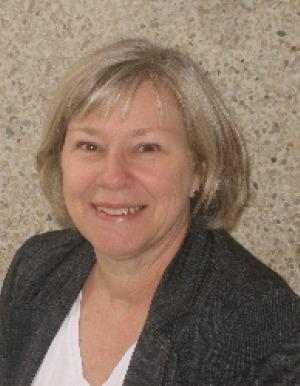
Marilyn J Smith is the David S. Lewis Professor and Director of the Vertical Lift Research Center of Excellence (VLRCOE) at the Georgia Institute of Technology's Daniel Guggenheim School of Aerospace Engineering. She leads a seven-university consortium conducting vertical lift research for the U.S. Army, Navy, and NASA, and has secured over $200 million in collaborative research funding. Computational Nonlinear Computational Aeroelasticity Lab Director NASA FUN3D development team contributor Aerospace Systems Design Lab (ASDL) affiliate Her research spans unsteady aerodynamics, computational aeroelasticity, and sustainable energy applications across rotary-wing, fixed-wing, and launch vehicles. She serves on the Vertical Lift Consortium (VLC) Board of Directors and Vertical Flight Society (VFS) Board, while acting as VFS Deputy Technical Director for Aeromechanics and leading international NATO AVT panels on UAV aerodynamics. Recent publications focus on galaxy cluster cosmology, ship-helicopter dynamic interface modeling, and Type Ia supernova analysis. She has won prestigious awards including the AIAA Aerodynamics Award and multiple American Helicopter Society honors for research, mentoring, and service. 2022 AIAA Aerodynamics Award 2015 Best Paper Awards at AHS Forum 2014 & 2012 AHS Agusta-Westland International Fellowships Her laboratory work integrates high-performance computing with aerospace design and develops advanced turbulence models through partnerships with Georgia Tech Research Institute (GTRI). She contributes to public science communication with appearances on National Geographic, PBS, NPR, and local media.
Aviad Levis is an Assistant Professor at the University of Toronto's Department of Computer Science, starting July 2024. He is affiliated with the Dunlap Astronomical Data Science and Technology Group (DADDAA) and collaborates with the Toronto Computational Imaging Group alongside Kyros Kutulakos and David Lindell. Previously, he was a postdoctoral researcher at Caltech's Computing + Mathematical Sciences department under Katherine Bouman, working with the Event Horizon Telescope (EHT) collaboration. PhD in Electrical Engineering from the Technion (supervised by Yoav Schechner) Research focuses on computational imaging tools at the intersection of AI and physics Develops algorithms for 3D tomography in both cloud physics and black hole imaging Recipient of ERC Synergy grant for CloudCT space mission His research spans two major domains: Computational Climate Imaging through cloud tomography to improve climate models, and Black Hole Imaging with the EHT collaboration. He pioneered methodologies for 3D cloud structure recovery using scattered sunlight and contributes to dynamic 3D reconstructions of black hole environments. Current interests include non-linear inverse problems, equation discovery from data, and ML-accelerated scientific simulations. Recent publications highlight advancements in atmospheric tomography and black hole emission modeling. His work on CloudCT involves coordinated nano-satellites for 3D cloud imaging, while EHT contributions include first images of Sagittarius A* (2022) and ongoing development of algorithms for 3D structure recovery. The ERC Synergy grant underscores his impact on climate imaging technology. Personal Website Work Email
Prof. Jaume Sanz Subirana is a Tenure Full Professor of Mathematics at the Universitat Politècnica de Catalunya (UPC), BarcelonaTECH, and a Senior GNSS Scientific Researcher. He has been affiliated with the Department of Mathematics since 1983. His primary research focuses on GNSS data processing algorithms, ionospheric sounding, and high-accuracy navigation systems like WARTK and Fast-PPP. He co-founded the spin-off company gAGE-NAV S.L. in 2009 and served on the European Space Agency's GNSS Scientific Advisory Group (2018-2022). Prof. Sanz Subirana holds a Physics degree (1982) and a PhD in Galactic Dynamics (1987) from the Universitat de Barcelona. He has authored over 100 peer-reviewed papers (50+ in top JCR journals), 200 conference works, five books (including ESA-commissioned volumes), and holds four patents. His work has earned four best paper awards and UPC's Merit Recognition for teaching excellence. His research group, gAGE/UPC, specializes in GNSS navigation algorithms, ionospheric monitoring, and SBAS/GBAS systems. Key contributions include ionospheric gradient monitoring, real-time kinematic positioning, and mitigation of space weather effects on navigation signals.
Alyson M. Brooks is an Associate Professor in the Department of Physics and Astronomy at Rutgers University, part of the School of Arts and Sciences. Her research focuses on galaxy formation and evolution, particularly using cosmological simulations to study dark matter dynamics, stellar abundances, and galactic structures. She holds a PhD in Astronomy from the University of Washington (2008) and has held prestigious fellowships, including the Sherman Fairchild Fellowship at Caltech and the Grainger Postdoctoral Fellowship at UW-Madison. Brooks has been recognized with awards such as the 2015 Alfred P. Sloan Research Fellowship and the 2019 Maria Goeppert Mayer Award from the American Physical Society. Her educational background includes a B.A. in Physics with Astronomy from Macalester College (2000) and an M.S. in Astronomy from the University of Washington (2004). Her research interests span topics like the interplay between baryonic processes and dark matter, chemical evolution in dwarf galaxies, and the role of feedback mechanisms in galaxy formation. Brooks is actively involved in outreach, including founding the RU-PREP program to support undergraduate research and mentoring initiatives. Brooks has authored over 100 refereed publications, with recent work exploring the resolved stellar populations of dwarf galaxies using the James Webb Space Telescope and analyzing dark matter halo properties through simulations. Her scientific contributions have advanced understanding of galaxy kinematics, dark matter interactions, and the evolution of galactic structures across cosmic time.
Professor David Alexander is a distinguished academic at Durham University's Department of Physics, where he serves as Professor and Chair of Board of Examiners. His responsibilities include Head of Section for Astronomy and Director of Postgraduate Research, demonstrating his significant leadership role within the department. Alexander is also responsible for teaching the Stars Lecturer component of the Level 2 Stars and Galaxies course. His primary research interests focus on Active Galactic Nuclei, black holes, and galaxy formation and evolution, representing core areas in modern astrophysics. Alexander's work spans observational and theoretical aspects of high-energy astrophysics, with particular emphasis on understanding the connections between supermassive black holes and their host galaxies across cosmic time. His research leverages data from major international facilities including NuSTAR, ALMA, DESI, and XMM-Newton, conducting multi-wavelength studies that combine X-ray, infrared, optical, and radio observations. Analysis of his most recent publications reveals a strong focus on AGN demographics, obscuration mechanisms, quasar environments, and the role of AGN in galaxy evolution. His work frequently explores the connection between AGN activity and galaxy properties, with particular attention to the cosmic evolution of these relationships. Recent papers demonstrate increasing emphasis on large-scale surveys and statistical approaches to understanding AGN populations. Leverhulme Research Fellowship (2000-2012) Philip Leverhulme Prize (2000-2008) Royal Society University Research Fellowship (2000-2003) Thomson Reuters ESI highly cited researcher over 2002-2012 Professor Alexander has been instrumental in numerous major survey projects including the NuSTAR extragalactic surveys, DESI quasar studies, and the VST ATLAS Quasar Survey. His collaborative work spans international teams and leverages cutting-edge observational facilities across the electromagnetic spectrum. His research group focuses on understanding the physical processes that govern AGN activity and their connection to galaxy evolution, with particular emphasis on obscured AGN populations and their role in the cosmic black hole growth history.
Imre Bartos is an Associate Professor of Physics at the University of Florida, specializing in multi-messenger astrophysics that combines gravitational waves, neutrinos, and electromagnetic signals. His research investigates extreme cosmic explosions involving black holes and neutron stars, with emphasis on merger environments in active galactic nuclei. Groundbreaking work includes demonstrating how nearby neutron star mergers influenced Solar System composition, identifying AGN disks as factories for eccentric black hole mergers, and developing techniques to probe black hole origins through gravitational wave localization. His group participates in major collaborations including LIGO, LISA, and IceCube observatories. Professor Bartos received the Sloan Fellowship and shares Breakthrough Prize honors for contributions to gravitational wave astronomy. He leads observational programs using Chandra, VLA, and Fermi telescopes while mentoring students in computational astrophysics techniques.
Ellen Zweibel is the W. L. Kraushaar Professor of Astronomy and Physics at the University of Wisconsin–Madison , where she has been a faculty member since 2003. She holds a joint appointment in the Department of Astronomy and Physics . Zweibel earned her undergraduate degree in Mathematics from the University of Chicago and her Ph.D. in Astrophysical Sciences from Princeton University. Her research focuses on plasma astrophysics , particularly the evolution of astrophysical magnetic fields , cosmic ray feedback in galactic and intergalactic environments, and stellar differential rotation dynamics. Recent work examines cosmic ray interactions with the interstellar medium, magnetic instabilities in galaxy clusters, and turbulence-driven dynamo processes. Zweibel's publications highlight collaborations on missions like HelioSwarm and SOFIA/HAWC+ , including the discovery of a magnetized dust ring in the Galactic Center . She leads NSF-funded research on microscale plasma processes in high-beta environments and contributes to understanding magnetic reconnection across astrophysical contexts.
Foteini Oikonomou is an Associate Professor at the Department of Physics, Faculty of Natural Sciences, Norwegian University of Science and Technology (NTNU). She specializes in theoretical astroparticle physics, focusing on extreme astrophysical environments that accelerate particles to energies exceeding 10 20 eV. Current research includes multimessenger emission modeling of active galactic nuclei Expertise in cosmic ray acceleration and high-energy neutrino origin Active in teaching advanced astrophysics and particle physics Her work bridges astrophysics, particle physics, and cosmology, with particular attention to blazars, tidal disruption events, and ultra-high-energy cosmic rays. She contributes to major collaborations like GRAND and GCOS, developing future instrumentation for astroparticle detection. Recent publications explore cosmic ray propagation in diverse source populations, neutrino emission from transient astrophysical phenomena, and magnetic field line effects on particle acceleration. Her research has been featured in journals such as Nature Reviews Physics , Physical Review D , and The Astrophysical Journal . She teaches AST-3451 Astrophysics II and has previously taught particle physics (FY3403/FY8913) and general astrophysics (FY2450). Her outreach includes public explanations of ultra-high-energy cosmic ray research through popular science articles.
Amir Bahadori serves as Professor and Nuclear Engineering Program Director in the Department of Mechanical and Nuclear Engineering at Kansas State University's Carl R. Ice College of Engineering, holding the Hal and Mary Siegele Professorship in Engineering. He directs the Radiological Engineering Analysis Laboratory (REAL) and established the Institute for Radiation Health Studies (IRHS) in 2024, focusing on radiation protection, space radiation environments, and radiation health effects. His educational background includes: Ph.D. in Biomedical Engineering, University of Florida (2012) M.S. in Nuclear Engineering Sciences, University of Florida (2010) B.S. in Mechanical Engineering and Mathematics, Kansas State University (2008) Bahadori's research spans radiation transport modeling, dosimetry, and risk assessment with applications in space exploration, medical physics, and radiation epidemiology. He develops computational frameworks for radiation exposure scenarios and biological response prediction, emphasizing space radiation protection for Artemis missions and chronic exposure studies through the Million Person Study collaboration. Analysis of his recent publications reveals dominant themes in space radiation measurement (Artemis missions), radiation epidemiology (Million Person Study innovations), and advanced detection systems (miniaturized neutron spectrometers). His work increasingly integrates big data approaches for radiation risk assessment and electrostatic shielding concepts for deep-space exploration. His scientific recognition includes: NASA Graduate Student Research Fellowship (2009) Certified Health Physicist designation Big 12 faculty fellowship (2022-2023) NCRP council election (2024) Two USPTO patents Bahadori secures substantial research funding from NASA for space radiation instrumentation, Department of Energy projects via the Kansas City National Security Campus, and collaborative epidemiological studies. He mentors nuclear engineering graduate students while leading interdisciplinary teams developing radiation protection solutions for aerospace and medical applications. His laboratory infrastructure includes the REAL with Beocat high-performance computing resources, radiation detectors, and a 3D printer, plus the IRHS with a Precision X-ray XRad320 irradiator and radon chamber. These facilities support collaborations across K-State colleges and external organizations for radiation health effect studies.
Wenbin Lu is an Assistant Professor in the Department of Astronomy at the University of California Berkeley, where he conducts theoretical research on high-energy transient phenomena. He is also affiliated with the Theoretical Astrophysics Center at UC Berkeley. PhD in Astronomy, University of Texas at Austin (2018) Bachelor in Physics, Peking University (2013) Professor Lu specializes in extreme astrophysical events that serve as natural laboratories for studying physics under conditions of high energy density, strong gravity, and intense magnetic fields. His work integrates multiple physical domains including plasma physics, relativistic hydrodynamics, radiative transfer, and stellar dynamics. He maintains active collaborations with researchers worldwide and encourages student involvement in his projects. Analysis of his recent publications reveals a strong focus on tidal disruption events and fast radio bursts, with increasing emphasis on multi-messenger approaches and theoretical modeling of observational data from facilities like JWST, Chandra, and radio telescopes. His work demonstrates consistent theoretical innovation in explaining complex transient phenomena. Burke Fellow at Caltech (2018-2021) Lyman Spitzer Fellow at Princeton University (2021-2022) Professor Lu actively mentors students and postdocs, with many projects originating from discussions with junior researchers. He teaches courses in Radiation and Stars at UC Berkeley. His research is supported by multiple grants that enable computational modeling and observational collaborations across various wavelengths. His theoretical work often involves complex numerical simulations of astrophysical phenomena, particularly focusing on the hydrodynamic evolution of stellar debris in tidal disruption events and plasma processes in fast radio burst emission mechanisms.
Dr. Alfred Kume is a Senior Lecturer in Statistics at the University of Kent, affiliated with the School of Mathematics, Statistics and Actuarial Science. He has held this position since 2004 and has been involved in examining processes for the Institute of Actuaries. His research focuses on shape analysis, directional statistics, image analysis, and stochastic geometry. Kume obtained his PhD and postdoctoral training at the University of Nottingham after working as an actuary. He has supervised students including Theodoros Gkolias and Justyn Campbell-White. His work spans statistical methodology applied to astronomy (e.g., stellar light observations, HII regions) and computational statistics (e.g., holonomic gradient methods, clustering algorithms). His publications reflect expertise in probability distributions, algorithm development, and interdisciplinary applications. His office is located in Cornwallis South, Canterbury Campus. Research interests emphasize statistical techniques for shape and directional data, with applications in astronomy and biology. Key contributions include saddlepoint approximations for normalizing constants and statistical clustering methods. His work bridges theoretical statistics with practical problems in astrophysics and actuarial science. Publications highlight trends in statistical methodology (e.g., Bingham/Fisher-Bingham distributions), computational algorithms, and interdisciplinary collaborations. While no specific awards are listed, his extensive publication record and academic roles reflect scholarly recognition. Advising focuses on statistical shape analysis and Bayesian methods, with grants possibly tied to collaborative projects. He is part of research teams analyzing molecular clouds and astronomical phenomena. His lab or team activities are integral to interdisciplinary projects, though specific lab names are not mentioned.
Dr Samantha Oates is a Lecturer in Astrophysics within the Department of Physics at Lancaster University's Faculty of Science and Technology. Her office is located in C035, C-Floor, Physics Building. Her research focuses on Gamma-ray Bursts (GRBs) in the gravitational wave era, investigating environments of GRB explosions, central engine mechanisms, jet structures, cosmological evolution of GRBs, and electromagnetic counterparts to gravitational wave events. She actively participates in international collaborations including Swift, LSST, STARGATE, and ENGRAVE . Her work addresses critical questions about optical/UV contaminants in gravitational wave counterpart searches and the cosmological utility of GRB correlations. Dr Oates supervises PhD students including Samuel Shilling in Observational Astrophysics. She contributes to the Astrophysics research group at Lancaster University, delivering specialized lectures and supervising projects on multi-messenger astrophysics. Recent publications demonstrate her expertise in gravitational wave follow-up campaigns, supernova classification, and nuclear transient phenomena. Her research group engages in multiwavelength observations from gamma-ray to radio wavelengths, utilizing facilities for real-time transient detection and characterization. Current projects involve analyzing data from gravitational wave events and developing methods to distinguish true counterparts from serendipitous transients.
Norm Murray is a Professor at the Canadian Institute for Theoretical Astrophysics (CITA) within the University of Toronto . With a Ph.D. from UC Berkeley (1986), his research spans nonlinear dynamics , planetary formation , solar system evolution , and active galactic nuclei . His work combines theoretical physics with observational data from radio telescopes, X-ray satellites, and cosmological simulations. Recent research focuses on galaxy formation (via FIRE simulations), dark matter interactions in dwarf galaxies, and AGN disk dynamics . He employs machine learning for planetary collision modeling and investigates the interplay of magnetohydrodynamics and radiative transfer in quasar environments. Publications highlight his expertise in computational astrophysics, spanning topics from cosmic molecular gas mapping to the stability of exoplanetary systems.
Professor Leah Morabito is a Professor (Research) - UKRI Future Leaders Fellow at Durham University, affiliated with the Department of Physics and the Institute for Computational Cosmology. She specializes in high-resolution imaging at low frequencies using the LOFAR telescope to study how supermassive black holes co-evolve with their host galaxies. As leader of the LOFAR Imaging of Resolved AGN (LIRA) group, she has made significant contributions to our understanding of active galactic nuclei and galaxy evolution through numerous high-impact publications. Professor Morabito's research primarily focuses on AGN physics, galaxy surveys, and radio interferometry. She has pioneered techniques for sub-arcsecond imaging at low radio frequencies, which has opened new windows for studying radio jets, galaxy evolution, and the interstellar medium. Her work reveals critical insights about AGN feedback mechanisms and the connection between supermassive black holes and their host galaxies across cosmic time. The analysis of her recent publications shows a strong emphasis on utilizing LOFAR's unique capabilities to study radio sources with unprecedented resolution at low frequencies. Scientific Recognition: UKRI Future Leaders Fellowship Professor Morabito actively mentors the next generation of astronomers, currently supervising PhD students Benite Tantely, Ciera Sargent, and Emmy Escott. Her research is supported by significant funding through her UKRI Future Leaders Fellowship and her role as co-Principal Investigator of the new LOFAR2.0 Large Programme, which extends her work on high-resolution low-frequency radio surveys. She has secured substantial research funding that enables cutting-edge observations and supports her research team. As leader of the LOFAR Imaging of Resolved AGN (LIRA) group, Professor Morabito oversees a collaborative research effort focused on advancing our understanding of how AGN help shape galaxy evolution. Her team utilizes unique high-resolution, low-frequency observations to study radio jets, AGN feedback mechanisms, and the connection between supermassive black holes and their host galaxies, contributing significantly to one of the most fundamental questions in modern astrophysics.
Kyle Dawson is a Professor of Physics and Astronomy at the University of Utah, where he has been employed since 2009. He currently serves as both a full Professor and Director of Graduate Studies in the Department of Physics and Astronomy, having progressed from Assistant Professor (2008-2015) to Associate Professor (2015-2019) before achieving his current position in 2019. His institutional affiliation places him within the College of Science at the University of Utah, a major research university in the western United States. Dawson earned his BA in Physics from Cornell University in 1998, followed by a PhD in Physics from the University of California, Berkeley in 2004. After completing his doctoral studies, he served as a postdoctoral researcher at the Lawrence Berkeley National Laboratory before joining the University of Utah faculty. His educational background in physics provided the foundation for his transition into observational cosmology, where he has made significant contributions through large-scale spectroscopic surveys. Professor Dawson's research focuses on observational cosmology through large spectroscopic surveys designed to measure the fundamental properties of the universe. He is currently the co-Spokesperson for the Dark Energy Spectroscopic Instrument (DESI), a major cosmological survey that has produced numerous high-impact publications in 2024-2025. Previously, he served as Principal Investigator for the Extended Baryon Oscillation Spectroscopic Survey (eBOSS), which concluded in 2020 with final cosmological measurements. His work centers on measuring baryon acoustic oscillations to constrain cosmic expansion history, dark energy properties, neutrino masses, and to test General Relativity. His research group employs techniques including galaxy clustering analysis, quasar astrophysics, and large-scale structure mapping to address fundamental questions in cosmology. The analysis of Dawson's recent publications reveals a strong focus on extracting cosmological constraints from the DESI survey data. His work spans multiple aspects of cosmological analysis, including baryon acoustic oscillation measurements, full-shape power spectrum analysis, imaging systematics mitigation, and cross-correlation studies with cosmic microwave background data. The publications demonstrate collaborative work with large international teams and contribute to increasingly precise measurements of cosmological parameters, with particular attention to dark energy equation of state, neutrino masses, and potential deviations from General Relativity. Professor Dawson has secured significant research funding throughout his career, including multiple grants from the Department of Energy (DOE), NASA, and the National Science Foundation. His grant portfolio includes leadership roles in major cosmological surveys like DESI and eBOSS, as well as support for postdoctoral researchers and graduate students. His research group has mentored numerous students who have gone on to successful careers in academia, industry, and data science fields. Dawson leads a vibrant research group at the University of Utah focused on cosmological data analysis from large spectroscopic surveys. His current team includes two postdoctoral researchers (Angela Berti and Sarah Eftekharzadeh) and a graduate student (Allyson Brodzeller). The group specializes in galaxy clustering analysis, quasar astrophysics, and machine learning applications to spectroscopic data. The research environment fosters collaboration with international teams working on DESI and related cosmological surveys, providing students with opportunities to engage with cutting-edge cosmological research and large-scale data analysis techniques.