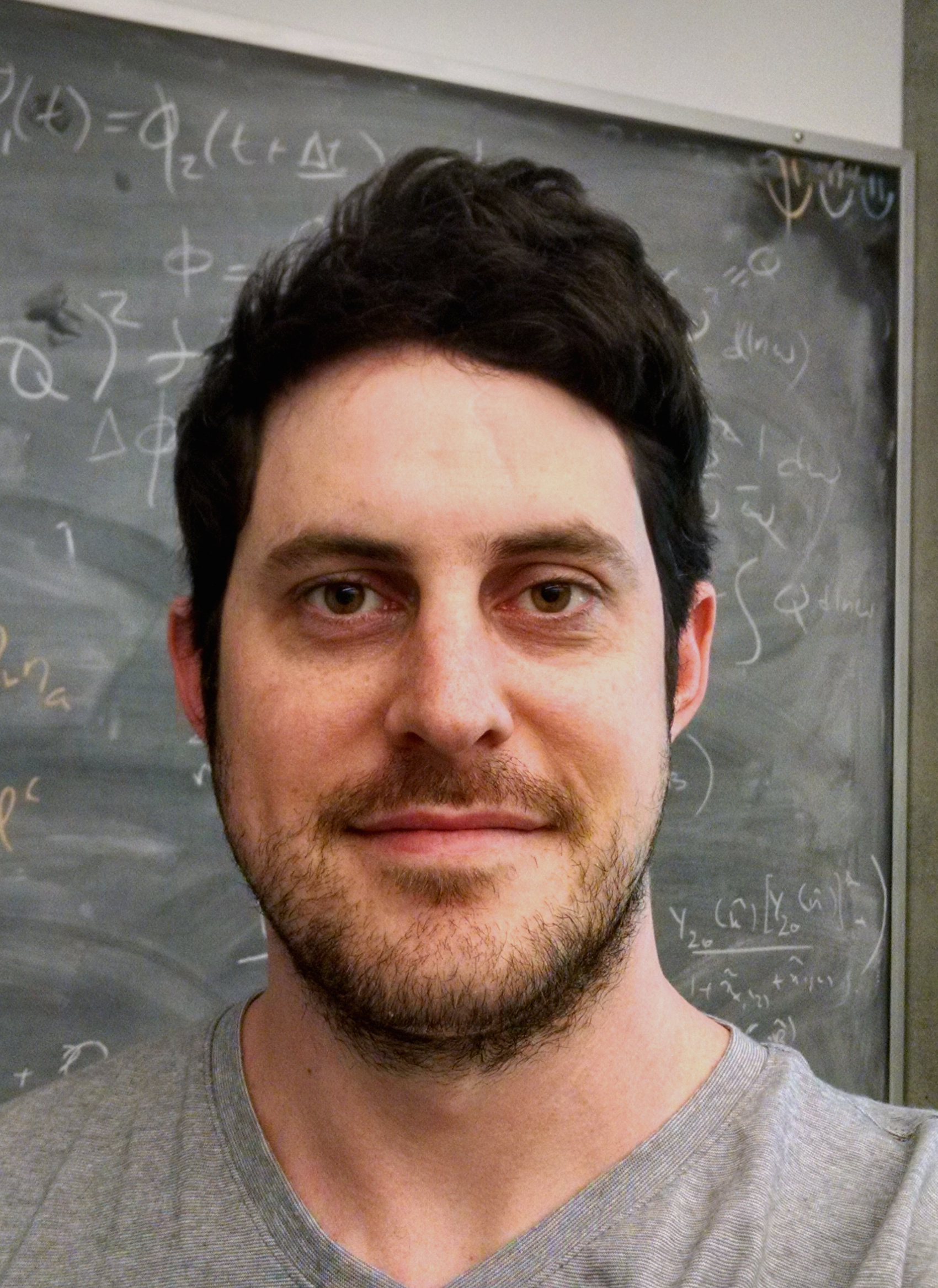
Peihong ZhangView profile
Professor
Peihong Zhang is a Professor in the Department of Physics at the University at Buffalo, SUNY. He holds a PhD in Condensed Matter Physics from Pennsylvania State University (2001) and has held academic positions since 2005, advancing from Assistant Professor (2005-2011) to Associate Professor (2011-2016) before becoming a full Professor in 2016. His research focuses on computational materials design, ab initio electronic structure calculations, and the study of nanostructured materials. Key areas include quasiparticle properties, excitonic effects, and phase transitions in 2D materials. He has contributed to the development of efficient GW methods for large-scale simulations and has explored applications in energy materials, optoelectronics, and defect physics. Education : B.S., Physics, Xiamen University, China (1993) M.S., Atomic & Molecular Physics, Institute of Physics, Chinese Academy of Sciences (1996) Ph.D., Condensed Matter Physics, Pennsylvania State University (2001) Ph.D. minor, High-Performance Computing, Penn State (2001) Research Interests : Zhang’s work integrates theoretical and computational methods to predict and design novel materials. His team investigates electronic and structural properties using advanced techniques like GW approximations and LSDA+U methods, with applications to semiconductors, MXenes, and layered materials. Recent studies highlight excitonic effects in monolayers (e.g., C₃N and C₃B), strain-induced phase transitions in SnSe, and machine-learning approaches to materials discovery. His research emphasizes bridging fundamental theory with practical applications in energy and optoelectronics. Awards & Honors : NSF CAREER Award (2010) American Chemical Society Doctoral New Investigator Award (2009) Xerox Award for Outstanding PhD Thesis in Materials (2001) Grants & Collaborations : Zhang has received funding from NSF, DOE, and the Petroleum Research Fund. His collaborations include projects on materials informatics, thermoelectric materials, and defect engineering. His lab actively contributes to open-source computational tools for electronic structure analysis. Labs & Teams : Zhang leads a research group focused on computational materials science. His team’s work is housed in the Department of Physics at UB, with affiliations to the RENEW Institute and the Center for Materials Informatics.