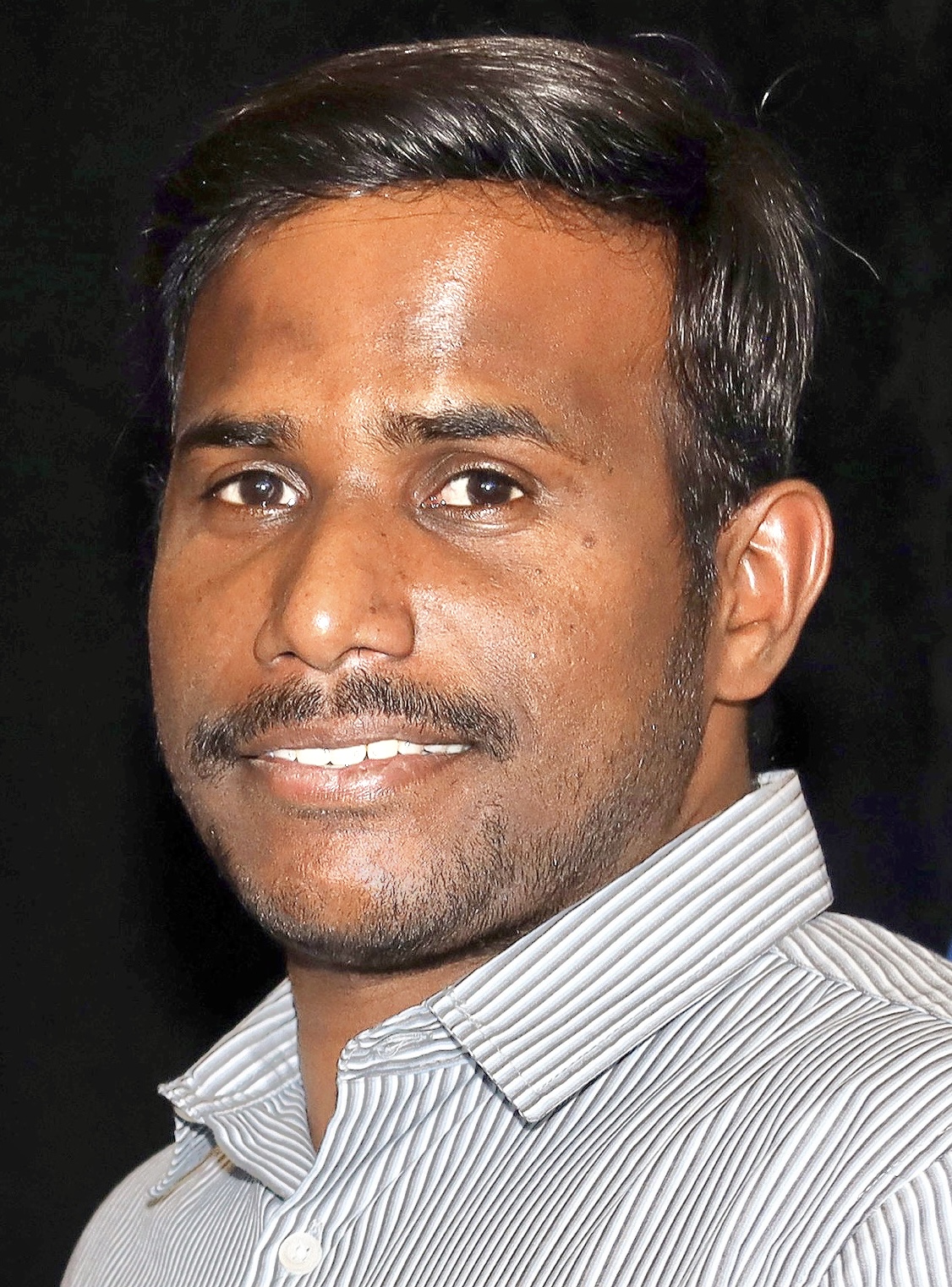
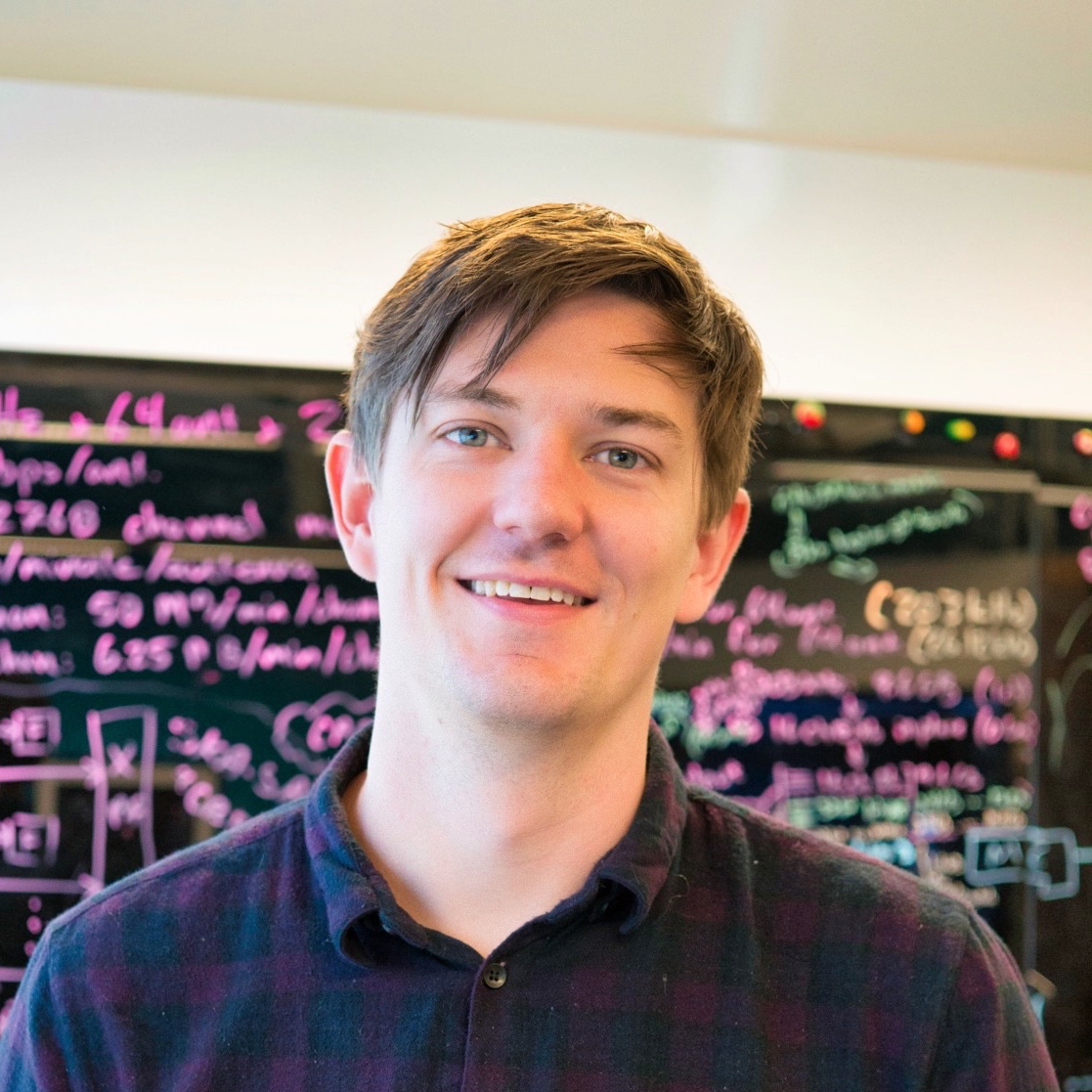
Tien Tsin Wong is a Professor in the Department of Data Science & AI at Monash University, Australia. Previously, he served as a Professor at the Chinese University of Hong Kong (1999–2024) and held a Visiting Assistant Professor position at the Hong Kong University of Science and Technology (1998–1999). His research focuses on Generative AI, Computer Graphics, Computer Vision, and Computational Manga, with significant contributions to GPU techniques, image-based rendering, and multimedia compression. Education: He earned a B.Sc. (1992), MPhil (1994), and PhD (1998) in Computer Science from the Chinese University of Hong Kong. Research Interests: His work bridges computational techniques with artistic applications, particularly in manga and animation. Notable areas include generative models, diffusion-based video synthesis, and physically plausible scene generation. His research aligns with UN Sustainable Development Goals through innovations in education and digital accessibility. Awards : He has received the 2004 Young Researcher Award, 2005 IEEE Transactions on Multimedia Prize Paper Award, and two international invention medals (Geneva 2018, Asia Hong Kong 2019). Editorial Roles : He serves as an Associate Editor for Computer Graphics Forum , IEEE Transactions on Visualization and Computer Graphics , and Computational Visual Media . His editorial work underscores his influence in advancing visualization and graphics research. Labs/Teams : While not explicitly named, his collaborations span global institutions, focusing on computational manga, generative AI, and GPU-optimized techniques. His work often involves interdisciplinary teams addressing challenges in digital media and AI.
Dr. Amin Sakzad is an Associate Professor in the Department of Software Systems & Cybersecurity at Monash University's Faculty of Information Technology. His research focuses on lattice-based cryptography, wireless communications, and post-quantum security protocols. He holds a PhD in Applied Mathematics from Amirkabir University of Technology (2011) and has held academic roles at Carleton University and Monash since 2012. Dr. Sakzad’s expertise spans lattice coding theory, MIMO systems, and privacy-preserving technologies for genomic databases and blockchain applications. He leads multiple ARC-funded projects, including work on secure databases (SRDBMS) and post-quantum cryptographic primitives for FinTech and energy sectors. His research has been recognized through awards such as the FIT Dean’s Award for Teaching Excellence (2021). Key collaborations include projects on blockchain security (CollinStar Lab), genomic data privacy, and energy market cybersecurity. His work addresses UN SDGs through contributions to quality education (SDG 4) and industry innovation (SDG 9). Recent publications highlight advancements in lattice-based cryptography (e.g., CRYSTALS-Kyber variants), privacy-preserving energy trading, and secure blockchain protocols like FPPW watchtower systems. His research bridges theoretical cryptography with practical implementations in embedded systems and 5G telecommunications. Grants: 16 active/completed projects including $1.2M in ARC funding Advising: Supervising PhD projects on lattice applications in post-quantum crypto and blockchain Labs: Core member of Monash’s Software Defined Telecommunications (SDT) Lab and CollinStar Lab
Professor Chongmin Song is a faculty member at the University of New South Wales (UNSW), affiliated with the School of Civil and Environmental Engineering. His academic rank is Professor, and he specializes in computational mechanics with a focus on innovative numerical methods. He holds a BE and ME from Tsinghua University and a DEng from the University of Tokyo. His research explores computational mechanics, fracture analysis, wave propagation, and soil-structure interactions. Key methodologies include the Scaled Boundary Finite Element Method (SBFEM), image-based modeling, and dynamic simulations of infrastructure systems. He leads significant ARC-funded projects like 'A scaled boundary framework for nonlinear dynamic analysis of structures' (DP250100955) and 'Developing sustainable graded porous cementitious structures' (LP240100123), totaling over $1M in recent grants. Recent publications emphasize adaptive modeling techniques, multiphysics simulations, and high-performance computing applications. Trends include topology optimization for structural dynamics, phase-field fracture modeling for brittle materials, and GPU-accelerated elastodynamics. His work integrates computational efficiency with real-world engineering challenges, particularly in geomechanics and material failure analysis. Professor Song collaborates extensively on projects involving computational fracture mechanics and maintains laboratories focused on numerical simulation advancements. Future work targets scalable algorithms for 3D crack propagation and multiphysics coupling in infrastructure systems.
Professor David Taubman is a distinguished academic serving as Professor and Deputy Head of School (Research) at the School of Electrical Engineering and Telecommunications (EE&T) at the University of New South Wales (UNSW) in Sydney, Australia. He is also co-director of Kakadu Software Pty. Ltd. and its affiliates Kakadu R&D and Kakadu GPU. With a career spanning over three decades, Professor Taubman has made significant contributions to the field of image and video compression, most notably as the author of the EBCOT coding algorithm adopted in the JPEG2000 international standard. Professor Taubman earned his B.Sc. in Mathematics and Computer Science (1986) and B.E. (Medal) in Electrical Engineering (1988) from the University of Sydney, followed by an M.Sc. (1992) and Ph.D. (1994) in Electrical Engineering from the University of California at Berkeley. His professional journey includes engineering work at the Electricity Commission of N.S.W. (1988-1990), research positions at Hewlett-Packard Laboratories in Palo Alto (1994-1998), and an academic career at UNSW where he progressed from Senior Lecturer (1998-2003) to Associate Professor (2004-2009) and finally to Professor (2009-present). He has held various leadership roles including Head of the EE&T Telecommunications Research Group (2003-2014), Head of the EE&T Signal Processing Research Group (2014-present), Director of Research for the School of EE&T (2011-2016), and Deputy Head of School (Research) since 2017. Professor Taubman's research interests center on image and video compression, with particular expertise in JPEG2000 standards and implementations. His work spans signal processing, wavelet transforms, scalable video coding, motion modeling, and multimedia systems. He has pioneered numerous compression algorithms and frameworks, including the EBCOT coding algorithm that became central to the JPEG2000 standard. His recent research focuses on efficient motion modeling with cuboidal partitioning, learned lifting-based transform structures, and high-throughput implementations of JPEG2000 for video applications. His work bridges theoretical foundations with practical implementations, as evidenced by the commercially successful Kakadu Software tools that have garnered around 500 commercial licensees. Analysis of Professor Taubman's recent publications reveals a consistent focus on advancing compression technologies with particular emphasis on scalability, efficiency, and adaptability. His work spans traditional image compression (JPEG2000 extensions), video coding (cuboid-based partitioning for UHD/360-degree video), and emerging applications (nanopore sequencing data compression). A notable trend is the integration of machine learning techniques with traditional compression frameworks, as seen in his work on learned lifting-based transform structures. His research maintains strong connections to real-world applications across diverse domains including medical imaging, astronomical data processing, and genomic sequencing. IEEE Fellow Engineers Australia Fellow (by invitation) Professor Taubman has served as Associate Editor for the IEEE Transactions on Image Processing for two four-year appointments (2003-2005 and 2010-2013). He has been actively involved in numerous research grants focused on image and video compression technologies, particularly those related to the JPEG2000 standard and its extensions. His work has received significant industry support, reflected in his consultancy with various U.S., Japanese, and Australian corporations. He has also contributed to international standards development as a member of Standards Australia Technical Committee MS-065 (mirroring ISO TC42 on Digital Photography) and as a constitutional member of Standards Australia Technical Committee IT-029 (Coded Representation of Picture, Audio and Multimedia/Hypermedia Information). Professor Taubman co-directs Kakadu Software Pty. Ltd. and its research affiliates Kakadu R&D and Kakadu GPU, which have developed the commercially successful Kakadu Software tools for JPEG2000. His research group at UNSW focuses on advanced image and video compression techniques, with particular expertise in wavelet-based methods, scalable coding, and motion modeling. The group maintains strong industry connections and has contributed significantly to the development and standardization of image compression technologies worldwide.
Dr. Sirojan Tharmakulasingam serves as a Lecturer and Research and Development Coordinator at the Signals, Information & Machine Intelligence lab within the Faculty of Engineering at the University of New South Wales (UNSW) Sydney. His work bridges theoretical machine learning with practical applications in edge computing and high-performance systems. His research spans multiple cutting-edge domains including machine learning, artificial intelligence, data science, edge computing, and high-performance computing. Dr. Tharmakulasingam specializes in developing next-generation inference models by integrating machine learning, signal processing, mathematical modeling, and computing across diverse data types including images, video, audio, and quantum molecular data. His work has significant implications for scientific computing, telecommunications, and healthcare applications. Analysis of his publication trends reveals a strong focus on practical AI implementations, with increasing emphasis on edge computing solutions, quantum applications, and energy-efficient models. His recent work demonstrates progression from foundational machine learning techniques toward specialized applications in scientific computing and real-time systems. Dr. Tharmakulasingam holds a Doctor of Philosophy from UNSW Sydney and a Bachelor of Science of Engineering from the University of Moratuwa in Sri Lanka. His academic journey reflects a strong foundation in both theoretical and applied engineering principles. As Research and Development Coordinator for the Signals, Information & Machine Intelligence lab, he oversees critical research infrastructure and collaborations. His work location in Room 447 of the EE&T Building (G17) places him at the heart of UNSW's engineering research ecosystem, with access to the Mark Wainwright Analytical Centre's extensive facilities.
Dr. Ramesh Bhat is a Senior Research Fellow at Curtin University's School of Electrical Engineering, Computing and Mathematical Sciences (EECMS), affiliated with the Curtin Research Institute and Curtin Institute of Radio Astronomy (CIRA). His primary affiliation is with the Faculty of Science and Engineering. He is based at Curtin Perth Campus in Brodie Hall, Room 161. His research focuses on astrophysics and radio astronomy, particularly pulsar timing, gravitational wave detection using pulsar timing arrays, and the study of transient phenomena such as fast radio bursts (FRBs). He contributes to major projects like the High Time Resolution Universe (HTRU) survey, MeerTime, and the Murchison Widefield Array (MWA). Key research interests include pulsar population studies, interstellar medium interactions, signal processing for radio astronomy, and instrumentation development for next-generation telescopes like the Square Kilometre Array (SKA). His work spans theoretical models of pulsar emission mechanisms to observational studies of pulsar nulling, subpulse drifting, and gravitational wave backgrounds. Recent publications highlight advancements in pulsar survey techniques (e.g., GPU-accelerated analysis), discovery of new pulsars and FRBs, and constraints on cosmological models via pulsar timing arrays. His research often involves international collaborations, leveraging facilities like the Parkes radio telescope and the MWA. He actively contributes to radio interferometry, transient detection algorithms, and pulsar timing array data analysis. His work bridges observational astronomy with computational methods, aiming to advance understanding of compact objects and gravitational physics.
Sam McSweeney is a Researcher at Curtin University's School of Electrical Engineering, Computer and Mathematical Sciences (EECMS), part of the Faculty of Science and Engineering. His work focuses on pulsar astrophysics, subpulse drifting phenomena, and radio transient detection using instruments like the Murchison Widefield Array (MWA). Key research areas include magnetar-like radio transients, nulling pulsars, and multiwavelength studies of neutron stars. He has contributed to major surveys like the SMART pulsar survey and developed advanced data processing pipelines for transient detection. Publications since 2023 highlight discoveries of long-period radio transients, emission state-switching phenomena, and multi-instrument follow-up strategies. His work bridges observational astronomy with computational techniques, emphasizing high-time resolution observations and GPU-based imaging for FRB searches.
Professor Anand Veeraragavan is a leading expert in hypersonics and combustion at the University of Queensland's School of Mechanical and Mining Engineering. As Centre Director of the Centre for Hypersonics and Associate Editor of the AIAA Journal of Spacecraft and Rockets, he drives international research initiatives and technical standards. B.Tech (IIT-Madras), MS/PhD (University of Maryland) Co-Director, Centre for Hypersonics Mid-Career Advance Queensland Research Fellow (2017-2020) His research spans supersonic combustion of hydrocarbons, hypersonic aerothermodynamics , advanced optical diagnostics (PLIF, FLDI), and microcombustion power systems . Current projects focus on Boundary Layer Transition (BOLT II) simulations and scramjet cavity optimization for supersonic combustion. Recent publications emphasize fuel injection dynamics in hypersonic flows, cavity flameholding mechanisms, and thermal management for scramjets. His team develops 3D numerical models and experimental diagnostics for shock-turbulence interactions. Best Thesis Award, University of Maryland (2009) Associate Editor, AIAA Journal of Spacecraft and Rockets (2021-present) Advance Queensland Mid-Career Fellowship (2017-2020) Supervising PhD researchers on topics including cavity flame holders, hypersonic boundary layer transition, and turbulent transport mechanisms. Collaborations with UQ's Centre for Hypersonics, MIT, and GE Energy inform his work.
Dr. Qianqian Yang is a Senior Lecturer in applied and computational mathematics at the School of Mathematical Sciences, Queensland University of Technology (QUT). She holds a PhD in computational mathematics from QUT (2010) and has been recognized with prestigious awards such as the QUT Outstanding Doctoral Thesis Award (2010) and an ARC DECRA fellowship (2014). Her research focuses on fractional differential equations, numerical methods, and their applications in medical imaging, particularly diffusion MRI. She has secured major grants, including an ARC DECRA fellowship (2015–2022, part-time) and an ARC Discovery Project (2019–2022). Dr. Yang’s work bridges computational mathematics and biomedical applications, aiming to model brain tissue microstructure using fractional models. She teaches computational mathematics units and has supervised 2 postdocs, 3 PhDs, and numerous Honours and VRES students. Her research is published in top journals like NeuroImage and SIAM Journal on Scientific Computing. Expertise: Fractional PDEs, Numerical Analysis, MRI Modeling Grants: ARC DECRA, ARC Discovery Project
Commonwealth Scientific and Industrial Research OrganisationAustralia
Dr. Conrad Sanderson is a Researcher and Team Leader at the Data61 division of CSIRO , focusing on artificial intelligence, machine learning, AI ethics, and high-performance numerical computing. He is also an Adjunct Professor at Griffith University . With over 150 publications and 11,000+ citations, he is renowned for developing influential open-source libraries like Armadillo and RcppArmadillo . Research Interests Artificial Intelligence & Deep Learning Responsible AI, Safe AI, and Ethical Trade-offs Numerical Linear Algebra and High-Performance Computing Recent Publications highlight advancements in: Dynamic graph anomaly detection via extreme value theory Fire propagation uncertainty estimation using neural emulators Resolving ethical tensions in AI implementation GPU-accelerated machine learning Scientific Awards Most cited paper award for thesis-based article Armadillo framework: 30+ million downloads Collaborations include researchers from Facebook, NASA, Boeing, and institutions like MIT and Stanford. His work bridges academia and industry through open-source contributions and interdisciplinary applications.
Commonwealth Scientific and Industrial Research OrganisationAustralia
Dr. Chuong Nguyen is a Senior Research Scientist at CSIRO DATA61 and an Honorary Lecturer at the College of Engineering & Computer Science of Australian National University. His career spans institutions including Monash University, CSIRO CMIS, and Johns Hopkins University. Education : PhD in Mechanical Engineering (Monash, 2010), MEng in Eco-Environmental Civil Engineering (Ritsumeikan, 2003), BEng in Aeronautical Engineering (Ho Chi Minh City University of Technology, 2001), and MBA (Australian National University, 2024). Dr. Nguyen's research focuses on 3D computer vision and machine learning for applications in smart manufacturing, agriculture, and medical imaging. His work bridges advanced imaging techniques like digital holography and hyperspectral scanning with practical industrial solutions. His 15 most recent publications span 3D reconstruction, fluid dynamics, and medical imaging from 2017 to 2010. Key trends involve 3D digitization of biological specimens, noise modeling in sensor systems, and velocity field measurement in complex flows. Scientific Awards : CSIRO Julius Career Award (2020) DICTA Best Paper Award (2019) iAward ACT (2014) CSIRO Innovation Award (2013) Performance Cash Reward (2021) Dr. Nguyen supervises PhD and honors students in machine learning and biomechanical imaging. His $1M CSIRO-Google grant (2024) funds 3D digitization of the Australian National Insect Collection. He leads industry collaborations in mining and manufacturing inspection through advanced 3D vision systems. His lab affiliations include the Immersive Environments Lab at CSIRO and the Australian Centre of Excellence for Robotic Vision . He collaborates with institutions like Microsoft Research, Google Research, and the High Resolution Plant Phenomics Centre.
Ryszard Kozera holds the position of Adjunct Associate Professor in the Department of Computer Science and Software Engineering at The University of Western Australia (UWA). He is affiliated with the School of Physics, Maths and Computing. His research focuses on computational mathematics, machine learning, and applied computer vision. Key research interests include spline interpolation, trajectory estimation, neural networks, and their applications in microbiology and hardware optimization. He has contributed to projects like 'Smoothness in geometry and computer vision' funded by ARC Small Grants. Recent work explores machine learning applications in soil microorganism identification and Apple Silicon performance analysis. Collaborations span international conferences such as ICCS and ESM.
Dr. Danny Price is an Adjunct Senior Lecturer at Curtin University, affiliated with the Curtin Research Institute and Curtin Institute of Radio Astronomy (CIRA). He holds a position as SKA-Low Operations Scientist and is part of the Faculty of Science and Engineering within the School of Electrical Engineering, Computing and Mathematical Sciences (EECMS). His research focuses on low-frequency radio astronomy, instrumentation, digital signal processing, 21-cm cosmology, fast radio bursts (FRBs), pulsars, and technosignatures related to SETI. Price has contributed to developing novel file formats like SDHDF and optimizing beamforming techniques for large-scale radio telescopes. His work spans Breakthrough Listen projects targeting nearby stars, galaxies, and the Galactic Center, leveraging advanced machine learning and GPU computing for signal analysis. He has also been involved in infrastructure development for the Square Kilometer Array (SKA) and collaborates globally on radio transient monitoring systems. His teaching contributions span multiple disciplines including the Centre for Aboriginal Studies, Business and Law, Health Sciences, Humanities, and Science & Engineering. Affiliated across Curtin's campuses in Australia, Dubai, Malaysia, Mauritius, and Singapore, Price emphasizes interdisciplinary approaches to radio astronomy challenges. His publications highlight advancements in search pipelines for FRBs and technosignatures, hardware management systems, and the application of cutting-edge computational methods in radio instrumentation. While no formal awards are listed, his research has produced impactful work in cosmic dawn studies and pulsar timing methodologies.
Dr. Wei Zhang is a Researcher at the Complex Systems and Data Science group within The University of Sydney. Her work focuses on network science, evolutionary dynamics, and complex systems, with an emphasis on modeling social systems and analyzing meso-scale structures in social networks. She combines theoretical approaches, data-driven modeling, and web-based experimental methods to study emergent collective phenomena. Dr. Zhang holds a PhD in Network Science from ETH Zurich. Her research spans interdisciplinary topics including data science applications to complex systems and the detection of structural patterns in social networks. Recent projects include exploring domain adaptation techniques in machine learning and developing methods for 3D object detection and model compression. Her publications reflect expertise in computer vision, machine learning, and environmental science. Key themes include domain adaptation networks, 3D reconstruction, and LiDAR-based forestry analysis. While no specific awards are mentioned, her work demonstrates significant contributions to theoretical and applied data science. Dr. Zhang collaborates on projects involving interdisciplinary teams, though specific grants or lab affiliations are not detailed in the provided text. Her current research continues to bridge complex systems theory with modern data-driven methodologies.
Huaming Chen is a Senior Lecturer at the School of Electrical and Computer Engineering, The University of Sydney (equivalent to Associate Professor in the US system). He specializes in trustworthy AI, software security, and computational biology. His research focuses on integrating AI techniques into software engineering and scientific domains to enhance system reliability and ethical compliance. Currently, he advises PhD and master's students on projects involving AI in intelligent building systems, blockchain-driven governance frameworks, and open-source AI security. He holds roles as Area Chair for ACM MM, PC member for venues like ACM CCS and IJCAI, and Guest Editor for Computers & Security . His service extends to IEEE/ACM memberships and discipline expertise in Software Engineering and Electrical & Computer Systems. Awards include the 2020 IEEE CIS Student Grant and 2017 travel fellowships for bioinformatics and services computing conferences. Research interests span adversarial machine learning, AI ethics, computational biology applications, and secure AI system design. Key contributions include work on federated learning security, adversarial attacks on vision transformers, and privacy-aware STI/HIV risk prediction models. He actively promotes responsible AI through workshops and interdisciplinary collaborations.