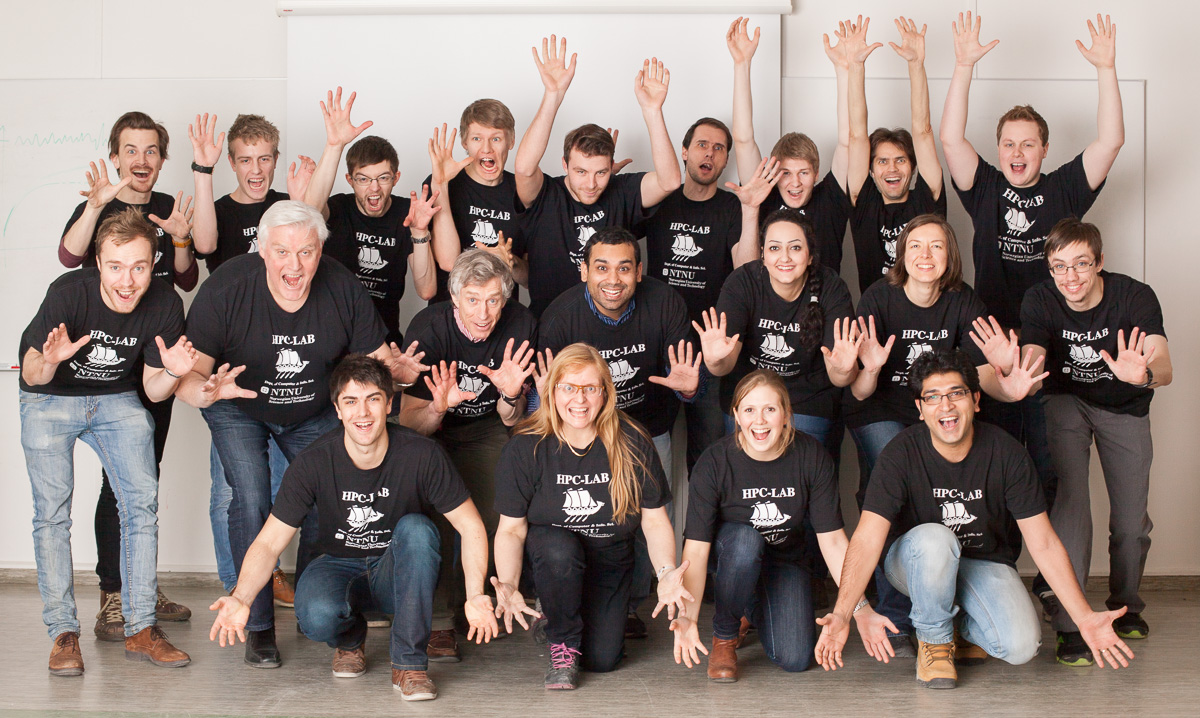
Prof. Anne C. Elster is a Professor of Computer Science at NTNU's Department of Computer & Information Science (IDI), leading the HPC-Lab. She specializes in High-Performance Computing (HPC), GPU acceleration, and heterogeneous systems. Her work spans HPC applications in medical imaging, seismic processing, and oil & gas simulations, with collaborations at CERN, NVIDIA, and Schlumberger. Elster holds a PhD in Electrical Engineering from Cornell University (1994) and is an IEEE Senior Member since 2000. She has supervised over 70 master students and numerous PhD candidates, emphasizing GPU computing. Her teaching includes courses like Parallel Computing and Compilers , with a focus on programming and problem-based learning. She leads EU projects like CLOUDLIGHTNING (2015–2018) and has organized major conferences (e.g., ISC, SC, PARA). Her HPC-Lab is a CUDA Research and Teaching Center, and she advocates for HPC infrastructure investments in Norway through policy engagement.
Wonsik Song is a Research Fellow at the Norwegian University of Science and Technology (NTNU), based in the Department of Energy and Process Engineering. His research focuses on combustion dynamics, turbulent flames, and hydrogen/ammonia combustion, with a strong emphasis on computational fluid dynamics and numerical simulations. He has contributed to studies on flame propagation, heat release characteristics, and the application of high-fidelity methods like direct numerical simulations (DNS) to analyze complex reactive flows. His work spans both experimental and computational analyses of hydrogen-air and ammonia-air mixtures in various combustion regimes, including MILD (Moderately Pressurized Ignition Delayed) conditions. Key research areas include turbulent flame interactions, radical concentrations in lean flames, and the impact of turbulence on combustion efficiency. Song’s studies often address energy applications, aiming to improve combustion models for cleaner and more efficient energy systems. Publications highlight his expertise in analyzing flame structures, dissipation rates, and the integration of GPU acceleration for simulating shock waves and stiff chemistry. While no formal awards are listed, his contributions to combustion science reflect a deep engagement with both fundamental and applied research challenges. No advising roles or grant details are explicitly mentioned in the provided texts. His work is primarily centered on computational and analytical methods, with a focus on advancing understanding of combustion processes in turbulent and high-pressure environments.
Nicolaas Ervik Groeneboom is a researcher affiliated with the University of Oslo's Department of Astrophysics within the Faculty of Mathematics and Natural Sciences. He holds a Ph.D. in astrophysics (2010) and has conducted post-doctoral research across multiple institutions. His work bridges computational astrophysics with neuroimaging tools, particularly through the Nutil software for rodent brain data analysis and the TRSE open-source project. Education: Ph.D. in Astrophysics, University of Oslo (2010) M.Sc. in Theoretical Astrophysics, University of Oslo (2007) B.Sc. in Mathematics, University of Oslo (2006) Research focuses on: Cosmological simulations (N-body, galaxy formation) CMB anisotropies and gravitational lensing Software development for scientific visualization (OpenGL, Unity) Compiler optimizations and HPC techniques Recent work extends into neuroimaging analysis tools for Alzheimer's research. His publications span leading journals like Astrophysical Journal and Communications Biology . Grants: Recipient of a 3-year Research Council of Norway grant for his doctoral research. Active contributor to Euclid project (cosmology). Projects: Creator of open-source TRSE compiler (1000+ users) and Nutil toolbox for histological image processing.
Xing Cai is a Professor at the Department of Informatics, University of Oslo, specializing in Scientific Computing and Machine Learning. His academic career spans several decades with a consistent focus on high-performance computing and its applications to complex scientific problems. He maintains an active research profile with numerous publications in top-tier journals and conferences. Professor Cai's research interests encompass parallel programming and high-performance computing, performance modeling and optimization, automated code generation, heterogeneous computing, and numerical methods for solving partial differential equations. His work extends to specialized applications in computational cardiology, computational geoscience, and biomedical computing. His research bridges theoretical computer science with practical applications in medicine and earth sciences, demonstrating exceptional interdisciplinary reach. An analysis of his recent publications (2019-2024) reveals a strong trend toward leveraging novel hardware architectures (GPUs, AI processors, specialized accelerators) for scientific computing, with particular emphasis on cardiac modeling applications. His work shows increasing sophistication in hardware-aware algorithm design, with publications spanning from fundamental performance modeling to domain-specific applications. The interdisciplinary nature of his work is evident in the diverse range of journals and conferences where he publishes, from computer science venues to specialized medical and geoscience publications. Professor Cai leads or participates in several significant research projects including the EuroHPC Centre of Excellence: Numerical Modeling of Cardiac Electrophysiology at the Cellular Scale (MICROCARD-2), High resolution simulation of cardiac electrophysiology on realistic whole-heart geometries, Maelstrom Associate Team, ODISSEE, Simula-Berkeley Education and Research collaboration (SIMBER), and aCG eX3: Experimental Infrastructure for Exploration of Exascale Computing. These projects reflect his leadership in both computational methodology development and domain-specific applications. His research group maintains strong collaborations with medical researchers, particularly in cardiac electrophysiology, and with geoscientists working on reservoir simulation. The publications list demonstrates consistent mentorship of junior researchers, with frequent co-authorship patterns suggesting an active supervision of PhD and postdoctoral researchers. His work on the EMI model for cardiac tissue represents a significant contribution to computational cardiology with potential clinical applications. The laboratory environment surrounding Professor Cai's work appears to be well-equipped for high-performance computing research, with access to advanced hardware platforms including GPU clusters, AI processors, and specialized accelerators. His publications on the use of Graphcore IPUs, Xeon Phi processors, and NVIDIA architectures indicate a well-resourced research environment capable of experimenting with cutting-edge hardware.
Carsten Griwodz is a Professor in the Department of Informatics (IFI) at the University of Oslo, specializing in digital infrastructure and security. He leads the Distributed Infrastructure and Security (DIS) research group and contributes to several specialized labs including the Sustainable Immersive Networking Lab (SINLAB), Imagine Beyond 5G Blockchain Lab, and the AliceVision Association. Professor at Department of Informatics, University of Oslo Section leader for DIS: Distributed Infrastructure and Security Group member in Networks and Distributed Systems (ND) Active in sustainable immersive networking and blockchain labs Co-founder of AliceVision open-source photogrammetric framework His research focuses on network performance, edge computing, and immersive technologies. He has pioneered work in cloud gaming QoE, real-time 3D reconstruction, and low-latency systems. Current projects explore redirected walking in VR, GPU programming for tracking, and sustainable networking solutions. Recent publications (2021-2024) demonstrate his expertise in network delay analysis, point cloud compression, virtual reality environments, and GPU-accelerated systems. His work bridges computer science fundamentals with cutting-edge applications in multimedia, security, and health informatics. He supervises numerous master's theses covering diverse topics from wireless streaming challenges to medical imaging advancements, consistently mentoring on topics related to network optimization, immersive technologies, and GPU computing. Supervised 40+ master's theses (2004-2024) Thesis topics span network performance, GPU programming, VR systems, and multimedia processing Active in both theoretical and applied research domains Mentoring interests include HCI, distributed systems, and real-time processing Contributes to education through research-led supervision As a permanent faculty member with extensive publication records and active research groups, Griwodz maintains significant influence in academic circles through both his technical contributions and educational mentorship.
Ramon Brasser is an Associate Professor at the Centre for Planetary Habitability, University of Oslo, specializing in planetary formation and habitability. His interdisciplinary work combines dynamical modeling , cosmochemistry , geochemistry , and geochronology to explore the origins and evolution of planets in our solar system and beyond. Key research areas include: Mechanisms and timescales of terrestrial planet formation Post-formation impact bombardment and its effects on planetary crusts Role of central stars in planet formation and habitability Long-term planetary habitability and delivery of biogenic materials Tidal evolution of planets and satellites He utilizes high-performance computing (GPU/CPU) on EU supercomputers and in-house facilities, with future plans to incorporate experimental work. He teaches the course From Planets to Cells at IISER Pune, India. Brasser has held appointments as a Professor II at the University of Oslo and as a Research Fellow at Konkoly Observatory, Hungary.
Johannes Langguth is an Associate Professor at the Department of Informatics, University of Bergen. His work focuses on high-performance computing, graph algorithms, and social network analysis. He has contributed to GPU acceleration techniques for cardiac simulations and graph processing on manycore architectures. Langguth's research intersects computational science with societal challenges, including misinformation detection in social media and conspiracy theory analysis. He leads projects on temporal interaction networks and has developed datasets like COCO and GECO to study pandemic-related disinformation. His interdisciplinary approach combines computer science with psychology and public health, addressing both technical and human aspects of information dissemination. Notable contributions include optimizing breadth-first search on Graphcore IPUs and applying graph neural networks for combinatorial problems. Langguth collaborates widely, with affiliations at Simula Research Laboratory and BI Norwegian School of Business. His work is funded by institutions like the Research Council of Norway and the EU, reflecting its applied and impactful nature in both academia and industry.
Bjørn Atle Johan Angelsen is a Professor affiliated with the Norwegian University of Science and Technology (NTNU), based at AHL-senteret (Prinsesse Kristinas gate 3, Øya). His research focuses on medical ultrasound imaging, nonlinear acoustics, and biomedical engineering, with emphasis on applications in drug delivery, tissue characterization, and contrast agent detection. He has supervised multiple PhD students, including Ola Finneng Myhre, Jochen Rau, and Rune Hansen. His work frequently appears in journals like the Journal of the Acoustical Society of America and IEEE Transactions on Ultrasonics . Angelsen's research interests include dual-frequency ultrasound technologies, acoustic radiation force mechanisms, and the development of advanced imaging techniques for clinical diagnostics. His studies often involve collaborations on nanoparticle transport in biological tissues and the optimization of transducer designs to reduce scattering and enhance image clarity. His recent articles highlight advancements in nonlinear elasticity imaging, ultrasound-enhanced drug delivery, and the exploitation of acoustic properties for tissue classification. These contributions bridge fundamental physics with translational biomedical applications. While no specific awards are noted in the text, his extensive publication record and role as a supervisor at NTNU underscore his significant contributions to the field.
About Mohammad Derawi Mohammad Derawi is a Professor at NTNU's Department of Electronic Systems, part of the Faculty of Information Technology and Electrical Engineering. He leads the Smart Wireless Systems (SWS) Research Group and directs the IoT-Lab at NTNU Gjøvik. His academic journey includes a PhD from NISLab (Norway) and CASED (Germany), alongside BSc/MSc degrees in Informatics from DTU (Denmark). Research Interests Derawi specializes in Smart Wireless Systems (IoT), Information Security (Biometric Systems), Digital Electronics, and Machine Learning applications in activity recognition and e-learning. His work bridges theoretical advancements with practical implementations, emphasizing secure and efficient IoT solutions. Research Projects Notable projects include IoT-Safetraffic (RFF Innlandet), Ambulance Drone (NTNU), Wireless ECG (Innovation Norway), and the EU-funded TURBINE project. These projects focus on IoT security, healthcare applications, and smart transportation systems. Awards & Recognition Recipient of NTNU's Quality in Education Award (2017) Honored as Norway's Youngest Professor (2016) Received multiple best paper awards from IEEE/ACM/Springer Invited to the Crown Prince Couple's 50th Birthday Celebration (2023) Grants & Leadership Led multi-institutional initiatives funded by RFF Innlandet, Innovation Norway, and EU grants. His research group collaborates with industry partners to develop cutting-edge IoT and wireless communication solutions. Labs & Teams Scientific Director of NTNU's IoT-Lab, fostering innovation in IoT ecosystems and smart city technologies. Active in mentoring students and industry professionals through workshops and conferences.
Andrei Lobov is an Associate Professor at the Norwegian University of Science and Technology (NTNU), Department of Mechanical and Industrial Engineering. He specializes in knowledge-based engineering (KBE), AI-driven manufacturing systems, and ontology-based frameworks. His research focuses on integrating multi-disciplinary engineering knowledge into automated design and manufacturing processes, emphasizing interoperability and extendibility of systems. Education: B.S. in Computer and Systems Engineering (Tallinn University of Technology, 2001); M.S. in Automation Engineering (Tampere University of Technology, 2004); Ph.D. in Formal Methods in Factory Automation (Tampere University of Technology, 2008). Research Projects: Robotic Welding for Shipbuilding with Aluminium Hulls (2019-2023) – Contributing as a supervisor DIGIMAN: Multi-disciplinary knowledge integration for digital manufacturing (2021-2023) – Technical coordinator PERSEUS DP (2021-2026) – Manufacturing lead Research Interests: KBE frameworks, ontology-based systems, AI in manufacturing, digital twins, IoT integration, CAD/CAM automation, and interdisciplinary education. His work emphasizes leveraging semantic web technologies and machine-processable knowledge representation to enhance automation and interoperability in engineering workflows. Key Awards: Best Paper Award (12th IFAC Symposium, 2006) Best Presentation Paper Award (IEEE Industrial Informatics, 2008) Best Paper Award (International Conference on Systems, 2012) Teaching & Mentoring: Leads courses like TMM4270 (Knowledge-Based Engineering) and TMM4128 (Machine Learning for Engineers). Supervised over 20 MSc and PhD students, including notable works in KBE systems, human-robot collaboration, and IoT-driven manufacturing. Labs/Teams: Active in the Design, Analysis and Manufacturing (DAM) group at NTNU, focusing on KBE, digital twins, and automation. Developed the MOVIDA Tools Framework for formal validation in manufacturing systems.
Aritra Mukherjee is a Research Fellow at the Norwegian University of Science and Technology (NTNU), affiliated with the Department of Energy and Process Engineering and the Department of Language and Literature. His work integrates computational physics, fluid dynamics, and thermal engineering to address complex multiphase flow phenomena and environmental modeling challenges. His research focuses on multiphase flow dynamics, phase-change processes, and high-performance computational methods such as the lattice Boltzmann method. He also explores applications in wildfire prediction, thermal hydraulics, and nanostructured surface characterization. His contributions span both fundamental fluid mechanics and applied environmental science. Key research themes include low Mach number modeling for multicomponent flows, GPU-accelerated simulation frameworks, and dual-phase-lag heat conduction analysis. His work bridges mesoscopic fluid dynamics with large-scale environmental systems, emphasizing algorithmic innovation for multiphase systems. Notable outreach includes a 2024 presentation at the International Conference on Numerical Methods in Multiphase Flows in Reykjavik, Iceland. His lab affiliations include the Strømningstekniske laboratorier (Fluid Mechanics Laboratory) at NTNU.
Magnus Jahre is a Professor at the Norwegian University of Science and Technology (NTNU) Department of Computer Science. His research focuses on computer architecture, particularly performance analysis, ultra-low-power systems, spatial accelerators, GPUs, and heterogeneous computing systems. Jahre's current work investigates sustainable computing approaches, including Edge AI systems that reduce energy consumption. He has organized workshops on Sustainable and Performant Computing and serves on program committees for major computer architecture conferences including ISCA, MICRO and HPCA. He received the prestigious Young Research Talents grant from the Research Council of Norway in 2019 and is a senior member of both ACM and IEEE.
Andrei Lobov is an Associate Professor at the Department of Mechanical Engineering and Manufacturing, Faculty of Engineering at NTNU. His research focuses on Knowledge-Based Engineering (KBE), advanced manufacturing systems, IoT integration, and robotics automation. He has extensive experience in developing ontology-based solutions for CAD integration, industrial robotics programming, and human-robot collaboration systems. His work emphasizes interoperability, sustainability, and digital thread implementation across engineering domains. Key research areas include parametric design automation, semantic web applications in engineering, and IoT-driven environmental systems. Recent projects involve optimizing warehouse systems using modular Petri nets, smart textile waste management, and AI-enhanced bearing condition monitoring. He has supervised doctoral research such as Yu Wang's thesis on acoustic emission-based bearing monitoring. Lobov actively publishes in journals like Advanced Engineering Informatics and The International Journal of Advanced Manufacturing Technology. His work bridges theoretical KBE frameworks with practical industrial applications, contributing to both academic conferences (IEEE, AIP) and industry-focused forums. He has organized international conferences like the IEET series and presented at venues such as Nor-Fishing 2024 on digital twin applications in fisheries.
Theoharis Theoharis is a Professor at the Department of Computer Science (IDI), Norwegian University of Science and Technology (NTNU Trondheim), where he leads research in shape analysis and visual computing. He is a core member of the Visual Computing Lab , focusing on 3D object retrieval, biometrics, and cultural heritage applications. Research Interests : 3D Object Retrieval and Registration Biometric Identification (facial data, somatotype analysis) Shape Segmentation and Cultural Heritage Preservation Medical Imaging and Robotics Notable Projects : PRESIOUS : EU-funded initiative for cultural heritage using visual computing D4FLY : On-the-move biometric verification CHANGE ITN : Monitoring cultural heritage change with 15 PhD theses Publications highlight trends in: 3D shape descriptors (QUICCI, radial intersection count) Deep learning for 3D reconstruction and registration Applications in cultural heritage, medical imaging, and geophysics Education : BSc in Computer Science MSc in Computation DPhil in Computer Graphics and Parallel Processing Advising includes doctoral students like Evdokia Saiti (2023) and Peder Bergebakken Sundt (2024), with contributions to SHREC'16 and 3DOR2022 symposiums. Labs & Collaborations : Visual Computing Lab (NTNU) NTNU's Computing unit European Union FP7-ICT (D3.1 Deliverable)
Francesco Ravazzolo is Full Professor of Econometrics at the Free University of Bozen-Bolzano (Faculty of Economics and Management) and Head of the Department of Data Science & Analytics at BI Norwegian Business School. He also acts as visiting professor at BI’s Center for Applied Macro and Commodity Prices and is president of the Society of Nonlinear Dynamics and Econometrics. Education: Ph.D. in Econometrics, Tinbergen Institute & Erasmus University Rotterdam, 2007 Research domains: Ravazzolo’s work sits at the intersection of Bayesian econometrics, energy economics, financial econometrics and macroeconometrics. He develops forecasting methods for electricity prices, commodity markets, cryptocurrencies and macro aggregates, with particular emphasis on regime-switching, mixed-frequency and high-dimensional techniques. His recent projects exploit textual data and semantic networks to predict consumer confidence and financial volatility. Publication trends: Since 2022 he has published extensively on (i) hourly/daily electricity-price forecasting with renewables and macro drivers, (ii) robust or Markov-switching time-series methodologies, (iii) big-data sentiment indicators for bond and stock markets, and (iv) energy-commodity and crypto-asset econometrics. Applications span European gas-price caps, Italian zonal imbalances, Nordic and German power markets, and global CDS indices. Editorial & professional service: Editorial boards: Annals of Applied Statistics, International Journal of Forecasting, Journal of Applied Econometrics, Spatial Economic Analysis, Studies in Nonlinear Dynamics & Econometrics President, Society of Nonlinear Dynamics & Econometrics Grants & enterprise: He is co-founder of three academic spin-offs: AIAQUA (AI for water and energy management), COMMODIA (commodity-data analytics) and STAIRS (forecasting platforms), securing continuous grant and industry funding for applied research. Labs & teams: At BI he leads the Department of Data Science & Analytics (ca. 40 faculty) and coordinates the Commodity Prices Research Hub; at unibz he supervises the Econometrics & Forecasting group involved in regional energy-market projects.