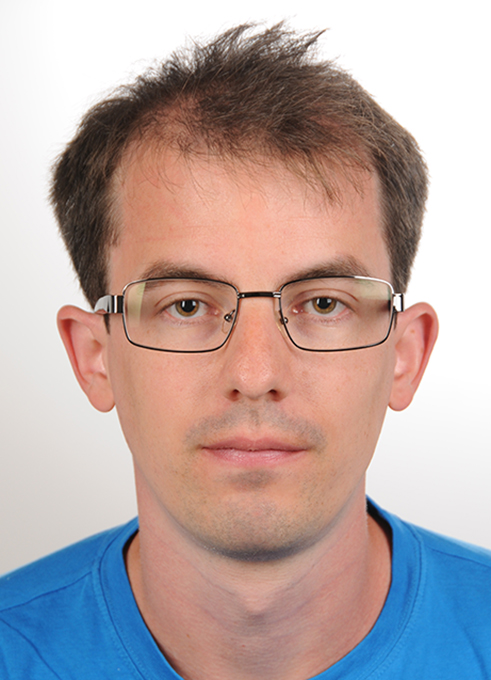
Moritz HeliasView profile
Professor
Prof. Dr. Moritz Helias is a University Professor and leads the Theory of Multi-Scale Neuronal Networks group at the Institute for Advanced Simulation (IAS-6), Computational and Systems Neuroscience, Forschungszentrum Jülich. His research bridges biological and artificial neural networks, focusing on dynamics, information processing, and the physics of AI. The group is part of a larger interdisciplinary institute that integrates theory, simulation, and data analysis to understand the brain. Institution: Forschungszentrum Jülich School: Institute for Advanced Simulation Department: IAS-6, Computational and Systems Neuroscience Position: Professor and Group Leader Email: m.helias@fz-juelich.de His research interests lie at the intersection of statistical physics and neuroscience. He investigates how structure shapes dynamics in both biological and artificial networks, aiming to uncover general principles of information processing. Using methods from statistical physics, his work enables a unified framework for understanding collective phenomena, learning, and generalization. Key areas include spiking neural networks, renormalized field theory, and the theoretical foundations of AI. The recent publications reflect a strong trend toward multi-scale modeling of neural systems, integrating statistical physics with neuroscience. Topics include spiking network dynamics, mean-field theory, renormalization, and applications of machine learning in physics. The work spans biological realism and artificial intelligence, with implications for neuromorphic computing and brain-inspired AI architectures. While no scientific awards are listed in the provided texts, his group actively contributes to open science through tools like NEST and theoretical frameworks that influence both neuroscience and AI. Prof. Helias supervises a research group focused on theoretical and computational approaches, contributing to collaborative projects involving large-scale simulations and data analysis. His team works closely with experimentalists and theorists to validate models and advance understanding of brain function. The group is also involved in developing simulation technologies and theoretical tools that support reproducible neuroscience. The Theory of Multi-Scale Neuronal Networks group is embedded within a vibrant research environment at IAS-6, collaborating with teams in statistical neuroscience, computational neurophysics, and future simulation architectures. This fosters a loop between data, theory, and simulation, enabling cutting-edge research on brain function and artificial intelligence.