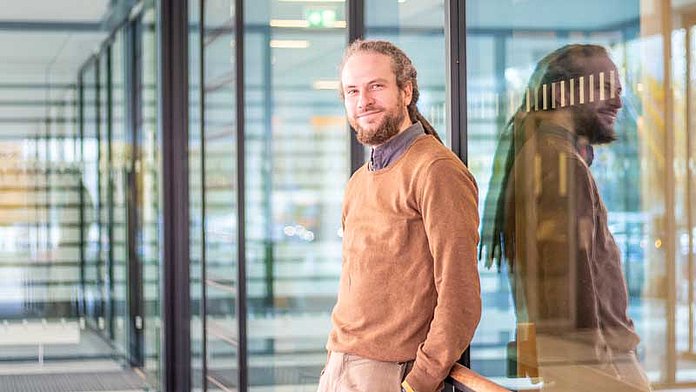
Dr. Robert Haase is a Lecturer and Training Coordinator at the Center for Scalable Data Analytics and Artificial Intelligence (ScaDS.AI) under Leipzig University , with prior leadership roles at the DFG Cluster of Excellence 'Physics of Life' at TU Dresden . He specializes in Bioimage Analysis , GPU-Accelerated Image Processing , and Large Language Models (LLMs) for life sciences. His research focuses on democratizing bioimage analysis through open-source tools like CLIJ , clesperanto , and bia-bob , aiming to bridge microscopy with data science . Recent projects explore LLM-driven code generation for image analysis and interactive workflow design in platforms like napari . He leads initiatives such as the NFDI4BioImage consortium for research data management in Germany and GloBIAS , a global society for bioimage analysts. Funded by organizations including the Chan Zuckerberg Initiative (CZI) and DFG , his work emphasizes reproducibility , open science , and interdisciplinary collaboration in bioimaging. As an educator, he conducts training programs like "Large Language Models for Bioimage Analysis" and "Collaborative Working with Git" , and contributes to workshops at institutions such as EMBO , Institut Pasteur , and ScaDS.AI Summer Schools .
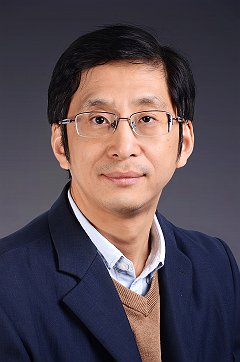
Wing-Kwong Chan is an Associate Professor in the Department of Computer Science at City University of Hong Kong. With a background that includes industry experience as a software engineer, Dr. Chan returned to academia and has established himself as a leading researcher in software engineering with a focus on emerging technologies. Dr. Chan received his BEng, MPhil, and PhD all from The University of Hong Kong. His academic journey began with a hardware-oriented Computer Engineering degree before shifting to software engineering for his graduate studies. His research interests center on software engineering, particularly the technical aspects interfacing with machine learning, blockchain, and GPU technologies. He addresses challenges in program analysis and concurrency, with recent work focusing on deep learning model verification and robustness. His publications span top venues including TOSEM, TSE, ICSE, ESEC/FSE, and ASE. Dr. Chan's recent publications demonstrate a strong trend toward integrating software engineering principles with deep learning systems, particularly in verification, testing, and robustness of AI models. His work bridges theoretical software engineering concepts with practical applications in emerging technologies. Best Paper Award from COMPSAC'04 Best Paper Award from COMPSAC'08 Best Paper Award from COMPSAC'10 Best Paper Award from QSIC'11 Best Paper Award from QRS'16 Best Paper Award from ISET'18 CityU President's Award 2017 Dr. Chan has successfully advised numerous PhD and MPhil students, with alumni dating back to 2006. He has secured substantial research funding through multiple Hong Kong Research Grants Council projects, ITF grants, and international collaborations. His current research focuses on patch robustness certification for deep learning models, reflecting his ongoing commitment to advancing software engineering practices for emerging technologies. As Program Leader for the MSc in E-Commerce program from the CS Department, Dr. Chan also contributes significantly to academic administration and curriculum development at City University of Hong Kong.
Christoph Müller is a Doctoral Researcher at the Visualization Research Center (VISUS) at the University of Stuttgart, working within the Weiskopf Group and Sedlmair Group. With over 19 years of research experience documented through publications from 2006 to 2025, he has established himself as a significant contributor to the scientific visualization community. Dr. Müller's research spans multiple domains of visualization including scientific visualization, computer graphics, visual analytics, cybersecurity visualization, molecular graphics, and energy-efficient visualization techniques. His recent work demonstrates a strong focus on practical applications, particularly in cybersecurity analysis through projects like AlertSets for exploratory analysis of cybersecurity alerts and VITALflow for network traffic analysis. He has also made important contributions to understanding and reducing the energy consumption of visualization systems, with recent papers on foveated volume visualization and comprehensive energy measurement approaches. His publication record shows consistent contributions to top visualization venues, with recent work appearing in IEEE Transactions on Visualization and Computer Graphics, Journal of Visualization, and proceedings of major conferences including IEEE VIS, Eurographics, and VizSec. His research often involves interdisciplinary collaboration, particularly with cybersecurity experts and domain scientists. Active research in cybersecurity visualization for security operations Pioneering work on energy measurement and reduction in visualization systems Contributions to scientific visualization for cosmic evolution and manufacturing Development of visualization frameworks like MegaMol Exploration of novel platforms including gaming consoles for scientific visualization Dr. Müller's work bridges theoretical visualization research with practical applications, making significant contributions to both the academic community and real-world visualization challenges across multiple domains.
Maura John serves as a Research Associate at the Chair of Bioinformatics at Hochschule Weihenstephan-Triesdorf's Straubing Campus for Sustainable Resource Use. Her research focuses on developing advanced computational methods for biological data analysis, with particular expertise in genome-wide association studies and protein structure prediction. Her primary research interests include: Genome-wide association studies with permutation-based significance thresholds that preserve population structure Development of bioinformatics tools like permGWAS2 and easyPheno Protein thermostability prediction using machine learning approaches Genomic selection methodologies for crop breeding applications Dr. John's recent publications demonstrate a strong focus on methodological improvements in computational biology, particularly addressing limitations of traditional approaches in handling skewed phenotype distributions and population structure. Her work bridges theoretical statistical methods with practical biological applications across plant genomics and protein science. Notable contributions include: permGWAS2: An improved method that maintains population structure during permutations ProLaTherm: A protein language model-based thermophilicity predictor outperforming existing methods easyPheno: A comprehensive Python framework for phenotype prediction model comparison Her research program demonstrates strong collaborative efforts with Dominik Grimm's group and other bioinformatics researchers, focusing on developing open-source tools that address critical challenges in genomic data analysis. The work has practical applications in plant breeding, protein engineering, and understanding genotype-phenotype relationships.
Dr. Matthias Becker serves as a Group Leader within the Career Development Fellow Programme at the German Center for Neurodegenerative Diseases (DZNE) in Bonn, Germany. His research integrates advanced machine learning techniques with biomedical applications, focusing on drug discovery and privacy-preserving health data analysis. His primary research interests include: Development of generative AI models for drug molecule design (DrugDiff) Privacy-preserving synthetic data generation for medical research (PriSyn project) Swarm learning applications for high-dimensional biomedical data Energy-efficient computing for molecular modeling His work bridges computational methods with neurodegenerative disease research, emphasizing practical implementations that balance innovation with ethical data handling. Becker's recent publication analyzes autoencoder architectures for molecular data, demonstrating significant reductions in data requirements (97%) and energy consumption (36%) while maintaining performance. His research shows particular strength in optimizing latent space utility for chemical applications. Becker actively collaborates with major institutions including CISPA Helmholtz Center for Information Security, QuantPi startup, and Hewlett Packard Enterprise. His technical expertise spans HPC/GPU cluster utilization, containerization for reproducibility, and emerging technologies like FPGAs for energy-efficient computing. He contributes to DZNE's computational infrastructure while advancing research in synthetic data generation for genetic and clinical applications.
Luciano Baresi is a Full Professor at the Polytechnic University of Milan (Politecnico di Milano), Italy, affiliated with the Department of Electronics, Information and Bioengineering. He earned his laurea (MSc) and PhD in Computer Science from the same institution and has held visiting positions at the University of Oregon (USA), Tongji University (China), and the University of Paderborn (Germany). His research spans software engineering, with current focuses on self-adaptive systems, edge computing, and AI/ML-based software. His work integrates formal methods with practical applications, emphasizing autonomous systems, cloud-edge continuum, and federated learning. Recent publications highlight AI-driven advancements in software testing, resource optimization, and educational tools. Key research themes include: AI/ML for autonomous driving testing and data augmentation Serverless computing at the edge Federated learning system architectures Containerization and cloud resource management Awarded for impactful contributions: RE 2020 Most Influential Paper ICSOC 2020 Best Paper SEAMS 2022 Best Paper He advises 14+ PhD students and leads projects like Ketonet (health app), WHO's Essential Items Estimator, and dynaSpark. As Editor-in-Chief of Proceedings of the ACM on Software Engineering and senior editor for multiple journals, he shapes academic discourse in adaptive systems and software engineering.
Hongyu Zhang is a Professor and Dean of the School of Big Data and Software Engineering at Chongqing University, China, and an Honorary Professor at The University of Newcastle, Australia. Previously, he served as a Lead Researcher at Microsoft Research Asia and an Associate Professor at Tsinghua University, China. He received his PhD from the National University of Singapore in 2003. His academic journey spans prestigious institutions, combining industry research experience with academic leadership. Dr. Zhang's research interests focus on intelligent software engineering, software analytics, data-driven software engineering, software fault management, testing and debugging, and software maintenance and reuse. His work centers on improving software quality and productivity by mining and analyzing vast amounts of software data. Over the years, he has developed innovative methods that apply data mining, machine learning (including deep learning), and information retrieval techniques to extract knowledge from software data and solve complex software engineering problems. His research spans three major areas: intelligent programming (code search, code summarization, code generation), intelligent quality prediction (defect prediction, cloud failure prediction, performance prediction), and intelligent fault detection and diagnosis (log-based fault detection, crash-based fault localization, bug report analytics). His recent publications demonstrate a clear trend toward integrating large language models and deep learning techniques with traditional software engineering practices. The research spans intelligent programming assistance, code security, UI automation, distributed systems optimization, and performance analysis. His work increasingly focuses on practical applications of AI in software engineering, with emphasis on real-world impact in industrial settings, particularly in microservices, cloud systems, and large-scale software development environments. 8 ACM Distinguished Paper Awards Best Paper Award: How Long Will it Take to Mitigate this Incident for Online Service Systems? David Lorge Parnis Fellowship Senior Member of IEEE Distinguished Member of ACM Distinguished Member of CCF Fellow of Engineers Australia (FIEAust) Recognized in The Australian's Top Researchers special edition as leading researcher in Software Systems World's Top 2% Scientists (career-long) Dr. Zhang has successfully advised numerous PhD and Master's students who have gone on to prominent positions at leading technology companies and academic institutions worldwide. His research has been supported by significant grants including Australian Research Council Discovery Projects (as Lead CI) and multiple National Science Foundation of China projects. His work has made tangible impacts in industry, most notably through the Microsoft Developer Assistant project which received over 450K downloads in 2016. He leads research groups focused on intelligent software engineering and software analytics, with strong collaborations between Chongqing University, The University of Newcastle, and Microsoft Research. His teams develop practical tools for code intelligence, log analysis, and fault diagnosis that are deployed in real-world online service systems.
Dr. Fabian Schönfeld is a postdoctoral researcher at the Institute of Neural Computation (INI), which is part of the Faculty of Computer Science at Ruhr-Universität Bochum. He works in the Theory of Neural Systems group, focusing on computational modeling of the hippocampus using Slow Feature Analysis and other machine learning techniques. His educational background includes: Diploma in Computer Science from FAU Erlangen (2004-2009) PhD in Neuroscience from the International Graduate School of Neuroscience (2010-2016) Dr. Schönfeld's research primarily focuses on theoretical neuroscience, particularly on modeling the hippocampus and spatial cognition. His work combines computational approaches with neuroscience to understand how the brain processes spatial information. He has extensively used Slow Feature Analysis to model place cell behavior in the rat hippocampus, arguing for its feasibility as a fundamental principle of cognitive data processing. His research interests also extend to deep learning, artificial intelligence, and the intersection of these fields with neuroscience. His publications demonstrate a consistent focus on hippocampal function and spatial representation, with an increasing sophistication in modeling approaches over time. The research shows how computational models can help understand neural mechanisms of spatial representation, navigation, and memory formation, with applications in both neuroscience and artificial intelligence. Dr. Schönfeld has supervised several bachelor's theses on topics related to robot navigation using Slow Feature Analysis and has taught courses on Scientific Computing with Python. His academic service includes: Supervising bachelor's theses (2012-2013) Teaching Scientific Computing with Python (2015-2017) Tutoring high school students in mathematics and physics (2007-2010)