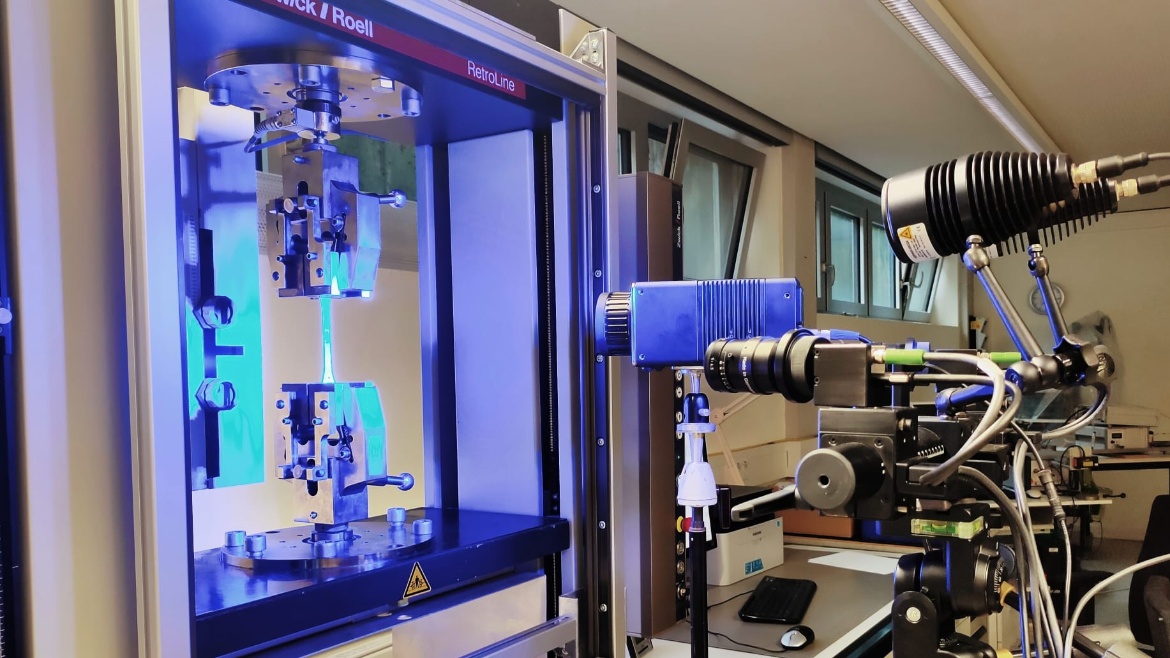
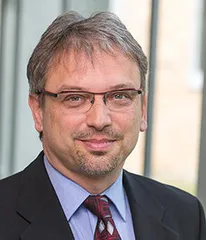
Jan Liedmann is a Professor at the Institute for Statics and Dynamics of Aerospace Structures (ISD) within the Faculty 6: Aerospace Engineering and Geodesy at the University of Stuttgart. His research focuses on structural mechanics, dynamics, environmental mechanics, and biomechanics with methodological emphasis on finite element analysis, machine learning integration, and high-performance computing (HPC). He leads projects involving uncertainty quantification, porous media simulation, and methane oxidation studies. Affiliations: DFG Cluster of Excellence SimTech, SPP 1886, SPP 2311, and FOR 5151 HPC Resources: Vulcan cluster, Hawk supercomputer, bwUniCluster 2.0 Key research areas include experimental mechanics, carbon fiber composite durability, and sea ice modeling. Recent work emphasizes physics-informed machine learning and adaptive finite element methods. The ISD operates advanced labs for static/dynamic fatigue testing and biomaterial analysis, supported by institutional GPU servers. His team collaborates with the Alfred Wegener Institute (AWI) on Antarctic projects and participates in EU initiatives like DigiTain for sustainable aerospace design. Recent publications highlight innovations in separable DeepONet architectures and multiphysics modeling frameworks.
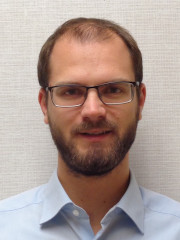
William Donnelly is a professor at Waterford Institute of Technology in Waterford, Ireland, with a distinguished research career spanning over three decades. His work demonstrates a clear evolution from traditional telecommunications and network management to bio-inspired computing approaches, and more recently to precision agriculture applications and computer graphics. His primary research interests focus on Computer Networking , Bio-inspired Computing , and Precision Agriculture . Early in his career, he specialized in telecommunications management networks (TMN) and service management. He then pioneered work applying biological concepts like chemotaxis and quorum sensing to networking problems, developing bio-inspired routing protocols and service management frameworks. In the 2010s, his research shifted toward precision agriculture applications, particularly dairy farming, where he applied wireless sensor networks, fog computing, and edge analytics to monitor animal behavior and optimize farming practices. Most recently, he has transitioned into computer graphics, focusing on real-time rendering techniques with publications in 2023-2024 on spatiotemporal sampling methods. Analysis of his publication trends reveals a researcher who consistently identifies emerging technological challenges and applies innovative cross-disciplinary approaches to solve them. His work demonstrates remarkable adaptability, moving from telecommunications standards to biological metaphors, then to agricultural technology applications, and finally to computer graphics - always maintaining a focus on optimization, efficiency, and practical implementation. Throughout his career, Donnelly has maintained strong collaborative relationships, particularly with Sasitharan Balasubramaniam and Dmitri Botvich, with whom he has co-authored numerous papers exploring bio-inspired networking approaches. His recent collaborations in computer graphics include Alan Wolfe, Judith Bütepage, and Jon Valdés.
Witold Andrzejewski is an active researcher in computer science, focusing on data deduplication pipelines, co-location pattern mining, and GPU-accelerated algorithms. His work bridges academia and industry, with publications analyzing customer record deduplication in the financial sector, performance optimization of spatial data processing, and comparative studies of statistical modeling versus machine learning approaches. 2025: Co-location pattern mining with Euclidean metrics 2024: Customer data deduplication parameter tuning 2023: Text similarity measures in financial applications
Carlo Curino is a researcher at Microsoft Research , focusing on database systems, cloud computing, and machine learning integration. He has collaborated extensively with institutions including MIT, Microsoft, and the University of Wisconsin-Madison. His research spans Geo-distributed data analytics Automated configuration tuning Tensor-based database systems Data lake optimization Spark performance engineering Recent publications highlight his work on AI-driven systems like MotherNet and Rockhopper , alongside contributions to query processing over compressed data and log-structured tables. Collaborators include prominent figures such as Raghu Ramakrishnan and Jesús Camacho-Rodríguez . Key projects involve LST-Bench (cloud storage benchmarking), AutoComp (data compaction), and PyFroid (commodity workstation analytics). His work bridges database optimization with modern machine learning demands in enterprise environments.
Dr. Charlotte Debus serves as a junior research group leader at the Scientific Computing Center (SCC) of Karlsruhe Institute of Technology (KIT), directing her independently funded research group since 2022. Her work pioneers sustainable artificial intelligence through robustness optimization, energy efficiency improvements, and carbon footprint reduction in large-scale AI systems. Her academic foundation includes a physics degree and doctoral research focused on AI methods for medical imaging. Prior to leading her KIT group, she contributed to the Helmholtz AI program as an AI consultant, advising researchers across the Helmholtz Association on AI implementation strategies. Dr. Debus's research integrates high-performance computing (HPC) principles into AI training workflows to eliminate computational bottlenecks. She demonstrates how synchronizing data loading, forward/backward computation, and network communication across CPU/GPU architectures minimizes idle time and energy waste. Her meteorology case study proves 2D AI architectures achieve weather forecasting accuracy comparable to 3D models while drastically reducing training time and resource consumption—revealing data processing speed and volume as critical efficiency factors beyond dimensional structure. Funded by the German Federal Ministry of Education and Research, her group develops transparent benchmarking frameworks for AI energy consumption metrics. She actively advocates for industry-wide adoption of these standards to convert computational energy use into tangible CO2 emissions data, driving environmentally responsible AI development practices across research and industry sectors.
Stepan Vanecek is a Doctoral Candidate and Scientific Employee at the Chair of Computer Architecture and Parallel Systems within Technische Universität München . His work spans software tool development, performance analysis, and HPC system optimization. Research focus on HPC architecture, quantum computing integration, and heterogeneous memory systems Active in performance modeling, GPU bottleneck detection, and hardware topology representation Led development of tools like sys-sage and GPUscout Research Trends from recent publications show: Quantum-HPC system integration frameworks Dynamic hardware topology modeling GPU memory bottleneck visualization Heterogeneous computing optimization techniques Scientific Recognition : Hans Meuer Award (ISC'25) for quantum-HPC research Student Mentorship : Supervised 17+ theses (6 MA, 11 BA) since 2022, including GPU performance analysis, sys-sage API development, and heterogeneous system evaluation projects.
Miriam Schulte is a Professor at the Institute for Parallel and Distributed Systems (IPVS) at the University of Stuttgart . As Dean of Studies SimTech , she leads academic programs in simulation technology. Her research focuses on high-performance computing , multi-physics simulations , and scientific software development , with significant contributions to coupling libraries like preCICE and biophysical frameworks like OpenDiHu . Key Research Areas: High-Performance Computing (HPC) Multi-physics and Fluid-Structure Interaction (FSI) Sparse Grids and Hierarchical Numerical Methods Machine Learning in Simulation Software Parallel and GPU-Accelerated Algorithms Advising: Guided student projects on quantum neural networks , GPU-optimized sparse grids , and SYCL-based HPC frameworks . Coordinated SimTech Research Modules and IPVS/SGS team initiatives. Software Leadership: Maintains preCICE (coupling library for multi-physics) Develops OpenDiHu (neuromuscular simulations) Advances PLSSVM (parallel SVM library) and SG++ (sparse grids) Her recent publications (2022–2025) emphasize machine learning integration with multi-physics simulations , including groundwater heat pumps , brain tumor modeling , and neuromuscular EMG prediction . She actively promotes open-source software sustainability and collaborative research infrastructure at the University of Stuttgart.
Kürsat Yurt, M.Sc., serves as a Research Associate at the Institute for Rotorcraft and Vertical Flight, Technical University of Munich (TUM), based at Boltzmannstr. 15, 85748 Garching, Germany. His role encompasses advanced computational research in vertical flight systems, thesis supervision, and participation in multiple national and international projects targeting next-generation rotorcraft technologies and urban air mobility solutions. Yurt's research spans High Performance Computing, Performance Portable Programming, Rotor and Wake Aerodynamics, and Aeroelasticity. He develops GPU-accelerated meshless methods for large eddy simulations, creates real-time guidance algorithms for urban obstacle avoidance, and investigates morphing airfoil dynamics through fluid-structure interaction frameworks. His work bridges computational mechanics with practical rotorcraft design challenges, emphasizing energy efficiency and flight safety in complex environments. His 2022-2025 publications reveal a cohesive trajectory in computational rotorcraft aerodynamics, featuring innovations in meshless GPU simulations, partitioned coupling techniques, and urban air mobility guidance systems. These works integrate computational fluid dynamics, high-performance computing, and aerospace engineering to address vertical flight challenges including wake modeling, morphing rotor blades, and rotor-airframe interactions. Yurt actively supervises Master's and Bachelor's theses on vortex particle methods, rotorcraft simulation frameworks, and morphing rotor technologies. His research is funded through key projects: ENGEL - Energy Efficient Flight Guidance VARI-SPEED II ARCTIS LaBouR complemented by completed initiatives like InteReSt II and TEMA-UAV. The Institute provides critical infrastructure for his work through specialized facilities: Whirl Tower for rotor dynamics testing Flight Simulator Facilities for pilot-in-loop studies Unmanned Rotorcraft Testbed (AREA) High-performance GPU/CPU clusters for computational workloads These resources enable experimental validation of his computational models and support the institute's mission in vertical flight innovation.
Frank Jenko is an Honorary Professor for Computational Physics at the Technical University of Munich and a Scientific Member and Head of the Tokamak Theory Division at the Max Planck Institute for Plasma Physics (IPP) since January 2017. His research focuses on plasma physics and fusion energy, with particular expertise in tokamak theory, turbulence simulation, and computational physics. Dr. Jenko was born in 1968 in Landshut and studied physics at the Technical University of Munich. After completing his doctorate, he joined IPP as a research associate in 1998. Following research stays in the USA, he completed his habilitation at the University of Ulm in 2005 and led an IPP junior research group focused on simulating plasma turbulence on supercomputers. From 2014 to 2017, he served as a professor of physics and astronomy and director of the Plasma Science and Technology Institute at the University of California, Los Angeles. His research interests span plasma physics, fusion energy, and computational methods for simulating complex plasma phenomena. Jenko's work particularly emphasizes gyrokinetic modeling of plasma turbulence in magnetic confinement devices, with applications to both tokamaks and stellarators. His research group develops and utilizes advanced computational tools like the GENE code for high-fidelity plasma simulations. Analysis of his recent publications reveals a strong focus on advancing computational methods for plasma turbulence simulation, with applications to both tokamak and stellarator configurations. His work spans fundamental plasma physics, computational algorithm development, and practical applications to fusion energy research, particularly in validating simulation codes against experimental data and applying these validated models to predict and optimize fusion plasma performance. Starting Grant from the European Research Council (2011) Hans Werner Osthoff Prize from the University of Greifswald (2004) Otto Hahn Medal from the Max Planck Society (1999) As head of the Tokamak Theory Department at IPP, Dr. Jenko leads a research group focused on computational plasma physics and turbulence simulation. His team has secured significant funding through European Research Council grants and maintains strong international collaborations with major fusion facilities worldwide, including JET, ASDEX Upgrade, and Wendelstein 7-X. The group plays a key role in the development of the GENE code, a leading gyrokinetic turbulence simulation tool used by researchers globally. The Tokamak Theory Department under Dr. Jenko's leadership operates advanced computational facilities for plasma turbulence simulation and maintains close ties with experimental teams at major fusion facilities. The department is instrumental in bridging theoretical plasma physics with experimental results, contributing to the advancement of magnetic confinement fusion research worldwide.
Dr. David Champion is a Researcher at the Max Planck Institute for Radio Astronomy (MPIfR) in Bonn, Germany, affiliated with the Research Department of Radio Astronomical Fundamental Physics. He is a core member of the COMPACT Research Group, focusing on radio astronomical fundamental physics. His research utilizes major radio telescopes including Effelsberg, Arecibo, Green Bank, and Parkes for pulsar timing and gravitational wave detection. Education History: B.Sc. in Physics with Astrophysics from University of Bristol M.Sc. in Opto-electronics and Optical Information Processing from Queen's University Belfast Ph.D. in Pulsar Searching and Timing from University of Manchester (Jodrell Bank Observatory) Research Focus: Champion specializes in pulsar timing arrays, gravitational wave detection, and neutron star physics. His work includes the European Pulsar Timing Array project, pulsar surveys, analysis of relativistic binaries, and studies of the interstellar medium. Recent research explores dark matter signatures via pulsar polarimetry and developing methodologies for the Square Kilometre Array. Publication Trends: Over 15 recent publications (2024-2025) demonstrate consistent focus on pulsar timing arrays, gravitational wave detection, and neutron star systems. Key themes include MeerKAT data analysis, binary pulsar characterization, survey discoveries, and instrumentation for next-generation telescopes. Research emphasizes statistical methods for noise reduction and gravitational wave background mapping. Scientific Recognition: Natural Sciences and Engineering Research Council of Canada (NSERC) Postdoctoral Fellowship, supplemented by Canadian Space Agency Research Projects & Collaborations: Leads efforts in the European Pulsar Timing Array and Parkes Pulsar Timing Array projects. Manages observational programs using Effelsberg Radio Telescope and contributes to TRAPUM (Transients and Pulsars with MeerKAT). Collaborates internationally on gravitational wave detection and pulsar surveys. Laboratories & Teams: Heads the COMPACT Research Group at MPIfR. Previously worked with pulsar research groups at McGill University and Australia Telescope National Facility (CSIRO). Contributes to instrumentation development for neutron spectroscopy and radio astronomy.
Maximilian Schüle serves as Assistant Professor in the Department of Data Engineering at the University of Bamberg's Faculty of Information Systems and Applied Computer Sciences since October 2022. Previously, he held research positions at Technical University of Munich (2017-2022). His research bridges database systems and machine learning through compiler-based approaches. His research focuses on in-database machine learning , GPU-accelerated query processing , and recursive SQL extensions . Key contributions include: Developing MLIR-based compilers for automatic differentiation in SQL (DuoLingo-AutoDiff) Creating GPU code generators for database kernels using NVRTC Designing higher-order lambda functions for expressive query languages Implementing end-to-end neural network training within database engines His recent publications (2023-2025) demonstrate consistent output in top venues including ICDE, VLDB workshops, and BTW conferences, with growing emphasis on hardware-aware optimization and compiler techniques for analytical workloads. He currently leads a DFG-funded project on elastic memory hierarchies for memory-intensive applications (2025-2028), supporting multiple PhD researchers. His supervision emphasizes open-source contributions to database systems like Umbra and practical implementation skills alongside theoretical foundations. As an active member of the database community, he serves as workshop chair for BTW 2025 and regularly reviews for ACM TODS, VLDB Journal, and Information Systems. His work on public transport analytics demonstrates real-world impact through collaborations with urban mobility initiatives in Bamberg.
Prof. Dr. André Hinkenjann is the Founding Director of the Institute for Visual Computing and holds a Research Professorship in Computer Graphics and Interactive Systems at Bonn-Rhein-Sieg University of Applied Sciences. His research spans computer graphics, interactive environments, and visualization, with applications in VR/AR, digital twins, and scientific data analysis. He leads multidisciplinary projects funded by institutions like BMBF and Zukunftsfonds NRW. His research integrates: Computer Graphics : Real-time global illumination, foveated rendering, and GPU optimization Interactive Systems : Haptic interfaces, large-display collaboration, and spatial interaction techniques Applied VR/AR : From trauma therapy to industrial training and cultural heritage preservation Recent publications emphasize mixed-reality interaction, neural rendering, and perceptual optimization, reflecting a consistent focus on bridging theoretical graphics with human-centered applications. His lab frequently contributes to high-impact venues like ACM SIGGRAPH, IEEE VR, and Eurographics. Notable projects under his direction include: PInBiM: Gamified citizen science for museum-based insect research DT4MP: Digital twins for urban/industrial multiphysics simulations GTN: State-wide network advancing game technology in NRW Witality: VR for sensory wine analysis
Professor Dirk J. Lehmann is a Professor of Data Science in IoT at Ostfalia University of Applied Sciences, Faculty of Computer Science, where he has been employed since May 2022. He holds significant leadership roles including Deputy Head of the Institute for Information Engineering (since 2024), Research Officer of the Faculty of Computer Science (since 2023), and membership in multiple committees including the Admissions Committee for Digital Technologies and the Digital Technologies Examination Board. Professor Lehmann's extensive academic journey includes: Part-time professorship in Data Science in IoT at Ostfalia University (2020-2022) Senior Specialist for Digitalization, AI, and Visual Analysis at IAV GmbH (2018-2023) Assistant Professor of Visual Data Analysis at Nazarbayev University, Kazakhstan (2017) Visiting professorships at TU Graz, Austria and Universidad Rey Juan Carlos, Spain (2016-2017) Researcher at Otto-von-Guericke University Magdeburg (2009-2017) His research expertise centers on Visual Analytics and Data Science, with particular emphasis on high-dimensional data visualization, categorical data analysis, and IoT applications. Professor Lehmann leads the Data Science in IoT working group, conducting research across three main areas: visual data analysis, distributed data analysis using AI methods, and applied data analysis in geology, climate data, medicine, and industrial processes. His methodological contributions include innovative visualization techniques for complex datasets across multiple domains. Analysis of Professor Lehmann's 15 most recent publications (2017-2025) reveals a consistent focus on advancing visualization techniques for complex data analysis. His work spans categorical data visualization (CatNetVis), biological data analysis (D. Melanogaster research), optimization of star coordinate systems, and interactive exploration methods for large datasets. These publications appear in top venues including IEEE Transactions on Visualization and Computer Graphics and EuroVis, demonstrating both theoretical rigor and practical application across diverse domains from healthcare to environmental science. As an educator, Professor Lehmann teaches a comprehensive range of courses from foundational mathematics to advanced machine learning and visualization techniques. He actively supervises student projects and theses, emphasizing clear project definitions with measurable acceptance criteria. His international collaborations span institutions in Israel, Saudi Arabia, China, Austria, and Spain, reflecting a global research perspective that bridges academic theory with industry applications, particularly through his previous role at IAV GmbH, a Volkswagen subsidiary.
Alvo Aabloo is a Full Professor at the University of Tartu's Institute of Technology, where he leads the Intelligent Materials and Systems Laboratory (IMS Lab). His affiliations include a postdoctoral position at Uppsala University (1995–1996) and ongoing roles at the University of Tartu since 2005. The IMS Lab, accessible via www.ims.ut.ee , specializes in electroactive polymers, biomimetic robotics, and sustainable materials. His research integrates Advanced Materials , Nanotechnology , and Soft Robotics , with emphasis on: Biomimetic actuators (e.g., spider-leg exoskeletons, plant-inspired fluid transport) Ionic polymer-metal composites for precision manipulation Acoustic metamaterials for noise control Green sensors using bacterial cellulose and bio-derived ionic liquids Recent publications (2022–2025) reveal trends in: Robotics education tools (ROS2 web labs, 3D-printable robots) Programmable metamaterials for environmental applications Textile-based encoding and wearable compliance modulation He pioneers sustainable tech, such as all-printed micro-supercapacitors and biodegradable artificial muscles, while collaborating globally on projects spanning Italy, China, and Sweden.
Dr. Philipp Grete is a postdoctoral research associate at the Hamburg Observatory (University of Hamburg), previously holding a Marie Skłodowska-Curie Fellowship at the same institution and a postdoctoral position at the Department of Physics & Astronomy, Michigan State University . His interdisciplinary research bridges astrophysics and computational methods , focusing on: Magnetohydrodynamic turbulence in astrophysical systems Performance-portable exascale simulation frameworks (Parthenon, AthenaPK) Cosmic ray transport mechanisms Anisotropic transport processes in weakly collisional plasmas Supercomputer-driven AGN feedback analysis He leads the XMAGNET project using DOE INCITE allocations on exascale systems and recently secured DFG funding for three years. His work has been recognized with the Postdoctoral Excellence in Research Award (MSU), SC23 Best Paper nomination, and CUG23 Best Paper Runner-up award.