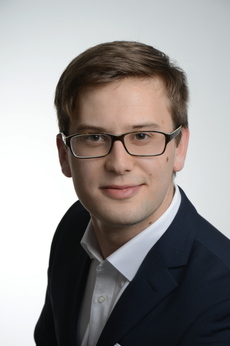
Ignacio Pérez Hurtado De Mendoza is a Researcher affiliated with the Department of Sport and Computer Science at the University of Seville . His work primarily focuses on Membrane Computing , Computer Science , and Biology and Other Natural Sciences , with specific emphasis on GPU-accelerated simulations , bio-inspired algorithms , and computational modeling of ecosystems . Developed the P-Lingua toolkit for agile membrane computing Contributed to GPU-based simulators for Spiking Neural P Systems and Evolving P Systems Applied membrane computing to robotic motion planning and social navigation systems Co-author of foundational software tools like MeCoSim and MAREX His publications span Computer Science and Biology , with a focus on parallel computing , ecological modeling , and algorithm efficiency . While specific awards are not documented, his collaborations with leading researchers in membrane computing highlight his academic impact.
Lei Li is an Associate Professor in the Department of Computer Science at the University of California, Santa Barbara (UCSB), where they serve as Co-Director of the UCSB NLP Group. Their research focuses on developing algorithms and systems for machine learning, natural language processing, machine translation, reasoning, and AI-powered drug discovery. Dr. Li received their PhD from Carnegie Mellon University and completed their undergraduate studies at Shanghai Jiao Tong University. Dr. Li's research spans multiple critical areas in artificial intelligence and machine learning. Their work in natural language processing encompasses machine translation, speech translation, multilingual NLP, large language models, text generation, program synthesis, reasoning, privacy, and watermarking. Additionally, they have made significant contributions to AI applications in drug design and efficient machine learning techniques. Their research bridges theoretical foundations with practical applications, particularly in the emerging field of AI for biological discovery. Analysis of Dr. Li's recent publications reveals a strong focus on advancing natural language processing capabilities while addressing critical challenges in model efficiency, security, and evaluation. Their work spans machine translation systems that handle hundreds of languages, techniques for improving large language model capabilities in zero-shot settings, methods for evaluating text generation quality, and novel approaches for protecting intellectual property in language models. Notably, they've also made significant contributions to applying AI to biological problems, particularly in antimicrobial peptide discovery and protein sequence design. Dr. Li has received notable recognition for their research, including: Best Paper Award at ACL 2021 for "Vocabulary Learning via Optimal Transport for Neural Machine Translation" Dr. Li actively advises PhD and Master's students in computer science at UCSB, with recent advisees working on topics including antimicrobial peptide discovery, protein sequence design, diffusion models, speech translation, and language model watermarking. Their research group, the UCSB NLP Group, appears to be well-funded and productive, with consistent publications in top-tier conferences including ACL, EMNLP, ICML, KDD, and NeurIPS. The group has developed several influential frameworks and benchmarks, including MTG (Multilingual Text Generation benchmark) and SEScore2 (text generation evaluation metric). The UCSB NLP Group, co-directed by Dr. Li, maintains an active research agenda with multiple ongoing projects spanning natural language processing, machine learning, and their applications to scientific discovery. The group collaborates with researchers across disciplines, particularly in the biological sciences for drug discovery applications.
Arya Mazaheri is a Research Leader at PanocularAI, affiliated with the Technische Universität Darmstadt. His work bridges high-performance computing (HPC) and machine learning, focusing on optimizing large-scale computational systems. Based at Hochschulstr. 10, Darmstadt, Germany, he contributes to GPU acceleration, neural network pruning, and parallel processing. PhD in Performance Engineering of Data-Intensive Applications (2022) Key areas: HPC, Machine Learning, GPU Computing, Neural Network Pruning Research Trends: Mazaheri's publications from 2015-2024 reveal expertise in: Accelerating LLM inference through pipelined speculation Topology-aware network pruning with reinforcement learning GPU-based spacecraft trajectory simulations Performance portability in tensor operations Hardware-independent communication metrics for parallel systems
Deming Chen is the Abel Bliss Professor of Engineering at the University of Illinois at Urbana-Champaign, holding appointments in the Electrical and Computer Engineering Department within the Grainger College of Engineering. He serves as a research professor in the Coordinated Science Laboratory and an affiliate professor in the Computer Science department. Additionally, he is the Director of the AMD-Xilinx Center of Excellence and the Co-Director of the IBM-Illinois Discovery Accelerator Institute. Dr. Chen earned his B.S. in Computer Science from the University of Pittsburgh in 1995, followed by his M.S. and Ph.D. in Computer Science from UCLA in 2001 and 2005, respectively. After working as a software engineer during two periods (1995-1999 and 2001-2002), he joined the University of Illinois at Urbana-Champaign in 2005 and became a full professor in 2015. His research spans reconfigurable computing, AI hardware acceleration, high-level synthesis, cloud computing, and hardware security. Dr. Chen's work has significant industry impact, with open-source solutions like Medusa being integrated into NVIDIA's TensorRT-LLM, improving LLM execution speed by 1.9-3.6x. His research group pursues system-level and high-level design automation, machine learning and cognitive computing, hybrid cloud systems, hardware/software co-design, and FPGA and GPU computing. His recent publications show a strong trend toward AI acceleration and large language model optimization, with projects like SnapKV and Medusa addressing critical challenges in LLM efficiency. His work consistently bridges theoretical innovation with practical implementation, as evidenced by numerous open-source projects that have been adopted by industry. IEEE Fellow (2019) Abel Bliss Professor of Engineering (2020-present) Google Faculty Award (2020) IBM Faculty Award (2014, 2015) NSF CAREER Award (2008) Ten Best Paper Awards TCFPGA Hall-of-Fame paper award DAC International System Design Contest wins (2017, 2019) Dr. Chen has served as PI/Co-PI on over 40 research grants from US Federal agencies and industry partners. He has led numerous open-source projects including FCUDA, DNNBuilder, SkyNet, ScaleHLS, and Medusa, many of which have been adopted by industry. As Editor-in-Chief of ACM TRETS (2019-2025), he increased the journal's impact factor by 3.8x. He actively mentors students and has been recognized as an excellent teacher by UIUC students in 2008 and 2017. His research group operates at the intersection of hardware and AI, with projects spanning from low-level hardware design to high-level AI applications. The AMD-Xilinx Center of Excellence and IBM-Illinois Discovery Accelerator Institute provide substantial infrastructure for his team's research in hybrid cloud systems and AI acceleration.
Prof. Dr.-Ing. Richard Membarth is a faculty member at Technische Hochschule Ingolstadt , where he holds the professorship for System-on-a-Chip and AI for Edge Computing. He is also affiliated with the German Research Center for Artificial Intelligence (DFKI) as a Senior Researcher and Team Leader for Compiler Technologies and High-Performance Computing, and with the Saarland University Computer Graphics Lab . His research spans GPU computing, domain-specific languages, and compilers. PhD from Friedrich-Alexander University Erlangen-Nürnberg (2013) Postgraduate diploma from Auckland University of Technology His research focuses on: Parallel computer architectures and programming models Automatic code generation for embedded to HPC systems Image processing, computer graphics, and deep learning applications Domain-specific languages for performance-portable code Recent publications highlight compiler design, GPU acceleration, and parallel algorithms. Scientific awards include the HiPEAC Paper Award (2018) and GPCE Best Paper Award (2015) . Professional roles include organizing High-Performance Graphics conferences as Treasurer (2024-2025) and Papers Chair (2020).
Lazaros Papadopoulos serves as an Assistant Professor in the Department of Electrical and Computer Engineering at Democritus University of Thrace since May 2024, focusing on computational resource management for embedded and high-performance systems. His work bridges hardware-software co-design with energy-efficient computing paradigms. His academic credentials include: Bachelor's in Electrical and Computer Engineering from Democritus University of Thrace (2005) Master's degree from the same institution (2008) PhD from the National Technical University of Athens (2016) Research centers on optimizing computing infrastructure through real-time resource management, heterogeneous memory architectures, and AI workload acceleration. His investigations target energy-performance tradeoffs in GPU systems, persistent memory integration, and edge-device neural network deployment, with direct applications in sustainable computing and high-performance data processing. Publication analysis (2018-2022) reveals consistent focus on heterogeneous system optimization, particularly energy-aware GPU acceleration frameworks, memory management for DRAM/NVM hybrids, and efficient CNN implementations for edge devices. Key thematic threads include sustainable computing practices, hardware-aware AI deployment, and memory hierarchy innovations. Scientific recognition includes: Two Best Paper Awards Research leadership spans major EU initiatives: Work Package Coordinator for LAGO (Horizon Europe, 2022-2024) and PRAETORIAN (H2020, 2022-2024); Technical Coordinator for EXA2PRO (H2020, 2018-2021); and Work Package Coordinator roles in SDK4ED (H2020, 2018-2020) and EXCESS (H2020, 2013-2016). These projects address embedded systems security, exascale programming models, and energy-efficient computing toolchains. He operates within the Computer Architecture and High Performance Systems laboratory, directing research on computational resource orchestration for next-generation heterogeneous platforms.
David Cardinal is a Lecturer at Stanford University where he co-teaches Psychology 221 (Image Systems Engineering) and Psychology 204A (Human Neuroimaging Methods). He also works as a researcher, currently improving simulation tools for computational photography applications and mentoring students in the lab. Cardinal is a co-contributor to Stanford's ISET imaging toolbox, leading efforts to extend it into machine learning and computational photography areas. His research interests span computational photography, image systems engineering, human neuroimaging methods, machine learning applications in imaging, and digital imaging technologies. Cardinal brings extensive industry experience to his academic role, having held development and management positions at Sun Microsystems where he directed AI and digital imaging efforts, and serving as founding CEO and CTO of First Floor Software (later Calico Commerce). As a professional photographer with two decades of experience in digital travel and nature photography, Cardinal has received significant recognition including First Place in the National Wildlife Federation contest and being a Finalist in the BBC/NHM Wildlife Photographer of the Year competition. His technical expertise is reflected in his co-authorship of one of the first image management solutions for digital photographers - DigitalPro for Windows. First Place in the National Wildlife Federation contest Finalist in the BBC / NHM Wildlife Photographer of the Year competition Cardinal maintains an active presence in the photography technology community through his writing, with articles appearing in numerous publications including PCMag, Dr. Dobbs, Photoshop User, and Outdoor Photographer. His blog covers the latest developments in photography technology, software, and techniques, with recent posts focusing on AI-powered image editing tools, mobile photography workflows, and emerging imaging technologies for both professional and enthusiast photographers.
Christopher Jewell is Professor in Statistics at Lancaster University's School of Mathematical Sciences, with affiliations across the Data Science Institute, CHICAS (Centre for Health Informatics, Computing, and Statistics), and STOR-i Centre for Doctoral Training. He serves as N8 CIR Digital Health Theme Lead and holds memberships in the Royal Statistical Society and Royal Society. His research pioneers computational methods for infectious disease modeling, specializing in inference for stochastic epidemic systems, foodborne disease source attribution, and GPU-accelerated biostatistics. He develops high-performance algorithms enabling real-time outbreak analysis and intervention evaluation, with applications spanning veterinary epidemiology, public health surveillance, and low-resource settings. Recent work demonstrates his dual focus on methodological innovation and practical implementation, exemplified by 2025 studies on foot-and-mouth disease control in Turkey and scalable epidemic model calibration. These reflect his commitment to computationally efficient solutions for complex disease dynamics. His scientific recognition includes: SPI-M-O Award for Modelling and Data Services Weldon Memorial Prize Lancaster University Staff Award Professor Jewell supervises PhD researchers Charlotte Appleton, Jordan Hood, and James Neill. His £5M MARS project (2024-2029) drives AI applications for real-world systems, while active DSI grants address COVID-19 wastewater epidemiology, disease transmission in Africa, and adaptive clinical trial designs. He contributes to national pandemic response through SPI-M and the Office for National Statistics. As co-leader of CHICAS and STOR-i contributor, he fosters interdisciplinary collaborations integrating statistics, computer science, and epidemiology to transform disease surveillance and control strategies globally.
Vsevolod Katritch is a Professor of Quantitative and Computational Biology, Chemistry, and Pharmacology and Pharmaceutical Sciences at the University of Southern California's Dornsife College of Letters, Arts and Sciences. His research focuses on computational approaches to understanding G-protein coupled receptors (GPCRs) and structure-based drug discovery. He leads a productive research group that has made significant contributions to the field of GPCR structural biology and computational pharmacology. Dr. Katritch's research interests center on the development and application of computational tools to study key biological phenomena, with particular focus on membrane proteins and the superfamily of G-protein coupled receptors (GPCRs), which are targeted by more than 30% of clinical drugs. His work spans molecular modeling, structural bioinformatics, integrative structural biology, and structure-based drug discovery. Current research directions include deciphering molecular basis of GPCR interactions, structure-based discovery of novel ligands, and integrative structural biology combining computational approaches with experimental data. His group has published extensively in top-tier journals including Nature, Cell, and Science, with recent work focusing on opioid receptors, angiotensin receptors, and computational methodologies for drug discovery. The lab has developed innovative approaches such as V-SYNTHES for virtual screening of ultra-large chemical libraries. Dr. Katritch was promoted to full professor in November 2023 and has received significant recognition including being named a Highly Cited Researcher by Clarivate Analytics in both Biology & Biochemistry and Pharmacology & Toxicology categories. Dr. Katritch's laboratory has been supported by multiple NIH grants including a recent Maximizing Investigators' Research Award (MIRA) from NIGMS. His research has important implications for pain management, addiction treatment, and cardiovascular disorders. The group maintains strong collaborations with structural biologists, medicinal chemists, and pharmacologists across multiple institutions. Notable members of his research team include postdoctoral scholars Anastasiia Sadybekov, Saheem Zaidi, and Jordy Lam, who have made significant contributions to the lab's publications and discoveries. The lab has been recognized for its innovative work, with members receiving awards including the Michael S. Waterman Award in Quantitative and Computational Biology.
Dr. Tobias Rapp is a researcher at the Computer Graphics Group of the Karlsruhe Institute of Technology (KIT). Based in Karlsruhe, Germany, he focuses on computer graphics, data visualization, and GPU-accelerated computation of complex datasets like fluid dynamics and SPH simulations. Research Interests: Data visualization, GPU computing, FTLE analysis, and physically-based rendering. Teaching: Supervises visualization exercises, programming labs, and GPGPU courses (2016–2019). Labs & Teams: Active member of the KIT Computer Graphics Group.
Nagi N. Mekhiel is a Professor in the Department of Electrical and Computer Engineering at Toronto Metropolitan University (formerly Ryerson University), where he teaches courses including Digital Systems, Microprocessors, Advanced Computer Architecture, and Parallel Computing. His office is located in the George Vari Engineering and Computing Centre at 245 Church St., Toronto. Dr. Mekhiel received his B.Sc. in Electrical Engineering from Assiut University, Egypt (1973), M.A.Sc. from University of Toronto (1981), and Ph.D. in Computer Engineering from McMaster University (1995). Prior to academia, he worked as a Biomedical Engineer at Toronto's Hospital for Sick Children (1981-1987), Senior Hardware Engineer at Definicon Systems Corporation (1987-1990), and Senior Member of Technical Staff at Yarc System Corporation (1996-1998). His research focuses on solving fundamental computer industry challenges, particularly the processor/memory speed gap and scalability of parallel processors. His work spans computer architecture, parallel processing, high-performance memory systems, VLSI, and performance evaluation. Mekhiel's research has been cited in patents by major tech companies including IBM, Google, Apple, Intel, Microsoft, and others. Analysis of his recent publications reveals a strong trajectory toward quantum computing applications, orbital data processing architectures, and memory system innovations for big data applications. His work consistently addresses the processor/memory speed gap through novel architectural solutions, with increasing emphasis on quantum information representation and parallel time computing models. Intel Xeon+FPGA system access via Intel's Hardware Accelerator Research Program Senior Member of IEEE Dr. Mekhiel has supervised numerous graduate students who have co-authored publications with him in areas including facial recognition systems, quantum computing implementations, and parallel processing architectures. His research has received industry support through patent licensing agreements with Intellectual Ventures US. He leads a research group focused on advanced computer architecture solutions, with current projects involving quantum bit encoding, reconfigurable memory systems, and orbital network architectures for scalable multi-core processing.
Lukas Exl is a Senior Lecturer at the University of Vienna and a Research Director at the Wolfgang Pauli Institute (WPI), where he leads the Mathematical AI/ML Research Division. He holds a habilitation (venia docendi) in Computational Science from the University of Vienna, the first in this interdisciplinary field. Research Platform MMM Mathematics-Magnetism-Materials Wolfgang Pauli Institute (WPI), Vienna His research integrates Applied Mathematics, Computational Physics, and Scientific Machine Learning, focusing on numerical methods for PDE-based simulations, data-driven modeling, and reduced-order approaches. Key applications include computational micromagnetism for green energy materials and developing physics-informed neural networks (PINNs) with interpretable architectures. Recent publications emphasize machine learning techniques for magnetic material optimization, stray field computation, and trustworthy AI (TAI/XAI). He supervises students in Computational Science, Applied Mathematics, and Physics, with a focus on Extreme Learning Machines (ELMs), PINNs, and tensor decomposition methods. Data-driven Reduced Order Approaches for Micromagnetism (FWF Project, €484k, 2024-2028) Design of Nanocomposite Magnets by Machine Learning (FWF Project, €254k, 2022-2027) Reduced Order Approaches for Micromagnetics (FWF Project, €402k, 2018-2024) His team includes researchers like Dr. Sebastian Schaffer (PhD graduate), Kein Gjordeni, and Caroline Maitz. Collaborations span Danube University Krems and Technical University of Denmark's Energy Conversion and Storage department.
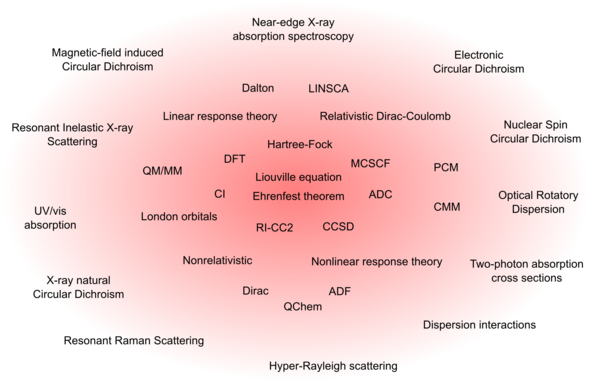
Patrick Norman is a Professor and Head of the Division of Theoretical Chemistry and Biology at KTH Royal Institute of Technology, Stockholm, Sweden. He also serves as Director of the PDC Center for High Performance Computing. His research focuses on advanced time-dependent molecular response theory methods, with applications in optical and X-ray spectroscopy. Coordinates VeloxChem and Gator HPC software projects Leads EU-EIC project OMICSENS (2023–2026) for lung cancer biosensors Principal Investigator in EU-ITN COSINE (2018–2021) and KAW network CoTXS (2014–2019) His theoretical work includes resonance convergent response theory via Liouville equations and Ehrenfest theorem, implemented in quantum chemistry software for linear/nonlinear spectroscopy. He co-authored the graduate textbook Principles and Practices of Molecular Properties (Wiley, 2018) and organizes international PhD schools on molecular response properties. Recent publications emphasize fragment state optimization, solvation effects, chiral luminescent materials, and amyloid ligand binding simulations. His work bridges quantum chemistry, HPC, and biomedical applications through tools like Gator and VeloxChem .
Silvia Giuseppina Franchini serves as a Contract Teacher in the Department of Biomedicine, Neuroscience and Advanced Diagnostics at the University of Palermo's School of Medicine and Surgery. Her academic career demonstrates a strong interdisciplinary focus bridging advanced mathematical frameworks with practical medical applications. Dr. Franchini's research interests include: Geometric and Clifford Algebra applications in medical imaging Hardware acceleration for geometric algebra operations Machine learning approaches for medical diagnosis, particularly for Crohn's disease Embedded systems design for real-time image processing Robotics control systems using conformal geometric algebra Medical image analysis and 3D reconstruction Her publication record spanning fifteen years reveals an evolution from foundational hardware implementations to sophisticated medical applications. She has developed specialized architectures including the GAPPCO system, ConformalALU coprocessor, and GAPP compiler, demonstrating innovative approaches to implementing geometric algebra in hardware for medical imaging. Her recent work emphasizes machine learning applications for Crohn's disease classification, showing how mathematical frameworks can translate to clinical diagnostic tools. Dr. Franchini maintains active research engagement with publications continuing through 2022, indicating ongoing contributions to the field of medical imaging technology development. Her work consistently addresses computational challenges while maintaining clinical relevance, particularly in gastroenterology through her Crohn's disease research.
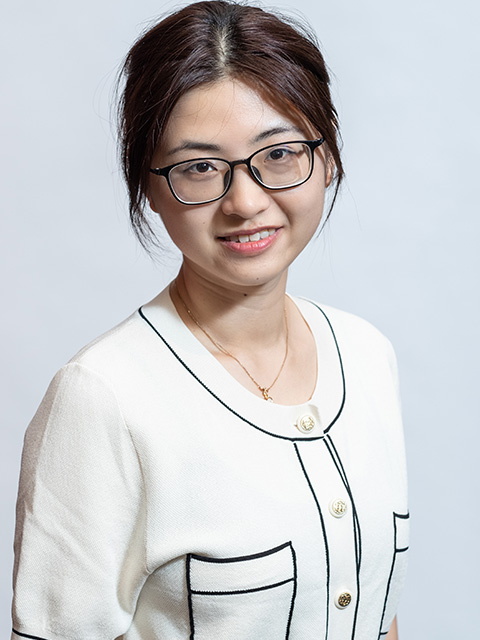
Dr. Jinghua Jiang is a Vice-Chancellor Independent Research Fellow specializing in flood risk management and hydrodynamic modelling. Her research focuses on developing GPU-accelerated computational tools and nature-based solutions to address climate resilience challenges in data-scarce regions. She leads the DECLARE Project, aiming to create automated tools for nature-based solutions (NbS) design against compound flood risks. Her work bridges academic research with practical implementation through international collaborations, including partnerships with the UK Met Office. Her expertise spans high-performance environmental modelling, machine learning applications, and stakeholder-engaged research. Completed projects include the Living Deltas Hub (GCRF WCSSP India), ValBGI, and ENACT initiatives, all supported by major UK research councils. She has pioneered pollutant transport models to enhance urban flood resilience and developed fluvial process models for rivers like the Mekong. Key contributions include advancing stormwater management techniques and integrating computational efficiency with real-world urban challenges. Her research emphasizes both technical innovation and community-focused solutions, with publications addressing urban flood modeling, nature-based interventions, and particle-tracking methodologies.