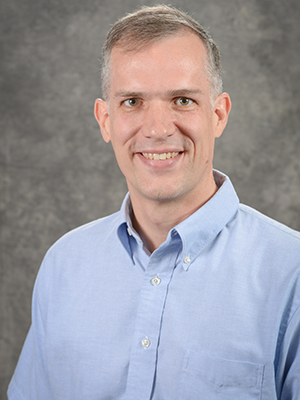
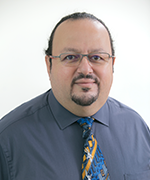
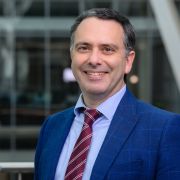
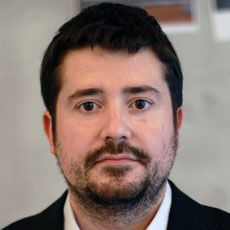
Dr. Tom Spink is a Lecturer at the School of Computer Science, University of St Andrews. His research focuses on efficient cross-architecture hardware virtualization, leveraging Dynamic Binary Translation (DBT) and hardware acceleration to enhance virtualized system performance. He teaches Operating Systems (CS3104) and Computer Architecture (CS4202), and serves as the First-level CS Coordinator. Dr. Spink holds a PhD in computer systems architecture from the University of Edinburgh and is a Fellow of the British Computer Society (BCS). His research interests span operating systems, virtualization, compilers, and runtime systems. Notable contributions include work on DBT hypervisors, weak memory model architectures (Risotto/Lasagne), and embedded systems security. He has been awarded the Best Paper Award in 2019 for his work on retargetable DBT hypervisors. Dr. Spink advises PhD student Ferdia McKeogh and collaborates on tools like Risotto and Lasagne. His work addresses challenges in cross-platform execution, IoT virtualization, and compiler optimizations for embedded systems. He actively engages in academic activities, including organizing conferences and delivering invited talks on hardware acceleration and virtualization techniques.
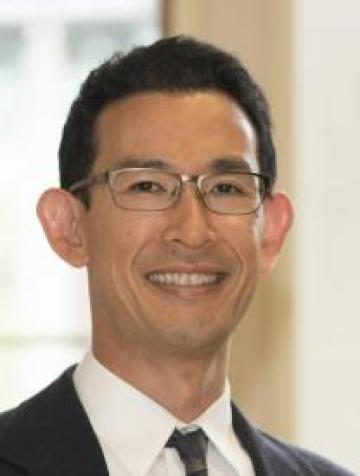
Gokop Goteng is a Senior Lecturer at Queen Mary University of London's School of Electronic Engineering and Computer Science, specializing in cloud computing, IoT security, and middleware systems. He holds a PhD in Grid Computing from Cranfield University (2009) and has held postdoctoral roles at Qatar Computing Research Institute (2012-2014) and King Abdullah University of Science and Technology (2012-2014). Currently, he leads the BUPT joint program's Cloud Computing and Middleware modules, focusing on industry-relevant skills in distributed systems and software engineering. His research integrates cloud technologies, cybersecurity, and AI to address challenges in smart cities, energy systems, and digital healthcare. Notable projects include malware detection in IoT devices and optimizing cloud service latency via deep learning. He is an Oracle Certified Professional (OCP), Java Certified Programmer (JCP), and active member of the British Computer Society (BCS) and IEEE. Teaching responsibilities include Cloud Computing (BUPT joint programme) Middleware for IoT Software Engineering , emphasizing hands-on programming with APIs, secure middleware design, and team-based software development. His work emphasizes industry collaboration, as seen in AWS Academy partnerships to enhance student employability. He maintains a research website at gotengphdstudents for doctoral supervision and project updates.
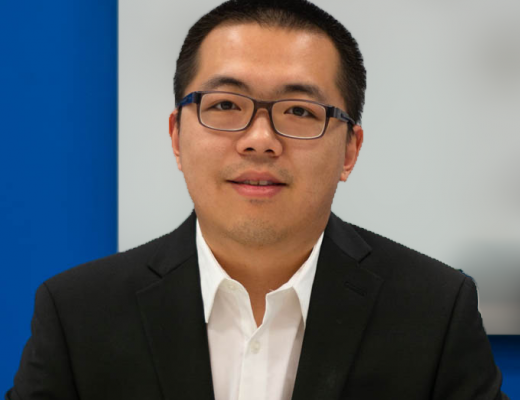
Claudio Pica is a Professor of Computational Science and Head of Section at the University of Southern Denmark (SDU), affiliated with the Department of Mathematics and Computer Science (IMADA) and CP3-Origins. He holds leadership roles as CEO of DeiC National HPC Center and Head of the SDU eScience Center. With a PhD in Physics from the University of Pisa (2005) and a Laurea cum Laude in Theoretical Physics from the Scuola Normale Superiore (2001), his expertise spans quantum field theory, lattice gauge simulations, and high-performance computing. His research focuses on fundamental particle physics, including composite Higgs models, walking technicolor theories, and lattice QCD. He leads large-scale computational projects, such as scaling SU(2) simulations to 1000 GPUs and optimizing algorithms for supercomputers. His outreach initiatives include award-winning educational projects like 'KvanteBanditter' (Lovie Awards 2018) and the SDU Supercomputing Challenge. He has secured € millions in grants, including the €4M European ITN ETN 'EuroPLEx' (2018-2022) and Danish Lundbeckfonden funding (2013-2018). Pica has organized major conferences like the 'Origin of Mass' series and the 'Odense Winter School on Geometry and Theoretical Physics.' His work bridges theoretical physics with computational innovation, addressing challenges in conformal dynamics, dark matter, and supercomputing infrastructure. He is a frequent speaker at international forums and a reviewer for prestigious journals like Physical Review D and European Physical Journal C.
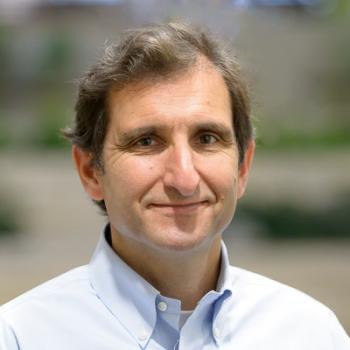
John Keyser is a Professor in the Department of Computer Science & Engineering at Texas A&M University, serving as Graduate Advisor. He holds a Ph.D. from the University of North Carolina at Chapel Hill and multiple B.S. degrees from Abilene Christian University. His research focuses on geometric computing, physically-based simulation, graphics, and modeling, with notable contributions to 3D visualization and computational geometry. Keyser's educational background includes advanced degrees in Computer Science, Applied Mathematics, and Engineering Physics. He has received prestigious awards such as the William Keeler Faculty Fellowship and teaching accolades from the Association of Former Students and Tenneco. His research interests span robust geometric modeling, physically-based simulation, brain networks, and graphics. Keyser's work bridges theoretical foundations with applied systems, including innovations in particle-based fluids, mesh rendering, and filament tracking in microscopy. Awards: William Keeler Faculty Fellow (2009-2010), Teaching Excellence Awards (2007), Montague Scholar (2003-2004). Advising: Graduate Advisor role with expertise in guiding students through complex computational projects. Keyser collaborates on advanced imaging techniques like the Knife-Edge Scanning Microscope (KESM) for brain tissue analysis and contributes to GPU-accelerated algorithms for real-time simulations. His research trends emphasize interdisciplinary applications of geometric computing in both academic and industrial contexts.
Dr. Eike Mueller is a Reader (Associate Professor) in the Department of Mathematical Sciences at the University of Bath. His research focuses on developing fast numerical algorithms for solving physical problems across scales, from atmospheric models to subatomic particles. As part of the Numerical Analysis group, he specializes in parallel computing implementations using frameworks like DUNE and Firedrake/PyOP2. His work is characterized by close collaboration with the Met Office on weather and climate forecasting models. Research interests center on numerical techniques for complex systems, emphasizing parallel computing architectures including GPU clusters. Key areas include massively parallel solvers for PDEs, multilevel Monte Carlo methods for atmospheric dispersion, and performance-portable frameworks for physics simulations. Recent work explores machine learning integration with traditional numerical methods for enhanced computational efficiency. Publications demonstrate consistent focus on accelerating scientific computation through novel algorithms. Recent articles emphasize the application of multigrid methods to climate modeling, neural networks in numerical integration, and Bayesian inference techniques. A significant portion of work targets performance optimization on modern hardware architectures including GPU acceleration. Research leadership includes principal investigator roles for major EPSRC projects: 'MGHyPE: An ExaHyPE version with a multigrid solver' and 'IAA – Accelerating climate- and weather-forecasts with faster multigrid solvers'. Collaboration with the Met Office has resulted in operational improvements to weather prediction models through bespoke solver development.
Masao Sako is the Arifa Hasan Ahmad and Nada Al Shoaibi Presidential Professor of Physics and Astronomy at the University of Pennsylvania. He has held academic positions including Professor (2020–present), Associate Professor (2012–2020), and Assistant Professor (2006–2012) at UPenn. His research focuses on observational cosmology using Type Ia supernovae to study dark energy and the universe's expansion, leveraging large-scale surveys like DES, LSST, and Roman. He also develops machine learning/deep learning methods for astronomical data analysis and GPU-accelerated image processing. His educational background includes a B.S. from Columbia University (1995), and M.A., M.Phil., and Ph.D. in Physics from Columbia (1997–2001). Postdoctoral training included Chandra and KIPAC fellowships at Caltech and Stanford. Research interests emphasize cosmological parameter estimation via supernova surveys, systematic uncertainty mitigation, and interdisciplinary applications of AI/ML. Recent work includes Hubble constant measurements, dark energy constraints, and astrometric redshift techniques. Key contributions include the Dark Energy Survey's cosmological results, photometric classification with SCONE, and collaborations with LSST/ Rubin Observatory. His team's machine learning tools enhance transient detection and photometric redshift estimation.
Youtao Zhang is a Professor at the Swanson School of Engineering, University of Pittsburgh. His research focuses on computer architecture, machine learning, quantum computing, and data storage systems. He has contributed to advancements in secure non-volatile memories, GPU optimization, and healthcare informatics through deep learning applications. His work addresses challenges in hardware security, memory management, and efficient quantum circuit simulation. Key research areas include: Hardware Security and Covert Channels Quantum Computing Algorithms and Hardware Storage Systems Optimization GPU Acceleration and Parallel Computing Medical Imaging and Healthcare AI Recent publications emphasize innovations in hybrid storage deduplication, quantum circuit evaluation, and adversarial defense in vision transformers. His work bridges theoretical computer science with practical applications in emerging technologies.
Xulong Tang is an Assistant Professor in the Department of Computer Science at the University of Pittsburgh. He holds a PhD in Computer Science from Penn State (2019), an MS from the University of Science and Technology of China (2013), and a BS from Harbin Institute of Technology (2010). His research focuses on high-performance computing, parallel architectures, and compiler optimization for heterogeneous systems. Research interests include GPU optimization, compiler-assisted parallel computing, quantum computing systems, and efficient machine learning frameworks. He advises multiple PhD students and has published extensively in top conferences like ASPLOS, ISCA, and MICRO. His work addresses challenges in multi-GPU systems, quantum circuit simulation, and adversarial machine learning. Tang has collaborated on projects involving quantum computing optimization, photonic quantum systems, and edge device acceleration. Notable contributions include frameworks for efficient training of temporal graph neural networks and compiler-driven hardware-software co-design. He serves as a program committee member for ASPLOS and IEEE Micro Top Picks.
Franck Cappello is a distinguished computer scientist currently serving as a Project Manager and Senior Computer Scientist at Argonne National Laboratory and as an Adjunct Research Professor at the University of Illinois at Urbana-Champaign. With over 30 years of research experience, he has made significant contributions to high-performance computing, particularly in the areas of resilience and fault tolerance at extreme scale, lossy compression of scientific data, and AI for science. Dr. Cappello received his Ph.D. from the University of Paris XI in 1994 with highest honors ("très honorable avec les félicitations du jury"). His academic journey includes positions as a Junior Researcher at CNRS (1994-2003), Senior Researcher at INRIA (2003-2013), and Visiting Research Professor at the University of Illinois (2009-2013). His research interests focus on high-performance parallel and distributed computing, resilience and fault tolerance at extreme scale, lossy compression of scientific data, and AI for science. Cappello has pioneered several high-impact software tools including XtremWeb (one of the first Desktop Grid software systems), MPICH-V fault tolerance MPI library, VeloC multilevel checkpointing environment, and SZ lossy compressor for scientific data. His work on the Grid'5000 project has enabled hundreds of researchers to conduct experiments in parallel and distributed computing, resulting in over 2000 research publications and supporting 300+ Ph.D. theses. Dr. Cappello's recent publication record shows a strong integration of AI techniques with traditional HPC approaches, particularly in lossy compression, workflow management, and energy efficiency. His research demonstrates a consistent focus on practical solutions for real-world scientific computing challenges with emphasis on maintaining data fidelity while achieving significant data reduction. The publications reveal growing interest in GPU acceleration, wafer-scale engines, federated learning, and energy trade-offs in compressed I/O systems. IEEE Fellow (2017) 2024 IEEE CS Charles Babbage Award 2024 Europar Achievement Award 2022 ACM HPDC Achievement Award 2021 IEEE Transactions of Computer Award for Editorial Service and Excellence 2018 IEEE TCPP Outstanding Service Award Two R&D 100 awards (2019 and 2021) for innovative software 12 Best papers Finalists/Awards Dr. Cappello has advised 22 Ph.D. students and served on 58 Ph.D. defense juries. He has secured over 60 research grants as main PI or Co-PI, including numerous DOE ECP projects, NSF grants, and European projects. His leadership extends to directing the Joint Laboratory on Extreme-Scale Computing (JLESC), which brings together seven prominent research centers in supercomputing. Currently, he leads the AuroraGPT Evaluation Group, focusing on evaluation methods for Large Language Models as research assistants, and continues to lead resilience and compression research at Argonne's Mathematics and Computer Science Division. Dr. Cappello directs several significant research initiatives including the Joint Laboratory on Extreme-Scale Computing and leads resilience and compression research at Argonne's Mathematics and Computer Science Division. His teams have developed groundbreaking software frameworks like SZ and VeloC that are deployed on exascale systems. Through his leadership of the Grid'5000 project and JLESC, he has fostered international collaboration among researchers working on the frontiers of supercomputing. His current work on error-bounded lossy compression, resilient workflow management, and energy-efficient computing represents the cutting edge of scientific computing research with practical applications across numerous scientific domains.
Murali Krishna Emani is an Assistant Computer Scientist in the Data Science group at Argonne Leadership Computing Facility (ALCF) within Argonne National Laboratory. Previously, he served as a Postdoctoral Research Staff Member at Lawrence Livermore National Laboratory. His research spans High Performance Computing , Scalable Machine Learning , and Emerging HPC architectures . Key interests include parallel programming models, runtime systems, and online adaptation for scientific applications. At ALCF, he co-leads the AI Testbed initiative exploring AI accelerator performance for scientific machine learning, and chaired the MLPerf HPC group at MLCommons for benchmarking large-scale ML on HPC systems. His recent publications (2023-2025) reveal strong focus on LLM optimization (MoE inference, KV cache management), AI accelerator benchmarking , and scientific applications (climate modeling, protein design). The work demonstrates cross-cutting themes in hardware-software co-design and performance modeling for emerging architectures. ACM Gordon Bell Prize finalist for climate modeling (2025) Winner of ACM Gordon Bell Special Prize for HPC-based Covid-19 research (2022) Emani actively mentors PhD students and postdocs, with advisees now faculty at Binghamton University, California State University, and researchers at NVIDIA, Microsoft, and national labs. His service includes program committees for SC, IPDPS, and AAAI conferences. Current projects focus on performance modeling for ML/DL frameworks on supercomputers, co-design of hardware architectures for ML algorithms, and benchmarking ML/DL frameworks on HPC systems.
Ümit V. Çatalyürek is a Professor in the School of Computational Science and Engineering at Georgia Institute of Technology's College of Computing. Previously, he held positions as a Professor and Vice Chair in Biomedical Informatics at Ohio State University. He earned his Ph.D., M.S., and B.S. in Computer Engineering from Bilkent University, Turkey. His research focuses on High-Performance Computing, Combinatorial Scientific Computing, and Biomedical Informatics. Education: Ph.D. (2000), M.S. (1994), B.S. (1992) in Computer Engineering from Bilkent University Research interests include parallel computing, graph algorithms, and genomic data analysis. He has authored over 200 peer-reviewed articles and leads the TDA research group at Georgia Tech. Notable contributions include scalable graph partitioning methods and genome assembly tools like BOA. Awards include IEEE and SIAM Fellowships and an NSF CAREER Award. He serves as Editor-in-Chief of Parallel Computing and has held leadership roles in ACM SIGBio and IEEE TCPP. His grants include funding from DOE, NIH, and NSF for projects in computational science and biomedical informatics. Advising involves mentoring students in computational methods and large-scale data analysis. He leads the TDA lab and collaborates on interdisciplinary initiatives in bioinformatics and quantum computing.
Daniele Tartarini is a Senior Research Software Engineer at the School of Computer Science, University of Sheffield . His work focuses on high-performance computing, computational modeling, and biomedical applications, integrating software engineering with life sciences. Role: Senior Research Software Engineer Institution: University of Sheffield ORCID: 0000-0002-8913-0156 Email: d.tartarini@sheffield.ac.uk Research Interests: Dr. Tartarini specializes in parallel and GPU computing for biomedical applications. His work spans computational mechanics and complex systems modeling in biology and medicine, with a focus on tissue engineering, cancer research, and nanosensor simulation. Tissue Engineering: Scaffold design, cell-biomaterial interactions Cancer Modeling: Multiscale digital twins, clinical workflow optimization Nano-Device Simulation: Hertzian Potential formulation, GPU acceleration Software Engineering: FAIR4RS principles, automated code generation Grant Involvement: Currently serves as Principal Investigator (PI) for the AI-Care (KE) grant (EPSRC, 2024–2025, £65,862) focused on cancer digital twin platforms.
Lorena Lozano Plata is an Associate Professor in the Department of Computer Science at the Universidad de Alcalá. Her research focuses on computational electromagnetics, radar cross-section (RCS) analysis, antenna design, and high-performance numerical methods. She holds a PhD from Universidad de Alcalá (2006) with a thesis on accelerating ray-tracing techniques for RCS reduction using physical optics. She is part of the GEC (Computational Electromagnetic Group) and has developed software tools like NewFasant and FASANT for electromagnetic analysis. Her work emphasizes efficient algorithms for solving large-scale electromagnetic problems, including multilevel fast multipole algorithm (MLFMA), characteristic basis function method (CBFM), and hybrid techniques combining high-frequency asymptotic methods with rigorous solvers. Applications include antenna placement optimization, urban V2X communication channels, wind turbine interference characterization, and aerospace satellite communication modeling. She has contributed to GPU-accelerated parallelization strategies and radar system simulations in traffic scenarios. Lozano Plata's research also involves radio propagation analysis in complex environments, radar Doppler spectrum analysis, and pre-processing/meshing optimization for electromagnetic software. Her work bridges theoretical developments with practical tools used in industry and academia for electromagnetic design and simulation challenges.
Fue-Sang Lien is a Professor in the Department of Mechanical and Mechatronics Engineering at the University of Waterloo, Canada. He serves as the head of Waterloo Computational Fluid Dynamics Engineering Consulting and is affiliated with IMMERSE – The Research Network for Video Game Immersion. His primary research focuses on computational fluid dynamics (CFD), turbulence modeling, wind engineering, and aerodynamics/aeroacoustics applications. Educations: Doctorate in Mechanical Engineering, University of Manchester Institute of Science and Technology, UK (1992) Master's in Mechanical Engineering, National Cheng Kung University, Taiwan (1984) Bachelor's in Mechanical Engineering, National Cheng Kung University, Taiwan (1982) Research interests include urban flow dispersion modeling, LES techniques, free-surface flows, and CFD integration with serious game technologies for emergency response training. Recent publications emphasize immersed boundary methods, GPU acceleration, and wind energy forecasting. No scientific awards explicitly mentioned in the provided text. Teaching & Advising: Active in graduate student supervision, currently accepting applications. Teaches ME 564 (Aerodynamics), ME 566 (CFD for Engineering Design), and ME 663 (Computational Fluid Dynamics).
Dr. Alessandro Di Nola is an Assistant Professor in the Department of Economics at Birmingham Business School, University of Birmingham, where he joined in September 2024. His research lies at the intersection of macroeconomics and public finance, focusing on taxation, tax avoidance, inequality, and gender disparities in labor markets. He completed his Ph.D. in Economics at Bocconi University in 2015 and held postdoctoral positions at the University of Barcelona and the University of Konstanz prior to his current appointment. His research interests include: Macroeconomics with heterogeneous agents Tax avoidance and evasion Gender gaps in the labor market Quantitative macroeconomic modeling Firm dynamics and macro-labor Dr. Di Nola's recent work explores the aggregate consequences of tax evasion, rescue policies for small businesses during the pandemic, and the gendered effects of minimum wage policies. His research often employs dynamic general equilibrium models and computational methods to analyze policy impacts. Several of his papers are forthcoming or published in leading journals such as the Review of Economic Dynamics and the International Economic Review . His recent publications reflect a strong focus on taxation, inequality, and labor market dynamics, with increasing attention to gender-specific effects of economic policies. He actively develops and shares computational tools on GitHub, demonstrating a commitment to reproducible research. Notable scientific contributions include: "The Aggregate Consequences of Tax Evasion" (Review of Economic Dynamics) "Taxation of Top Incomes and Tax Avoidance" (forthcoming, International Economic Review) "Rescue Policies for Small Businesses in the COVID-19 Recession" (Review of Economic Dynamics) "The Gendered Effects of the Minimum Wage" (under revision, International Economic Review) Dr. Di Nola advises on research projects and collaborates with economists across Europe. While formal student advising is not detailed, his active research program suggests involvement in mentoring graduate researchers. He has been involved in projects analyzing fiscal responses to economic crises and structural labor market issues. His work often involves collaboration with institutions such as the Barcelona Economic Analysis Team (BEAT) and uses advanced computational techniques for model simulation and estimation.