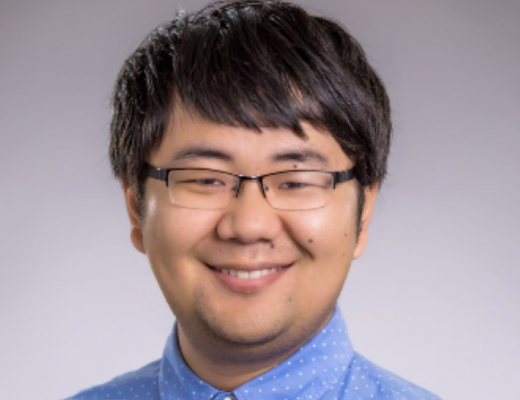
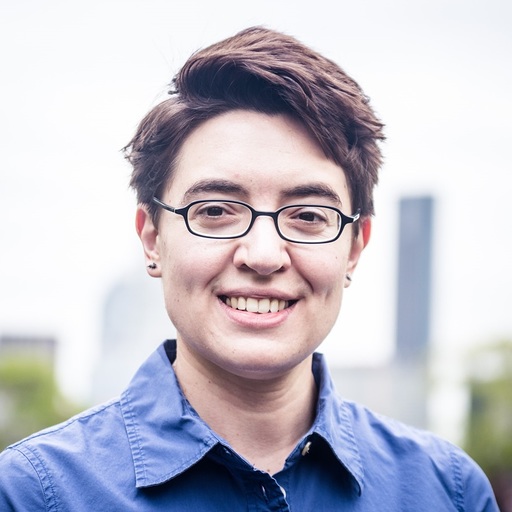
Kaihang ShiView profile
Assistant Professor
Dr. Kaihang Shi is an Assistant Professor in the Department of Chemical and Biological Engineering at the University at Buffalo (UB), School of Engineering and Applied Sciences. He leads the Digital Porous Materials Laboratory (DP Lab) and serves as an affiliate member of the Acceleration Consortium. His research integrates machine learning, atomistic simulations, statistical mechanics, and mathematical modeling to study molecular adsorption, reaction, and transport in porous media for energy, sustainability, and healthcare applications. Education: PhD in Chemical Engineering (North Carolina State University, 2020), BS in Polymer Materials and Engineering (East China University of Science & Technology, 2015) Professional Affiliations: American Institute of Chemical Engineers (AIChE), American Association for the Advancement of Science (AAAS), International Adsorption Society (IAS) Dr. Shi's research focuses on computational discovery of nanoporous materials, particularly metal-organic frameworks (MOFs), using quantum chemical modeling, molecular simulations, and interpretable machine learning. His group develops tools like gRASPA for GPU-accelerated simulations and MOFX-DB for computational adsorption data sharing. Recent trends in his publications span: Machine learning for adsorption prediction in nanoporous materials Molecular transport mechanisms in MOFs and composites Microscopic pressure tensor analysis in confined systems CO2 capture and methane activation catalysts GPU algorithms for efficient simulation Scientific honors include: ACS PRF Doctoral New Investigator Award (2024) Best Poster Award, Diffusion Fundamentals XI (2025) Team Science Contest Winner, US Department of Energy (2021) James K. Ferrell Outstanding Ph.D. Graduate Award (NCSU 2020) Multiple teaching and conference presentation awards Dr. Shi mentors students in computational materials science, with Master’s graduates Asritha and Asha contributing to molecular transport studies. His group actively collaborates on CO2 capture projects and has secured grants from NSF, UB, and ACS for advanced materials research.