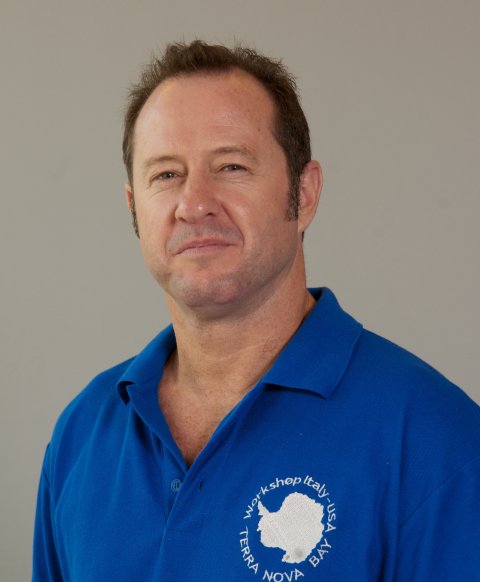
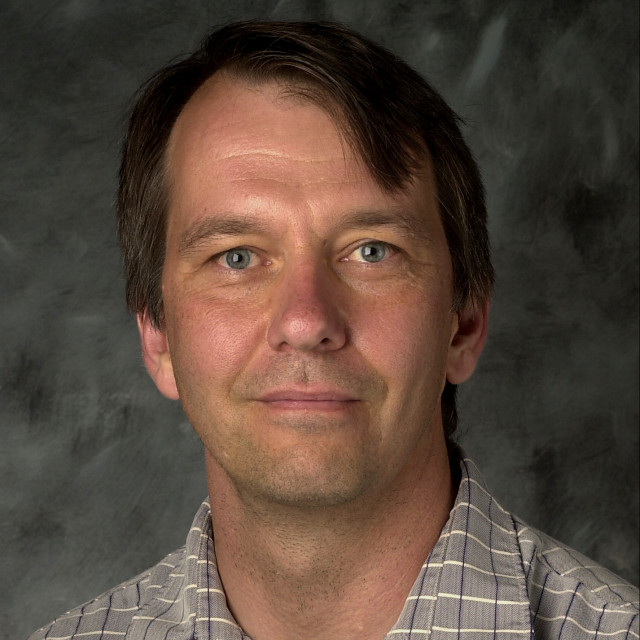
Eric Achterberg holds a W3 Professorship in Marine Chemistry at GEOMAR Helmholtz Centre for Ocean Research Kiel and the University of Kiel. His research examines global ocean biogeochemical cycles, with particular expertise in trace element distributions, nutrient cycling, and carbon system dynamics. Achterberg develops and deploys advanced in-situ sensors for oceanographic measurements, enabling high-resolution studies of chemical variability across marine environments. His fieldwork spans tropical oxygen minimum zones, polar regions, and hydrothermal vent systems, with recent projects investigating contamination from historical munitions in the Baltic Sea and trace metal distributions in the Southern Ocean. Honored as a Royal Society Wolfson Merit Award Professor, he leads multiple collaborative projects including AMMOTRACe (trace element cycling) and EMS FORE (estuarine systems). Achterberg serves on editorial boards and scientific committees for international oceanographic research programs.
Dr. Tal Ben Altabet is a Researcher affiliated with the Institute of Geochemistry and Petrology at ETH Zurich, within the Department of Geochemistry and Petrology (School of Earth and Planetary Sciences, D-EAPS). His work focuses on marine geochemistry, trace metal dynamics, and isotope geochemistry in oceanic environments. Key research themes include anthropogenic metal cycling, dust-driven perturbations, and the interplay between dissolved and particulate trace elements in coastal and open ocean systems. His studies span the Red Sea, Mediterranean Sea, and Pacific Ocean, with a particular emphasis on the Gulf of Aqaba. He employs advanced analytical techniques such as isotope tracing (e.g., Pb, Nd isotopes) and time-series monitoring to investigate element transport mechanisms, environmental impacts of dust storms, and coral reef resilience under pollution and climate stressors. Collaborative projects like the REDMAST initiative highlight his focus on long-term environmental monitoring and biogeochemical process understanding. Dr. Ben Altabet’s contributions include pioneering work on using foraminiferal shells and invasive ascidians as biological proxies for heavy metal pollution tracking. His research bridges fundamental geochemistry with applied environmental science, addressing global challenges such as ocean acidification and anthropogenic contaminant distribution.
Joseph Resing serves as a Senior Research Scientist at NOAA's Pacific Marine Environmental Laboratory (PMEL) within the Earth-Ocean Interactions (EOI) Program and holds an Affiliate Associate Professor position at the University of Washington's School of Oceanography. He also maintains a Research Scientist appointment at the Joint Institute for the Study of the Atmosphere and Ocean, demonstrating his interdisciplinary approach bridging government science and academic research. Dr. Resing's research focuses on trace element chemistry, climate variability and predictability (CLIVAR), submarine volcanic and hydrothermal activity, and vent plume chemistry. His work examines how hydrothermal systems influence ocean chemistry, particularly regarding iron cycling and trace metal transport. He has conducted extensive research on the Mariana Arc, Lau Basin, and Atlantic Ocean, investigating how hydrothermal plumes transport dissolved metals across ocean basins and how atmospheric dust deposition affects ocean chemistry. Analysis of Dr. Resing's publication record reveals a consistent focus on hydrothermal processes and their biogeochemical implications. His most recent work demonstrates sophisticated understanding of basin-scale metal transport, hydrothermal plume dynamics, and the connections between volcanic activity and ocean chemistry. His research often involves large-scale oceanographic surveys and international collaborations, with particular emphasis on Pacific Ocean systems. Dr. Resing has secured substantial funding through multiple NSF and NOAA grants, including current projects on the U.S. GEOTRACES Pacific Section and dynamics of eruptive plumes above submarine arc volcanoes. His past funding includes significant work on the CLIVAR/CO2 Repeat Hydrography program, exploring trace metal deposition and cycling in the North Atlantic. He has participated in numerous research expeditions to study hydrothermal systems, including the Submarine Ring of Fire projects in the Western Pacific. Working primarily from NOAA's PMEL laboratory in Seattle, Dr. Resing leads analytical efforts focused on trace element measurements in seawater and hydrothermal plumes. His laboratory work employs advanced techniques including flow injection analysis with in-line preconcentration for measuring aluminum and manganese in seawater. He collaborates extensively with researchers from the University of Hawaii, Florida State University, Oregon State University, and other institutions on large interdisciplinary projects.
Claudia Benitez-Nelson is a Distinguished Professor and Senior Associate Dean for College Initiatives and Interdisciplinary Programs at the University of South Carolina , within the College of Arts and Sciences and the School of the Earth, Ocean and Environment . She holds a courtesy appointment and is actively engaged in research, education, and national science leadership. B.S. in Chemistry and Oceanography — University of Washington Ph.D. in Oceanography — MIT-WHOI Joint Program (1999) Her research centers on biogeochemical cycling , particularly of phosphorus and carbon , in marine and coastal systems. She investigates particle formation, export, and burial using radiochemical and mass spectrometric techniques, with field sites spanning South Carolina, California, and South Africa. Her work integrates climate change, ocean acidification, and nutrient dynamics. The most recent publications reflect a strong focus on marine particle dynamics , organic matter cycling , carbon export , and environmental change . Themes include the use of radionuclides (e.g., 234Th), mercury isotopes, and foraminiferal proxies to understand biogeochemical processes and paleoenvironmental conditions. Research spans coastal to open ocean systems, with implications for climate modeling and ecosystem health. Scientific Awards and Honors: AGU Early Career Award in Oceanography Fulbright and Marie Curie Fellowships AAAS, ASLO, and Oceanography Society Fellow University of South Carolina Distinguished Professor of the Year Sulzman Award for Excellence in Education and Mentoring (AGU) Oceanography Society Mentoring Award Outstanding Educator Award — Association for Women Geoscientists She has been continuously funded by NSF, NASA, and NOAA for over two decades, supporting extensive research and education initiatives. She mentors numerous graduate and undergraduate students, many of whom are co-authors on her publications. She leads major projects such as those under EXPORTS and GEOTRACES , and serves on national advisory panels including the NAS Ocean Studies Board and the White House Ocean Research Advisory Panel . She is also active in outreach through Science Moms , a nonpartisan group of climate scientist mothers advocating for climate action and education. Her work bridges science, policy, and public engagement.
Rene Boiteau is an Assistant Professor in the Department of Chemistry at the University of Minnesota, with research centered on environmental and bioinorganic chemistry. His work integrates advanced analytical techniques, particularly mass spectrometry, to investigate the molecular mechanisms underlying elemental cycling in natural and industrial environments. Research Interests: His primary research areas include trace metal cycling, environmental organic chemistry, bioinorganic chemistry, and the development of novel mass spectrometry methods and data processing pipelines. The Boiteau Lab leverages 'omics' tools to explore how microbes and plants transform organic and inorganic species in oceans, rivers, soils, sediments, and wastewaters, aiming to build predictive models of environmental change and its impacts on food webs, evolution, and human health. Scientific Awards: No awards explicitly mentioned. Advising and Grants: While specific students and grant funding are not listed, Dr. Boiteau is actively recruiting new members to join his research group. His work appears to be supported through institutional affiliations and likely external funding related to environmental monitoring and analytical method development, particularly in the context of programs like US GEOTRACES. Labs and Teams: Dr. Boiteau leads the Boiteau Lab at the University of Minnesota, located in Amundson Hall. The lab focuses on metals, microbes, and analytical chemistry in the environment, contributing to broader scientific efforts in biogeochemistry and environmental sustainability.
Prof. Dr. Martin Frank is a leading scientist at GEOMAR Helmholtz Centre for Ocean Research Kiel, where he serves as Spokesperson for Research Area 1: Ocean Circulation and Climate Dynamics since 2020. He works in the Department of Paleo-Oceanography, operating a modern trace-metal-clean laboratory and an MC-ICP mass spectrometer. His research focuses on reconstructing past ocean circulation and its relationship with climate using geochemical and isotopic proxy indicators. Dr. Frank's research interests span multiple interconnected fields of marine science: Paleoceanography : Reconstructing ocean circulation patterns and their relationships with past climate on different timescales Geochemical Proxies : Developing and applying radiogenic (Nd, Pb, Hf, Sr), stable (Si, Fe, Ba, Mo), and cosmogenic (10Be) isotope systems Continental Weathering : Investigating relationships between weathering inputs from continents, nutrient utilization, biological productivity, and climate Marine Archives : Extracting proxy signals from marine sediments, manganese/iron crusts, and nodules Modern Ocean Processes : Understanding processes controlling proxy indicators in the present-day water column through participation in the GEOTRACES program His recent publications demonstrate a strong focus on isotope geochemistry applied to understanding ocean circulation, continental weathering inputs, and biogeochemical cycling. Major trends in his work include the use of multiple isotope systems (particularly neodymium, hafnium, and barium) to trace water masses and continental inputs, investigations of river-ocean interfaces (particularly the Amazon and Congo systems), and studies of hydrothermal inputs to the ocean. His work bridges modern process studies with paleoceanographic reconstructions, providing critical insights into how the ocean system operates across different timescales. Dr. Frank actively participates in the internationally coordinated GEOTRACES program, which aims to improve the understanding of biogeochemical cycles and large-scale distribution of trace elements and their isotopes in the marine environment. His laboratory at GEOMAR operates advanced analytical facilities including a trace-metal-clean laboratory and MC-ICP mass spectrometer, enabling high-precision isotope measurements critical for his research.
Mark Moore is a Professor of Ocean Biogeochemistry at the School of Ocean and Earth Science, University of Southampton, based at the National Oceanography Centre Southampton. He specializes in marine nutrient and carbon cycling, with a focus on phytoplankton resource limitation and biogeochemical consequences. His research integrates fieldwork, experiments, and modeling. Affiliations: School of Ocean and Earth Science; National Oceanography Centre Southampton Teaching: Contributes to Marine Biology and Oceanography programs, coordinating modules SOES2006 and SOES6070. Research interests include phytoplankton photosynthesis, oceanic nutrient dynamics, and carbon sequestration. Active projects include IDAPro (Atlantic productivity), CHALKY (coccolithophore alkalinity), and N-POP (ocean photosynthesis). Recent work emphasizes Southern Ocean iron transport, ENSO-driven iron limitation, and global phytoplankton co-limitation patterns. Supervises current PhD students including Jack Rees Williams and Joseph Furby. His publications highlight diatom dynamics, twilight zone inefficiencies, and opal-silicate relationships. Collaborates on interdisciplinary projects like COMICS (mesopelagic carbon storage) and GEOTRACES (micronutrient cycles).
Dario Marconi is a Postdoctoral Research Fellow in the Sigman Research Laboratory at Princeton University , specializing in Geochemistry & Paleoclimate . His work focuses on nitrogen isotopes as tracers for oceanic nutrient cycling and climate reconstruction. Research Interests: Marine nitrogen cycling and isotopic signatures Paleoclimate reconstruction via biogeochemical proxies Ocean circulation and nutrient transport dynamics Foraminifera-bound isotopes as ecological indicators Interactions between biological productivity and oxygen-deficient zones Recent Publications highlight his expertise in isotopic analysis across the Pacific and Atlantic Oceans, with a focus on denitrification, nitrogen fixation, and nutrient recycling. Articles from 2024-2025 explore topics such as δ15N/δ18O nitrate isotopes, Agulhas Current dynamics, and photosymbiosis effects in foraminifera. Contact: Email: dmarconi@Princeton.EDU Phone: 609-258-0896 Office: C259 Briger Hall
Daniel Sigman is the Dusenbury Professor of Geological and Geophysical Sciences at Princeton University's Department of Geosciences. His research focuses on biogeochemistry of modern and ancient environments, particularly oceanic interactions with the global carbon cycle and climate change over ice-age cycles, alongside method development in isotope geochemistry. He is affiliated with Princeton's High Meadows Environmental Institute (HMEI) Grand Challenges Program. Biogeochemistry of marine nitrogen cycles Paleoclimatology through isotopic analysis Isotope geochemistry methodology Ice-age cycle dynamics Global carbon cycle interactions Water and biogeochemistry research Recent publications highlight isotopic studies of nitrate assimilation, denitrification patterns along the GEOTRACES GP15 Pacific transect, and nitrogen cycling impacts in oxygen-deficient zones. His work explores Southern Ocean dynamics, coral reef nitrogen sources, and Late Cretaceous marine ecosystems through fish otolith isotopes. Notable contributions include the Dusenbury Professorship and advancements in isotopic analysis techniques. Research spans oceanography, paleoceanographic proxies, and climate-biogeochemistry interactions, notably examining biogeochemical changes in polar oceans driving atmospheric CO2 shifts during glacial cycles.
Peter Sedwick is a Professor at Old Dominion University's College of Sciences, specializing in Chemical Oceanography and Marine Biogeochemistry. He holds a Ph.D. in Oceanography (University of Hawaii at Manoa, 1991) and a B.S. in Chemistry (University of Hawaii at Manoa, 1983). His research focuses on trace metals in marine systems, Antarctic science, and atmospheric deposition impacts. He has secured over $6 million in federal grants, including studies on iron dynamics in the Ross Sea, hydrothermal vents, and aerosol iron solubility. Key research areas include iron cycling in polar and open-ocean environments, GEOTRACES program contributions, and the role of human emissions on ocean biogeochemistry. His work has advanced understanding of iron's role in phytoplankton growth, Ross Sea ecosystems, and hydrothermal metal transport. Notable awards include the 2018 Distinguished Research Award from ODU and a 2017 NOAA research paper award. His recent grants include investigations into convective processes in the Ross Sea, GEOTRACES North Atlantic transects, and iron sources in low-temperature hydrothermal vents. He has authored over 100 peer-reviewed articles, with a focus on trace metal speciation, biogeochemical modeling, and Antarctic shelf dynamics. His lab operates a marine atmospheric sampling facility in Bermuda, contributing to long-term ocean-atmosphere studies.
Laurent Bopp is a Senior Scientist at CNRS (IPSL/LMD, Paris, France) and a Professor at Ecole Normale Supérieure since 2016. He specializes in ocean carbon cycle dynamics and climate modeling, with significant contributions to understanding feedbacks between the carbon cycle and climate change, ocean acidification, and dust flux impacts on ocean productivity. His research spans spatial scales from open to coastal oceans and temporal scales from deep past to future climate scenarios. Head of 'Thème Climat et Cycles' (2014-2016) and BIOMAC team (2010-2014) at LSCE Active member of IGBP/IMBER, GEOTRACE, and Plateforme Océan-Climat committees Professor and lecturer at Ecole Normale Supérieure (2016-present), ED129 doctoral school (2011-2017), and SOLAS summer school (2005-2013) His scientific accolades include the Médaille de la Société d’Océanographie de France (2011) and AGU Voyager Award (2016). He has held key roles in national and international research evaluation panels, including CNRS Section 19 and CNU Section 37, and has contributed to teacher training programs for 'agrégation' and 'capes' in France (1998-2017).
Robert Sherrell is an Associate Professor at Rutgers, The State University of New Jersey, specializing in marine and environmental geochemistry. His research focuses on trace metal biogeochemistry in polar regions, including Antarctic and Arctic ecosystems. He investigates processes such as glacial meltwater contributions to ocean chemistry, iron cycling dynamics, and paleochemical records preserved in ice cores and speleothems. Education: B.A. from Oberlin College; Ph.D. from Massachusetts Institute of Technology/Woods Hole Oceanographic Institution. Professional activities include leadership in the US GEOTRACES program studying ocean biogeochemistry. Current projects explore iron sources in the Amundsen Sea, isotopic tracing of micronutrients, and the impact of glacial retreat on marine ecosystems. Research themes emphasize interdisciplinary approaches to understanding climate change impacts through studies of trace elements, sediment-water interactions, and ocean-atmosphere exchange processes. His work contributes to global understanding of biogeochemical cycles in sensitive polar environments. Grants and collaborations include major NSF-funded initiatives like Project ARTEMIS and Antarctic Shelf studies. Active in developing analytical methods such as laser ablation ICP-MS for high-resolution geochemical analysis.
Melchor González Dávila is a Full Professor of Physical Chemistry at the University of Las Palmas de Gran Canaria, within the Faculty of Marine Sciences. He leads the QUIMA-ULPGC research group, focusing on marine carbonate system dynamics, trace metal biogeochemistry, and ocean acidification. His career includes research stays at the University of Hamburg and Rosenstiel School of Marine and Atmospheric Science (University of Miami). He holds a PhD in Chemistry from the University of La Laguna (1987). Research Interests: Carbonate system in ocean time series and repeated sections Atmosphere-ocean CO₂ exchange mechanisms Redox processes of trace metals (Fe, Cu) in seawater Publications highlight studies on volcanic iron fertilization, ocean acidification trends, and coastal carbonate chemistry. His work spans field observations, experimental modeling, and interdisciplinary collaborations in marine environmental science. Grants & Projects: Active in EU-funded initiatives like FeRIA (iron cycling in acidified oceans) and coastal monitoring networks (CanOA). Long-term involvement in the ESTOC ocean time series (Northeast Atlantic). Labs/Teams: Director of QUIMA-ULPGC, coordinating studies on marine chemistry and biogeochemical cycles. Collaborates with international programs (GEOTRACES, ICOS).
Dr. J. Magdalena Santana Casiano is a Full Professor in Chemical Oceanography at the Faculty of Marine Sciences, University of Las Palmas de Gran Canaria (ULPGC). Since 1990, she has contributed to teaching and research, serving as Vice-Dean of Postgraduate Studies (2010–2017) and coordinator of the Doctoral Program in Oceanography and Global Change (since 2022). Her work focuses on marine biogeochemistry, particularly iron redox processes and ocean acidification. PhD, Marine Sciences (ULPGC, 1991) MSc, Marine Sciences (ULPGC, 1988) Her research explores: Iron Biogeochemistry (kinetics of Fe(II)/Fe(III) speciation), Ocean Acidification (carbonate system dynamics), and Trace Metal Cycling (ligand complexation, volcanic inputs). Recent studies include the FeRIA project, La Palma volcanic eruption impacts on iron oxidation, and blue carbon dynamics in Macaronesia. Scientific awards include the Extraordinary Doctoral Thesis Award (ULPGC, 1991) . Her publications span topics like: Iron and copper complexation in coastal waters Redox kinetics under climate stressors Isoatlantic and Mediterranean carbonate system variability Lava-seawater interaction chemistry She has mentored graduate students and collaborates extensively through the QUIMA-ULPGC research group, GEOTRACES projects, and international networks like the Rosenstiel School of Marine and Atmospheric Science.
Dr. Mark Brzezinski is a Research Professor at the University of California, Santa Barbara, specializing in marine biogeochemistry and microbial ecology. His work focuses on diatoms' role in silicon cycling, their ecological and climate impacts, and the interplay between nutrient dynamics and carbon sequestration. Key research areas include silicon limitation in marine systems, diatom-virus interactions, and the application of silicon isotopes as biogeochemical proxies. His research integrates field studies (e.g., EXPORTS, GEOTRACES campaigns) with laboratory experiments, addressing topics like diatom physiology under nutrient stress, silica production mechanisms, and the resilience of marine ecosystems to climate change interventions such as ocean alkalinity enhancement. Notable contributions include advancing understanding of the global silicon cycle, the role of diatoms in the biological carbon pump, and the development of isotopic tools to trace historical oceanic processes. Collaborative projects with international teams have furthered insights into Arctic and Southern Ocean biogeochemistry. Dr. Brzezinski’s work has implications for predicting future climate scenarios, particularly regarding ocean carbon sinks and microbial community shifts under environmental perturbations.