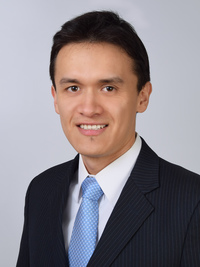
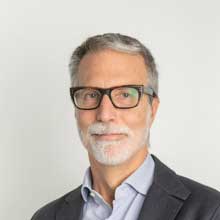
Jacek Mazurkiewicz is an academic researcher at Wrocław University of Science and Technology, affiliated with the Faculty of Information and Communication Technology and Department of Computer Engineering . His work spans artificial neural networks, network systems dependability, and transport safety applications. PhD in Computer Engineering Active participation in DepCoS-RELCOMEX conferences Research focuses on: Hardware implementation of neural networks Soft computing for safety improvements Critical situation analysis in network systems Intelligent transport systems development Recent publications highlight his interdisciplinary approach combining AI with transportation safety, creative AI applications in music/art, and dependability engineering. He has contributed to conference proceedings editing and collaborative research projects. Contact: jacek.mazurkiewicz@pwr.edu.pl
Jacek Cichosz is an academic researcher affiliated with the Faculty of Information and Communication Technology at Wrocław University of Science and Technology , specializing in the Department of Systems and Computer Networks . Holding a PhD, he focuses on system identification, biomedical engineering, and signal processing applications. University: Wrocław University of Science and Technology School: Faculty of Information and Communication Technology Department: Department of Systems and Computer Networks His research spans system identification , medical imaging analysis , and fuzzy logic applications in diagnostics , particularly for laryngeal pathology and ECG interpretation. He has developed educational tools like the CARDIO system and contributed to computer-aided diagnosis frameworks. Recent publications highlight trends in recursive identification , image analysis , and fuzzy rule-based diagnostic systems , with interdisciplinary applications in healthcare and computer science. Keywords include system identification , medical imaging , and biomedical signal processing . Contact: jacek.cichosz@pwr.edu.pl
Francisco Silva Pinto is a researcher at Universidade Lusófona, specializing in Numerical Modeling and Operations Research applied to infrastructure systems, particularly water supply, sanitation, and flood management. His work bridges governance , tariff design , and climate change adaptation in utility sectors. Expertise in Multicriteria Decision Analysis , Portfolio Optimization , and Data Mining Focus on regulatory governance , nature-based solutions , and sustainable housing His recent publications emphasize water security , resource efficiency , and transdisciplinary collaboration in developing countries. He has contributed to projects like the FANFAR flood forecasting system in West Africa and developed frameworks for wastewater reuse and material tracking in construction . Francisco coordinates R&D initiatives , teaches in academic programs, and serves as a reviewer for ISI journals. His work includes policy design for universal water coverage and assessing the economic feasibility of desalination projects.
Daniel G. Costa is a Researcher at the Department of Technology within the State University of Feira de Santana (UEFS), Brazil . His work bridges smart cities , IoT , and public health to address urban emergencies like pandemics. Affiliation: State University of Feira de Santana (UEFS), Brazil Email: danielgcosta@uefs.br Research Focus: Costa investigates sensor-based monitoring , social media data mining , and wearable health technologies to enhance outbreak detection and mitigation. His studies emphasize data integration , AI-driven emergency response , and digital health infrastructure in urban environments. Recent Publications: His 2020 article on smart city pandemic initiatives highlights trends in AI for disease prediction , multi-source data processing , and urban emergency systems . Other works span fuzzy logic in sensor networks , open-source hardware , and social media integration for real-time urban monitoring. Collaborations & Projects: Costa collaborates with institutions like the Federal Institute of Bahia (IFBA) and contributes to GeoCovid-19 portal for centralized pandemic data. His research aligns with digital health , urban resilience , and cyber-physical systems in smart cities.
Amandeep Kaur is a researcher with affiliations across multiple institutions including the University of Cambridge , IIT Delhi , and Central University of Punjab . Her work spans interdisciplinary fields such as machine learning , deep learning , cybersecurity , and biomedical signal processing . Her research focuses on solving complex problems in healthcare, network security, and agricultural technology. Key contributions include optimizing SDN environments for DDoS attack detection, advancing 6G IoMT applications, and developing deep learning models for rice disease detection and COVID-19 classification using X-rays. The 15 most recent articles highlight her expertise in multi-objective optimization , hybrid algorithms , and federated learning for privacy protection. Topics range from smart city management and blockchain security to medical image segmentation and sentiment analysis in multilingual contexts.
Professor Dimitris Drikakis serves as Vice President for Global Partnerships at the University of Nicosia, Cyprus, and holds a joint professorship in the School of Sciences and Engineering. His academic career spans over 24 years, including roles as Executive Dean and Head of Department at UK universities. His research focuses on fluid dynamics, acoustics, computational science, and nanotechnology, emphasizing uncertainty reduction and physics-based modeling. He has co-authored two books, published over 400 papers, and graduated 45 PhD students globally. Research interests include super-resolution fluid flow analysis, machine learning applications in turbulence simulation, and computational methods for aerodynamics and heat transfer. His work on indoor aerosol transmission and epidemiological modeling has addressed pandemic-related challenges. He serves on editorial boards for journals like Computers and Fluids and Physics of Fluids . Recent articles highlight advancements in deep learning for fluid-structure interaction, shock-wave predictions, and AI-driven thermal optimization. His contributions bridge computational science with real-world engineering and public health applications.
Dr. Barbara J. Lence is a Professor in Civil Engineering at the University of British Columbia (UBC), part of the Faculty of Applied Science. She has been a Full-time Faculty member since 1997 and currently serves as Director of the UBC Master of Engineering Leadership in Integrated Water Management. Her research focuses on optimizing water resources projects, managing water quality under uncertainty, and climate change adaptation. She teaches courses such as CIVL 301 (Optimization and Decision Analysis) and CIVL 554 (Water Resource Management). Dr. Lence holds a doctorate from the University of Illinois at Urbana-Champaign, where her research addressed water pollution control policies and emissions trading. Before joining UBC, she was an Associate Professor at the University of Manitoba. Her work bridges engineering, environmental science, and policy, emphasizing decision-making frameworks for sustainable infrastructure. Key research interests include hydraulic systems, water distribution optimization, and ecological risk assessment. Her awards include the 1980 Walter E. Deuchler Environmental Engineering Award and the M. E. Meade Memorial Scholarship. She has contributed to over 20 peer-reviewed publications since 2012, focusing on algorithmic advancements in water resource systems and disaster resilience strategies.
Dr. Steven Coy is a Professor in the Department of Management at the University of Houston-Downtown , where he has been employed since 2002, progressing from Assistant Professor (2002-2009) to Associate Professor (2009-2016) and Professor (2016-present). He teaches courses in Operations & Supply Chain Management (MGT 3332) and Problem Solving & Decision Making (MGT 4317), with over 20 years of teaching experience in these areas. Degrees: Ph.D. in Management Science (University of Maryland), MS in Operations Research, BS in Business Administration (University of Vermont), and additional credentials including AAS in Culinary Arts. Dr. Coy's research focuses on Operations Research , Supply Chain Management , and Decision Modeling , with applications in Artificial Neural Networks , Fuzzy Logic , and Educational Technology . His recent work explores Buyer-Supplier Relationships , Sustainable Fisheries , and Big Data Analytics in environmental contexts. Key trends in his publications include: Integration of Machine Learning for predictive modeling in ecology and business Application of Fuzzy Logic to airline performance and artificial reef analysis Advancements in Supply Chain Pedagogy through flipped classroom methodologies Empirical studies on Small Business Management in China and Pakistan Development of Metaheuristic Optimization for operations problems Analysis of Purchasing Maturity in SMEs
Dr. Margaret Shipley is a Professor of Management at the University of Houston-Downtown's College of Business, specializing in fuzzy logic applications for decision-making systems. With a Ph.D. in Operations Research from University of Pittsburgh, she has taught courses including Project Management, Operations Management, and Managerial Decision Making. Academic Rank: Professor University Affiliation: University of Houston-Downtown Key Research Areas: Fuzzy logic, multicriteria decision making, supply chain management Her research focuses on integrating fuzzy logic with operations management frameworks to address uncertainty in business processes, particularly in supplier selection, virtual team dynamics, and ecological sustainability models. Recent publications examine sentiment analysis in supply chains, artificial reef impacts on marine ecosystems, and SME sustainability strategies. Scientific recognition includes multiple Faculty Development Grants from UHD for international conference participation and a significant NSF-sponsored research collaboration. Her professional service spans editorial reviewing for European Journal of Operational Research , Computers & Operations Research , and committee roles in academic governance.
Ali Danandeh Mehr is a Professor in the Department of Civil Engineering at Antalya Bilim University, Turkey, with a focus on stochastic hydrology, hydroinformatics, and climate change impacts on water resources. He has held adjunct research positions at the University of Tabriz (Iran), Middle East University (Jordan), and the University of Oulu (Finland). PhD in Civil Engineering from Istanbul Technical University Bachelor’s degree from Islamic Azad University His research spans drought forecasting , extreme hydrologic events , and hydroclimatic modeling , leveraging advanced machine learning and hybrid algorithms. Recent work includes the S-Transformer deep learning model, MOGGP multi-objective genetic programming, and Wavelet-Entropy Clustering for drought risk mapping. He has authored over 90 peer-reviewed journal articles and six books, with recognition as a World’s Top 2% Scientist (Stanford/SCOPUS, 2019–2022) and Top 1% Highly Ranked Scholar (ScholarGPS™, 2022). Current roles include Associate Editor for Discover Water (Springer) and J. Civil. Env. Eng. (University of Tabriz).
Amir Shirdel is a Researcher at the Faculty of Science and Engineering, focusing on advanced control systems and system identification techniques. His work spans various applications including industrial automation, process control, and energy systems. Dr. Shirdel's research interests center around control theory and system identification, with specific expertise in: Handling structural disturbances in control systems Wiener model identification Sparse optimization techniques for system identification Fuzzy control systems for industrial applications Kernel-based methods for forecasting and optimization His publication record shows a consistent research trajectory from 2014-2018, with a focus on addressing practical challenges in system identification and control design. His work often addresses real-world engineering problems such as overhead crane control, waste heat recovery in ships, and process control systems that must function reliably despite disturbances and outliers. His publications demonstrate increasing impact, with his 2015 fuzzy controller paper receiving 21 Scopus citations. Dr. Shirdel has established strong research collaborations, particularly with Böling, J. and Toivonen, H., with multiple co-authored publications appearing in reputable venues including IFAC World Congress and journals like Journal of Process Control and Neural Computing and Applications.
Jozsef Mezei is a Professor at the School of Business and Economics, Faculty of Social Sciences, Economics and Law, at Åbo Akademi University. His research lies at the intersection of artificial intelligence, information systems, and business analytics, with a strong focus on customer satisfaction, sentiment analysis, and e-commerce platforms. His research interests include Artificial Intelligence , Machine Learning , Large Language Models , Customer Review Analysis , Fuzzy Logic , and Configurational Methods in digital business environments. He applies computational intelligence techniques to understand user behavior, trust, and satisfaction in online platforms. The most recent publications highlight a strong trend toward integrating Large Language Models with traditional data analysis frameworks like CRISP-DM and qualitative comparative analysis (QCA), as well as continued innovation in fuzzy systems for sentiment and decision modeling. His work bridges technical AI methods with practical business applications, especially in e-commerce and digital health. He has contributed to research recognized under the UN Sustainable Development Goals, particularly in digital innovation and inclusive economic growth. While no specific scientific awards are listed, his work has been published in high-impact journals and top-tier conferences such as HICSS and Bled eConference. Jozsef Mezei supervises academic work, with at least two supervised projects documented. His research is supported by active collaboration networks across Europe, particularly in Finland and neighboring countries. He has developed frameworks combining sentiment analysis with fuzzy logic, applied to areas like mobile banking, recommendation systems, and customer feedback integration. He is affiliated with research in digital health usage, exploring how information systems facilitate healthcare innovation. His lab or research group appears to focus on intelligent systems for business decision-making, though no explicit lab name is provided. Future work is likely to further explore generative AI, trust modeling, and hybrid AI systems in digital platforms.
Paulo Jorge Carvalho Menezes is an Assistant Professor at the Department of Electrical and Computer Engineering, Faculty of Science and Technology, University of Coimbra. He is an associate researcher at the Institute of Systems and Robotics (ISR) and leads the Artificial Perception for Intelligent Systems and Robotics Team (AP4ISR) and the Immersive Systems and Sensory Stimulation Laboratory (IS3Lab). Ph.D. in Electrical and Computer Engineering (Informatics specialization) from University of Coimbra Lectures courses: Operating Systems, Computer Networks, Mobile Robotics, Computer Vision, Human-Machine Interaction Research focuses on Augmented Reality, Virtual Reality, Human-Robot Interaction, Computer Vision, and Assistive Technologies His 15 most recent publications span immersive systems, affective computing, and robotics, with keywords including Robotics , Human-Computer Interaction , and Artificial Intelligence . Notable subfields include Immersive Rehabilitation Games , Telepresence Systems , and Emotion Recognition . Scientific Awards 1st Prize 'As Novas Fronteiras da Engenharia' (2017) Best Paper Award (2016, 2020) Best Demonstrator Awards (2015, 2016, 2019) Honourable Mentions (2015, 2019) He supervises 12+ students in projects involving 3D Modeling , Emotion-Biosignal Analysis , and Assistive Robotics . Grants include EU Horizon 2020 (LIFEBOTS Exchange) and national projects like Move4ASD and BioHab .
Camilo Andres Gordillo Chaves serves as a Researcher in the Department of Computer Science at the University of Freiburg's Faculty of Engineering, working within the Autonomous Intelligent Systems research group under Prof. Dr. Wolfram Burgard since February 2015. His academic background includes: Master of Science in Microsystems Engineering from the University of Freiburg (2012-2014) Bachelor of Science in Mechatronics Engineering from Universidad Militar Nueva Granada, Colombia (2007-2012) His research integrates Machine Learning, Embedded Systems, and Robotics to address challenges in neural engineering and intelligent control systems. Key contributions include neural microprobe channel optimization using multi-armed bandit algorithms and computer vision-based traffic management solutions. His work demonstrates strong interdisciplinary connections between robotics, machine learning, and embedded hardware design. Publications reveal a consistent focus on real-time adaptive systems, with applications spanning neural recording technologies and intelligent transportation infrastructure. His methodologies frequently combine algorithmic optimization with physical system constraints. He actively contributes to the Autonomous Intelligent Systems group's research agenda, including the Advanced EDC project, while maintaining technical operations from his office at Georges-Köhler-Allee 080 in Freiburg.
Carlo Bagnoli is a Full Professor of Business Economics at Ca' Foscari University of Venice, affiliated with the Department of Management and Venice School of Management. His roles include leadership in strategic innovation initiatives, teaching excellence, and extensive research coordination. He holds key administrative roles such as Rector's Delegate for Strategy Innovation and oversees Ca' Foscari's innovation projects like the Venice Strategic Innovation Center. Education: High School Certificate in Accounting (1988) Bachelor’s in Economics and Banking (cum laude, 1992) PhD in Business Economics and Management (1997) Research Focus: Strategic innovation, business models, knowledge management, and sustainability. Recent work explores digital transformation, blockchain applications, and eco-design. He coordinates international projects on strategic innovation with Slovenia and Austria. Awards: Multiple teaching excellence awards (2006–2013) Kizok best paper award (2007) Distinguished International Business Scholar (2013) Festival delle Città Impresa Award (2012) Grants & Projects: Secured €2.8M+ in EU and regional funding for projects like Venice Strategic Innovation Center (€962K), Co-generazione di conoscenza (€2.85M), and Innovarea (€1M). Active in advisory roles for regional economic policies and enterprise innovation. Labs/Teams: Leads the Research Institute for Innovation Management. Founded Strategy Innovation Srl, a university spin-off (10% equity). Collaborates with IBM on Master’s programs and cross-disciplinary storytelling projects (Istorie).





.jpeg)